
有关binlog的那点事(mysql5.7.13)
binlog作为mysql中最重要的日志之一,能实现异常恢复以及主从复制。
我们主要讨论的是主从复制中的binlog,这里将以mysql5.7.13的源码为主要依据来分析binlog。
在主从复制中,binlog一般使用row模式,在主服务器上是binlog,在副服务器上是relaylog,在sql\binlog.h中is_relay_log这个变量来区分该情况.
在整个mysql中只有一个MYSQL_BIN_LOG实例,那就是在mysqld.h中定义的mysql_bin_log
1.binlog写定位的机制
以下是所有binlog的列表,通过show binary logs可以看到。
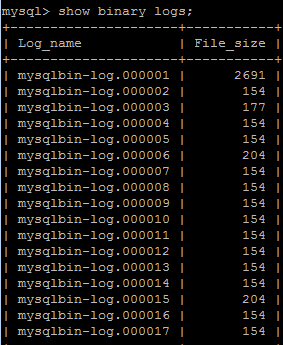
这个列表事实上是从mysqlbin-log.index的文件中拉出来的,我们称这个文件为binlog index 文件。
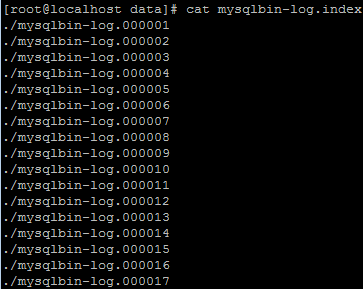
这些binlog相关文件一般在数据库路径下面。
这里我们要讲到binlog写的定位机制,其实通过binlog文件名和binlog文件偏移来定位binlog的写位置。
可以查看代码
sql\binlog.h:
 class MYSQL_BIN_LOG: public TC_LOG

 {

   enum enum_log_state { LOG_OPENED, LOG_CLOSED, LOG_TO_BE_OPENED };

   /* LOCK_log is inited by init_pthread_objects() */

   mysql_mutex_t LOCK_log;

   char *name;

   char log_file_name[FN_REFLEN];

   char db[NAME_LEN + ];

   bool write_error, inited;

   IO_CACHE log_file;

   IO_CACHE index_file;

   char index_file_name[FN_REFLEN];
index_file,log_file分别是binlog index文件以及binlog文件的读写io
log_file_name,index_file_name分别是binlog index文件以及binlog文件的文件名
include\my_sys.h:
 typedef struct st_io_cache        /* Used when cacheing files */

 {

   /* Offset in file corresponding to the first byte of uchar* buffer. */

   my_off_t pos_in_file;

   /*

     The offset of end of file for READ_CACHE and WRITE_CACHE.

     For SEQ_READ_APPEND it the maximum of the actual end of file and

     the position represented by read_end.

   */

   my_off_t end_of_file;

   /* Points to current read position in the buffer */

   uchar    *read_pos;

   /* the non-inclusive boundary in the buffer for the currently valid read */

   uchar  *read_end;

   uchar  *buffer;                /* The read buffer */

   /* Used in ASYNC_IO */

   uchar  *request_pos;

   /* Only used in WRITE caches and in SEQ_READ_APPEND to buffer writes */

   uchar  *write_buffer;

   /*

     Only used in SEQ_READ_APPEND, and points to the current read position

     in the write buffer. Note that reads in SEQ_READ_APPEND caches can

     happen from both read buffer (uchar* buffer) and write buffer

     (uchar* write_buffer).

   */

   uchar *append_read_pos;

   /* Points to current write position in the write buffer */

   uchar *write_pos;

   /* The non-inclusive boundary of the valid write area */

   uchar *write_end;

   /*

     Current_pos and current_end are convenience variables used by

     my_b_tell() and other routines that need to know the current offset

     current_pos points to &write_pos, and current_end to &write_end in a

     WRITE_CACHE, and &read_pos and &read_end respectively otherwise

   */

   uchar  **current_pos, **current_end;

   /*

     The lock is for append buffer used in SEQ_READ_APPEND cache

     need mutex copying from append buffer to read buffer.

   */

   mysql_mutex_t append_buffer_lock;

   /*

     The following is used when several threads are reading the

     same file in parallel. They are synchronized on disk

     accesses reading the cached part of the file asynchronously.

     It should be set to NULL to disable the feature.  Only

     READ_CACHE mode is supported.

   */

   IO_CACHE_SHARE *share;

   /*

     A caller will use my_b_read() macro to read from the cache

     if the data is already in cache, it will be simply copied with

     memcpy() and internal variables will be accordinging updated with

     no functions invoked. However, if the data is not fully in the cache,

     my_b_read() will call read_function to fetch the data. read_function

     must never be invoked directly.

   */

   int (*read_function)(struct st_io_cache *,uchar *,size_t);

   /*

     Same idea as in the case of read_function, except my_b_write() needs to

     be replaced with my_b_append() for a SEQ_READ_APPEND cache

   */

   int (*write_function)(struct st_io_cache *,const uchar *,size_t);

   /*

     Specifies the type of the cache. Depending on the type of the cache

     certain operations might not be available and yield unpredicatable

     results. Details to be documented later

   */

   enum cache_type type;

   /*

     Callbacks when the actual read I/O happens. These were added and

     are currently used for binary logging of LOAD DATA INFILE - when a

     block is read from the file, we create a block create/append event, and

     when IO_CACHE is closed, we create an end event. These functions could,

     of course be used for other things

   */

   IO_CACHE_CALLBACK pre_read;

   IO_CACHE_CALLBACK post_read;

   IO_CACHE_CALLBACK pre_close;

   /*

     Counts the number of times, when we were forced to use disk. We use it to

     increase the binlog_cache_disk_use and binlog_stmt_cache_disk_use status

     variables.

   */

   ulong disk_writes;

   void* arg;                /* for use by pre/post_read */

   char *file_name;            /* if used with 'open_cached_file' */

   char *dir,*prefix;

   File file; /* file descriptor */

   PSI_file_key file_key; /* instrumented file key */

   /*

     seek_not_done is set by my_b_seek() to inform the upcoming read/write

     operation that a seek needs to be preformed prior to the actual I/O

     error is 0 if the cache operation was successful, -1 if there was a

     "hard" error, and the actual number of I/O-ed bytes if the read/write was

     partial.

   */

   int    seek_not_done,error;

   /* buffer_length is memory size allocated for buffer or write_buffer */

   size_t    buffer_length;

   /* read_length is the same as buffer_length except when we use async io */

   size_t  read_length;

   myf    myflags;            /* Flags used to my_read/my_write */

   /*

     alloced_buffer is 1 if the buffer was allocated by init_io_cache() and

     0 if it was supplied by the user.

     Currently READ_NET is the only one that will use a buffer allocated

     somewhere else

   */

   my_bool alloced_buffer;

 } IO_CACHE;
看英文注释很容易明白pos_in_file就是在文件中的偏移量
再查看sql\binlog.h,这是定位binlog写位置的结构体
 typedef struct st_log_info

 {

   char log_file_name[FN_REFLEN];

   my_off_t index_file_offset, index_file_start_offset;

   my_off_t pos;

   bool fatal; // if the purge happens to give us a negative offset

   int entry_index; //used in purge_logs(), calculatd in find_log_pos().

   st_log_info()

     : index_file_offset(), index_file_start_offset(),

       pos(), fatal(), entry_index()

     {

       memset(log_file_name, , FN_REFLEN);

     }

 } LOG_INFO;
log_file_name,pos是binlog文件的文件名以及binlog文件的偏移量,一般pos不使用。
index_file_offset, index_file_start_offset是该binlog在index文件中所处的偏移量以及index文件下一个查找开始的偏移量。
这样我们来看sql\binlog.cc代码find_log_pos以及find_log_next
 /**

   Find the position in the log-index-file for the given log name.

   @param[out] linfo The found log file name will be stored here, along

   with the byte offset of the next log file name in the index file.

   @param log_name Filename to find in the index file, or NULL if we

   want to read the first entry.

   @param need_lock_index If false, this function acquires LOCK_index;

   otherwise the lock should already be held by the caller.

   @note

     On systems without the truncate function the file will end with one or

     more empty lines.  These will be ignored when reading the file.

   @retval

     0            ok

   @retval

     LOG_INFO_EOF            End of log-index-file found

   @retval

     LOG_INFO_IO        Got IO error while reading file

 */

 int MYSQL_BIN_LOG::find_log_pos(LOG_INFO *linfo, const char *log_name,

                                 bool need_lock_index)

 {

   int error= ;

   char *full_fname= linfo->log_file_name;

   char full_log_name[FN_REFLEN], fname[FN_REFLEN];

   size_t log_name_len= , fname_len= ;

   DBUG_ENTER("find_log_pos");

   full_log_name[]= full_fname[]= ;

   /*

     Mutex needed because we need to make sure the file pointer does not

     move from under our feet

   */

   if (need_lock_index)

     mysql_mutex_lock(&LOCK_index);

   else

     mysql_mutex_assert_owner(&LOCK_index);

   // extend relative paths for log_name to be searched

   if (log_name)

   {

     if(normalize_binlog_name(full_log_name, log_name, is_relay_log))

     {

       error= LOG_INFO_EOF;

       goto end;

     }

   }

   log_name_len= log_name ? strlen(full_log_name) : ;

   DBUG_PRINT("enter", ("log_name: %s, full_log_name: %s",

                        log_name ? log_name : "NULL", full_log_name));

   /* As the file is flushed, we can't get an error here */

   my_b_seek(&index_file, (my_off_t) );

   for (;;)

   {

     size_t length;

     my_off_t offset= my_b_tell(&index_file);

     DBUG_EXECUTE_IF("simulate_find_log_pos_error",

                     error=  LOG_INFO_EOF; break;);

     /* If we get 0 or 1 characters, this is the end of the file */

     if ((length= my_b_gets(&index_file, fname, FN_REFLEN)) <= )

     {

       /* Did not find the given entry; Return not found or error */

       error= !index_file.error ? LOG_INFO_EOF : LOG_INFO_IO;

       break;

     }

     // extend relative paths and match against full path

     if (normalize_binlog_name(full_fname, fname, is_relay_log))

     {

       error= LOG_INFO_EOF;

       break;

     }

     fname_len= strlen(full_fname);

     // if the log entry matches, null string matching anything

     if (!log_name ||

        (log_name_len == fname_len &&

        !memcmp(full_fname, full_log_name, log_name_len)))

     {

       DBUG_PRINT("info", ("Found log file entry"));

       linfo->index_file_start_offset= offset;

       linfo->index_file_offset = my_b_tell(&index_file);

       break;

     }

     linfo->entry_index++;

   }

 end:

   if (need_lock_index)

     mysql_mutex_unlock(&LOCK_index);

   DBUG_RETURN(error);

 }

 /**

   Find the position in the log-index-file for the given log name.

   @param[out] linfo The filename will be stored here, along with the

   byte offset of the next filename in the index file.

   @param need_lock_index If true, LOCK_index will be acquired;

   otherwise it should already be held by the caller.

   @note

     - Before calling this function, one has to call find_log_pos()

     to set up 'linfo'

     - Mutex needed because we need to make sure the file pointer does not move

     from under our feet

   @retval 0 ok

   @retval LOG_INFO_EOF End of log-index-file found

   @retval LOG_INFO_IO Got IO error while reading file

 */

 int MYSQL_BIN_LOG::find_next_log(LOG_INFO* linfo, bool need_lock_index)

 {

   int error= ;

   size_t length;

   char fname[FN_REFLEN];

   char *full_fname= linfo->log_file_name;

   if (need_lock_index)

     mysql_mutex_lock(&LOCK_index);

   else

     mysql_mutex_assert_owner(&LOCK_index);

   /* As the file is flushed, we can't get an error here */

   my_b_seek(&index_file, linfo->index_file_offset);

   linfo->index_file_start_offset= linfo->index_file_offset;

   if ((length=my_b_gets(&index_file, fname, FN_REFLEN)) <= )

   {

     error = !index_file.error ? LOG_INFO_EOF : LOG_INFO_IO;

     goto err;

   }

   if (fname[] != )

   {

     if(normalize_binlog_name(full_fname, fname, is_relay_log))

     {

       error= LOG_INFO_EOF;

       goto err;

     }

     length= strlen(full_fname);

   }

   linfo->index_file_offset= my_b_tell(&index_file);

 err:

   if (need_lock_index)

     mysql_mutex_unlock(&LOCK_index);

   return error;

 }
可以看到find_log_pos使用过binlog的文件名在index文件中的偏移量来查找,具体是将两个文件名转化为绝对路径来比较的。
而find_log_next通过读取下一行的文件名来查看定位下一个文件。这两个函数被用于重启时恢复数据库等。
最后通过raw_get_current_log可以找到当前binlog的定位,这个函数被用于show master status
int MYSQL_BIN_LOG::raw_get_current_log(LOG_INFO* linfo)

{

  strmake(linfo->log_file_name, log_file_name, sizeof(linfo->log_file_name)-);

  linfo->pos = my_b_safe_tell(&log_file);

  return ;

}
2.binlog的文件格式以及更新时机
binlog的文件格式是由binlog_event的格式写入的,可以用show binlog events in 'log file name'或者show binlog events等SQL命令查看。

写binlog文件首先写一个格式信息就是format_desc和previous_gtids两个binlog_event。
写binlog的时机(常见的)
(1)非事务性的语句,如一些ddl,仅仅记录sql语句。

1)关于数据库的
在sql\sql_db.cc中的
删除数据库、创建数据库、修改数据库名、升级数据库
2)视图
创建视图、修改视图、删除视图
3)表
创建表,丢弃或导入表,简单地重命名或开关索引,修改表。
3)其他
在sql_base.cc中close_temporary_tables 关闭临时表==>MYSQL_BIN_LOG::write_event
在sp_head.cc中==>MYSQL_BIN_LOG::write_event
4)灾难错误
MYSQL_BIN_LOG::write_incident
(2)事务性的语句,如一些ddl,先让事务开始,有一个开始标识,再提交修改表的信息,然后记录修改前后的内容,最后提交事务。
即以这样的形式记录

1)insert, update, delete
2)删除表 回滚
还可以使用程序mysqlbinlog查看:
../bin/mysqlbinlog --base64-output=DECODE-ROWS -v mysqlbin-log.

3)在rpl_injector.h中 use_table(tablemap) write_row(inster) delete_row update_row commit rollback
4)在transaction.h中
 bool trans_check_state(THD *thd);

 void trans_reset_one_shot_chistics(THD *thd);

 void trans_track_end_trx(THD *thd);

 bool trans_begin(THD *thd, uint flags= );

 bool trans_commit(THD *thd);

 bool trans_commit_implicit(THD *thd);

 bool trans_rollback(THD *thd);

 bool trans_rollback_implicit(THD *thd);

 bool trans_commit_stmt(THD *thd);

 bool trans_rollback_stmt(THD *thd);

 bool trans_commit_attachable(THD *thd);

 bool trans_savepoint(THD *thd, LEX_STRING name);

 bool trans_rollback_to_savepoint(THD *thd, LEX_STRING name);

 bool trans_release_savepoint(THD *thd, LEX_STRING name);
(3)binlog异常恢复
这个是指mysql在重启时的异常恢复,代码入口在mysqld.h的4137行 open函数,具体实现在binlog.h的683行
int open(const char *opt_name) { return open_binlog(opt_name); }
open_binlog是通过找到binlog的最后一个binlog文件,具体请看代码
     do

     {

       strmake(log_name, log_info.log_file_name, sizeof(log_name)-);

     } while (!(error= find_next_log(&log_info, true/*need_lock_index=true*/)));
接着打开相关文件,开始读取。
 if ((file= open_binlog_file(&log, log_name, &errmsg)) < )

    {

      sql_print_error("%s", errmsg);

      goto err;

    }

    my_stat(log_name, &s, MYF());

    binlog_size= s.st_size;

    /*

      If the binary log was not properly closed it means that the server

      may have crashed. In that case, we need to call MYSQL_BIN_LOG::recover

      to:

        a) collect logged XIDs;

        b) complete the 2PC of the pending XIDs;

        c) collect the last valid position.

      Therefore, we do need to iterate over the binary log, even if

      total_ha_2pc == 1, to find the last valid group of events written.

      Later we will take this value and truncate the log if need be.

    */

    if ((ev= Log_event::read_log_event(&log, , &fdle,

                                       opt_master_verify_checksum)) &&

        ev->get_type_code() == binary_log::FORMAT_DESCRIPTION_EVENT &&

        (ev->common_header->flags & LOG_EVENT_BINLOG_IN_USE_F ||

         DBUG_EVALUATE_IF("eval_force_bin_log_recovery", true, false)))

    {

      sql_print_information("Recovering after a crash using %s", opt_name);

      valid_pos= my_b_tell(&log);

      error= recover(&log, (Format_description_log_event *)ev, &valid_pos);

    }

    else

      error=;
在recove中实现了恢复,把其中的没有commit的命令执行一遍来实现的。
 /**

   MYSQLD server recovers from last crashed binlog.

   @param log           IO_CACHE of the crashed binlog.

   @param fdle          Format_description_log_event of the crashed binlog.

   @param valid_pos     The position of the last valid transaction or

                        event(non-transaction) of the crashed binlog.

   @retval

     0                  ok

   @retval

     1                  error

 */

 int MYSQL_BIN_LOG::recover(IO_CACHE *log, Format_description_log_event *fdle,

                             my_off_t *valid_pos)

 {

   Log_event  *ev;

   HASH xids;

   MEM_ROOT mem_root;

   /*

     The flag is used for handling the case that a transaction

     is partially written to the binlog.

   */

   bool in_transaction= FALSE;

   if (! fdle->is_valid() ||

       my_hash_init(&xids, &my_charset_bin, TC_LOG_PAGE_SIZE/, ,

                    sizeof(my_xid), , , MYF(),

                    key_memory_binlog_recover_exec))

     goto err1;

   init_alloc_root(key_memory_binlog_recover_exec,

                   &mem_root, TC_LOG_PAGE_SIZE, TC_LOG_PAGE_SIZE);

   while ((ev= Log_event::read_log_event(log, , fdle, TRUE))

          && ev->is_valid())

   {

     if (ev->get_type_code() == binary_log::QUERY_EVENT &&

         !strcmp(((Query_log_event*)ev)->query, "BEGIN"))

       in_transaction= TRUE;

     if (ev->get_type_code() == binary_log::QUERY_EVENT &&

         !strcmp(((Query_log_event*)ev)->query, "COMMIT"))

     {

       DBUG_ASSERT(in_transaction == TRUE);

       in_transaction= FALSE;

     }

     else if (ev->get_type_code() == binary_log::XID_EVENT)

     {

       DBUG_ASSERT(in_transaction == TRUE);

       in_transaction= FALSE;

       Xid_log_event *xev=(Xid_log_event *)ev;

       uchar *x= (uchar *) memdup_root(&mem_root, (uchar*) &xev->xid,

                                       sizeof(xev->xid));

       if (!x || my_hash_insert(&xids, x))

         goto err2;

     }

     /*

       Recorded valid position for the crashed binlog file

       which did not contain incorrect events. The following

       positions increase the variable valid_pos:

       1 -

         ...

         <---> HERE IS VALID <--->

         GTID

         BEGIN

         ...

         COMMIT

         ...

       2 -

         ...

         <---> HERE IS VALID <--->

         GTID

         DDL/UTILITY

         ...

       In other words, the following positions do not increase

       the variable valid_pos:

       1 -

         GTID

         <---> HERE IS VALID <--->

         ...

       2 -

         GTID

         BEGIN

         <---> HERE IS VALID <--->

         ...

     */

     if (!log->error && !in_transaction &&

         !is_gtid_event(ev))

       *valid_pos= my_b_tell(log);

     delete ev;

   }

   /*

     Call ha_recover if and only if there is a registered engine that

     does 2PC, otherwise in DBUG builds calling ha_recover directly

     will result in an assert. (Production builds would be safe since

     ha_recover returns right away if total_ha_2pc <= opt_log_bin.)

    */

   if (total_ha_2pc >  && ha_recover(&xids))

     goto err2;

   free_root(&mem_root, MYF());

   my_hash_free(&xids);

   return ;

 err2:

   free_root(&mem_root, MYF());

   my_hash_free(&xids);

 err1:

   sql_print_error("Crash recovery failed. Either correct the problem "

                   "(if it's, for example, out of memory error) and restart, "

                   "or delete (or rename) binary log and start mysqld with "

                   "--tc-heuristic-recover={commit|rollback}");

   return ;

 }
在通过调用ha_recove对弈每一条记录进行执行的操作,ha_recover使用哈希表存储数据进行恢复操作的
 int ha_recover(HASH *commit_list)

 {

   struct xarecover_st info;

   DBUG_ENTER("ha_recover");

   info.found_foreign_xids= info.found_my_xids= ;

   info.commit_list= commit_list;

   info.dry_run= (info.commit_list ==  &&

                  tc_heuristic_recover == TC_HEURISTIC_NOT_USED);

   info.list= NULL;

   /* commit_list and tc_heuristic_recover cannot be set both */

   DBUG_ASSERT(info.commit_list ==  ||

               tc_heuristic_recover == TC_HEURISTIC_NOT_USED);

   /* if either is set, total_ha_2pc must be set too */

   DBUG_ASSERT(info.dry_run || total_ha_2pc>(ulong)opt_bin_log);

   if (total_ha_2pc <= (ulong)opt_bin_log)

     DBUG_RETURN();

   if (info.commit_list)

     sql_print_information("Starting crash recovery...");

   if (total_ha_2pc > (ulong)opt_bin_log + )

   {

     if (tc_heuristic_recover == TC_HEURISTIC_RECOVER_ROLLBACK)

     {

       sql_print_error("--tc-heuristic-recover rollback strategy is not safe "

                       "on systems with more than one 2-phase-commit-capable "

                       "storage engine. Aborting crash recovery.");

       DBUG_RETURN();

     }

   }

   else

   {

     /*

       If there is only one 2pc capable storage engine it is always safe

       to rollback. This setting will be ignored if we are in automatic

       recovery mode.

     */

     tc_heuristic_recover= TC_HEURISTIC_RECOVER_ROLLBACK; // forcing ROLLBACK

     info.dry_run= false;

   }

   for (info.len= MAX_XID_LIST_SIZE ;

        info.list ==  && info.len > MIN_XID_LIST_SIZE; info.len/= )

   {

     info.list= (XID *)my_malloc(key_memory_XID,

                                 info.len * sizeof(XID), MYF());

   }

   if (!info.list)

   {

     sql_print_error(ER(ER_OUTOFMEMORY),

                     static_cast<int>(info.len * sizeof(XID)));

     DBUG_RETURN();

   }

   plugin_foreach(NULL, xarecover_handlerton,

                  MYSQL_STORAGE_ENGINE_PLUGIN, &info);

   my_free(info.list);

   if (info.found_foreign_xids)

     sql_print_warning("Found %d prepared XA transactions",

                       info.found_foreign_xids);

   if (info.dry_run && info.found_my_xids)

   {

     sql_print_error("Found %d prepared transactions! It means that mysqld was "

                     "not shut down properly last time and critical recovery "

                     "information (last binlog or %s file) was manually deleted"

                     " after a crash. You have to start mysqld with "

                     "--tc-heuristic-recover switch to commit or rollback "

                     "pending transactions.",

                     info.found_my_xids, opt_tc_log_file);

     DBUG_RETURN();

   }

   if (info.commit_list)

     sql_print_information("Crash recovery finished.");

   DBUG_RETURN();

 }
其中plugin_foreach(NULL, xarecover_handlerton,MYSQL_STORAGE_ENGINE_PLUGIN, &info);每一条进行如下xarecover_handlerton操作
 static my_bool xarecover_handlerton(THD *unused, plugin_ref plugin,

                                     void *arg)

 {

   handlerton *hton= plugin_data<handlerton*>(plugin);

   struct xarecover_st *info= (struct xarecover_st *) arg;

   int got;

   if (hton->state == SHOW_OPTION_YES && hton->recover)

   {

     while ((got= hton->recover(hton, info->list, info->len)) > )

     {

       sql_print_information("Found %d prepared transaction(s) in %s",

                             got, ha_resolve_storage_engine_name(hton));

       for (int i= ; i < got; i++)

       {

         my_xid x= info->list[i].get_my_xid();

         if (!x) // not "mine" - that is generated by external TM

         {

 #ifndef DBUG_OFF

           char buf[XIDDATASIZE *  + ]; // see xid_to_str

           XID *xid= info->list + i;

           sql_print_information("ignore xid %s", xid->xid_to_str(buf));

 #endif

           transaction_cache_insert_recovery(info->list + i);

           info->found_foreign_xids++;

           continue;

         }

         if (info->dry_run)

         {

           info->found_my_xids++;

           continue;

         }

         // recovery mode

         if (info->commit_list ?

             my_hash_search(info->commit_list, (uchar *)&x, sizeof(x)) !=  :

             tc_heuristic_recover == TC_HEURISTIC_RECOVER_COMMIT)

         {

 #ifndef DBUG_OFF

           char buf[XIDDATASIZE *  + ]; // see xid_to_str

           XID *xid= info->list + i;

           sql_print_information("commit xid %s", xid->xid_to_str(buf));

 #endif

           hton->commit_by_xid(hton, info->list + i);

         }

         else

         {

 #ifndef DBUG_OFF

           char buf[XIDDATASIZE *  + ]; // see xid_to_str

           XID *xid= info->list + i;

           sql_print_information("rollback xid %s", xid->xid_to_str(buf));

 #endif

           hton->rollback_by_xid(hton, info->list + i);

         }

       }

       if (got < info->len)

         break;

     }

   }

   return false;

 }
hton->recover(hton, info->list, info->len)是个函数指针
赋值如下:
nnobase_hton->recover = innobase_xa_recover
具体实现如下:
 static

 int

 innobase_xa_recover(

 /*================*/

     handlerton*    hton,    /*!< in: InnoDB handlerton */

     XID*        xid_list,/*!< in/out: prepared transactions */

     uint        len)    /*!< in: number of slots in xid_list */

 {

     return(trx_recover_for_mysql(xid_list, len));

 }

 int

 trx_recover_for_mysql(

 /*==================*/

     XID*    xid_list,    /*!< in/out: prepared transactions */

     ulint    len)        /*!< in: number of slots in xid_list */

 {

     const trx_t*    trx;

     ulint        count = ;

     ut_ad(xid_list);

     ut_ad(len);

     /* We should set those transactions which are in the prepared state

     to the xid_list */

     trx_sys_mutex_enter();

     for (trx = UT_LIST_GET_FIRST(trx_sys->rw_trx_list);

          trx != NULL;

          trx = UT_LIST_GET_NEXT(trx_list, trx)) {

         assert_trx_in_rw_list(trx);

         /* The state of a read-write transaction cannot change

         from or to NOT_STARTED while we are holding the

         trx_sys->mutex. It may change to PREPARED, but not if

         trx->is_recovered. It may also change to COMMITTED. */

         if (trx_state_eq(trx, TRX_STATE_PREPARED)) {

             xid_list[count] = *trx->xid;

             if (count == ) {

                 ib::info() << "Starting recovery for"

                     " XA transactions...";

             }

             ib::info() << "Transaction "

                 << trx_get_id_for_print(trx)

                 << " in prepared state after recovery";

             ib::info() << "Transaction contains changes to "

                 << trx->undo_no << " rows";

             count++;

             if (count == len) {

                 break;

             }

         }

     }

     trx_sys_mutex_exit();

     if (count > ){

         ib::info() << count << " transactions in prepared state"

             " after recovery";

     }

     return(int (count));

 }
有关binlog的那点事(mysql5.7.13)的更多相关文章
- 有关binlog的那点事(三)(mysql5.7.13)
这次我们要探索更精细的binlog内容,上次讨论的Query_event和Rows_event肯定有让你疑惑不解的问题.Query_event中的status-vars环境变量有哪些,Rows_eve ...
- MySQL5.7.13源码编译安装指南
系统 CenterOs 6.5 1.安装依赖包(cmake make gcc等,其实好多都有了,不需要更新,为了防止世界被破坏,就装下) yum install gcc gcc-c++ -yyum i ...
- MySQL-5.6.13免安装版配置方法
MySQL-5.6.13免安装版配置方法 1. 下载MySQL Community Server 5.6.13 2. 解压MySQL压缩包 将以下载的MySQL压缩包解压到自定义目录下,我的 ...
- linux安装MySQL5.7.13(二进制|源码)
二进制和源码版本安装MySQL5.7.13,并简单介绍不同之处. 一.通用二进制部分 1.下载MySQL通用二进制软件包.[root@node1 ~]# wget http://120.52.72.2 ...
- MySQL5.7.13源码编译安装指南(转)
系统 CenterOs 6.5 1.安装依赖包(cmake make gcc等,其实好多都有了,不需要更新,为了防止世界被破坏,就装下) yum install gcc gcc-c++ -yyum i ...
- 使用cmake安装mysql5.5.13
MySQL从5.5版本开始,通过./configure进行编译配置方式已经被取消,取而代之的是cmake工具.因此,我们首先要在系统中源码编译安装cmake工具. 安装cmake : tar zxvf ...
- Win10下Mysql5.7.13,解压版安装流程
一.环境变量配置 1.将下载好的压宿包解压到安装目录,我的安装目录就是:D:\DevelopmentTool\Mysql5.7.13\mysql-5.7.13-winx64 2.鼠标选择计算机右键,点 ...
- 编译部署mysql5.7.13
署环境centos7.2+mysql5.7.131.依赖包注: 相关依赖包的作用cmake:由于从 MySQL5.5 版本开始弃用了常规的 configure 编译方法,所以需要 CMake 编译器, ...
- mysql5.6.13通用二进制格式安装并使用amoeba实现对mysql5.6数据库读写分离
proxy 192.168.8.39 master 192.168.8.40 slave 192.168.8.20 一.安装mysql-5.6.13服务器 安装包: mysql-5.6.13-linu ...
随机推荐
- .NET string字符串的截取、移除、替换、插入
在实际开发中经常要用到string的各种截取等操作,在这里总结自己认为经常出现的.NET 字符串的截取.移除.替换.插入操作,方面以后查阅. 前台代码: <%@ Page Language=&q ...
- Ubuntu14.04 CUDA8.0 CUDN4.0 NVIDIA1080 多种深度框架(懒人三步装) - 从入门到放弃
这是一个懒人快速安装教程,1080卡有点麻烦,因为cuda需要8.0.为了安装方便直接把命令写成三个shell脚本. 代码基本是http://blog.csdn.net/langb2014/artic ...
- compass reset和layout [Sass和compass学习笔记]
reset 可以重置浏览器的的html的默认样式,因为各个浏览器对有些元素解析差别很大 通过重置样式可以让样式的浏览器兼容 更简单 使用方法简单 @import "compass/reset ...
- PHP_SELF、 SCRIPT_NAME、 REQUEST_URI区别
$_SERVER[PHP_SELF], $_SERVER[SCRIPT_NAME], $_SERVER['REQUEST_URI'] 在用法上是非常相似的,他们返回的都是与当前正在使用的页面地址有关的 ...
- java空指针异常:java.lang.NullPointException
一.什么是java空指针异常 我们都知道java是没有指针的,这里说的"java指针"指的就是java的引用,我们不在这里讨论叫指针究竟合不合适,而只是针对这个异常本身进行分析.空 ...
- jqueryAjax在客户端发送请求的方式
get请求方式: $.get函数,发起一个get请求, //第一个参数是请求的url地址, //第二个参数是请求参数,可以是一个urlencode过的字符串,也可以是//一个对象,如果是对象jquer ...
- 【hihoCoder】1082: 然而沼跃鱼早就看穿了一切
题目:http://hihocoder.com/problemset/problem/1082 输入一个字符串,将其中特定的单词替换成另一个单词 代码注意点: 1. getline(istre ...
- 温故而知新 css + html 超级牛逼的居中策略
该方法甚至可以解决img内容居中的问题 套路:最外层div宽度为居中内容所占的宽度(通常是1170px),并且使其居中(margin:auto) 里层的div宽度为全屏(通常是1920px;)再mar ...
- 不需要sql进行计算数据的平均值、最大值、最小值、和
介绍下SqlServer.前端js.后台C#三个阶段对均值.最大值.最小值.和计算int[] jisuan = {0, 1, 3, 5, 7,8 }; List<int> jisuan2 ...
- C#_技巧:真伪随机数
使用 Random 产生随机数.(这是一种伪随机数,需要seed,同一个seed后,采用某种算法产生的数字序列都是一样的) 两种写法 错误 for(int i=0;i<100;i++) { ...