
Spring ConversionService 类型转换(二) ConversionService
Spring ConversionService 类型转换(二) ConversionService
Spring 系列目录(https://www.cnblogs.com/binarylei/p/10198698.html)
Spring ConversionService 类型转换系列文章:
在上一篇文章中提到了 Spring 3.0 提供了三种类型的转换器(Converter、ConverterFactory、GenericConverter),分别用来处理 1:1、1:N、N:N 的类型转换。那肯定要有一个类来统一管理所有的类型转换器,负责注册、查找、转换等功能,统一对外提供服务,这个类就是 ConversionService。
一、ConversionService 接口说明
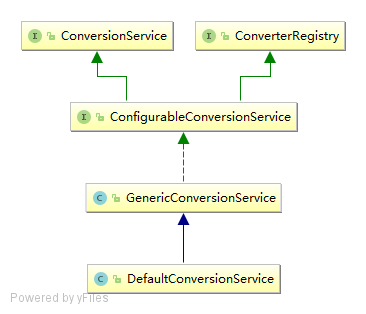
ConversionService类型转换。ConverterRegistry转换器注册、删除、查找功能。ConfigurableConversionService集合了上面两个接口的功能。GenericConversionService实现了 ConfigurableConversionService 接口,Spring 使用的 ConversionService 都是基于这个类的扩展。DefaultConversionService扩展 GenericConversionService,注册了一批默认的转换器。
// 类型转换

public interface ConversionService {

    boolean canConvert(@Nullable Class<?> sourceType, Class<?> targetType);

    boolean canConvert(@Nullable TypeDescriptor sourceType, TypeDescriptor targetType);

    <T> T convert(@Nullable Object source, Class<T> targetType);

    Object convert(@Nullable Object source,

        @Nullable TypeDescriptor sourceType, TypeDescriptor targetType);

}

// 三种类型的转换器的添加和删除

public interface ConverterRegistry {

    void addConverter(Converter<?, ?> converter);

    <S, T> void addConverter(Class<S> sourceType, Class<T> targetType,

        Converter<? super S, ? extends T> converter);

    void addConverter(GenericConverter converter);

    void addConverterFactory(ConverterFactory<?, ?> factory);

    void removeConvertible(Class<?> sourceType, Class<?> targetType);

}

public interface ConfigurableConversionService extends ConversionService, ConverterRegistry {

}
二、DefaultConversionService
ConversionService 有一个默认的实现 DefaultConversionService,这个类在初始化时会添加 Spring 默认的转换器,大部分时候使用这个实现就可以完成所需要的功能。
public DefaultConversionService() {

    addDefaultConverters(this);

}

// DefaultConversionService 唯一的功能就是注册默认的转换器

public static void addDefaultConverters(ConverterRegistry converterRegistry) {

    // 1. 基础的标准转换器

    addScalarConverters(converterRegistry);

    // 2. 集合类型

    addCollectionConverters(converterRegistry);

    // 3. 其他扩展

    converterRegistry.addConverter(new ByteBufferConverter((ConversionService) converterRegistry));

    converterRegistry.addConverter(new StringToTimeZoneConverter());

    converterRegistry.addConverter(new ZoneIdToTimeZoneConverter());

    converterRegistry.addConverter(new ZonedDateTimeToCalendarConverter());

    converterRegistry.addConverter(new ObjectToObjectConverter());

    converterRegistry.addConverter(new IdToEntityConverter((ConversionService) converterRegistry));

    converterRegistry.addConverter(new FallbackObjectToStringConverter());

    converterRegistry.addConverter(new ObjectToOptionalConverter((ConversionService) converterRegistry));

}
三、GenericConversionService
GenericConversionService 实现了 ConversionService, ConverterRegistry 两个接口的功能,上面提到的 DefaultConversionService 就是基于 GenericConversionService 的扩展,只是注册了一些默认的转换器。
3.1 Converters
Converters 是 GenericConversionService 中的内部类,负责所有转换器的添加、删除、查找。转换器有两种:一种指定转换的类型;一种没有指定,属于通用的转换器:
// 全局通用的转换器

private final Set<GenericConverter> globalConverters = new LinkedHashSet<>();

// 指定转换类型的转换器,ConvertiblePair 是 GenericConverter 接口的内部类,包含 sourceType 和 targetType

private final Map<ConvertiblePair, ConvertersForPair> converters = new LinkedHashMap<>(36);
对于三种转换器 Converter、ConverterFactory、GenericConverter 在添加到 Converters 中时都会进行适配成 GenericConverter,方便统一管理。这两个适配器都是 GenericConversionService 的内部类,ConverterAdapter 和 ConverterFactoryAdapter 都实现了 ConditionalGenericConverter 接口。
如果 ConvertiblePair(sourceType 和 targetType) 对应多个转换器则统一存储在 ConvertersForPair 中,ConvertersForPair 也是 GenericConversionService 的内部类,它内部维护了一个 LinkedList converters 数组。
(1) add
public void add(GenericConverter converter) {

    Set<ConvertiblePair> convertibleTypes = converter.getConvertibleTypes();

    // 1. globalConverters,没有指定 convertibleTypes 则根据 ConditionalConverter#matches 匹配

    if (convertibleTypes == null) {

        Assert.state(converter instanceof ConditionalConverter,

                "Only conditional converters may return null convertible types");

        this.globalConverters.add(converter);

    // 2. converters,指定 convertibleTypes

    } else {

        for (ConvertiblePair convertiblePair : convertibleTypes) {

            ConvertersForPair convertersForPair = this.converters.get(convertiblePair);

            if (convertersForPair == null) {

                convertersForPair = new ConvertersForPair();

                this.converters.put(convertiblePair, convertersForPair);

            }

            convertersForPair.add(converter);

        }

    }

}
(2) remove
public void remove(Class<?> sourceType, Class<?> targetType) {

    this.converters.remove(new ConvertiblePair(sourceType, targetType));

}
(3) find
public GenericConverter find(TypeDescriptor sourceType, TypeDescriptor targetType) {

    // 获取 sourceType 类的所有父类和接口

    List<Class<?>> sourceCandidates = getClassHierarchy(sourceType.getType());

    // 获取 targetType 类的所有父类和接口

    List<Class<?>> targetCandidates = getClassHierarchy(targetType.getType());

    for (Class<?> sourceCandidate : sourceCandidates) {

        for (Class<?> targetCandidate : targetCandidates) {

            ConvertiblePair convertiblePair = new ConvertiblePair(sourceCandidate, targetCandidate);

            // 查找指定 sourceType, targetType, convertiblePair 的转换器

            GenericConverter converter = getRegisteredConverter(sourceType, targetType, convertiblePair);

            if (converter != null) {

                return converter;

            }

        }

    }

    return null;

}

private GenericConverter getRegisteredConverter(TypeDescriptor sourceType,

        TypeDescriptor targetType, ConvertiblePair convertiblePair) {

    // 1. 首先在 converters 中查找

    ConvertersForPair convertersForPair = this.converters.get(convertiblePair);

    if (convertersForPair != null) {

        GenericConverter converter = convertersForPair.getConverter(sourceType, targetType);

        if (converter != null) {

            return converter;

        }

    }

    // 2. 再在 globalConverters 中查找

    for (GenericConverter globalConverter : this.globalConverters) {

        if (((ConditionalConverter) globalConverter).matches(sourceType, targetType)) {

            return globalConverter;

        }

    }

    return null;

}
ConvertersForPair 根据 sourceType 和 targetType 查找可用的 GenericConverter
private static class ConvertersForPair {

    private final LinkedList<GenericConverter> converters = new LinkedList<>();

    public void add(GenericConverter converter) {

        this.converters.addFirst(converter);

    }

    // 取第一个匹配到的 GenericConverter

    public GenericConverter getConverter(TypeDescriptor sourceType, TypeDescriptor targetType) {

        for (GenericConverter converter : this.converters) {

            if (!(converter instanceof ConditionalGenericConverter) ||

                    ((ConditionalGenericConverter) converter).matches(sourceType, targetType)) {

                return converter;

            }

        }

        return null;

    }

}
3.2 GenericConversionService
GenericConversionService 内部有两个属性
// Converters 负责所有转换器的添加、删除、查找,上面已经说了

private final Converters converters = new Converters();

// 缓存已经匹配过后 GenericConverter,避免下次还要查找

private final Map<ConverterCacheKey, GenericConverter> converterCache = new ConcurrentReferenceHashMap<>(64);
(1) 添加
// Converter

public void addConverter(Converter<?, ?> converter) {

    ResolvableType[] typeInfo = getRequiredTypeInfo(converter.getClass(), Converter.class);

    addConverter(new ConverterAdapter(converter, typeInfo[0], typeInfo[1]));

}

// ConverterFactory

public void addConverterFactory(ConverterFactory<?, ?> factory) {

    ResolvableType[] typeInfo = getRequiredTypeInfo(factory.getClass(), ConverterFactory.class);

    addConverter(new ConverterFactoryAdapter(factory,

            new ConvertiblePair(typeInfo[0].toClass(), typeInfo[1].toClass())));

}

// GenericConverter

public void addConverter(GenericConverter converter) {

    this.converters.add(converter);

    // 清空 converterCache 缓存中的数据

    invalidateCache();

}
添加的操作非常简单,在添加之前先要解析 Converter 或 ConverterFactory 的源类型和目标类型,由 getRequiredTypeInfo 完成。
private ResolvableType[] getRequiredTypeInfo(Class<?> converterClass, Class<?> genericIfc) {

    ResolvableType resolvableType = ResolvableType.forClass(converterClass).as(genericIfc);

    ResolvableType[] generics = resolvableType.getGenerics();

    if (generics.length < 2) {

        return null;

    }

    Class<?> sourceType = generics[0].resolve();

    Class<?> targetType = generics[1].resolve();

    if (sourceType == null || targetType == null) {

        return null;

    }

    return generics;

}
(2) 查找
protected GenericConverter getConverter(TypeDescriptor sourceType, TypeDescriptor targetType) {

    ConverterCacheKey key = new ConverterCacheKey(sourceType, targetType);

    GenericConverter converter = this.converterCache.get(key);

    if (converter != null) {

        return (converter != NO_MATCH ? converter : null);

    }

    // 1. 委托给 converters 完成

    converter = this.converters.find(sourceType, targetType);

    // 2. 由子类重写,默认判断 sourceType 和 targetType 的类型

    //    如不需要转换(targetType 是 sourceType 的子类),直接返回 source

    if (converter == null) {

        converter = getDefaultConverter(sourceType, targetType);

    }

    if (converter != null) {

        this.converterCache.put(key, converter);

        return converter;

    }

    this.converterCache.put(key, NO_MATCH);

    return null;

}
查找其实也很简单,核心步骤 converters.find() 都委托给 converters 完成了。
(3) canConvert
@Override

public boolean canConvert(@Nullable Class<?> sourceType, Class<?> targetType) {

    Assert.notNull(targetType, "Target type to convert to cannot be null");

    return canConvert((sourceType != null ? TypeDescriptor.valueOf(sourceType) : null),

            TypeDescriptor.valueOf(targetType));

}

@Override

public boolean canConvert(@Nullable TypeDescriptor sourceType, TypeDescriptor targetType) {

    Assert.notNull(targetType, "Target type to convert to cannot be null");

    if (sourceType == null) {

        return true;

    }

    GenericConverter converter = getConverter(sourceType, targetType);

    return (converter != null);

}
(4) convert
@Override

public <T> T convert(@Nullable Object source, Class<T> targetType) {

    Assert.notNull(targetType, "Target type to convert to cannot be null");

    return (T) convert(source, TypeDescriptor.forObject(source), TypeDescriptor.valueOf(targetType));

}

@Override

public Object convert(@Nullable Object source, @Nullable TypeDescriptor sourceType, TypeDescriptor targetType) {

    Assert.notNull(targetType, "Target type to convert to cannot be null");

    // 1. sourceType==null && source==null,返回 null(Optional)

    if (sourceType == null) {

        Assert.isTrue(source == null, "Source must be [null] if source type == [null]");

        return handleResult(null, targetType, convertNullSource(null, targetType));

    }

    // 2.1. getConverter 获取转换器

    GenericConverter converter = getConverter(sourceType, targetType);

    if (converter != null) {

        // 2.2. 执行 converter#convert 方法

        Object result = ConversionUtils.invokeConverter(converter, source, sourceType, targetType);

        return handleResult(sourceType, targetType, result);

    }

    return handleConverterNotFound(source, sourceType, targetType);

}
至于 handleResult 和 handleConverterNotFound 就非常简单了
private Object handleResult(@Nullable TypeDescriptor sourceType, TypeDescriptor targetType,

        @Nullable Object result) {

    if (result == null) {

        assertNotPrimitiveTargetType(sourceType, targetType);

    }

    return result;

}
参考:
- 《IOC源码-conversionService》:https://www.cnblogs.com/jyyzzjl/p/5478620.html
每天用心记录一点点。内容也许不重要,但习惯很重要!
Spring ConversionService 类型转换(二) ConversionService的更多相关文章
- Spring ConversionService 类型转换(一)Converter
Spring ConversionService 类型转换(一)Converter Spring 系列目录(https://www.cnblogs.com/binarylei/p/10198698.h ...
- 6. 抹平差异,统一类型转换服务ConversionService
目录 ✍前言 版本约定 ✍正文 ConverterRegistry ConversionService ConfigurableConversionService GenericConversionS ...
- Spring 学习记录3 ConversionService
ConversionService与Environment的关系 通过之前的学习(Spring 学习记录2 Environment),我已经Environment主要是负责解析properties和p ...
- spring 之 类型转换
在spring中, 提供了至少三种的 类型转换方式: ConversionServiceFactoryBean, FormattingConversionServiceFactoryBean, C ...
- Spring Environment(二)源码分析
Spring Environment(二)源码分析 Spring 系列目录(https://www.cnblogs.com/binarylei/p/10198698.html) Spring Envi ...
- spring boot / cloud (二) 规范响应格式以及统一异常处理
spring boot / cloud (二) 规范响应格式以及统一异常处理 前言 为什么规范响应格式? 我认为,采用预先约定好的数据格式,将返回数据(无论是正常的还是异常的)规范起来,有助于提高团队 ...
- Spring Data(二)查询
Spring Data(二)查询 接着上一篇,我们继续讲解Spring Data查询的策略. 查询的生成 查询的构建机制对于Spring Data的基础是非常有用的.构建的机制将截断前缀find-By ...
- spring boot / cloud (二十) 相同服务,发布不同版本,支撑并行的业务需求
spring boot / cloud (二十) 相同服务,发布不同版本,支撑并行的业务需求 有半年多没有更新了,按照常规剧本,应该会说项目很忙,工作很忙,没空更新,吧啦吧啦,相关的话吧, 但是细想想 ...
- Spring IOC(二)容器初始化
本系列目录: Spring IOC(一)概览 Spring IOC(二)容器初始化 Spring IOC(三)依赖注入 Spring IOC(四)总结 目录 一.ApplicationContext接 ...
随机推荐
- 第三章,DNA序列的进化演变
31.前言 3.1.两个序列间的核苷酸差异 来自同一祖先序列的两条后裔序列,之间的核苷酸的差异随着时间的增加而变大.简单的计量方法,p距离 3.2.核苷酸代替数的估计 3.3.Jukes和Cantor ...
- python 之面向对象
继承粗体文本 标签(空格分隔): 继承 什么是继承: 继承是指类与类之间的关系,是一种什么"是"什么的关系,继承的功能之一就是用来解决代买重用问题,继承是一种创建新类的方式,在py ...
- macaca自动化测试以及配置环境问题
macaca 测试和环境问题 标签(空格分隔): macaca自动化配置环境问题 macaca环境变量配置 基本环境需要准备的东西: JDK的安装及环境配置:(1.8) Node.js的安装及环境配置 ...
- python 函数的定义及传参
函数是一个通用的程序结构部件,是组织好的,可重复使用的,用来实现单一,或相关联功能的代码段. 定义一个简单的函数: >>> def test(a): #创建一个函数,函数名是test ...
- UVA-816.Abbott's Tevenge (BFS + 打印路径)
本题大意:给定一个迷宫,让你判断是否能从给定的起点到达给定的终点,这里起点需要输入起始方向,迷宫的每个顶点也都有行走限制,每个顶点都有特殊的转向约束...具体看题目便知... 本题思路:保存起点和终点 ...
- APIcloud制作APP 微信支付与支付宝支付
首先要在云端绑定相应模块如alipay和wxpay其次编写代码. 配置区域 var cfg = { webName:'',//APP名字 payDebug:true, isUseWxPay:true, ...
- JAVA去重
JAVA中去掉空格 1. String.trim() trim()是去掉首尾空格 2.str.replace(" ", ""); 去掉所有空格,包括首尾.中间 ...
- 解决vue-router嵌套路由(子路由)在history模式下刷新无法渲染页面的问题
一. 异常描述: 本来使用的是vue-router的hash模式,但是hash模式下url需要带“#”符号,不仅看起来不舒服,而且有些场景下是会破坏路由中的"#"(微信分享页面就会 ...
- C++ map中使用erase应该注意到的问题
注意:此程序在win环境下会出现上述描述的问题:在mac环境下第一种方式是正常运行的.Map.erase有3个重载函数: void erase(iterator position); size_typ ...
- Java08-java语法基础(七)构造方法
Java08-java语法基础(七)构造方法 一.构造方法 1.什么是构造方法? 构造方法(类方法)是一个方法名和类名相容的特殊的成员方法. 2.构造方法的作用? 当使用new关键字创建一个对象时,为 ...