
Spring学习总结一——SpringIOC容器一
什么是spring
spring是一个开源的轻量级的应用开发框架,它提供了IOC和AOP应用,可以减少组件之间的耦合度,即
解耦,spring容器可以创建对象并且管理对象之间的关系。
一:实例化spring容器对象
1:导入spring相关支持jar包

2:创建spring容器的配置文件applicationContext.xml,名称可以自己定义
内容如下:
 <?xml version="1.0" encoding="UTF-8"?>

 <beans xmlns="http://www.springframework.org/schema/beans"

     xmlns:xsi="http://www.w3.org/2001/XMLSchema-instance"

     xmlns:context="http://www.springframework.org/schema/context"

     xmlns:jdbc="http://www.springframework.org/schema/jdbc"

     xmlns:jee="http://www.springframework.org/schema/jee"

     xmlns:tx="http://www.springframework.org/schema/tx"

     xmlns:jpa="http://www.springframework.org/schema/data/jpa"

     xmlns:util="http://www.springframework.org/schema/util"

     xmlns:mvc="http://www.springframework.org/schema/mvc"

     xsi:schemaLocation="

         http://www.springframework.org/schema/beans http://www.springframework.org/schema/beans/spring-beans-3.2.xsd

         http://www.springframework.org/schema/context http://www.springframework.org/schema/context/spring-context-3.2.xsd

         http://www.springframework.org/schema/jdbc http://www.springframework.org/schema/jdbc/spring-jdbc-3.2.xsd

         http://www.springframework.org/schema/jee http://www.springframework.org/schema/jee/spring-jee-3.2.xsd

         http://www.springframework.org/schema/tx http://www.springframework.org/schema/tx/spring-tx-3.2.xsd

         http://www.springframework.org/schema/data/jpa http://www.springframework.org/schema/data/jpa/spring-jpa-1.3.xsd

         http://www.springframework.org/schema/util http://www.springframework.org/schema/util/spring-util-3.2.xsd

         http://www.springframework.org/schema/mvc http://www.springframework.org/schema/mvc/spring-mvc-3.2.xsd">

 </beans>
3:创建TestCase测试类,并引入Junit包
 /**

  *

  */

 package com.hlcui.test;

 import org.junit.Test;

 import org.springframework.context.ApplicationContext;

 import org.springframework.context.support.ClassPathXmlApplicationContext;

 /**

  * @author Administrator

  *

  */

 public class TestCase {

     @Test

     /**测试实例化spring容器对象*/

     public void testInitContext() {

         String conf = "applicationContext.xml";

         ApplicationContext ac = new ClassPathXmlApplicationContext(conf);

         System.out.println("spring容器对象:" + ac);

     }

 }
4:运行测试类,得到spring容器对象

二:使用spring容器创建javabean对象
1:在spring容器配置文件applicationcontext.xml中定义创建bean的声明
其中id代表bean的名称,也可以使用name属性名,id在配置文件中是唯一的,不可以重复,它就是给bean取一个名字,
class代表类,默认情况下spring会自动调用类无参构造方法创建对象,factory-method:工厂方法,类会调用工厂方法
常见对象,第三种情况是先通过java.util.GregorianCalendar无参构造创建calendar对象,然后通过调用calendar的
getTime方法创建date对象
 <!-- 使用构造器实例对象 -->

     <bean id="cal1" class="java.util.GregorianCalendar"></bean>

     <!-- 使用静态工厂方式实例对象 -->

     <bean id="cal2" class="java.util.Calendar" factory-method="getInstance"></bean>

     <!-- 使用实例工厂方法创建对象 -->

     <bean id="cal3" class="java.util.GregorianCalendar"></bean>

     <bean id="date1" factory-bean="cal3" factory-method="getTime"></bean>
2:在TestCase测试类中,创建方法测试实例对象
 /** 获取spring容器对象 */

     public ApplicationContext getApplicationContext() {

         String conf = "applicationContext.xml";

         return new ClassPathXmlApplicationContext(conf);

     }
spring容器对象调用getBean()方法,其中第一个参数是bean的id属性值,第二个参数是得到对象的类型
 @Test

     /**测试spring容器使用构造器实例对象*/

     public void testGregorianCalendar() {

         ApplicationContext ac = getApplicationContext();

         Calendar cal1 = ac.getBean("cal1", Calendar.class);

         System.out.println("cal1:" + cal1);

         Calendar cal2 = ac.getBean("cal2", Calendar.class);

         System.out.println("cal2:" + cal2);

         Date date = ac.getBean("date1", Date.class);

         System.out.println("date:" + date);

     }
3:运行测试类,得到结果如下:

三:控制bean的实例化
1:bean对象的创建模式
a.创建ExampleBean对象
 /**

  *

  */

 package com.hlcui.dao;

 /**

  * @author Administrator

  *

  */

 public class ExampleBean {

     public ExampleBean() {

         System.out.println("实例化ExampleBean对象...");

     }

     public void execute() {

         System.out.println("执行ExampleBean方法...");

     }

 }
b.在spring容器配置文件中配置ExampleBean的bean
 <!-- 实例化ExampleBean对象 -->

     <bean id="exampleBean" class="com.hlcui.dao.ExampleBean"></bean>
c.在TestCase测试类中添加测试方法
 @Test

     /**

      * 测试创建Bean对象的模式

      * 比较两次创建的是否是同一个对象,如果为true,则是同一个对象,如果为false则不是

      */

     public void testCreateExampleBean() {

         ApplicationContext ac = getApplicationContext();

         ExampleBean eb1 = ac.getBean("exampleBean", ExampleBean.class);

         ExampleBean eb2 = ac.getBean("exampleBean", ExampleBean.class);

         System.out.println(eb1 == eb2);

     }
运行测试类,结果如下:

可以看出spring容器默认实例化对象是单例模式,只创建一个对象。
d.如果修改配置,在bean中添加属性 scope="prototype"
 <!-- 实例化ExampleBean对象 -->

     <bean id="exampleBean" class="com.hlcui.dao.ExampleBean" scope="prototype"></bean>
在运行测试类结果为:

可以看出创建了两个对象,如果设置scope为原型模式,则不是单例模式。
2:Bean对象的初始化和销毁
a.在ExampleBean类中添加init()方法和destroy()方法
 /**

  *

  */

 package com.hlcui.dao;

 /**

  * @author Administrator

  *

  */

 public class ExampleBean {

     public ExampleBean() {

         System.out.println("实例化ExampleBean对象...");

     }

     public void execute() {

         System.out.println("执行ExampleBean方法...");

     }

     public void init() {

         System.out.println("初始化ExampleBean对象...");

     }

     public void destroy() {

         System.out.println("销毁ExampleBean对象...");

     }

 }
b.在spring配置文件中ExampleBean对应的bean元素上添加属性init-method="init"
 <!-- 实例化ExampleBean对象 -->

     <bean id="exampleBean" class="com.hlcui.dao.ExampleBean"

         init-method="init" scope="prototype"></bean>
c.运行测试方法,结果如下:

可以看出调用了init()方法
如果想在spring容器销毁时调用destroy()方法,只需在配置文件bean元素上添加
属性destroy-method()
 <!-- 实例化ExampleBean对象 -->

     <bean id="exampleBean" class="com.hlcui.dao.ExampleBean"

         init-method="init" destroy-method="destroy" scope="prototype"></bean>
测试方法中,将容器对象强制成AbstractApplicationContext对象,因为该对象定义了close()方法。
注:如果父类中的方法不能够满足业务要求时,可以将父类强制为子类,因为子类中拥有更多的方法。
 @Test

     /**

      * 测试创建Bean对象的模式

      * 比较两次创建的是否是同一个对象,如果为true,则是同一个对象,如果为false则不是

      */

     public void testCreateExampleBean() {

         ApplicationContext ac = getApplicationContext();

         ExampleBean eb1 = ac.getBean("exampleBean", ExampleBean.class);

         ExampleBean eb2 = ac.getBean("exampleBean", ExampleBean.class);

         System.out.println(eb1 == eb2);

         /**将容器对象强制为AbstractApplicationContext对象,因为该对象定义了close方法*/

         AbstractApplicationContext aac = (AbstractApplicationContext) (ac);

         aac.close();

     }
运行测试类,结果如下:
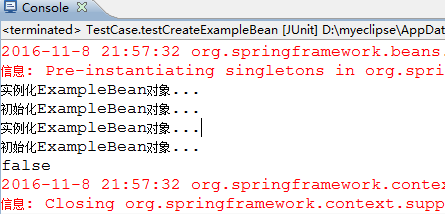
发现并没有调用销毁对象的destroy方法,这里需要注意,destroy方法,只有单例模式
下才会调用,这里是原型模式,所以在配置文件中将scope="prototype" 修改为
scope="singleton"
 <!-- 实例化ExampleBean对象 -->

     <bean id="exampleBean" class="com.hlcui.dao.ExampleBean"

         init-method="init" destroy-method="destroy" scope="singleton"></bean>
这是再运行测试方法:
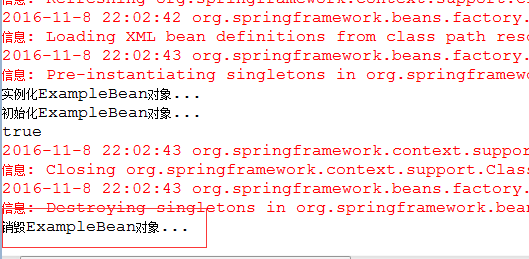
发现在卸载容器时,会调用destroy()方法。
d:如果将default-init-method="init"以及default-destroy-method="destroy"放到顶级的beans元素上,
那么它会作用于所有的bean对象。
3:bean对象的创建时机
a:注释掉一下代码
 @Test

     /**

      * 测试创建Bean对象的模式

      * 比较两次创建的是否是同一个对象,如果为true,则是同一个对象,如果为false则不是

      */

     public void testCreateExampleBean() {

         ApplicationContext ac = getApplicationContext();

         /*ExampleBean eb1 = ac.getBean("exampleBean", ExampleBean.class);

         ExampleBean eb2 = ac.getBean("exampleBean", ExampleBean.class);

         System.out.println(eb1 == eb2);

         *//**将容器对象强制为AbstractApplicationContext对象,因为该对象定义了close方法*//*

         AbstractApplicationContext aac = (AbstractApplicationContext) (ac);

         aac.close();*/

     }
运行测试类:

说明spring容器对象一旦创建,那么bean对象就会创建。
b:将配置文件中bean元素上添加lazy-init="true"属性
     <!-- 实例化ExampleBean对象 -->

     <bean id="exampleBean" class="com.hlcui.dao.ExampleBean"

         lazy-init="true" init-method="init" destroy-method="destroy" scope="singleton"></bean>
那么在运行测试方法时,并没有实例任何对象,说明延迟了实例bean对象。
c:去掉注释中的代码,再运行测试方法时

说明在使用到ExampleBean对象的时候才会实例化对象
如果在顶级元素beans上面添加属性default-lazy-init="true"时,那么默认在实例所有的bean
对象的时候都会延迟。
注:这里有点类似servlet容器,如果在web.xml中配置loadon-start-up时,那么在服务启动时就会创建
servlet对象,等待浏览器客户端的请求,如果不配置,那么只有当第一个请求发送过来的使用,才会创建
servlet对象,而且只会创建一个servlet对象。
<!-- 实例化ExampleBean对象 --><bean id="exampleBean" class="com.hlcui.dao.ExampleBean"init-method="init" destroy-method="destroy" scope="prototype"></bean>
Spring学习总结一——SpringIOC容器一的更多相关文章
- Spring学习总结四——SpringIOC容器四
一:spring容器给bean对象注入属性值 1:注入基本属性值 a. 创建MessageBean类: /** * */ package com.hlcui.dao; /** * @author Ad ...
- Spring学习总结三——SpringIOC容器三
一:spring容器自动装配注入 为了减少xml中配置内容,可以使用自动装配注入,代替setter注入,只需要在 bean对象配置中添加属性autoWire即可,那么在类中就会自动扫描setXXX() ...
- Spring学习总结二——SpringIOC容器二
一:指定bean的依赖关系 例如examplebean对象依赖examplebean1对象,那么在创建examplebean对象之前就 需要先创建examplebean1对象. 1:创建Example ...
- Spring学习总结五——SpringIOC容器五
一:spring组件扫描 可以使用注解的方式,代替在xml配置文件配置bean,可以减少配置文件的书写,只需要在spring容器配置 文件中配置<context:component-scan b ...
- 三、spring成长之路——springIOC容器详解(上)
目录 一.springIOC 一.springIOC 控制反转和依赖注入: 简单的说就是将对象的创建,属性的的设置交给spring容器进行管理,而不再由用户自己创建,当用户需要使用该接口或者类的时 ...
- 四、spring成长之路——springIOC容器(下)
目录 5.spring注解开发(Spring扩展知识) 5.1定义配置类:@Configuration 声明一个类为IOC容器 @Bean定义一个Bean 5.2.按照条件进行注入 5.3.@Impo ...
- Spring学习之旅(二)--容器
在 Spring 应用中,所有的对象都在 Spring 容器(container) 里,容器负责对象的创建.配置.装配并管理它们的整个生命周期. Spring 容器 Spring 容器 并不是只有一个 ...
- Spring学习记录1——IoC容器
IoC容器 1.1 IoC概述 Ioc(Inverse of Control,控制反转)是Spring容器的内核.对于软件来说,即某一接口具体实现类的选择控制权从调用类中移除,转交给第三方决定,即由 ...
- Spring学习一: Ioc容器
Spring 容器: Spring 容器是Spring框架的核心.Spring容器将创建Bean对象实例,把它们联系在一起,配置它们,并管理它们整个生命周期从创建到销毁.Spring 容器通 ...
随机推荐
- 获取父进程ID
本程序主要功能是:获取某程序的ParentProcessID 直接上代码: // parent.cpp (Windows NT/2000) // // This example will show t ...
- ASP.NET MVC- ActionFilter的使用
ActionFilter是穿插在Action执行过程,在Action执行前后提供扩展的功能.ActionFilter用途非常的广,用在页面压缩.缓存.错误处理,登陆验证. ActionFilter的实 ...
- css样式被覆盖解决方案
刚才写zenktodo的时候,通过动态添加class的方式修改一个div的样式,总是不起作用. #navigator { height: 100%; width: 200; position: abs ...
- 习总强调网络安全 ,咱们国产SSL证书必须加快普及速度
上海(2014 年 2 月 27 日)—— 央视新闻联播 27 日报道中央网络安全和信息化领导小组于当日成立的消息及习总在该小组首次会议上的重要讲话.据悉,该小组由习总任小组长,李克强.刘云山任副组长 ...
- unicode 编码在线转换--javascript
// unicode 编码在线转换工具--javascript 本人在网上搜索,看到有使用javascript做unicode编码转换的,感觉很好玩,所以拿来使用的. 这个功能有目前测试了两种: 1) ...
- Mysql的存储过程(以Mysql为例进行讲解)
我们常用的操作数据库语言SQL语句在执行的时候需要要先编译,然后执行,而存储过程(Stored Procedure)是一组为了完成特定功能的SQL语句集,经编译后存储 在数据库中,用户通过指定存 ...
- 使用Python脚本进行域名解析
因为在研究爬虫,所以也了解了下域名解析.要提高爬虫的效率,就需要提高域名解析的效率.我将爬虫记录下的域名作为待解析的域名来测试各域名解析方法的效率.我尝试以下四种方法:1. 单线程依次解析各域名,2. ...
- 【M31】让函数根据一个以上的对象类型来决定如何虚化
1.考虑下面的问题,游戏软件中有角色A,B,角色又可以细化为A1,A2,A3:B1,B2,B3,两类角色之间相互攻击.即A1可以攻击B1,B2,B3,B1可以攻击A1,A2,A3.C++的多态,只根据 ...
- jQuery + jQuery Mobile 实现省市二级下拉列表页面
一.需求: 提供省.市下拉列表,当用户选择省一级下拉列表项后,市下拉列表的各个选项自动变为该省对应的城市列表. 二.效果: 三.实现: 1.省市json数据,来自: http://www.cnblog ...
- C#中正则表达式只取前N个匹配结果
用Regex.Matches方法可以得到同指定正则表达式对应的所有匹配结果.有时,所有匹配结果可能有成千上万个,考虑到性能效率的因素,只需要取出前N个匹配结果.下面的代码演示了做法: 需求:取字符串中 ...