
IfcColumn
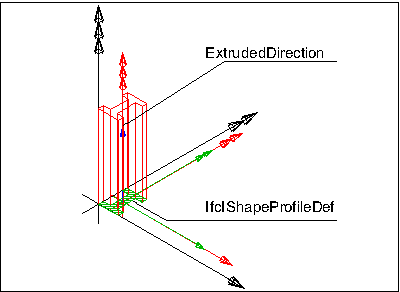
IfcColumn is a vertical structural member which often is aligned with a structural grid intersection. It represents a vertical, or nearly vertical, structural member that transmits, through compression, the weight of the structure above to other structural elements below. It represents such a member from an architectural point of view. It is not required to be load bearing.



| # | Attribute | Type | Cardinality | Description | C |
|---|---|---|---|---|---|
| IfcRoot | |||||
| 1 | GlobalId | IfcGloballyUniqueId | [1:1] | Assignment of a globally unique identifier within the entire software world. | X |
| 2 | OwnerHistory | IfcOwnerHistory | [0:1] | Assignment of the information about the current ownership of that object, including owning actor, application, local identification and information captured about the recent changes of the object,
|
X |
| 3 | Name | IfcLabel | [0:1] | Optional name for use by the participating software systems or users. For some subtypes of IfcRoot the insertion of the Name attribute may be required. This would be enforced by a where rule. | X |
| 4 | Description | IfcText | [0:1] | Optional description, provided for exchanging informative comments. | X |
| IfcObjectDefinition | |||||
| HasAssignments | IfcRelAssigns @RelatedObjects |
S[0:?] | Reference to the relationship objects, that assign (by an association relationship) other subtypes of IfcObject to this object instance. Examples are the association to products, processes, controls, resources or groups. | X | |
| Nests | IfcRelNests @RelatedObjects |
S[0:1] | References to the decomposition relationship being a nesting. It determines that this object definition is a part within an ordered whole/part decomposition relationship. An object occurrence or type can only be part of a single decomposition (to allow hierarchical strutures only). | X | |
| IsNestedBy | IfcRelNests @RelatingObject |
S[0:?] | References to the decomposition relationship being a nesting. It determines that this object definition is the whole within an ordered whole/part decomposition relationship. An object or object type can be nested by several other objects (occurrences or types). | X | |
| HasContext | IfcRelDeclares @RelatedDefinitions |
S[0:1] | References to the context providing context information such as project unit or representation context. It should only be asserted for the uppermost non-spatial object. | X | |
| IsDecomposedBy | IfcRelAggregates @RelatingObject |
S[0:?] | References to the decomposition relationship being an aggregation. It determines that this object definition is whole within an unordered whole/part decomposition relationship. An object definitions can be aggregated by several other objects (occurrences or parts). | X | |
| Decomposes | IfcRelAggregates @RelatedObjects |
S[0:1] | References to the decomposition relationship being an aggregation. It determines that this object definition is a part within an unordered whole/part decomposition relationship. An object definitions can only be part of a single decomposition (to allow hierarchical strutures only). | X | |
| HasAssociations | IfcRelAssociates @RelatedObjects |
S[0:?] | Reference to the relationship objects, that associates external references or other resource definitions to the object.. Examples are the association to library, documentation or classification. | X | |
| IfcObject | |||||
| 5 | ObjectType | IfcLabel | [0:1] | The type denotes a particular type that indicates the object further. The use has to be established at the level of instantiable subtypes. In particular it holds the user defined type, if the enumeration of the attribute PredefinedType is set to USERDEFINED. | X |
| IsDeclaredBy | IfcRelDefinesByObject @RelatedObjects |
S[0:1] | Link to the relationship object pointing to the declaring object that provides the object definitions for this object occurrence. The declaring object has to be part of an object type decomposition. The associated IfcObject, or its subtypes, contains the specific information (as part of a type, or style, definition), that is common to all reflected instances of the declaring IfcObject, or its subtypes. | X | |
| Declares | IfcRelDefinesByObject @RelatingObject |
S[0:?] | Link to the relationship object pointing to the reflected object(s) that receives the object definitions. The reflected object has to be part of an object occurrence decomposition. The associated IfcObject, or its subtypes, provides the specific information (as part of a type, or style, definition), that is common to all reflected instances of the declaring IfcObject, or its subtypes. | X | |
| IsTypedBy | IfcRelDefinesByType @RelatedObjects |
S[0:1] | Set of relationships to the object type that provides the type definitions for this object occurrence. The then associated IfcTypeObject, or its subtypes, contains the specific information (or type, or style), that is common to all instances of IfcObject, or its subtypes, referring to the same type. | X | |
| IsDefinedBy | IfcRelDefinesByProperties @RelatedObjects |
S[0:?] | Set of relationships to property set definitions attached to this object. Those statically or dynamically defined properties contain alphanumeric information content that further defines the object. | X | |
| IfcProduct | |||||
| 6 | ObjectPlacement | IfcObjectPlacement | [0:1] | Placement of the product in space, the placement can either be absolute (relative to the world coordinate system), relative (relative to the object placement of another product), or constraint (e.g. relative to grid axes). It is determined by the various subtypes of IfcObjectPlacement, which includes the axis placement information to determine the transformation for the object coordinate system. | X |
| 7 | Representation | IfcProductRepresentation | [0:1] | Reference to the representations of the product, being either a representation (IfcProductRepresentation) or as a special case a shape representations (IfcProductDefinitionShape). The product definition shape provides for multiple geometric representations of the shape property of the object within the same object coordinate system, defined by the object placement. | X |
| ReferencedBy | IfcRelAssignsToProduct @RelatingProduct |
S[0:?] | Reference to the IfcRelAssignsToProduct relationship, by which other products, processes, controls, resources or actors (as subtypes of IfcObjectDefinition) can be related to this product. | X | |
| IfcElement | |||||
| 8 | Tag | IfcIdentifier | [0:1] | The tag (or label) identifier at the particular instance of a product, e.g. the serial number, or the position number. It is the identifier at the occurrence level. | X |
| FillsVoids | IfcRelFillsElement @RelatedBuildingElement |
S[0:1] | Reference to the IfcRelFillsElement Relationship that puts the element as a filling into the opening created within another element. | X | |
| ConnectedTo | IfcRelConnectsElements @RelatingElement |
S[0:?] | Reference to the element connection relationship. The relationship then refers to the other element to which this element is connected to. | X | |
| IsInterferedByElements | IfcRelInterferesElements @RelatedElement |
S[0:?] | Reference to the interference relationship to indicate the element that is interfered. The relationship, if provided, indicates that this element has an interference with one or many other elements.
|
X | |
| InterferesElements | IfcRelInterferesElements @RelatingElement |
S[0:?] | Reference to the interference relationship to indicate the element that interferes. The relationship, if provided, indicates that this element has an interference with one or many other elements.
|
X | |
| HasProjections | IfcRelProjectsElement @RelatingElement |
S[0:?] | Projection relationship that adds a feature (using a Boolean union) to the IfcBuildingElement. | X | |
| ReferencedInStructures | IfcRelReferencedInSpatialStructure @RelatedElements |
S[0:?] | Reference relationship to the spatial structure element, to which the element is additionally associated. This relationship may not be hierarchical, an element may be referenced by zero, one or many spatial structure elements. | X | |
| HasOpenings | IfcRelVoidsElement @RelatingBuildingElement |
S[0:?] | Reference to the IfcRelVoidsElement relationship that creates an opening in an element. An element can incorporate zero-to-many openings. For each opening, that voids the element, a new relationship IfcRelVoidsElement is generated. | X | |
| IsConnectionRealization | IfcRelConnectsWithRealizingElements @RealizingElements |
S[0:?] | Reference to the connection relationship with realizing element. The relationship, if provided, assigns this element as the realizing element to the connection, which provides the physical manifestation of the connection relationship. | X | |
| ProvidesBoundaries | IfcRelSpaceBoundary @RelatedBuildingElement |
S[0:?] | Reference to space boundaries by virtue of the objectified relationship IfcRelSpaceBoundary. It defines the concept of an element bounding spaces. | X | |
| ConnectedFrom | IfcRelConnectsElements @RelatedElement |
S[0:?] | Reference to the element connection relationship. The relationship then refers to the other element that is connected to this element. | X | |
| ContainedInStructure | IfcRelContainedInSpatialStructure @RelatedElements |
S[0:1] | Containment relationship to the spatial structure element, to which the element is primarily associated. This containment relationship has to be hierachical, i.e. an element may only be assigned directly to zero or one spatial structure. | X | |
| HasCoverings | IfcRelCoversBldgElements @RelatingBuildingElement |
S[0:?] | Reference to IfcCovering by virtue of the objectified relationship IfcRelCoversBldgElement. It defines the concept of an element having coverings associated. | X | |
| IfcBuildingElement | |||||
| IfcColumn | |||||
| 9 | PredefinedType | IfcColumnTypeEnum | [0:1] | Predefined generic type for a column that is specified in an enumeration. There may be a property set given specificly for the predefined types.
|
|
XSD Specification
<xs:element name="IfcColumn" type="ifc:IfcColumn" substitutionGroup="ifc:IfcBuildingElement" nillable="true"/>

 <xs:complexType name="IfcColumn">

  <xs:complexContent>

   <xs:extension base="ifc:IfcBuildingElement">

    <xs:attribute name="PredefinedType" type="ifc:IfcColumnTypeEnum" use="optional"/>

   </xs:extension>

  </xs:complexContent>

 </xs:complexType>
EXPRESS Specification
ENTITY IfcColumn

 SUPERTYPE OF(IfcColumnStandardCase)

 SUBTYPE OF (IfcBuildingElement);

  PredefinedType : OPTIONAL IfcColumnTypeEnum;

 WHERE

  CorrectPredefinedType : NOT(EXISTS(PredefinedType)) OR (PredefinedType <> IfcColumnTypeEnum.USERDEFINED) OR ((PredefinedType = IfcColumnTypeEnum.USERDEFINED) AND EXISTS (SELF\IfcObject.ObjectType));

  CorrectTypeAssigned : (SIZEOF(IsTypedBy) = 0) OR ('IFCSHAREDBLDGELEMENTS.IFCCOLUMNTYPE' IN TYPEOF(SELF\IfcObject.IsTypedBy[1].RelatingType));

END_ENTITY;
IfcColumn的更多相关文章
- osg ifc ifccolumn
- [BIM]BIM中IFC介绍
ifc是干什么的,看下图 ifc架构图 下文转自:http://www.bimcn.org/cjwt/201506053789.html IFC目前是国际通用的BIM标准,现在很多BIM软件都采用其作 ...
- [转]基于WorldWind平台的建筑信息模型在GIS中的应用
1 引言 随着BIM(Building Information Modeling)的不断发展,建筑信息建模的理念贯穿着建筑.结构.施工.运行维护以及拆迁再规划的整个建筑的生命周期,这种理念不仅使得 ...
- IFC数据模式架构的四个概念层详解说明
IFC模型体系结构由四个层次构成,从下到上依次是 资源层(Resource Layer).核心层(Core Layer).交互层(Interoperability Layer).领域层(Domain ...
- IFC2x3标准阅读
参考地址:西北逍遥-IFC数据模式架构的四个概念层详解说明 1.架构图 IFC模型体系结构由四个层次构成,从下到上依次是 资源层(Resource Layer).核心层(Core Layer).交互层 ...
- TeslaManage 运行日志
“TeslaManage.exe”(Win32): 已加载“F:\TeslaManageProject\TeslaManage\x64\Debug\TeslaManage.exe”.已加载符号.“Te ...
- 基于ifc数据的bim模型吊装模拟-1
基于ifc数据的bim模型吊装模拟-1 IfcWallStandardCase IfcColumn
- bim模型中所有IfcWallStandardCase构件
ifc中的IfcWallStandardCase构件 //执行吊装 void startHoisting() { osg::Vec3f vec3f1 = index_node1->getBoun ...
- 获取IFC构件的位置数据、方向数据
获取IFC构件的位置数据.方向数据 std::map<int, shared_ptr<BuildingEntity>> map_buildingEntity = b_model ...
随机推荐
- 一些坑 Java 执行命令行命令 Spring Boot 打包为jar ResourceUtils.getFile 等出现的问题
Java 执行命令行命令 这个没技术含量的东西耗费了我半个多小时 String command = ....; Process process = Runtime.getRuntime().exec( ...
- Lombok 学习资料
Lombok 学习资料 网址 Lombok 官方网站 https://projectlombok.org/features/all Lombok:让JAVA代码更优雅 http://blog.didi ...
- wordpress定时发布失败Missed Schedule解决方法
今天一位客户的网站设置了文章定时发布但却没有发布成功,提示Missed Schedule错误,把所有的插件都暂停了再设置定时发布也不行,那就只能寻找其他的解决方案了.ytkah查看一下有没相关修复插件 ...
- Hive元数据配置到MySql
1 驱动拷贝 1.在/opt/software/mysql-libs目录下解压mysql-connector-java-5.1.27.tar.gz驱动包 [root@hadoop102 mysql-l ...
- Chrome插件安装和用法
XPath Helper 下载插件,拖入chrome://extensions/ 使用方法:ctrl+shift+x呼出 JSONView的使用: 安装JSONView插件 下载插件,拖入chrome ...
- vue 实战
vue 实战 Vue命令行工具vue-cli https://www.cnblogs.com/xiaohuochai/p/7277771.html https://github.com/ymblog/ ...
- ansible 批量部署准备工作
Ansible:自动化运维工具,基于Python开发 功能{ 批量系统配置 批量程序部署 批量运行命令等等 } 准备工作: 一.操作主机安装epel源 和 ansible工具 yum -y insta ...
- JS的ES6的async
1.async概念: 真在意义上解决异步回调函数的问题(由于promise的then方法中还是使用回调函数,而async中await并没有使用回调函数真正意义上解决回调函数),同步流程表达异步操作. ...
- 一个bug程序员的入园
大家好,我叫dg是一个只写bug的程序员.当然只写bug也是有好处的,那就是踩过的坑多了,摔的跟斗多了,并且没有被摔死,勇敢的活了下来,练就了一身钢筋铁骨.哈哈,开个玩笑.但是猜的坑多了就知道了哪里有 ...
- 关于window.getSelection
window.getSelection(),返回一个Selection对象,表示用户选择的文本范围或光标的当前位置. selection对象先来看下面两个selection结果:selection对象 ...