
MyBatis实现模糊查询的几种方式
在学习MyBatis过程中想实现模糊查询,可惜失败了。后来上百度上查了一下,算是解决了。记录一下MyBatis实现模糊查询的几种方式。
数据库表名为test_student,初始化了几条记录,如图:

起初我在MyBatis的mapper文件中是这样写的:
    <select id="searchStudents" resultType="com.example.entity.StudentEntity"

        parameterType="com.example.entity.StudentEntity">

        SELECT * FROM test_student

        <where>

            <if test="age != null and age != '' and compare != null and compare != ''">

                age

                ${compare}

                #{age}

            </if>

            <if test="name != null and name != ''">

                AND name LIKE '%#{name}%'

            </if>

            <if test="address != null and address != ''">

                AND address LIKE '%#{address}%'

            </if>

        </where>

        ORDER BY id

    </select>
写完后自我感觉良好,很开心的就去跑程序了,结果当然是报错了:
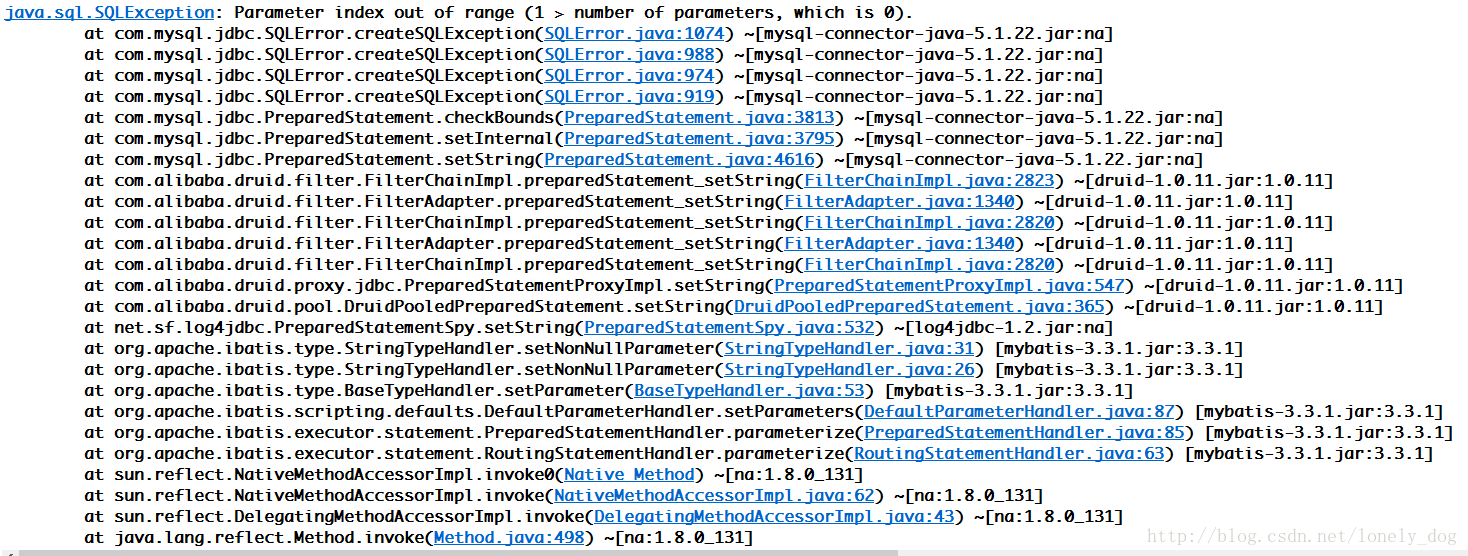
经百度得知,这么写经MyBatis转换后(‘%#{name}%’)会变为(‘%?%’),而(‘%?%’)会被看作是一个字符串,所以Java代码在执行找不到用于匹配参数的 ‘?’ ,然后就报错了。
解决方法
1.用${…}代替#{…}
   <select id="searchStudents" resultType="com.example.entity.StudentEntity"

        parameterType="com.example.entity.StudentEntity">

        SELECT * FROM test_student

        <where>

            <if test="age != null and age != '' and compare != null and compare != ''">

                age

                ${compare}

                #{age}

            </if>

            <if test="name != null and name != ''">

                AND name LIKE '%${name}%'

            </if>

            <if test="address != null and address != ''">

                AND address LIKE '%${address}%'

            </if>

        </where>

        ORDER BY id

    </select>
查询结果如下图:

注:使用${…}不能有效防止SQL注入,所以这种方式虽然简单但是不推荐使用!!!
2.把’%#{name}%’改为”%”#{name}”%”
   <select id="searchStudents" resultType="com.example.entity.StudentEntity"

        parameterType="com.example.entity.StudentEntity">

        SELECT * FROM test_student

        <where>

            <if test="age != null and age != '' and compare != null and compare != ''">

                age

                ${compare}

                #{age}

            </if>

            <if test="name != null and name != ''">

                AND name LIKE "%"#{name}"%"

            </if>

            <if test="address != null and address != ''">

                AND address LIKE "%"#{address}"%"

            </if>

        </where>

        ORDER BY id

    </select>
查询结果:

3.使用sql中的字符串拼接函数
   <select id="searchStudents" resultType="com.example.entity.StudentEntity"

        parameterType="com.example.entity.StudentEntity">

        SELECT * FROM test_student

        <where>

            <if test="age != null and age != '' and compare != null and compare != ''">

                age

                ${compare}

                #{age}

            </if>

            <if test="name != null and name != ''">

                AND name LIKE CONCAT(CONCAT('%',#{name},'%'))

            </if>

            <if test="address != null and address != ''">

                AND address LIKE CONCAT(CONCAT('%',#{address},'%'))

            </if>

        </where>

        ORDER BY id

    </select>
查询结果:

4.使用标签
   <select id="searchStudents" resultType="com.example.entity.StudentEntity"

        parameterType="com.example.entity.StudentEntity">

        <bind name="pattern1" value="'%' + _parameter.name + '%'" />

        <bind name="pattern2" value="'%' + _parameter.address + '%'" />

        SELECT * FROM test_student

        <where>

            <if test="age != null and age != '' and compare != null and compare != ''">

                age

                ${compare}

                #{age}

            </if>

            <if test="name != null and name != ''">

                AND name LIKE #{pattern1}

            </if>

            <if test="address != null and address != ''">

                AND address LIKE #{pattern2}

            </if>

        </where>

        ORDER BY id

    </select>
查询结果:

5.在Java代码中拼接字符串
这个方法没试过,就不贴代码和结果了。
————2017.07.03
MyBatis实现模糊查询的几种方式的更多相关文章
- Mybatis的select查询的三种方式
1.首先建立一个测试的dao public interface IStudentDao { // 根据姓名查询 List<Student> selectStudentsByName(Str ...
- 五 Mybatis一对一关联查询的两种方式(基于resultType&基于resultMap)
关联查询: 一个用户对应多个订单,一个订单只有一个用户 订单关联用户:两种方式 一:基于resultTYpe,一个与表关系一样的pojo实现 主表订单,从表用户 首先要有一个与关联查询表关系一样的po ...
- 【mysql模糊查询的几种方式】
select * from activyty_code where acname like '%yj%' 1:%:表示任意0个或多个字符.可匹配任意类型和长度的字符,有些情况下若是中文,请使用两个百分 ...
- JDBC模糊查询的4种方式
1:%放在占位符中 parameters.add("%"+familyMemberQueryBean.getFullName()+"%" ...
- java之mybatis之模糊查询
1.在 mybatis 中,模糊查询可以有以下方式 (1).第一种,直接将封装好的条件传给 sql 语句 <select id="findByName" parameterT ...
- MyBatis开发Dao层的两种方式(原始Dao层开发)
本文将介绍使用框架mybatis开发原始Dao层来对一个对数据库进行增删改查的案例. Mapper动态代理开发Dao层请阅读我的下一篇博客:MyBatis开发Dao层的两种方式(Mapper动态代理方 ...
- MyBatis开发Dao层的两种方式(Mapper动态代理方式)
MyBatis开发原始Dao层请阅读我的上一篇博客:MyBatis开发Dao层的两种方式(原始Dao层开发) 接上一篇博客继续介绍MyBatis开发Dao层的第二种方式:Mapper动态代理方式 Ma ...
- MyBatis中模糊查询
接口 // 模糊查询 List<User> getUserLike(String value); Mapper.xml文件 <!-- 模糊查询 --> <select i ...
- mybatis中批量插入的两种方式(高效插入)
MyBatis简介 MyBatis是一个支持普通SQL查询,存储过程和高级映射的优秀持久层框架.MyBatis消除了几乎所有的JDBC代码和参数的手工设置以及对结果集的检索封装.MyBatis可以使用 ...
随机推荐
- Java并发编程笔记之Timer源码分析
timer在JDK里面,是很早的一个API了.具有延时的,并具有周期性的任务,在newScheduledThreadPool出来之前我们一般会用Timer和TimerTask来做,但是Timer存在一 ...
- DNS服务器能遭受到的DDNS攻击类型
每个网站都有可能会遭受到攻击,现在的互联网服务器遭受的最多的是DDOS攻击,本文总结了一些DNS服务器会遇到的DDOS攻击类型,以及相应的预防措施. [1]的作者将DDOS的攻击分为三种类型: 大数据 ...
- php防止刷流量攻击
<?php //查询禁止IP $ip =$_SERVER['REMOTE_ADDR']; $fileht=".htaccess2"; if(!file_exists($fil ...
- JavaScript字符串常用方法
toUpperCase():把一个字符串全部变为大写 toLowerCase():把一个字符串全部变为小写 indexOf():会搜索制定字符串出现的位置,有返回索引,没有返回-1 substring ...
- Linux中ansible批量管理软件部署及剧本编写
服务器版本信息: Centos6.9 [root@db02 ~]# uname -a Linux db02 2.6.32-696.el6.x86_64 #1 SMP Tue Mar 21 19:29: ...
- asp.net前台页面与后台之间传值,
在前台用 js 获取到的 “值 ”需要传到后台,在后台调用, ****** 原有传入的 “值 ” 不要被覆盖 1.最简单的在页面写一个隐藏表单,隐藏标签,把获取到的值赋给隐藏标签之后 ...
- [android] 手机卫士欢迎页检测更新
客户端:去服务器获取最新的版本信息 服务器端: 版本信息,最新的版本2.0 最新版本的下载地址:http://xxxxxxxx/mobilesafe2.0.apk 版本的描述信息 客户端如果不升级新版 ...
- (4)Jquery1.8.3快速入门_基本选择器
一.Jquery选择器: 基本选择器: 1.id #id 根据元素的id获取的唯一元素. 2.class ...
- C# 填充Excel
1.添加引用 Microsoft.Office.Interop.Excel; 2.使用命名空间 using Microsoft.Office.Interop.Excel; 3.填充EXCEL单元格方法 ...
- Fundebug前端JavaScript插件更新至1.2.0
摘要: Fundebug的前端JavaScript错误监控插件更新至1.2.0:支持监控WebSocket连接错误:修复了监控unhandledrejection错误的BUG,即未用catch处理的P ...