
springIOC源码接口分析(六):ResourceLoader
参考博客: https://www.cnblogs.com/jixp/articles/10702486.html
一 定义方法
Spring提供了ResourceLoader接口用于实现不同的Resource加载策略,即将不同Resource实例的创建交给ResourceLoader来计算.
接口提供了两个方法和一个字符串常量:
    /**  class path: "classpath:". */

    String CLASSPATH_URL_PREFIX = ResourceUtils.CLASSPATH_URL_PREFIX;

    /**

     * 通过提供的资源location参数获取Resource实例,该实例可以是ClasPathResource、FileSystemResource、UrlResource等,

     * 但是该方法返回的Resource实例并不保证该Resource一定是存在的,需要调用exists方法判断

     */

    Resource getResource(String location);

    /**

     * 此方法将ClassLoader暴露出来,可以直接调用getClassLoader()方法获得ClassLoader,而不是依赖于Thread Context ClassLoader,

     * 因为有些时候ResourceLoader内部使用自定义的ClassLoader

     */

    @Nullable

    ClassLoader getClassLoader();
二 ResourcePatternResolver
在实际开发中经常会遇到需要通过某种匹配方式查找资源,比如通配符,而且可能有多个资源匹配这种模式,在Spring中提供了ResourcePatternResolver接口用于实现这种需求并实现了ResourceLoader接口:
接口定义了一个方法和一个正则字符串常量:
    /**

     * 用于查找匹配classpath下所有的匹配Resource

     */

    String CLASSPATH_ALL_URL_PREFIX = "classpath*:";

    /**

     * 用于根据传入的locationPattern查找和其匹配的Resource实例,并以数组的形式返回,在返回的数组中不可以存在

     * 相同的Resource实例

     */

    Resource[] getResources(String locationPattern) throws IOException;
三 实现类
ResourceLoader接口的实现类在spring中有DefaultResourceLoader、FileSystemResourceLoader和ServletContextResourceLoader等.
ResourcePatternResolver接口的实现类有PathMatchingResourcePatternResolver。并且ApplicationContext接口也继承了ResourcePatternResolver,
在实现中,ApplicationContext的实现类会将逻辑代理给相关的单独实现类,如PathMatchingResourcePatternResolver等。在ApplicationContext中ResourceLoaderAware接口,可以将ResourceLoader(自身)注入到实现该接口的Bean中,
在Bean中可以将其强制转换成ResourcePatternResolver接口使用(为了安全,强转前需要判断)。
1 DefaultResourceLoader
DefaultResourceLoader是ResourceLoader的默认实现,AbstractApplicationContext继承该类。主要是实现了ResourceLoader的getResource()方法:
    @Override

    public Resource getResource(String location) {

        Assert.notNull(location, "Location must not be null");

        /**

         * protocolResolvers:是类的成员变量,ProtocolResolver类的Set集合

         * ProtocolResolver是解析location的自定义拓展类接口,只定义了resolve解析方法,根据传入的location字符串,解析出对应的Resource资源

         * 我们可以自定义一个类实现ProtocolResolver接口,然后实现该resolve方法,就可以解析特定的location得到Resoure。

         * 这一步主要是看是否有自定义的协议解析可以解析出Resource对象,如果有就返回这个实例

         */

        for (ProtocolResolver protocolResolver : this.protocolResolvers) {

            Resource resource = protocolResolver.resolve(location, this);

            if (resource != null) {

                return resource;

            }

        }

        //返回ClassPathContextResource实例

        if (location.startsWith("/")) {

            return getResourceByPath(location);

        }

        /**

         * 如果是 classpath开头,返回ClassPathResource实例

         * 开发中一般在这返回配置文件实例,比如 new ClassPathXmlApplicationContext("classpath:spring.xml");

         */

        else if (location.startsWith(CLASSPATH_URL_PREFIX)) {

            return new ClassPathResource(location.substring(CLASSPATH_URL_PREFIX.length()), getClassLoader());

        }

        else {

            try {

                /**

                 * 尝试创建UrlResource,如果当前location没有定义URL的协议(即以”file:”、”zip:”等开头,比如使用相对路径”resources/META-INF/MENIFEST.MF),

                 * 则创建UrlResource会抛出MalformedURLException,

                 * 此时调用getResourceByPath()方法获取Resource实例

                 */

                URL url = new URL(location);

                return (ResourceUtils.isFileURL(url) ? new FileUrlResource(url) : new UrlResource(url));

            }

            catch (MalformedURLException ex) {

                // No URL -> resolve as resource path.

                return getResourceByPath(location);

            }

        }

    }
2 FileSystemResourceLoader
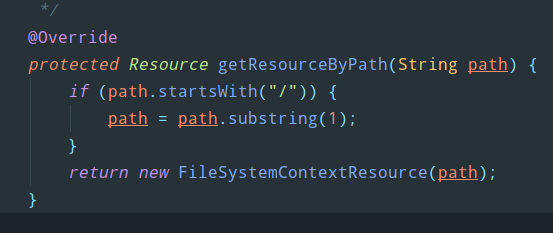
FileSystemResourceLoader继承了DefaultResourceLoader,覆写了getResourceByPath()方法,
DefaultResourceLoader的getResourceByPath方法返回的是ClassPathContextResource实例,而返回的是FileSystemContextResource实例.
3 ServletContextResourceLoader
ServletContextResourceLoader类也继承自DefaultResourceLoader,和FileSystemResourceLoader一样,它的getResource方法的实现逻辑和DefaultResourceLoader相同,
不同的是它实现了自己的getResourceByPath方法,即当UrlResource创建失败时,它会使用ServletContextResource实例:

4 PathMatchingResourcePatternResolver
PathMatchingResourcePatternResolver类实现了ResourcePatternResolver接口,它包含了对ResourceLoader接口的引用,在对继承自ResourceLoader接口的方法的实现会代理给该引用,
同时在getResources()方法实现中,当找到一个匹配的资源location时,可以使用该引用解析成Resource实例。默认使用DefaultResourceLoader类,用户可以使用构造函数传入
自定义的ResourceLoader。
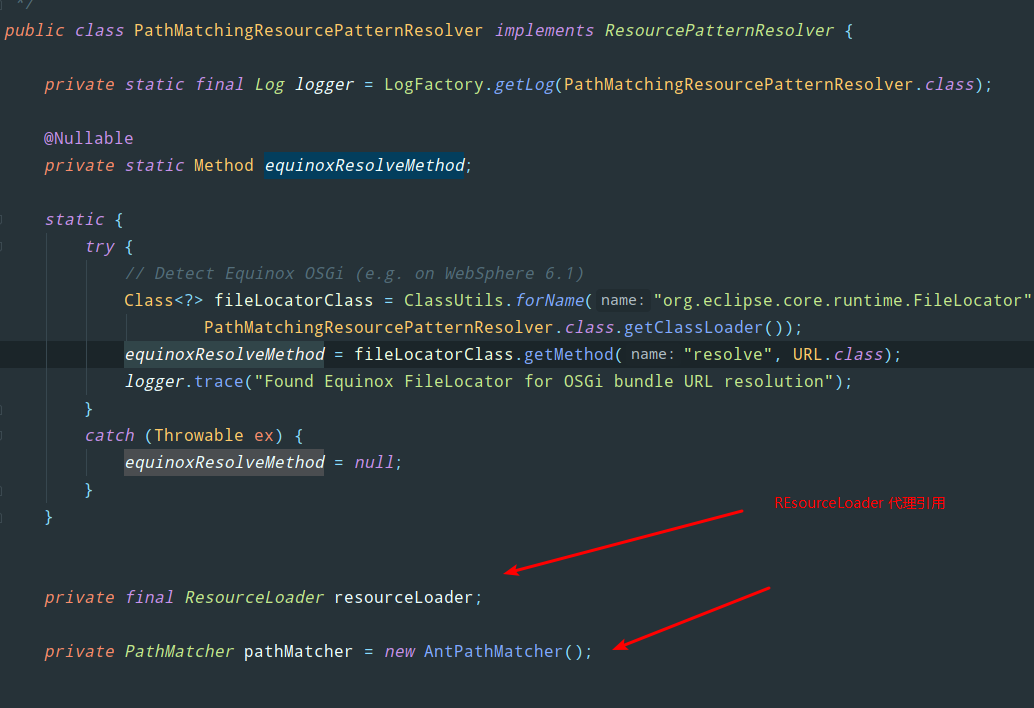

PathMatchingResourcePatternResolver还包含了一个对PathMatcher接口的引用,该接口基于路径字符串实现匹配处理,如判断一个路径字符串是否包含通配符(’*’、’?’),
判断给定的path是否匹配给定的pattern等。Spring提供了AntPathMatcher对PathMatcher的默认实现,表达该PathMatcher是采用Ant风格的实现。
其中PathMatcher的接口定义如下:
    //判断path是否是一个pattern,即判断path是否包含通配符

    boolean isPattern(String path);

    //判断给定path是否可以匹配给定pattern

    boolean match(String pattern, String path);

    //判断给定path是否可以匹配给定pattern,该方法不同于match,它只是做部分匹配,即当发现给定path匹配给定path的可能性比较大时,即返回true。

    // 可以先使用它确定需要全面搜索的范围,然后在这个比较小的范围内再找出所有的资源文件全路径做匹配运算

    boolean matchStart(String pattern, String path);

    //去除path中和pattern相同的字符串,只保留匹配的字符串。

    // 比如如果pattern为”/doc/csv/*.htm”,而path为”/doc/csv/commit.htm”,则该方法的返回值为commit.htm。

    //该方法默认pattern和path已经匹配成功,因而算法比较简单

    String extractPathWithinPattern(String pattern, String path);
PathMatchingResourcePatternResolver中getResources方法的实现:
    @Override

    public Resource[] getResources(String locationPattern) throws IOException {

        Assert.notNull(locationPattern, "Location pattern must not be null");

        //判断是否是classpath*: 开头的位置,表示需要匹配多个,即不同目录下相同名字的文件

        if (locationPattern.startsWith(CLASSPATH_ALL_URL_PREFIX)) { //

            // 判断是否包含通配符

            if (getPathMatcher().isPattern(locationPattern.substring(CLASSPATH_ALL_URL_PREFIX.length()))) {

                // 查找所有匹配名称的resource

                return findPathMatchingResources(locationPattern);

            }

            else {

                //查找所有该名称的resource,不同目录里的

                return findAllClassPathResources(locationPattern.substring(CLASSPATH_ALL_URL_PREFIX.length()));

            }

        }

        else {

            //获取截取前缀长度

            int prefixEnd = (locationPattern.startsWith("war:") ? locationPattern.indexOf("*/") + 1 :

                    locationPattern.indexOf(':') + 1);

            if (getPathMatcher().isPattern(locationPattern.substring(prefixEnd))) {

                // 查找所有匹配名称的resource

                return findPathMatchingResources(locationPattern);

            }

            else {

                //直接获取一个resource

                return new Resource[] {getResourceLoader().getResource(locationPattern)};

            }

        }

    }
springIOC源码接口分析(六):ResourceLoader的更多相关文章
- springIOC源码接口分析(九):Environment
先贴一下接口继承关系图,spring容器启动的时候会初始化环境,所以此接口相关接口非常有必要进行了解: 一 PropertyResolver接口 Environment继承了该接口,PropertyR ...
- springIOC源码接口分析(三):ApplicationContext
一 新增方法 主要都是获取容器基本信息的一些接口,比如获取名称,id和启动时间戳,获取AutowireCapableBeanFactory等接口 二 继承接口 ApplicationContext继承 ...
- springIOC源码接口分析(八):AutowireCapableBeanFactory
参考博文: https://blog.csdn.net/f641385712/article/details/88651128 一 接口规范 从宏观上看,AutowireCapableBeanFact ...
- springIOC源码接口分析(十一):ConfigurableApplicationContext
一 实现接口 关系图: ConfigurableApplicationContext接口实现了三个接口,ApplicationContext, Lifecycle, Closeable, Applic ...
- springIOC源码接口分析(七):ApplicationEventPublisher
一 定义方法 此接口主要是封装事件发布功能的接口,定义了两个方法: /** * 通知应用所有已注册且匹配的监听器此ApplicationEvent */ default void publishEve ...
- springIOC源码接口分析(五):ListableBeanFactory
一 继承关系 该接口是对BeanFactory的扩展,允许预加载bean定义的BeanFactory可以实现此接口 其目的在于使实现它的BeanFactory能够枚举所有的Bean 该接口不支持分层结 ...
- springIOC源码接口分析(四):MessageSource
一 定义方法 MessageSource接口用于支持信息的国际化和包含参数的信息的替换 这个接口定义了三个方法: public interface MessageSource { /** * 解析co ...
- springIOC源码接口分析(二):ConfigurableBeanFactory
一 继承功能 1 SingletonBeanRegistry接口 此接口是针对Spring中的单例Bean设计的.提供了统一访问单例Bean的功能,类中定义了以下方法: 2 HierarchicalB ...
- springIOC源码接口分析(一):BeanFactory
一 应用场景 BeanFactory接口定义了IOC容器的最基本功能,提供了容器应该具有的功能规范,所有的容器都应该实现这个接口 BeanFactory设计了getBean方法用来获取容器中的Bean ...
随机推荐
- 我的 2019 年 Python 文章榜单
现在是 2020 年的第一天,我相信从昨天开始,各位的信息流里肯定充斥了各式各样的年度盘点/回顾/总结/记录之类的内容.虽然来得稍晚了,但我还是想给诸位送上这一篇文章. 我将在本文中列出自己于 201 ...
- Elasticsearch 节点磁盘使用率过高,导致ES集群索引无副本
目录 一.问题 二.问题的原因 三.问题解决的办法 1. 扩大磁盘 2. 删除部分历史索引 3. 更改es设置 四.扩展 一.问题 最近在查看线上的 es,发现最近2天的索引没有副本,集群的状态也是为 ...
- JVM性能优化系列-(1) Java内存区域
1. Java内存区域 1.1 运行时数据区 Java虚拟机在执行Java程序的过程中会把它所管理的内存划分为若干个不同的数据区域.主要包括:程序计数器.虚拟机栈.本地方法栈.Java堆.方法区(运 ...
- 「CH2101」可达性统计 解题报告
CH2101 可达性统计 描述 给定一张N个点M条边的有向无环图,分别统计从每个点出发能够到达的点的数量.N,M≤30000. 输入格式 第一行两个整数N,M,接下来M行每行两个整数x,y,表示从x到 ...
- linux installer os的驱动更新
installer os的驱动更新 linux系统可以简单的分为installer OS与运行时的OS,安装阶段识别不到硬件设备大概率因为installers OS版本较低,没有驱动来识别新的硬件,可 ...
- PHP 转化 Excel导入时间
$fixation = 25569; $fixationT = 24 * 60 * 60; $date = gmdate('Y-m-d H:i:s', ('excel导入的时间'- $fixation ...
- Django之models高级进阶技术详解
目录 一.常用字段 1.AutoField 2.IntegerField 3.CharField 4.自定义及使用char 5.DateField 6.DateTimeField 二.字段合集 三.字 ...
- 看完这篇HTTP,跟面试官扯皮就没问题了
我是一名程序员,我的主要编程语言是 Java,我更是一名 Web 开发人员,所以我必须要了解 HTTP,所以本篇文章就来带你从 HTTP 入门到进阶,看完让你有一种恍然大悟.醍醐灌顶的感觉. 最初在有 ...
- 简简单单之Linux命令入门
show me the code and talk to me,做的出来更要说的明白 GitHub 项目JavaHouse同步收录 我是布尔bl,你的支持是我分享的动力! 引入 作为一名合格的后端开发 ...
- MySQL 物理备份工具-xtrabackup
安装 wget -O /etc/yum.repos.d/epel.repo http://mirrors.aliyun.com/repo/epel-7.repo yum -y install perl ...