
Spring核心原理之IoC容器初体验(2)
本文节选自《Spring 5核心原理》
1 IoC与DI基本概念
IoC(Inversion of Control,控制反转)就是把原来代码里需要实现的对象创建、依赖,反转给容器来帮忙实现。我们需要创建一个容器,同时需要一种描述来让容器知道要创建的对象与对象的关系。这个描述最具体的表现就是我们所看到的配置文件。
DI(Dependency Injection,依赖注入)就是指对象被动接受依赖类而不自己主动去找,换句话说,就是指对象不是从容器中查找它依赖的类,而是在容器实例化对象时主动将它依赖的类注入给它。
我们先从自己设计的视角来考虑。
(1)对象与对象的关系怎么表示?
可以用XML、properties等语义化配置文件表示。
(2)描述对象关系的文件存放在哪里?
可能是classpath、filesystem或者URL网络资源、servletContext等。
(3)不同的配置文件对对象的描述不一样,如标准的、自定义声明式的,如何统一?
在内部需要有一个统一的关于对象的定义,所有外部的描述都必须转化成统一的描述定义。
(4)如何对不同的配置文件进行解析?
需要对不同的配置文件语法采用不同的解析器。
2 Spring核心容器类图
2.1. BeanFactory
Spring中Bean的创建是典型的工厂模式,这一系列的Bean工厂,即IoC容器,为开发者管理对象之间的依赖关系提供了很多便利和基础服务,在Spring中有许多IoC容器的实现供用户选择,其相互关系如下图所示。
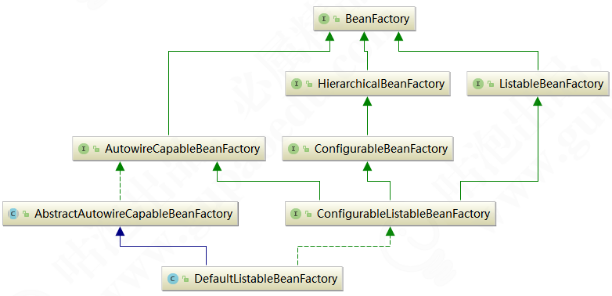
其中,BeanFactory作为最顶层的一个接口类,定义了IoC容器的基本功能规范,BeanFactory有三个重要的子类:ListableBeanFactory、HierarchicalBeanFactory和AutowireCapableBeanFactory。但是从类图中我们可以发现最终的默认实现类是DefaultListableBeanFactory,它实现了所有的接口。那么为何要定义这么多层次的接口呢?查阅这些接口的源码和说明发现,每个接口都有它的使用场合,主要是为了区分在Spring内部操作过程中对象的传递和转化,对对象的数据访问所做的限制。例如,ListableBeanFactory接口表示这些Bean可列表化,而HierarchicalBeanFactory表示这些Bean是有继承关系的,也就是每个Bean可能有父Bean。AutowireCapableBeanFactory接口定义Bean的自动装配规则。这三个接口共同定义了Bean的集合、Bean之间的关系及Bean行为。最基本的IoC容器接口是BeanFactory,来看一下它的源码:
public interface BeanFactory {

   //对FactoryBean的转义定义,因为如果使用Bean的名字检索FactoryBean得到的对象是工厂生成的对象

   //如果需要得到工厂本身,需要转义

   String FACTORY_BEAN_PREFIX = "&";

   //根据Bean的名字,获取在IoC容器中得到的Bean实例

   Object getBean(String name) throws BeansException;

   //根据Bean的名字和Class类型来得到Bean实例,增加了类型安全验证机制

   <T> T getBean(String name, @Nullable Class<T> requiredType) throws BeansException;

   Object getBean(String name, Object... args) throws BeansException;

    <T> T getBean(Class<T> requiredType) throws BeansException;

    <T> T getBean(Class<T> requiredType, Object... args) throws BeansException;

   //提供对Bean的检索,看看在IoC容器中是否有这个名字的Bean

   boolean containsBean(String name);

   //根据Bean的名字得到Bean实例,同时判断这个Bean是不是单例

   boolean isSingleton(String name) throws NoSuchBeanDefinitionException;

   boolean isPrototype(String name) throws NoSuchBeanDefinitionException;

   boolean isTypeMatch(String name, ResolvableType typeToMatch) throws

 NoSuchBeanDefinitionException;

   boolean isTypeMatch(String name, @Nullable Class<?> typeToMatch) throws

 NoSuchBeanDefinitionException;

   //得到Bean实例的Class类型

   @Nullable

   Class<?> getType(String name) throws NoSuchBeanDefinitionException;

    //得到Bean的别名,如果根据别名检索,那么其原名也会被检索出来

   String[] getAliases(String name);

}
在BeanFactory里只对IoC容器的基本行为做了定义,根本不关心你的Bean是如何定义及怎样加载的。正如我们只关心能从工厂里得到什么产品,不关心工厂是怎么生产这些产品的。
要知道工厂是如何产生对象的,我们需要看具体的IoC容器实现,Spring提供了许多IoC容器实现,比如GenericApplicationContext、ClasspathXmlApplicationContext等。
ApplicationContext是Spring提供的一个高级的IoC容器,它除了能够提供IoC容器的基本功能,还为用户提供了以下附加服务。
(1)支持信息源,可以实现国际化(实现MessageSource接口)。
(2)访问资源(实现ResourcePatternResolver接口,后面章节会讲到)。
(3)支持应用事件(实现ApplicationEventPublisher接口)。
2.2. BeanDefinition
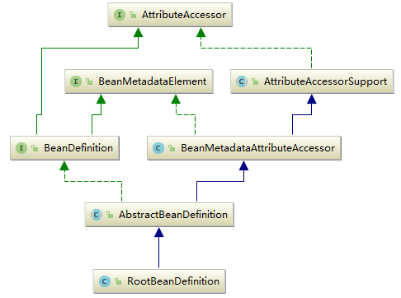
BeanDefinition 用于保存 Bean 的相关信息,包括属性、构造方法参数、依赖的 Bean 名称及是否单例、延迟加载等,它相当于实例化 Bean 的原材料,Spring 就是根据 BeanDefinition 中的信息实例化 Bean。,其继承体系如下图所示。
2.3. BeanDefinitionReader
Bean的解析过程非常复杂,功能被分得很细,因为这里需要被扩展的地方很多,必须保证足够的灵活性,以应对可能的变化。Bean的解析主要就是对Spring配置文件的解析。这个解析过程主要通过BeanDefinitionReader来完成,看看Spring中BeanDefinitionReader的类结构图,如下图所示。

通过前面的分析,我们对Spring框架体系有了一个基本的宏观了解,希望“小伙伴们”好好理解,最好在脑海中形成画面,为以后的学习打下良好的基础。
3 基于Web的IoC容器初体验
我们还是从大家最熟悉的DispatcherServlet开始,最先想到的应该是DispatcherServlet的init()方法。我们在DispatherServlet中并没有找到init()方法,经过探索,在其父类HttpServletBean中找到了,代码如下:
@Override

public final void init() throws ServletException {

   if (logger.isDebugEnabled()) {

      logger.debug("Initializing servlet '" + getServletName() + "'");

   }

   PropertyValues pvs = new ServletConfigPropertyValues(getServletConfig(),

 this.requiredProperties);

   if (!pvs.isEmpty()) {

      try {

         //定位资源

         BeanWrapper bw = PropertyAccessorFactory.forBeanPropertyAccess(this);

         //加载配置信息

         ResourceLoader resourceLoader = new ServletContextResourceLoader(getServletContext());

         bw.registerCustomEditor(Resource.class, new ResourceEditor(resourceLoader,

getEnvironment()));

         initBeanWrapper(bw);

         bw.setPropertyValues(pvs, true);

      }

      catch (BeansException ex) {

         if (logger.isErrorEnabled()) {

            logger.error("Failed to set bean properties on servlet '" + getServletName() + "'", ex);

         }

         throw ex;

      }

   }

   initServletBean();

   if (logger.isDebugEnabled()) {

      logger.debug("Servlet '" + getServletName() + "' configured successfully");

   }

}
在init()方法中,真正完成初始化容器动作的代码其实在initServletBean()方法中,我们继续跟进:
@Override

protected final void initServletBean() throws ServletException {

   getServletContext().log("Initializing Spring FrameworkServlet '" + getServletName() + "'");

   if (this.logger.isInfoEnabled()) {

      this.logger.info("FrameworkServlet '" + getServletName() + "': initialization started");

   }

   long startTime = System.currentTimeMillis();

   try {

      this.webApplicationContext = initWebApplicationContext();

      initFrameworkServlet();

   }

   catch (ServletException ex) {

      this.logger.error("Context initialization failed", ex);

      throw ex;

   }

   catch (RuntimeException ex) {

      this.logger.error("Context initialization failed", ex);

      throw ex;

   }

   if (this.logger.isInfoEnabled()) {

      long elapsedTime = System.currentTimeMillis() - startTime;

      this.logger.info("FrameworkServlet '" + getServletName() + "': initialization completed

            in " + elapsedTime + " ms");

   }

}
在上面的代码中终于看到了似曾相识的代码initWebApplicationContext(),继续跟进:
protected WebApplicationContext initWebApplicationContext() {

   //先从ServletContext中获得父容器WebApplicationContext

   WebApplicationContext rootContext =

         WebApplicationContextUtils.getWebApplicationContext(getServletContext());

   //声明子容器

   WebApplicationContext wac = null;

   //建立父、子容器之间的关联关系

   if (this.webApplicationContext != null) {

      wac = this.webApplicationContext;

      if (wac instanceof ConfigurableWebApplicationContext) {

         ConfigurableWebApplicationContext cwac = (ConfigurableWebApplicationContext) wac;

         if (!cwac.isActive()) {

            if (cwac.getParent() == null) {

               cwac.setParent(rootContext);

            }

            configureAndRefreshWebApplicationContext(cwac);

         }

      }

   }

   //先去ServletContext中查找Web容器的引用是否存在,并创建好默认的空IoC容器

   if (wac == null) {

      wac = findWebApplicationContext();

   }

   //给上一步创建好的IoC容器赋值

   if (wac == null) {

      wac = createWebApplicationContext(rootContext);

   }

   //触发onRefresh()方法

   if (!this.refreshEventReceived) {

      onRefresh(wac);

   }

   if (this.publishContext) {

      String attrName = getServletContextAttributeName();

      getServletContext().setAttribute(attrName, wac);

      if (this.logger.isDebugEnabled()) {

         this.logger.debug("Published WebApplicationContext of servlet '" + getServletName() +

               "' as ServletContext attribute with name [" + attrName + "]");

      }

   }

   return wac;

}

@Nullable

protected WebApplicationContext findWebApplicationContext() {

   String attrName = getContextAttribute();

   if (attrName == null) {

      return null;

   }

   WebApplicationContext wac =

         WebApplicationContextUtils.getWebApplicationContext(getServletContext(), attrName);

   if (wac == null) {

      throw new IllegalStateException("No WebApplicationContext found: initializer not registered?");

   }

   return wac;

}

protected WebApplicationContext createWebApplicationContext(@Nullable ApplicationContext parent) {

   Class<?> contextClass = getContextClass();

   if (this.logger.isDebugEnabled()) {

      this.logger.debug("Servlet with name '" + getServletName() +

            "' will try to create custom WebApplicationContext context of class '" +

            contextClass.getName() + "'" + ", using parent context [" + parent + "]");

   }

   if (!ConfigurableWebApplicationContext.class.isAssignableFrom(contextClass)) {

      throw new ApplicationContextException(

            "Fatal initialization error in servlet with name '" + getServletName() +

            "': custom WebApplicationContext class [" + contextClass.getName() +

            "] is not of type ConfigurableWebApplicationContext");

   }

   ConfigurableWebApplicationContext wac =

         (ConfigurableWebApplicationContext) BeanUtils.instantiateClass(contextClass);

   wac.setEnvironment(getEnvironment());

   wac.setParent(parent);

   String configLocation = getContextConfigLocation();

   if (configLocation != null) {

      wac.setConfigLocation(configLocation);

   }

   configureAndRefreshWebApplicationContext(wac);

   return wac;

}

protected void configureAndRefreshWebApplicationContext(ConfigurableWebApplicationContext wac) {

   if (ObjectUtils.identityToString(wac).equals(wac.getId())) {

      if (this.contextId != null) {

         wac.setId(this.contextId);

      }

      else {

         wac.setId(ConfigurableWebApplicationContext.APPLICATION_CONTEXT_ID_PREFIX +

               ObjectUtils.getDisplayString(getServletContext().getContextPath()) + '/' + getServletName());

      }

   }

   wac.setServletContext(getServletContext());

   wac.setServletConfig(getServletConfig());

   wac.setNamespace(getNamespace());

   wac.addApplicationListener(new SourceFilteringListener(wac, new ContextRefreshListener()));

   ConfigurableEnvironment env = wac.getEnvironment();

   if (env instanceof ConfigurableWebEnvironment) {

      ((ConfigurableWebEnvironment) env).initPropertySources(getServletContext(),

 getServletConfig());

   }

   postProcessWebApplicationContext(wac);

   applyInitializers(wac);

   wac.refresh();

}
从上面的代码可以看出,在configAndRefreshWebApplicationContext()方法中调用了refresh()方法,这是真正启动IoC容器的入口,后面会详细介绍。IoC容器初始化以后,调用了DispatcherServlet的onRefresh()方法,在onRefresh()方法中又直接调用initStrategies()方法初始化Spring MVC的九大组件:
@Override

protected void onRefresh(ApplicationContext context) {

   initStrategies(context);

}

//初始化策略

protected void initStrategies(ApplicationContext context) {

   //多文件上传的组件

   initMultipartResolver(context);

   //初始化本地语言环境

   initLocaleResolver(context);

   //初始化模板处理器

   initThemeResolver(context);

   //初始化handlerMapping

   initHandlerMappings(context);

   //初始化参数适配器

   initHandlerAdapters(context);

   //初始化异常拦截器

   initHandlerExceptionResolvers(context);

   //初始化视图预处理器

   initRequestToViewNameTranslator(context);

   //初始化视图转换器

   initViewResolvers(context);

   //初始化Flashmap管理器

   initFlashMapManager(context);

}

本文为“Tom弹架构”原创,转载请注明出处。技术在于分享,我分享我快乐!
如果本文对您有帮助,欢迎关注和点赞;如果您有任何建议也可留言评论或私信,您的支持是我坚持创作的动力。
原创不易,坚持很酷,都看到这里了,小伙伴记得点赞、收藏、在看,一键三连加关注!如果你觉得内容太干,可以分享转发给朋友滋润滋润!
Spring核心原理之IoC容器初体验(2)的更多相关文章
- Spring核心原理之 IoC容器中那些鲜为人知的细节(3)
本文节选自<Spring 5核心原理> Spring IoC容器还有一些高级特性,如使用lazy-init属性对Bean预初始化.使用FactoryBean产生或者修饰Bean对象的生成. ...
- 30个类手写Spring核心原理之Ioc顶层架构设计(2)
本文节选自<Spring 5核心原理> 1 Annotation(自定义配置)模块 Annotation的代码实现我们还是沿用Mini版本的,保持不变,复制过来便可. 1.1 @GPSer ...
- Spring核心模块:IoC容器介绍
1.IoC容器运用的是控制反转模式. 2.IoC容器负责管理对象之间的依赖关系,并完成对象的注入. 3.在IoC设计中,会将依赖关系注入到特定组件中,其中setter注入和构造器注入是主要的注入方式. ...
- Spring boot集成Rabbit MQ使用初体验
Spring boot集成Rabbit MQ使用初体验 1.rabbit mq基本特性 首先介绍一下rabbitMQ的几个特性 Asynchronous Messaging Supports mult ...
- Spring源码解析-ioc容器的设计
Spring源码解析-ioc容器的设计 1 IoC容器系列的设计:BeanFactory和ApplicatioContext 在Spring容器中,主要分为两个主要的容器系列,一个是实现BeanFac ...
- 30个类手写Spring核心原理之环境准备(1)
本文节选自<Spring 5核心原理> 1 IDEA集成Lombok插件 1.1 安装插件 IntelliJ IDEA是一款非常优秀的集成开发工具,功能强大,而且插件众多.Lombok是开 ...
- Docker深入浅出系列 | 容器初体验
目录 Docker深入浅出系列 | 容器初体验 教程目标 预备工作 容器与虚拟化技术 什么是Docker 为什么要用Docker 事例 什么是容器镜像和容器 容器与虚拟机的区别 Vagrant与Doc ...
- Spring系列14:IoC容器的扩展点
Spring系列14:IoC容器的扩展点 回顾 知识需要成体系地学习,本系列文章前后有关联,建议按照顺序阅读.上一篇我们详细介绍了Spring Bean的生命周期和丰富的扩展点,没有阅读的强烈建议先阅 ...
- spring之:XmlWebApplicationContext作为Spring Web应用的IoC容器,实例化和加载Bean的过程
它既是 DispatcherServlet 的 (WebApplicationContext)默认策略,又是 ContextLoaderListener 创建 root WebApplicationC ...
随机推荐
- HDU 6987 - Cycle Binary(找性质+杜教筛)
题面传送门 首先 mol 一发现场 AC 的 csy 神仙 为什么这题现场这么多人过啊啊啊啊啊啊 继续搬运官方题解( 首先对于题目中的 \(k,P\),我们有若存在字符串 \(k,P,P'\) 满 ...
- Atcoder Regular Contest 096 D - Sweet Alchemy(贪心+多重背包)
洛谷题面传送门 & Atcoder 题面传送门 由于再过 1h 就是 NOI 笔试了所以题解写得会略有点简略. 考虑差分,记 \(b_i=c_i-c_{fa_i}\),那么根据题意有 \(b_ ...
- sigma网格中水平压力梯度误差及其修正
1.水平梯度误差产生 sigma坐标系下,笛卡尔坐标内水平梯度项对应形式为 \[\begin{equation} \left. \frac{\partial }{\partial x} \right| ...
- sprint-boot 日志
市面上的日志框架: JUL.JCL.Jboss-logging.logback.log4j.log4j2.slf4j.... SpringBoot:底层是Spring框架,Spring框架默认是用JC ...
- R数据科学-1
R数据科学(R for Data Science) Part 1:探索 by: PJX for 查漏补缺 exercise: https://jrnold.github.io/r4ds-exercis ...
- 通过mac地址确认二层交换机某个端口下接的终端设备IP
正常来说,二层交换机主要是通过mac地址进行通信的,这就导致我们无法直接通过arp表来确认交换机端口下终端设备的IP: 但我们仍然能通过查找二层交换机端口下学习到的mac地址,然后通过对照三层核心交换 ...
- No.1 R语言在生物信息中的应用——序列读取及格式化输出
目的:读入序列文件(fasta格式),返回一个数据框,内容包括--存储ID.注释行(anno).长度(len).序列内容(content) 一.问题思考: 1. 如何识别注释行和序列内容行 2. 如何 ...
- Scrapy-Redis的安装和使用
Scrapy-Redis是Scrapy的分布式扩展模块,有了它,我们就可以方便地实现Scrapy分布式爬虫的搭建.GitHub:https://github.com/rmax/scrapy-redis ...
- Scrapy-Splash的安装和使用
Scrapy-Splash是一个Scrapy中支持JavaScript渲染的工具. Scrapy-Splash的安装分为两部分.一个是Splash服务的安装,具体是通过Docker,安装之后,会启动一 ...
- 利用抖音Cookie充值接口提取支付链接,个人调起原生微信h5支付宝h5支付
最近开始搞一些个人支付通道的开发,方便个人不用和第三方平台签约就能收款,省去很多流程手续的成本. 然后翻了一下网上并没有太多现成的技术教程,只能自己研究着搞了. 这次要分享的是利用抖音的充值接口,去分 ...