
【JDK】JDK源码分析-TreeMap(1)
概述
前面数据结构与算法笔记对红黑树进行了分析,而 TreeMap 内部就是基于红黑树实现的。示意图:
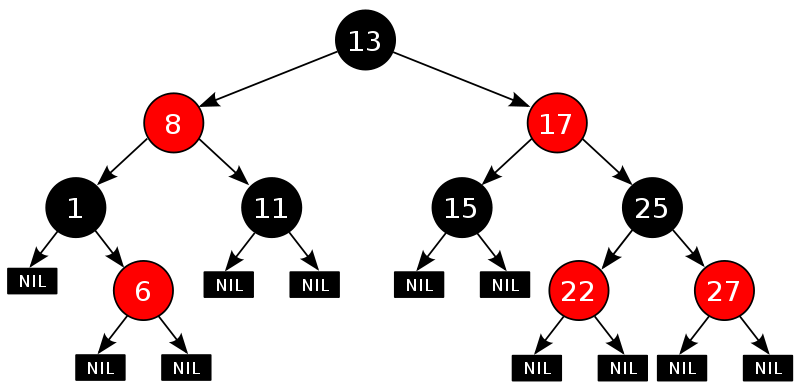
它的查找、插入、删除操作的时间复杂度均为 O(logn)。
TreeMap 类的继承结构如下:
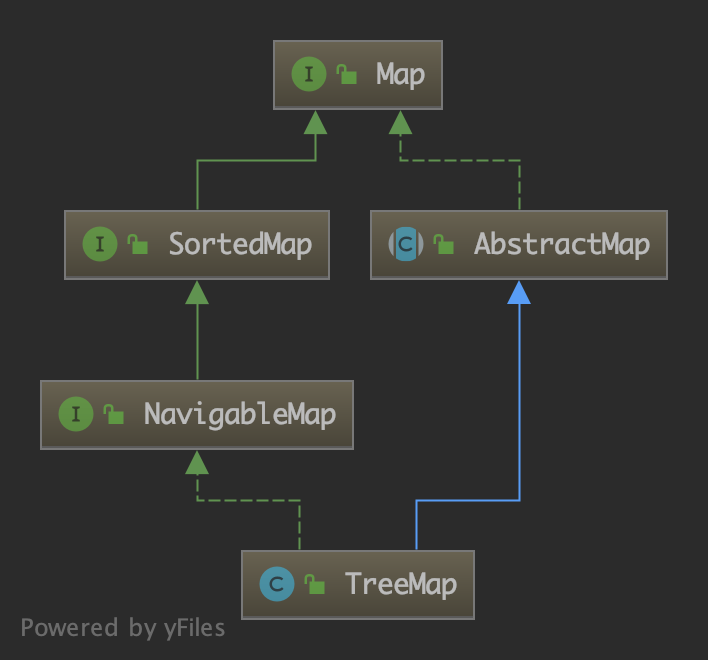
类签名:
public class TreeMap<K,V>

    extends AbstractMap<K,V>

    implements NavigableMap<K,V>, Cloneable, java.io.Serializable
TreeMap 实现了 Map 接口,其内部数据格式是“键-值对”的形式(Entry),排列顺序是按照键的顺序进行的。
代码分析
成员变量
/**

 * The comparator used to maintain order in this tree map, or

 * null if it uses the natural ordering of its keys.

 *

 * TreeMap 内部的比较器,若为空,则为自然顺序

 */

private final Comparator<? super K> comparator;

// 根节点

private transient Entry<K,V> root;

/**

 * The number of entries in the tree

 */

private transient int size = 0;

/**

 * The number of structural modifications to the tree.

 */

private transient int modCount = 0;
构造器
TreeMap 有四个构造器,分别如下:
构造器一:无参构造器
/**

 * 无参构造器。使用 key 的自然顺序排列(key 要实现 Comparable 接口)

 */

public TreeMap() {

    comparator = null;

}
构造器二:
/**

 * 使用指定的 Comparator(比较器)构造一个空的 TreeMap

 */

public TreeMap(Comparator<? super K> comparator) {

    this.comparator = comparator;

}
构造器三:
/**

 * 使用给定的 Map 构造一个 TreeMap

 */

public TreeMap(Map<? extends K, ? extends V> m) {

    comparator = null;

    putAll(m);

}
构造器四:
/**

 * 使用给定的 SortedMap 构造一个 TreeMap

 *(使用 SortedMap 的顺序)

 */

public TreeMap(SortedMap<K, ? extends V> m) {

    comparator = m.comparator();

    try {

        buildFromSorted(m.size(), m.entrySet().iterator(), null, null);

    } catch (java.io.IOException cannotHappen) {

    } catch (ClassNotFoundException cannotHappen) {

    }

}
常用方法
查找某个 key
// 判断 TreeMap 是否包含某个 key

public boolean containsKey(Object key) {

    return getEntry(key) != null;

}

// 查找 TreeMap 中某个 key 对应的 value(若不存在返回 null)

public V get(Object key) {

    Entry<K,V> p = getEntry(key);

    return (p==null ? null : p.value);

}
由于这两个方法内部都是通过 getEntry 方法实现,因此放在一起分析,如下:
final Entry<K,V> getEntry(Object key) {

    // Offload comparator-based version for sake of performance

    if (comparator != null)

        return getEntryUsingComparator(key);

    if (key == null)

        throw new NullPointerException();

    @SuppressWarnings("unchecked")

        Comparable<? super K> k = (Comparable<? super K>) key;

    Entry<K,V> p = root;

    while (p != null) {

        int cmp = k.compareTo(p.key);

        if (cmp < 0)

            p = p.left;

        else if (cmp > 0)

            p = p.right;

        else

            return p;

    }

    return null;

}
当 Comparator 不为空时,使用如下方法查找:
/**

 * Version of getEntry using comparator. Split off from getEntry

 * for performance. (This is not worth doing for most methods,

 * that are less dependent on comparator performance, but is

 * worthwhile here.)

 */

final Entry<K,V> getEntryUsingComparator(Object key) {

    @SuppressWarnings("unchecked")

        K k = (K) key;

    Comparator<? super K> cpr = comparator;

    if (cpr != null) {

        Entry<K,V> p = root;

        while (p != null) {

            int cmp = cpr.compare(k, p.key);

            if (cmp < 0)

                p = p.left;

            else if (cmp > 0)

                p = p.right;

            else

                return p;

        }

    }

    return null;

}
可以看到,这两个方法都是二叉查找树的查找过程。
PS: 这里将 Comporator 和 Comparable 两个接口分开进行操作。注释说明是出于性能考虑,虽然大部分方法中不值得这样做,但这里值得。
查找某个 value
public boolean containsValue(Object value) {

    for (Entry<K,V> e = getFirstEntry(); e != null; e = successor(e))

        if (valEquals(value, e.value))

            return true;

    return false;

}
getFirstEntry() 方法是获取第一个 Entry 节点(中序遍历最左边的节点):
/**

 * Returns the first Entry in the TreeMap (according to the TreeMap's

 * key-sort function).  Returns null if the TreeMap is empty.

 */

final Entry<K,V> getFirstEntry() {

    Entry<K,V> p = root;

    if (p != null)

        while (p.left != null)

            p = p.left;

    return p;

}
查找某个 Entry 的后继节点:
/**

 * Returns the successor of the specified Entry, or null if no such.

 */

static <K,V> TreeMap.Entry<K,V> successor(Entry<K,V> t) {

    if (t == null)

        return null;

    // 若右子树不为空,则后继节点就是右子树的最小节点

    else if (t.right != null) {

        Entry<K,V> p = t.right;

        while (p.left != null)

            p = p.left;

        return p;

    } else {

        // 若右子树为空,则向上回溯

        Entry<K,V> p = t.parent;

        Entry<K,V> ch = t;

        while (p != null && ch == p.right) {

            ch = p;

            p = p.parent;

        }

        return p;

    }

}
可以看到,这里判断 TreeMap 是否包含某个 value,是按照二叉查找树的中序遍历去比较是否存在与给定 value 相等的值。
lowerEntry / lowerKey: 查找比指定 key 小的最大 Entry / key
public Map.Entry<K,V> lowerEntry(K key) {

    return exportEntry(getLowerEntry(key));

}

public K lowerKey(K key) {

    return keyOrNull(getLowerEntry(key));

}
/**

 * Returns the entry for the greatest key less than the specified key; if

 * no such entry exists (i.e., the least key in the Tree is greater than

 * the specified key), returns {@code null}.

 */

final Entry<K,V> getLowerEntry(K key) {

    Entry<K,V> p = root;

    while (p != null) {

        int cmp = compare(key, p.key);

        // 给定的key大于根节点,继续与右子节点比较

        if (cmp > 0) {

            if (p.right != null)

                p = p.right;

            else

                return p;

        } else {

            // 左子节点不为空,则为左子节点

            if (p.left != null) {

                p = p.left;

            } else {

                // 左子节点为空,向父节点上溯

                Entry<K,V> parent = p.parent;

                Entry<K,V> ch = p;

                while (parent != null && ch == parent.left) {

                    ch = parent;

                    parent = parent.parent;

                }

                return parent;

            }

        }

    }

    return null;

}
higherEntry / higherKey: 查找比指定 key 大的最小 Entry / key
public Map.Entry<K,V> higherEntry(K key) {

    return exportEntry(getHigherEntry(key));

}

public K higherKey(K key) {

    return keyOrNull(getHigherEntry(key));

}
getHigherEntry 方法与 getLowerEntry 方法实现类似,不同之处在于 left 和 right 相反,这里不再贴代码。
floorEntry / floorKey:
public Map.Entry<K,V> floorEntry(K key) {

    return exportEntry(getFloorEntry(key));

}

public K floorKey(K key) {

    return keyOrNull(getFloorEntry(key));

}
/**

 * Gets the entry corresponding to the specified key; if no such entry

 * exists, returns the entry for the greatest key less than the specified

 * key; if no such entry exists, returns {@code null}.

 */

final Entry<K,V> getFloorEntry(K key) {

    Entry<K,V> p = root;

    while (p != null) {

        int cmp = compare(key, p.key);

        if (cmp > 0) {

            if (p.right != null)

                p = p.right;

            else

                return p;

        } else if (cmp < 0) {

            if (p.left != null) {

                p = p.left;

            } else {

                Entry<K,V> parent = p.parent;

                Entry<K,V> ch = p;

                while (parent != null && ch == parent.left) {

                    ch = parent;

                    parent = parent.parent;

                }

                return parent;

            }

        } else

            // 与上述方法的区别

            return p;

    }

    return null;

}
查找指定 key 关联的 Entry;若不存在,返回比该 key 小的最大 key 关联的 Entry;若这也不存在则返回 null。
PS: 该方法与上面的 getLowerEntry 方法仅相差 while 循环内部的一个 else。
ceilingEntry / ceilKey:
public Map.Entry<K,V> ceilingEntry(K key) {

    return exportEntry(getCeilingEntry(key));

}

public K ceilingKey(K key) {

    return keyOrNull(getCeilingEntry(key));

}
getCeilingEntry 方法与 getFloorEntry 方法实现类似,也是 left 和 right 相反。就像上面 getLowerEntry 和 getHigherEntry的区别那样,这里不再贴代码。
查找指定 key 关联的 Entry;若不存在,返回比该 key 大的最小 key 关联的 Entry;若这也不存在则返回 null。
还有几个截取 TreeMap 一部分的方法,分别如下:
public NavigableMap<K,V> headMap(K toKey, boolean inclusive) {

    return new AscendingSubMap<>(this,

                                 true,  null,  true,

                                 false, toKey, inclusive);

}

public NavigableMap<K,V> tailMap(K fromKey, boolean inclusive) {

    return new AscendingSubMap<>(this,

                                 false, fromKey, inclusive,

                                 true,  null,    true);

}

public NavigableMap<K,V> subMap(K fromKey, boolean fromInclusive,

                                K toKey,   boolean toInclusive) {

    return new AscendingSubMap<>(this,

                                 false, fromKey, fromInclusive,

                                 false, toKey,   toInclusive);

}
除此之外,最常用的插入和删除操作还未分析,这两部分比较复杂,因此留到后面单独分析。
小结
1. TreeMap 实现了 Map 接口,内部节点类型为 Entry;
2. 基于红黑树实现,具有红黑树的特点;
3. 有序,根据 Entry 的 key 排序;
4. 查找、插入、删除操作的时间复杂度均为 O(logn)。
相关阅读
Stay hungry, stay foolish.

PS: 本文首发于微信公众号【WriteOnRead】。
【JDK】JDK源码分析-TreeMap(1)的更多相关文章
- 【JDK】JDK源码分析-TreeMap(2)
前文「JDK源码分析-TreeMap(1)」分析了 TreeMap 的一些方法,本文分析其中的增删方法.这也是红黑树插入和删除节点的操作,由于相对复杂,因此单独进行分析. 插入操作 该操作其实就是红黑 ...
- JDK Collection 源码分析(2)—— List
JDK List源码分析 List接口定义了有序集合(序列).在Collection的基础上,增加了可以通过下标索引访问,以及线性查找等功能. 整体类结构 1.AbstractList 该类作为L ...
- JDK AtomicInteger 源码分析
@(JDK)[AtomicInteger] JDK AtomicInteger 源码分析 Unsafe 实例化 Unsafe在创建实例的时候,不能仅仅通过new Unsafe()或者Unsafe.ge ...
- 设计模式(十八)——观察者模式(JDK Observable源码分析)
1 天气预报项目需求,具体要求如下: 1) 气象站可以将每天测量到的温度,湿度,气压等等以公告的形式发布出去(比如发布到自己的网站或第三方). 2) 需要设计开放型 API,便于其他第三方也能接入气象 ...
- JDK Collection 源码分析(3)—— Queue
@(JDK)[Queue] JDK Queue Queue:队列接口,对于数据的存取,提供了两种方式,一种失败会抛出异常,另一种则返回null或者false. 抛出异常的接口:add,remove ...
- JDK Collection 源码分析(1)—— Collection
JDK Collection JDK Collection作为一个最顶层的接口(root interface),JDK并不提供该接口的直接实现,而是通过更加具体的子接口(sub interface ...
- 【JDK】JDK源码分析-HashMap(1)
概述 HashMap 是 Java 开发中最常用的容器类之一,也是面试的常客.它其实就是前文「数据结构与算法笔记(二)」中「散列表」的实现,处理散列冲突用的是“链表法”,并且在 JDK 1.8 做了优 ...
- JDK(七)JDK1.8源码分析【集合】TreeMap
本文转载自joemsu,原文链接 [JDK1.8]JDK1.8集合源码阅读——TreeMap(二) TreeMap是JDK中一种排序的数据结构.在这一篇里,我们将分析TreeMap的数据结构,深入理解 ...
- JDK源码分析—— ArrayBlockingQueue 和 LinkedBlockingQueue
JDK源码分析—— ArrayBlockingQueue 和 LinkedBlockingQueue 目的:本文通过分析JDK源码来对比ArrayBlockingQueue 和LinkedBlocki ...
随机推荐
- 自定义vue全局组件use使用、vuex的使用
自定义vue全局组件use使用(解释vue.use()的原理)我们在前面学习到是用别人的组件:Vue.use(VueRouter).Vue.use(Mint)等等.其实使用的这些都是全剧组件,这里我们 ...
- tomcat配置多个数据源
应用场景: 公司tomcat服务器中运行着多个工程,工程链接的mysql数据库不同,所以每个工程的Spring总配置文件中都配置了数据源. 需求: 将数据源统一拿到tomcat中配置. 本来指派给 ...
- 微信小程序地图开发总结
最近在做一个微信小程序地图插件,通过传入起始位置名称和经纬度信息,就可以跳转到路线规划插件页面中,在该页面中,可以根据起始位置查询自驾,公共交通,步行等方式的路线信息,并且在地图上显示路线信息,在这个 ...
- MxNet 模型转Tensorflow pb模型
用mmdnn实现模型转换 参考链接:https://www.twblogs.net/a/5ca4cadbbd9eee5b1a0713af 安装mmdnn pip install mmdnn 准备好mx ...
- JRebel的优势与使用(基于IDEA)
在平时的工作产出中,代码出现问题时往往要不停的修改测试其正确性,每次修改一部分代码都需要重启项目,这十分的耗时,对于企业大型项目来说你重启的时间够你去喝杯咖啡了,本篇博文主要就减少重启项目时间为目的来 ...
- 一篇文章让你理解Ceph的三种存储接口(块设备、文件系统、对象存储)
“Ceph是一个开源的.统一的.分布式的存储系统”,这是我们宣传Ceph时常说的一句话,其中“统一”是说Ceph可以一套存储系统同时提供块设备存储.文件系统存储和对象存储三种存储功能.一听这句话,具有 ...
- 使用SpringSecurity搭建授权认证服务(1) -- 基本demo认证原理
使用SpringSecurity搭建授权认证服务(1) -- 基本demo 登录认证是做后台开发的最基本的能力,初学就知道一个interceptor或者filter拦截所有请求,然后判断参数是否合理, ...
- django基础知识之模型查询:
查询集表示从数据库中获取的对象集合 查询集可以含有零个.一个或多个过滤器 过滤器基于所给的参数限制查询的结果 从Sql的角度,查询集和select语句等价,过滤器像where和limit子句 接下来主 ...
- 分布式事务(3)---RocketMQ实现分布式事务原理
分布式事务(3)-RocketMQ实现分布式事务原理 之前讲过有关分布式事务2PC.3PC.TCC的理论知识,博客地址: 1.分布式事务(1)---2PC和3PC原理 2.分布式事务(2)---TCC ...
- 从四个属性的角度来理解C语言的指针也许会更好理解
文章会在文末更新! 关于指针是什么,很多教材已经作出了定义,大多数都会定义为"存放变量内存地址的变量".从这句话中我觉得除了让我知道这个定义有11个字以外,其他就没什么用了.我个人 ...