
【2020-03-28】Dubbo源码杂谈
前言
本周空闲时间利用了百分之六七十的样子。主要将Dubbo官网文档和本地代码debug结合起来学习,基本看完了服务导出、服务引入以及服务调用的过程,暂未涉及路由、字典等功能。下面对这一周的收获进行一下总结梳理。
一、基于事件驱动的服务导出
提起服务导出,不要被它的名字误导了,通俗点说就是服务的暴露和注册。服务的暴露是指将服务端的端口开放,等待消费端来连接。服务的注册即将服务信息注册到注册中心。针对服务暴露和注册的具体流程,可参见博主之前的一篇文章 https://www.cnblogs.com/zzq6032010/p/11275478.html ,讲述的比较详细,暂不赘述。
注重提一下的是Dubbo启动服务暴露和注册的时机,是采用的事件驱动来触发的,跟SpringBoot有点神似。这种通过事件驱动来触发特定逻辑的方式,在实际开发工作中也可以灵活使用。
二、服务引入及SPI
对于Dubbo的SPI自适应扩展,可参见博主之前的一篇文章 https://www.cnblogs.com/zzq6032010/p/11219611.html,但此篇文章当时写的比较浅显,还未悟得全部。
下面以Protocol类为例,看一下在ServiceConfig类中的成员变量 Protocol protocol = ExtensionLoader.getExtensionLoader(Protocol.class).getAdaptiveExtension() 是什么样子。
 package org.apache.dubbo.rpc;

 import org.apache.dubbo.common.extension.ExtensionLoader;

 public class Protocol$Adaptive implements org.apache.dubbo.rpc.Protocol {

     public void destroy()  {

         throw new UnsupportedOperationException("The method public abstract void org.apache.dubbo.rpc.Protocol.destroy() of interface org.apache.dubbo.rpc.Protocol is not adaptive method!");

     }

     public int getDefaultPort()  {

         throw new UnsupportedOperationException("The method public abstract int org.apache.dubbo.rpc.Protocol.getDefaultPort() of interface org.apache.dubbo.rpc.Protocol is not adaptive method!");

     }

     public org.apache.dubbo.rpc.Exporter export(org.apache.dubbo.rpc.Invoker arg0) throws org.apache.dubbo.rpc.RpcException {

         if (arg0 == null) throw new IllegalArgumentException("org.apache.dubbo.rpc.Invoker argument == null");

         if (arg0.getUrl() == null) throw new IllegalArgumentException("org.apache.dubbo.rpc.Invoker argument getUrl() == null");

         org.apache.dubbo.common.URL url = arg0.getUrl();

         String extName = ( url.getProtocol() == null ? "dubbo" : url.getProtocol() );

         if(extName == null) throw new IllegalStateException("Failed to get extension (org.apache.dubbo.rpc.Protocol) name from url (" + url.toString() + ") use keys([protocol])");

         org.apache.dubbo.rpc.Protocol extension = (org.apache.dubbo.rpc.Protocol)ExtensionLoader.getExtensionLoader(org.apache.dubbo.rpc.Protocol.class).getExtension(extName);

         return extension.export(arg0);

     }

     public org.apache.dubbo.rpc.Invoker refer(java.lang.Class arg0, org.apache.dubbo.common.URL arg1) throws org.apache.dubbo.rpc.RpcException {

         if (arg1 == null) throw new IllegalArgumentException("url == null");

         org.apache.dubbo.common.URL url = arg1;

         String extName = ( url.getProtocol() == null ? "dubbo" : url.getProtocol() );

         if(extName == null) throw new IllegalStateException("Failed to get extension (org.apache.dubbo.rpc.Protocol) name from url (" + url.toString() + ") use keys([protocol])");

         org.apache.dubbo.rpc.Protocol extension = (org.apache.dubbo.rpc.Protocol)ExtensionLoader.getExtensionLoader(org.apache.dubbo.rpc.Protocol.class).getExtension(extName);

         return extension.refer(arg0, arg1);

     }

     public java.util.List getServers()  {

         throw new UnsupportedOperationException("The method public default java.util.List org.apache.dubbo.rpc.Protocol.getServers() of interface org.apache.dubbo.rpc.Protocol is not adaptive method!");

     }

 }
这就是getAdaptiveExtension()之后得到的代理类,可见在初始化ServiceConfig时先获取的protocol只是一个代理Protocol类,程序运行时再通过传入的Url来判断具体使用哪个Protocol实现类。这才是SPI自适应扩展的精髓所在。
除此之外,在通过getExtension方法获取最终实现类时,还要经过wrapper类的包装。详见ExtensionLoader类中的如下方法:
 private T createExtension(String name) {

         Class<?> clazz = getExtensionClasses().get(name);

         if (clazz == null) {

             throw findException(name);

         }

         try {

             T instance = (T) EXTENSION_INSTANCES.get(clazz);

             if (instance == null) {

                 EXTENSION_INSTANCES.putIfAbsent(clazz, clazz.newInstance());

                 instance = (T) EXTENSION_INSTANCES.get(clazz);

             }

             injectExtension(instance);

             Set<Class<?>> wrapperClasses = cachedWrapperClasses;

             if (CollectionUtils.isNotEmpty(wrapperClasses)) {

                 for (Class<?> wrapperClass : wrapperClasses) {

                     instance = injectExtension((T) wrapperClass.getConstructor(type).newInstance(instance));

                 }

             }

             initExtension(instance);

             return instance;

         } catch (Throwable t) {

             throw new IllegalStateException("Extension instance (name: " + name + ", class: " +

                     type + ") couldn't be instantiated: " + t.getMessage(), t);

         }

     }
如果接口存在包装类,则在第16行进行wrapper类的处理,将当前instance封装进包装类中,再返回包装类的实例,即通过这一行代码实现了扩展类的装饰器模式改造。
此处同样以Protocol类为例,Url中的协议是registry,那么我最终执行到RegistryProtocol的export方法时栈调用路径是这样的:
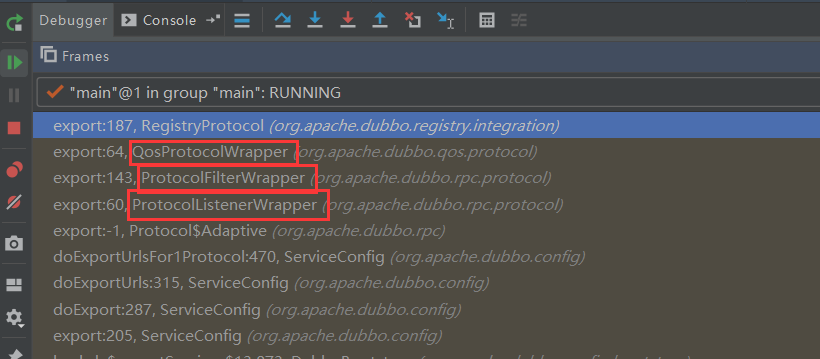
即中间经过了三层Wrapper的封装,每层都有自己特定的功能,且各层之间互不影响。Dubbo在很多自适应扩展接口处加了类似这样的装饰扩展,程序的可扩展设计还可以这样玩,Interesting!
服务引入的流程大体是这样的:消费端从注册中心获取服务端信息,封装成Invoker,再封装成代理类注入消费端Spring容器。流程比较简单,可自行根据上一节的内容debug调试。
三、服务调用的疑问
之前未看Dubbo源码时一直有一个疑问:dubbo的消费端代理类调用服务端接口进行消费时,是通过netty将消息发送过去的,服务端在接收到消息后,是如何调用的服务端目标类中的方法?反射吗?反射可以调用到方法,但是没法解决依赖的问题,而且正常情况服务端调用应该也是Spring容器中已经实例化好的的服务对象,那是如何通过netty的消息找到Spring中的对象的?
实际dubbo处理的很简单,只要在服务暴露的时候将暴露的服务自己存起来就好了,等消费端传过来消息的时候,直接去map里面取,取到的就是Spring中封装的那个服务对象,very easy。
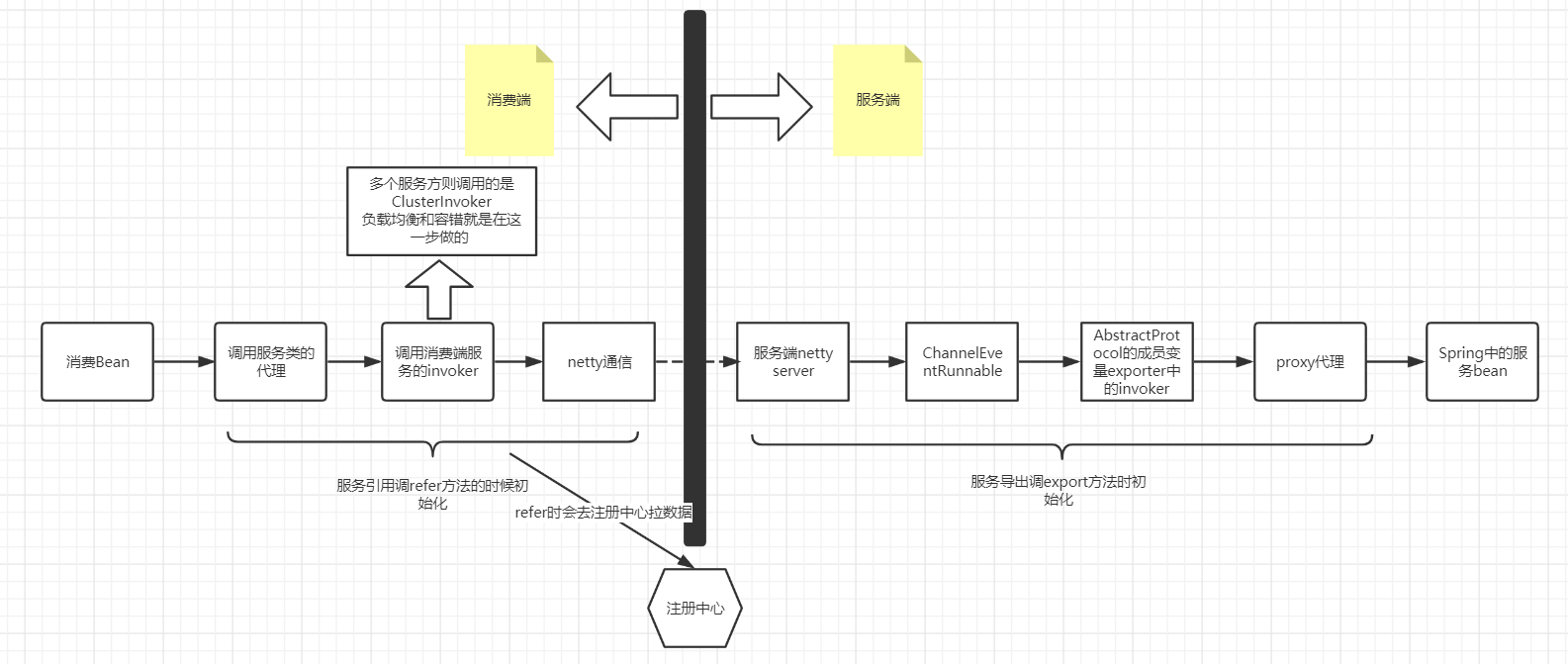
服务调用过程草图
如上图所示,服务调用的流程大体是这样的:调用之后通过client远程连接到server,在server端维护了暴露服务的一个map,服务端接收到请求后去map获取Exporter,exporter中有服务端封装好的Invoker,持有Spring中的服务bean,最终完成调用。中间还涉及很多细节,比如netty的封装与调用,序列化反序列化,负载均衡和容错处理等。
小结
Dubbo作为一个优秀的rpc服务框架,其优势不止在于它的rpc过程,还在于更多细节模块的实现以及可扩展的设计,比如序列化处理、负载均衡、容错、netty的线程调度、路由、字典... 内容挺多的,后面打算针对dubbo的四大负载均衡算法做一下研究,浅尝辄止,不求甚解!
【2020-03-28】Dubbo源码杂谈的更多相关文章
- dubbo面试题,会这些说明你真正看懂了dubbo源码
整理了一些dubbo可能会被面试的面试题,感觉非常不错.如果你基本能回答说明你看懂了dubbo源码,对dubbo了解的足够全面.你可以尝试看能不能回答下.我们一起看下有哪些问题吧? 1.dubbo中& ...
- dubbo源码分析6-telnet方式的管理实现
dubbo源码分析1-reference bean创建 dubbo源码分析2-reference bean发起服务方法调用 dubbo源码分析3-service bean的创建与发布 dubbo源码分 ...
- dubbo源码分析1-reference bean创建
dubbo源码分析1-reference bean创建 dubbo源码分析2-reference bean发起服务方法调用 dubbo源码分析3-service bean的创建与发布 dubbo源码分 ...
- dubbo源码分析2-reference bean发起服务方法调用
dubbo源码分析1-reference bean创建 dubbo源码分析2-reference bean发起服务方法调用 dubbo源码分析3-service bean的创建与发布 dubbo源码分 ...
- dubbo源码分析3-service bean的创建与发布
dubbo源码分析1-reference bean创建 dubbo源码分析2-reference bean发起服务方法调用 dubbo源码分析3-service bean的创建与发布 dubbo源码分 ...
- dubbo源码分析4-基于netty的dubbo协议的server
dubbo源码分析1-reference bean创建 dubbo源码分析2-reference bean发起服务方法调用 dubbo源码分析3-service bean的创建与发布 dubbo源码分 ...
- dubbo源码分析5-dubbo的扩展点机制
dubbo源码分析1-reference bean创建 dubbo源码分析2-reference bean发起服务方法调用 dubbo源码分析3-service bean的创建与发布 dubbo源码分 ...
- dubbo源码之四——服务发布二
dubbo版本:2.5.4 2. 服务提供者暴露一个服务的详细过程 上图是服务提供者暴露服务的主过程: 首先ServiceConfig类拿到对外提供服务的实际类ref(如:HelloWorldImpl ...
- dubbo源码之二——dubbo入口
dubbo源码版本:2.5.4 dubbo-contaner-api com.alibaba.dubbo.container dubbo-demo-consumer com.alibaba.dubbo ...
随机推荐
- Rails (栈)
题目链接:https://vjudge.net/problem/UVA-514 题目大意: 有A,B,C三个火车停靠点,火车最初停在A站,给你一个序列,问你能不能通过中转站C到达B站,火车从A站进入到 ...
- python爬虫练手项目快递单号查询
import requests def main(): try: num = input('请输入快递单号:') url = 'http://www.kuaidi100.com/autonumber/ ...
- react render渲染的几种情况
1. 首次加载 2. setState改变组件内部state. 注意: 此处是说通过setState方法改变. 3. 接受到新的props
- HEXO+Git+Github+域名搭建个人博客
搭建个人博客可以分为以下五个部分 一.搭建本地环境(个人为Win10) 1.安装Git,下载地址:点击 下载后,按提示进行安装即可,作用是:把本地的内容提交到github上去 注意:官网下载速度不是很 ...
- 乱世兄弟(豹老头 X 天捣臼)
论CP之冷冷冷 只为白凡扫剧- 片源: 乱世兄弟 BGM:兄弟 人物角色: 豹老头 - 白凡 天捣臼 大专栏 乱世兄弟(豹老头 X 天捣臼)- 姚鲁 B站:豹老头 X 天捣臼-MV<乱世兄弟& ...
- Vue.js——学习笔记(一)
Vue-自学笔记 Vue (读音 /vjuː/,类似于 view) 是一套用于构建用户界面的渐进式框架.与其它大型框架不同的是,Vue 被设计为可以自底向上逐层应用.Vue 的核心库只关注视图层,不仅 ...
- 关于localStorage面试的那点事
最近面试的时候关于html5API总会被问到localStorage的问题, 对于一般的问题很简单,无非就是 localStorage.sessionStorage和cookie这三个客户端缓存的区别 ...
- spring——AOP原理及源码(四)
前情回顾: 上文我们一路分析了从容器创建开始直到我们的AOP注解导入的核心组件AnnotationAwareAspectJAutoProxyCreator执行postProcessBeforeInst ...
- flask连接mysql出现ModuleNotFoundError: No module named 'MySQLdb'
只需在配置SQLALCHEMY_DATABASE_URI时,加上pymysql就可以了: app.config['SQLALCHEMY_DATABASE_URI'] = 'mysql+pymysql ...
- ysoserial源码结构分析
1.前言 之前也花了几天晚上熟悉了一下commonscollections系列的构造,那么学习一下这个项目是如何设计的也挺重要,多学习大佬如何写代码应该也能对自己的代码能力有提升吧~2333 2.项目 ...