
tensorFlow(三)逻辑回归
tensorFlow 基础见前博客
逻辑回归广泛应用在各类分类,回归任务中。本实验介绍逻辑回归在 TensorFlow 上的实现
理论知识回顾
激活函数(activation function):
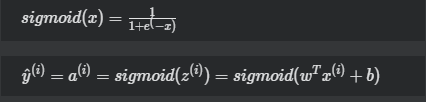
损失函数(cost function):

其中

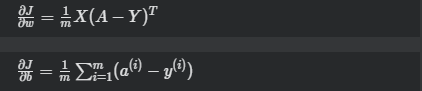
损失函数求偏导(derivative cost function):
训练模型
- 数据准备首先我们需要先下载MNIST的数据集。使用以下的命令进行下载:
wget https://devlab-1251520893.cos.ap-guangzhou.myqcloud.com/t10k-images-idx3-ubyte.gz

wget https://devlab-1251520893.cos.ap-guangzhou.myqcloud.com/t10k-labels-idx1-ubyte.gz

wget https://devlab-1251520893.cos.ap-guangzhou.myqcloud.com/train-images-idx3-ubyte.gz

wget https://devlab-1251520893.cos.ap-guangzhou.myqcloud.com/train-labels-idx1-ubyte.gz
创建代码
#-*- coding:utf-8 -*-

import time

import numpy as np

import tensorflow as tf

from tensorflow.examples.tutorials.mnist import input_data

MNIST = input_data.read_data_sets("./", one_hot=True)

learning_rate = 0.01

batch_size = 128

n_epochs = 25

X = tf.placeholder(tf.float32, [batch_size, 784])

Y = tf.placeholder(tf.float32, [batch_size, 10])

w = tf.Variable(tf.random_normal(shape=[784,10], stddev=0.01), name="weights")

b = tf.Variable(tf.zeros([1, 10]), name="bias")

logits = tf.matmul(X, w) + b

entropy = tf.nn.softmax_cross_entropy_with_logits(labels=Y, logits=logits)

loss = tf.reduce_mean(entropy)

optimizer = tf.train.GradientDescentOptimizer(learning_rate=learning_rate).minimize(loss)

init = tf.global_variables_initializer()

with tf.Session() as sess:

    sess.run(init)

    n_batches = int(MNIST.train.num_examples/batch_size)

    for i in range(n_epochs):

        for j in range(n_batches):

            X_batch, Y_batch = MNIST.train.next_batch(batch_size)

            _, loss_ = sess.run([optimizer, loss], feed_dict={ X: X_batch, Y: Y_batch})

            print "Loss of epochs[{0}] batch[{1}]: {2}".format(i, j, loss_)
执行结果
Loss of epochs[0] batch[0]: 2.28968191147

Loss of epochs[0] batch[1]: 2.30224704742

Loss of epochs[0] batch[2]: 2.26435565948

Loss of epochs[0] batch[3]: 2.26956915855

Loss of epochs[0] batch[4]: 2.25983452797

Loss of epochs[0] batch[5]: 2.2572259903

......

Loss of epochs[24] batch[420]: 0.393310219049

Loss of epochs[24] batch[421]: 0.309725940228

Loss of epochs[24] batch[422]: 0.378903746605

Loss of epochs[24] batch[423]: 0.472946226597

Loss of epochs[24] batch[424]: 0.259472459555

Loss of epochs[24] batch[425]: 0.290799200535

Loss of epochs[24] batch[426]: 0.256865829229

Loss of epochs[24] batch[427]: 0.250789999962

Loss of epochs[24] batch[428]: 0.328135550022
测试模型
#-*- coding:utf-8 -*-

import time

import numpy as np

import tensorflow as tf

from tensorflow.examples.tutorials.mnist import input_data

MNIST = input_data.read_data_sets("./", one_hot=True)

learning_rate = 0.01

batch_size = 128

n_epochs = 25

X = tf.placeholder(tf.float32, [batch_size, 784])

Y = tf.placeholder(tf.float32, [batch_size, 10])

w = tf.Variable(tf.random_normal(shape=[784,10], stddev=0.01), name="weights")

b = tf.Variable(tf.zeros([1, 10]), name="bias")

logits = tf.matmul(X, w) + b

entropy = tf.nn.softmax_cross_entropy_with_logits(labels=Y, logits=logits)

loss = tf.reduce_mean(entropy)

optimizer = tf.train.GradientDescentOptimizer(learning_rate=learning_rate).minimize(loss)

init = tf.global_variables_initializer()

with tf.Session() as sess:

    sess.run(init)

    n_batches = int(MNIST.train.num_examples/batch_size)

    for i in range(n_epochs):

        for j in range(n_batches):

            X_batch, Y_batch = MNIST.train.next_batch(batch_size)

            _, loss_ = sess.run([optimizer, loss], feed_dict={ X: X_batch, Y: Y_batch})

            print "Loss of epochs[{0}] batch[{1}]: {2}".format(i, j, loss_)

    n_batches = int(MNIST.test.num_examples/batch_size)

    total_correct_preds = 0

    for i in range(n_batches):

        X_batch, Y_batch = MNIST.test.next_batch(batch_size)

        preds = tf.nn.softmax(tf.matmul(X_batch, w) + b)

        correct_preds = tf.equal(tf.argmax(preds, 1), tf.argmax(Y_batch, 1))

        accuracy = tf.reduce_sum(tf.cast(correct_preds, tf.float32))

        total_correct_preds += sess.run(accuracy)

    print "Accuracy {0}".format(total_correct_preds/MNIST.test.num_examples)
执行结果
Accuracy 0.9108
tensorFlow(三)逻辑回归的更多相关文章
- 机器学习 (三) 逻辑回归 Logistic Regression
文章内容均来自斯坦福大学的Andrew Ng教授讲解的Machine Learning课程,本文是针对该课程的个人学习笔记,如有疏漏,请以原课程所讲述内容为准.感谢博主Rachel Zhang 的个人 ...
- 利用Tensorflow实现逻辑回归模型
官方mnist代码: #下载Mnist数据集 import tensorflow.examples.tutorials.mnist.input_data mnist = input_data.read ...
- tensorflow之逻辑回归模型实现
前面一篇介绍了用tensorflow实现线性回归模型预测sklearn内置的波士顿房价,现在这一篇就记一下用逻辑回归分类sklearn提供的乳腺癌数据集,该数据集有569个样本,每个样本有30维,为二 ...
- tensorflow 实现逻辑回归——原以为TensorFlow不擅长做线性回归或者逻辑回归,原来是这么简单哇!
实现的是预测 低 出生 体重 的 概率.尼克·麦克卢尔(Nick McClure). TensorFlow机器学习实战指南 (智能系统与技术丛书) (Kindle 位置 1060-1061). Kin ...
- 深度学习原理与框架-Tensorflow基本操作-mnist数据集的逻辑回归 1.tf.matmul(点乘操作) 2.tf.equal(对应位置是否相等) 3.tf.cast(将布尔类型转换为数值类型) 4.tf.argmax(返回最大值的索引) 5.tf.nn.softmax(计算softmax概率值) 6.tf.train.GradientDescentOptimizer(损失值梯度下降器)
1. tf.matmul(X, w) # 进行点乘操作 参数说明:X,w都表示输入的数据, 2.tf.equal(x, y) # 比较两个数据对应位置的数是否相等,返回值为True,或者False 参 ...
- Stanford大学机器学习公开课(三):局部加权回归、最小二乘的概率解释、逻辑回归、感知器算法
(一)局部加权回归 通常情况下的线性拟合不能很好地预测所有的值,因为它容易导致欠拟合(under fitting).如下图的左图.而多项式拟合能拟合所有数据,但是在预测新样本的时候又会变得很糟糕,因为 ...
- 10分钟搞懂Tensorflow 逻辑回归实现手写识别
1. Tensorflow 逻辑回归实现手写识别 1.1. 逻辑回归原理 1.1.1. 逻辑回归 1.1.2. 损失函数 1.2. 实例:手写识别系统 1.1. 逻辑回归原理 1.1.1. 逻辑回归 ...
- 逻辑回归,附tensorflow实现
本文旨在通过二元分类问题.多元分类问题介绍逻辑回归算法,并实现一个简单的数字分类程序 在生活中,我们经常会碰到这样的问题: 根据苹果表皮颜色判断是青苹果还是红苹果 根据体温判断是否发烧 这种答案只有两 ...
- 利用TensorFlow实现多元逻辑回归
利用TensorFlow实现多元逻辑回归,代码如下: import tensorflow as tf import numpy as np from sklearn.linear_model impo ...
随机推荐
- taro初识一
很早之前就听说京东的凹凸实验室发布的开源的一对多的开源框架---Taro,一对多指的是一套代码编译成多端代码使用,极大的节省了开发的效率和成本 废话不多说 第一步,和vue一样下载相应的是cli脚手架 ...
- tiny6410 uboot启动参数的问题
使用uboot来启动tiny6410,需要在启动参数中加入lcd=S70,才能在lcd上显示正确的画面
- 【winform】listbox 列表
一.Item 一个ListBox是由一个个的Item项组成的 1.向下添加Item lstResult.Items.Add("***" + PostWebRequest(cbxUr ...
- 转——git常见使用命令及git原理
0.常用命令1 1.git中brunch的使用和理解(一定理解brunch的指针理解和分叉) 分支创建 Git 是怎么创建新分支的呢? 很简单,它只是为你创建了一个可以移动的新的指针. 比如,创建一个 ...
- Qt::WindowFlags枚举类型解析
在使用Qt设计的时候经常会看到QWidget控件的构造函数出现下面这样一句话: QWidget(QWidget *parent=0,Qt::WindowFlags f=0) QWidget *pare ...
- Flutter之MaterialApp使用详解
来自: https://cloud.tencent.com/developer/article/1337184 字段 类型 navigatorKey(导航键) GlobalKey<Navigat ...
- Vue基础进阶 之 过渡效果
进入/离开过渡效果:Vue在插入.更新或移除DOM时,可以设置一些动画效果: 如何使用过渡效果:利用<transition></transition>组件将需要应用的过渡效果的 ...
- binlog的原理
- Codeforces 17E Palisection - Manacher
题目传送门 传送点I 传送点II 传送点III 题目大意 给定一个串$s$询问,有多少对回文子串有交. 好像很简单的样子. 考虑能不能直接求,感觉有点麻烦.因为要考虑右端点在当前回文子串内还有区间包含 ...
- Base64 空格,加号问题
缘由: 在一个项目中,app请求tcpdump日志与记录的日志内容不一致 请求%2B 识别成 + 请求 + 识别成 空格 这个在base64解密的时候会出现异常,base64需要的是加号,而不是空格 ...