
Java 多线程高并发编程 笔记(二)
1. 单例模式(在内存之中永远只有一个对象)
1.1 多线程安全单例模式——不使用同步锁
 public class Singleton {

     private static Singleton sin=new Singleton();    ///直接初始化一个实例对象

     private Singleton(){    ///private类型的构造函数,保证其他类对象不能直接new一个该对象的实例

     }

     public static Singleton getSin(){    ///该类唯一的一个public方法

         return sin;

     }

 }
上述代码中的一个缺点是该类加载的时候就会直接new 一个静态对象出来,当系统中这样的类较多时,会使得启动速度变慢 。现在流行的设计都是讲“延迟加载”,我们可以在第一次使用的时候才初始化第一个该类对象。所以这种适合在小系统。
1.2 多线程安全单例模式——使用同步方法
 public class Singleton {

      private static Singleton instance;

      private Singleton (){

      }

      public static synchronized Singleton getInstance(){    //对获取实例的方法进行同步

        if (instance == null)

          instance = new Singleton();

        return instance;

      }

  }
上述代码中的一次锁住了一个方法, 这个粒度有点大 ,改进就是只锁住其中的new语句就OK。就是所谓的“双重锁”机制。
1.3 多线程安全单例模式——使用双重同步锁
 public class Singleton {

      private static Singleton instance;

      private Singleton (){

      }

      public static Singleton getInstance(){    //对获取实例的方法进行同步

        if (instance == null){

            synchronized(Singleton.class){

                if (instance == null)

                    instance = new Singleton();

            }

        }

        return instance;

      }

  }
1.4 多线程安全单例模式——使用内部类的单例模式
既不用加锁,也能实现懒加载
 public class Singleton {

     private Singleton(){

         System.out.println("single");

     }

     private static class Inner{

         private static Singleton s = new Singleton();

     }

     //无论有多少次,有多少个线程在调用getsingle的时候拿到的都是同一个对象

     private static Singleton getSingle(){

         return Inner.s;

     }

     public static void main(String[] agrs){

         Thread[] ths = new Thread[200];

         for(int i=0; i<ths.length;i++){

             ths[i]=new Thread(()->{

                 Singleton.getSingle();

             });

         }

         Arrays.asList(ths).forEach(o->o.start());

     }

 }
2. 高并发——容器
2.1 有N张火车票,每张票都有一个编号,同时有10个窗口对外售票,写一个模拟程序,分析可能会产生哪些问题?重复销售,超量销售;
 public class TicketSeller1 {

     static List<String> tickets = new ArrayList<>();

     //初始化,放票

     static{

         for(int i=0; i<10000; i++)

             tickets.add("票编号:"+i);

     }

     public static void main(String[] args){

         //启动10个线程不断往外卖票

         for(int i=0;i<10;i++){

             new Thread(()->{

                 while(tickets.size()>0){

                     System.out.println("销售了--"+tickets.remove(0));

                 }

             }).start();

         }

     }

 }
改成下面的代码还有问题吗?
 public class TicketSeller2 {

     //vector本身就是一个同步容器,它所有的方法都是加锁的

     static Vector<String> tickets = new Vector<>();

     static{

         for(int i=0; i<10000; i++)

             tickets.add("票编号:"+i);

     }

     public static void main(String[] args){

         for(int i=0; i<10; i++){

             new Thread(()->{

                 while(tickets.size()>0){

                     /*

                     try{

                         TimeUnit.SECONDS.sleep(10);

                     }catch(InterruptedException e){

                         e.printStackTrace();

                     }*/

                     System.out.println("销售了--"+tickets.remove(0));

                 }

             }).start();

         }

     }

 }
仍有问题,判断与操作分离了(虽然在vector中size和remove方法都是原子的);
再改进:将判断和操作放到一个原子操作里面去
 public class TicketSeller3 {

     static List<String> tickets = new ArrayList<>();

     static{

         for(int i=0; i<10000; i++)

             tickets.add("票编号:"+i);

     }

     public static void main(String[] args){

         //启动10个线程不断往外卖票

         for(int i=0;i<10;i++){

             new Thread(()->{

                 while(true){

                     synchronized (tickets){

                         if(tickets.size()<=0) break;

                         try{

                             TimeUnit.SECONDS.sleep(10);

                         }catch(InterruptedException e){

                             e.printStackTrace();

                         }

                         System.out.println("销售了--"+tickets.remove(0));

                     }

                 }

             }).start();

         }

     }

 }
加锁效率不高,尤其是每销售一张票都要把整个队列给锁定;
引入并发容器:
 public class TicketSeller4 {

     //并发容器

     static Queue<String> tickets = new ConcurrentLinkedQueue<>();

     static{

         for(int i=0; i<1000; i++){

             tickets.add("票编号:"+i);

         }

     }

     public static void main(String[] args){

         for(int i=0; i<10; i++){

             new Thread(()->{

                 while(true){

                     //poll从头往外拿一个数据,是同步的

                     String s = tickets.poll();

                     if(s==null) break;

                     else System.out.println("销售了--"+s);

                 }

             }).start();

         }

     }

 }
if(s==null) break;虽然不是原子性的,但是我们判断以后没有对队列作修改操作,所以这里不会出错。

2.2 并发容器————ConcurrentMap
在多线程的情况下,什么样的容器效率比较高?
 public class T_ConcurrentMap {

     public static void main(String[] args){

         //Map<String, String> map = new ConcurrentHashMap<>();

         //Map<String, String> map = new ConcurrentSkipListMap<>();

         //HashTable 默认加锁,但是效率比较低

         Map<String, String> map = new Hashtable<>();

         //使用HashMap,自己往上加锁:Collection.synchronizedXXX

         //Map<String, String> map = new HashMap<>();

         //Map<String, String> map = new TreeMap<>();

         Random r = new Random();

         Thread[] ths = new Thread[100];

         CountDownLatch latch = new CountDownLatch(ths.length);

         long start = System.currentTimeMillis();

         for(int i=0; i<ths.length; i++){

             ths[i] = new Thread(()->{

                 for(int j=0; j<10000; j++)

                     map.put("a"+r.nextInt(100000),"a"+r.nextInt(100000));

                 latch.countDown();

             });

         }

         Arrays.asList(ths).forEach(o->o.start());

         try{

             latch.await();

         }catch (InterruptedException e){

             e.printStackTrace();

         }

         long end = System.currentTimeMillis();

         System.out.println(end-start);

     }

 }
HashTable:669;
ConcurrentHashMap:391;
why? HashTable 往里加任何一个数据的时候都是要锁定整个对象,而HashMap,ConcurrentHashMap默认把容器分成16段,每次往容器里插数据只锁定16段里面的一段(把锁细化),两个线程往里插不同的段的数据,那么这两个线程就能并发的插入;
ConcurrentSkipListMap:649 高并发并且排序
往里插数据效率低一些,因为要排序,查数据方便很多;
总结:
1. 对于map/set的选择使用
不加锁:hashmap;treemap;linkedhashmap;
加锁:hashtable;Collection.sychronizedXXX(传一个不加锁map,返回一个加了锁的map),在并发性不是特别高的情况下可以使用上面两种;如果并发性比较高,用concurrenthashmap,如果还需要排序,就用concurrentskiplistmap;
附:Collection.sychronizedXXX用法:
 public class T_SynchronizedList {

     public static void main(String[] args){

         List<String> strs = new ArrayList<>();

         List<String> strsSync = Collections.synchronizedList(strs);

     }

 }
2.3 并发容器——CopyOnWrite 写时复制容器
多线程环境下,写时效率低,读时效率高,适合写少读多的环境;
比较容器效率 :
 public class T_CopyOnWrite {

     public static void main(String[] args){

         List<String> lists =

                 //new ArrayList<>();//这个会出并发问题

                 //new Vector<>();

                 new CopyOnWriteArrayList<>();

         Random r = new Random();

         Thread[] ths = new Thread[100];

         for(int i=0; i<ths.length; i++){

             Runnable task = new Runnable() {

                 @Override

                 public void run() {

                     for(int j=0;j<1000;j++)

                         lists.add("a"+r.nextInt(10000));

                 }

             };

             ths[i] = new Thread(task);

         }

         runAndComputeTime(ths);

         System.out.println(lists.size());

     }

     static void runAndComputeTime(Thread[] ths){

         long s1 = System.currentTimeMillis();

         Arrays.asList(ths).forEach(o->o.start());

         Arrays.asList(ths).forEach(o->{

             try{

                 o.join();

             }catch(InterruptedException e){

                 e.printStackTrace();

             }

         });

         long s2 = System.currentTimeMillis();

         System.out.println(s2-s1);

     }

 }
CopyOnWriteArrayList:4853 100000
Vector:114 100000
ArrayList:97 86864(有错)
2.4 并发容器——ConcurrentLinkedQueue
常用方法:
 public class T_ConcurrentLinkedQueue {

     public static void main(String[] args){

         Queue<String> strs = new ConcurrentLinkedQueue<>();

         for(int i=0; i<10; i++){

             //类似于add,有boolean返回值

             strs.offer("a"+i);

         }

         System.out.println(strs);

         System.out.println(strs.size());

         System.out.println(strs.poll());//取值并删除

         System.out.println(strs.size());

         System.out.println(strs.peek());//只取值不删

         System.out.println(strs.size());

     }

 }
2.5 并发容器——BlockingQueue
在高并发的情况下可以使用两种队列:
ConcurrentLinkedQueue:加锁式
BlockingQueue:阻塞式
LinkedBlockingQueue:
 public class T_LinkedBlockingQueue {

     static BlockingQueue<String> strs = new LinkedBlockingQueue<>();

     static Random r = new Random();

     public static void main(String[] args){

         //生产者线程

         new Thread(()->{

             for(int i=0; i<100; i++){

                 try{

                     strs.put("a"+i);//使用put,如果满了,就会等待

                 }catch(InterruptedException e){

                     e.printStackTrace();

                 }

             }

         },"p1").start();

         //5个消费者线程

         for(int i=0; i<5; i++){

             new Thread(()->{

                 for(;;){

                     try{

                         System.out.println(Thread.currentThread().getName()+"task-"+strs.take());//take如果空了,就会等待

                     }catch(InterruptedException e){

                         e.printStackTrace();

                     }

                 }

             },"c"+i).start();

         }

     }

 }
ArrayBlockingQueue:
 public class T_ArrayBlockingQueue {

     //有界队列

     static BlockingQueue<String> strs = new ArrayBlockingQueue<>(10);

     static Random r = new Random();

     public static void main(String[] args) throws Exception{

         for(int i=0; i<10; i++){

             strs.put("a"+i);

         }

         //strs.put("aaa");//满了就会等待,程序阻塞

         //strs.add("aaa");//队列满了会报异常

         strs.offer("aaa");//队列满了不会报异常,也加不进去

         //strs.offer("aaa",1, TimeUnit.SECONDS);//隔一段时间之内加不进去就不往里面加了

         System.out.println(strs);

     }

 }
DelayQueue:
 public class T_DelayQueue {

     //加入队列的元素只有等一定的时间之后才能被消费者拿走

     //默认按等待时间排序

     //DelayQueue 需要实现接口

     static BlockingQueue<MyTask> tasks = new DelayQueue<>();

     static Random r = new Random();

     static class MyTask implements Delayed{

         long runningTime;

         MyTask(long rt){

             this.runningTime = rt;

         }

         public int compareTo(Delayed o){

             if(this.getDelay(TimeUnit.MILLISECONDS)<o.getDelay(TimeUnit.MILLISECONDS))

                 return -1;

             else if(this.getDelay(TimeUnit.MILLISECONDS)>o.getDelay(TimeUnit.MILLISECONDS))

                 return 1;

             else

                 return 0;

         }

         @Override

         public long getDelay(TimeUnit unit) {

             return unit.convert(runningTime-System.currentTimeMillis(), TimeUnit.MILLISECONDS);

         }

         public String toString(){

             return ""+runningTime;

         }

     }

     public static void main(String[] agrs) throws InterruptedException{

         long now = System.currentTimeMillis();

         MyTask t1 = new MyTask(now+1000);

         MyTask t2 = new MyTask(now+2000);

         MyTask t3 = new MyTask(now+1500);

         MyTask t4 = new MyTask(now+2500);

         MyTask t5 = new MyTask(now+500);

         tasks.put(t1);

         tasks.put(t2);

         tasks.put(t3);

         tasks.put(t4);

         tasks.put(t5);

         System.out.println(tasks);

         for(int i=0; i<5; i++){

             System.out.println(tasks.take());

         }

     }

 }
[1558935218208, 1558935218708, 1558935219208, 1558935220208, 1558935219708]
1558935218208
1558935218708
1558935219208
1558935219708
1558935220208
可以用来做定时执行任务
TransferQueue:
 public class T_TransferQueue {

     public static void main(String[] agrs) throws InterruptedException{

         LinkedTransferQueue<String> strs = new LinkedTransferQueue<>();

         new Thread(()->{

             try{

                 System.out.println(strs.take());

             }catch(InterruptedException e){

                 e.printStackTrace();

             }

         }).start();

         //先启动几个消费者线程,生产者生产出一个产品的时候不往队列里加,

         //首先去找有没有消费者,有消费者直接给消费者消费,没有就阻塞

         //用在更高并发的情况下

         strs.transfer("aaa");

     }

 }
SynchronusQueue:
 public class SynchronusQueue {//没有容量的队列

     public static void main(String[] agrs) throws InterruptedException{

         //同步队列是一种特殊的transferQueue

         //

         BlockingQueue<String> strs = new SynchronousQueue<>();

         new Thread(()->{

             try{

                 System.out.println(strs.take());

             }catch(InterruptedException e){

                 e.printStackTrace();

             }

         }).start();

         //strs.put("aaa");//不报错,阻塞等待消费者消费

         strs.add("aaa");//报错queue full

         System.out.println(strs.size);

     }

 }
3. 线程池
3.1 Executor
执行器,这是一个接口,内部维护了一个方法execute负责执行一项任务,参数为Runnable,方法具体实现有我们执行,如下面的代码,既可以使用单纯的方法调用也可以新砌一个新的线程去执行Runnable的run方法;
 public class T_MyExecutor implements Executor {

     public static void main(String[] agrs){

         new T_MyExecutor().execute(()->System.out.println("hello executor"));

     }

     public void execute(Runnable commend){

         commend.run();

         //new Thread(commend).run();

     }

 }
3.2 ExecutorService
代表着启动一系列的线程为用户提供服务(本质上也是一个执行器),Java8官方文档就举了一个网络接受连接池的例子(代码如下)。
 class NetworkService implements Runnable {

    private final ServerSocket serverSocket;

    private final ExecutorService pool;

    public NetworkService(int port, int poolSize)

        throws IOException {

      serverSocket = new ServerSocket(port);

      pool = Executors.newFixedThreadPool(poolSize);

    }

    public void run() { // run the service

      try {

        for (;;) {

          pool.execute(new Handler(serverSocket.accept()));

        }

      } catch (IOException ex) {

        pool.shutdown();

      }

    }

  }

  class Handler implements Runnable {

    private final Socket socket;

    Handler(Socket socket) { this.socket = socket; }

    public void run() {

      // read and service request on socket

    }

  }
在这里ExecutorService就代表着一个线程池对外提供接受网络请求的服务,同时它也是一系列线程池的接口,如,RorkJoinPool、ScheduledThreadPoolExecutor,、ThreadPoolExecutor等。同时,它可以提交Callable与Runnable的对象返回一个未来的执行结果对象Future。Callable是一个增强版的Runnable,它的call方法可以抛出异常可以有返回值,返回值放在Future对象中,我们可以使用Future对象的get方法来获得返回值。
除了以上方法来创建一个ExecutorService还可以使用Executors这个工具类来创建它,在这里我们可以把Executors理解为就像utils,collections的工具类,是操作Executor的一个工具类。
2.3 ThreadPool 线程池
 public class T_ThreadPool {

     public static void main(String[] agrs) throws InterruptedException{

         //Executors有一些工厂方法,newFixedThreadPool创建一个个数为5的线程池

         //ExecutorService接口是可以往里面扔任务(execute,submit)的,

         ExecutorService service = Executors.newFixedThreadPool(5);

         for(int i=0; i<6;i++){

             //5个线程,6个任务

             service.execute(()->{

                 try{

                     TimeUnit.MILLISECONDS.sleep(500);

                 }catch(InterruptedException e){

                     e.printStackTrace();

                 }

                 System.out.println(Thread.currentThread().getName());

             });

         }

         System.out.println(service);

         //ExecutorService 常用方法

         service.shutdown();//所有任务执行完关闭

         System.out.println(service.isTerminated());//所有任务是否执行完了

         System.out.println(service.isShutdown());//关了并一定是执行完了,代表正在关闭的过程中

         System.out.println(service);

     }

 }
执行结果:
java.util.concurrent.ThreadPoolExecutor@7ba4f24f[Running, pool size = 5, active threads = 5, queued tasks = 1(排队的任务), completed tasks = 0]
false
true
java.util.concurrent.ThreadPoolExecutor@7ba4f24f[Shutting down, pool size = 5, active threads = 5, queued tasks = 1, completed tasks = 0]
pool-1-thread-1
pool-1-thread-3
pool-1-thread-2
pool-1-thread-5
pool-1-thread-4
pool-1-thread-1
2.4 Future
 public class T_Future {

     public static void main(String[] agrs) throws InterruptedException, ExecutionException{

         //RunnableTask 不产生任何返回值

         //new了个Callable对象并把它包装成FutureTask

         FutureTask<Integer> task = new FutureTask<>(()->{

             TimeUnit.MILLISECONDS.sleep(500);

             return 1000;

         });//相当于创建一个匿名类:new Callable(){Integer call();}}

         //启动一个线程

         new Thread(task).start();

         System.out.println(task.get());//阻塞,任务执行完了返回值

         ExecutorService service = Executors.newFixedThreadPool(5);

         Future<Integer> f = service.submit(()->{

             TimeUnit.MILLISECONDS.sleep(500);

             return 1;

         });

         System.out.println(f.get());

         System.out.println(f.isDone());//任务执行完没有啊

         System.out.println(f.get());

         System.out.println(f.isDone());

     }

 }
2.5 线程池——newFixedThreadPool
小程序:计算1-200000之间的质数
比较一个线程和多个线程的效率:
 public class T_ParallelComputing {

     public static void main(String[] agrs) throws InterruptedException, ExecutionException {

         long start = System.currentTimeMillis();

         //计算1-200000之间所有的质数

         List<Integer> resulrs = getPrime(1,200000);

         //方法1:使用一个线程来计算

         long end = System.currentTimeMillis();

         System.out.println(end-start);

         //方法2:使用线程池

         final int cpuCoreNum = 4;

         ExecutorService service = Executors.newFixedThreadPool(cpuCoreNum);

         //创建4个任务,继承callable接口(有返回值)

         MyTask t1 = new MyTask(1,80000);

         MyTask t2 = new MyTask(80000,130000);

         MyTask t3 = new MyTask(130000,170000);

         MyTask t4 = new MyTask(170000,200000);

         //将4个任务扔到线程池

         Future<List<Integer>> f1 = service.submit(t1);

         Future<List<Integer>> f2 = service.submit(t2);

         Future<List<Integer>> f3 = service.submit(t3);

         Future<List<Integer>> f4 = service.submit(t4);

         start = System.currentTimeMillis();

         f1.get();

         f2.get();

         f3.get();

         f4.get();

         end = System.currentTimeMillis();

         System.out.println(end-start);

     }

     static class MyTask implements Callable<List<Integer>> {

         int startPos,endPos;

         MyTask(int s,int e){

             this.startPos = s;

             this.endPos = e;

         }

         public List<Integer> call() throws Exception{

             List<Integer> r = getPrime(startPos, endPos);

             return r;

         }

     }

     static boolean isPrime(int num){

         for(int i=2;i<=num/2;i++){

             if(num%i==0) return false;

         }

         return true;

     }

     static List<Integer> getPrime(int start,int end){

         List<Integer> results = new ArrayList<>();

         for(int i=start;i<=end;i++){

             if(isPrime(i)) results.add(i);

         }

         return results;

     }

 }
输出:
2513
786
2.6 线程池——CacheThreadPool
刚开始一个线程也没有,来一个任务起一个线程,如果来一个新的任务,线程池里刚好有一个线程空闲,直接让空闲线程执行任务,否则,起一个新线程;默认情况下,线程空闲超过60s自动销毁;
 public class T_CacheThreadPool {

     public static void main(String[] agrs) throws InterruptedException{

         ExecutorService service = Executors.newCachedThreadPool();

         System.out.println(service);

         for(int i=0;i<2;i++){

             service.execute(()->{

                 try{

                     TimeUnit.MILLISECONDS.sleep(500);

                 }catch(InterruptedException e){

                     e.printStackTrace();

                 }

                 System.out.println(Thread.currentThread().getName());

             });

         }

         System.out.println(service);

         TimeUnit.SECONDS.sleep(80);

         System.out.println(service);

     }

 }
运行结果:
java.util.concurrent.ThreadPoolExecutor@1540e19d[Running, pool size = 0, active threads = 0, queued tasks = 0, completed tasks = 0]
java.util.concurrent.ThreadPoolExecutor@1540e19d[Running, pool size = 2, active threads = 2, queued tasks = 0, completed tasks = 0]
pool-1-thread-2
pool-1-thread-1
java.util.concurrent.ThreadPoolExecutor@1540e19d[Running, pool size = 0, active threads = 0, queued tasks = 0, completed tasks = 2]
2.7 线程池——SingleThreadPool
线程池里就一个线程,保证任务顺序执行
 public class SingleThreadPool {

     public static void main(String[] agrs){

         ExecutorService service = Executors.newSingleThreadExecutor();

         for(int i=0;i<5;i++){

             final int j = i;

             service.execute(()->{

                 System.out.println(j+" "+Thread.currentThread().getName());

             });

         }

     }

 }
输出:
0 pool-1-thread-1
1 pool-1-thread-1
2 pool-1-thread-1
3 pool-1-thread-1
4 pool-1-thread-1
2.8 线程池——SchedulePool
与DelayQueue相对应,执行定时的任务,线程池里的线程可以复用
 public class SchedulePool {

     public static void main(String[] agrs){

         ScheduledExecutorService service = Executors.newScheduledThreadPool(4);

         service.scheduleAtFixedRate(()->{

             try{

                 TimeUnit.MILLISECONDS.sleep(new Random().nextInt(1000));

             }catch(InterruptedException e){

                 e.printStackTrace();

             }

             System.out.println(Thread.currentThread().getName());

         },0,500, TimeUnit.MILLISECONDS);

     }

 }
2.9 线程池——WorkStealingPool
工作窃取:有一堆任务和一堆线程,每个线程都维护一个自己的任务队列,当一个线程执行完自己队列里的任务,会去别的线程队列中“偷”未执行的任务继续执行;
 public class WorkStealPool {

     public static void main(String[] agrs) throws IOException {

         ExecutorService service = Executors.newWorkStealingPool();

         //打印cup多少核

         System.out.println(Runtime.getRuntime().availableProcessors());

         service.execute(new R(1000));

         service.execute(new R(2000));

         service.execute(new R(2000));

         service.execute(new R(2000));

         service.execute(new R(2000));

         //由于产生的是守护线程,主线程不阻塞看不到输出

         System.in.read();

     }

     public static class R implements Runnable{

         int time;

         R(int t){

             this.time = t;

         }

         public void run(){

             try{

                 TimeUnit.MILLISECONDS.sleep(time);

             }catch (InterruptedException e){

                 e.printStackTrace();

             }

             System.out.println(time+" "+Thread.currentThread().getName());

         }

     }

 }
2.10 线程池——ForkJoinPool
如果有一项特别难以完成的大任务,可以把大任务切分成小的任务(Fork),最后合并小任务(Join);
 public class ForkJoinPool2 {

     static int[] nums = new int[1000000];

     static final int MAX_NUM = 50000;

     static Random r = new Random();

     //求和

     static {

         for(int i=0; i<nums.length;i++){

             nums[i]=r.nextInt(100);

         }

         System.out.println(Arrays.stream(nums).sum());

     }

     static class AddTask extends RecursiveAction{

         int start,end;

         AddTask(int s, int e){

             start = s;

             end = e;

         }

         protected void compute(){

             if(end-start<=MAX_NUM){

                 long sum = 0L;

                 for(int i=start;i<end;i++){

                     sum+=nums[i];

                 }

                 System.out.println("from:"+start+"to:"+end+"="+sum);

             }else{

                 int middle = start+(end-start)/2;

                 AddTask subTask1 = new AddTask(start,middle);

                 AddTask subTask2 = new AddTask(middle,end);

                 subTask1.fork();

                 subTask2.fork();

             }

         }

     }

     public static void main(String[] agrs) throws IOException{

         ForkJoinPool fjp = new ForkJoinPool();

         AddTask task = new AddTask(0,nums.length);

         fjp.execute(task);

         System.in.read();

     }

 }
49508417
from:593750to:625000=1543717
from:468750to:500000=1548821
from:843750to:875000=1548865
from:968750to:1000000=1543900
from:718750to:750000=1539386
from:437500to:468750=1547593
from:812500to:843750=1538471
from:687500to:718750=1540626
from:562500to:593750=1545775
from:937500to:968750=1546144
from:406250to:437500=1550529
from:781250to:812500=1540313
from:218750to:250000=1556540
from:656250to:687500=1547825
from:93750to:125000=1545292
from:156250to:187500=1546528
from:531250to:562500=1544129
from:750000to:781250=1541918
from:500000to:531250=1551838
from:906250to:937500=1549404
from:625000to:656250=1550692
from:375000to:406250=1544616
from:62500to:93750=1554626
from:875000to:906250=1548556
from:343750to:375000=1554709
from:281250to:312500=1545881
from:125000to:156250=1550330
from:312500to:343750=1548005
from:250000to:281250=1552814
from:31250to:62500=1547229
from:187500to:218750=1545491
from:0to:31250=1547854
没有计算总的sun,因为RecursiveAction是没有返回值的,改为继承RecursiveTask,如下
 public class ForkJoinPool2 {

     static int[] nums = new int[1000000];

     static final int MAX_NUM = 50000;

     static Random r = new Random();

     //求和

     static {

         for(int i=0; i<nums.length;i++){

             nums[i]=r.nextInt(100);

         }

         System.out.println(Arrays.stream(nums).sum());

     }

     static class AddTask extends RecursiveTask<Long> {

         int start,end;

         AddTask(int s, int e){

             start = s;

             end = e;

         }

         protected Long compute(){

             if(end-start<=MAX_NUM){

                 long sum = 0L;

                 for(int i=start;i<end;i++){

                     sum+=nums[i];

                 }

                 return sum;

             }

             int middle = start+(end-start)/2;

             AddTask subTask1 = new AddTask(start,middle);

             AddTask subTask2 = new AddTask(middle,end);

             subTask1.fork();

             subTask2.fork();

             return subTask1.join()+subTask2.join();

         }

     }

     public static void main(String[] agrs) throws IOException{

         ForkJoinPool fjp = new ForkJoinPool();

         AddTask task = new AddTask(0,nums.length);

         fjp.execute(task);

         long result = task.join();

         System.out.println(result);

         //System.in.read();

     }

 }
2.11 线程池——ThreadPoolExecutor
线程池的底层实现:

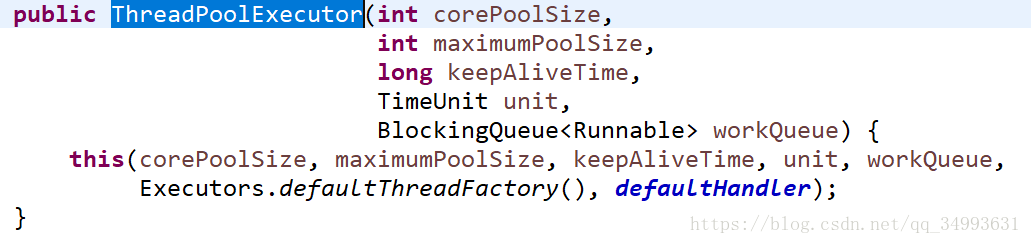

发现它们都基于ThreadPoolExector,WorkStealingPool与ForkJoinPool的底层都是ForkJoinPool。
2530
570
2.12——parallelStreamAPI
 public class T_ParallelStreamAPI {

     public static void main(String[] agrs){

         List<Integer> nums = new ArrayList<>();

         Random r = new Random();

         for(int i=0;i<10000;i++){

             nums.add(1000000+r.nextInt(1000000));

         }

         long start = System.currentTimeMillis();

         nums.forEach(v->isPrime(v));

         long end = System.currentTimeMillis();

         System.out.println(end-start);

         //使用parallelStream api

         start = System.currentTimeMillis();

         //默认使用多线程

         nums.parallelStream().forEach(T_ParallelStreamAPI::isPrime);

         end = System.currentTimeMillis();

         System.out.println(end-start);

     }

     static boolean isPrime(int num){

         for(int i=2;i<num/2;i++){

             if(num%i==0)

                 return false;

         }

         return true;

     }

 }
2530
570
Java 多线程高并发编程 笔记(二)的更多相关文章
- Java 多线程高并发编程 笔记(一)
本篇文章主要是总结Java多线程/高并发编程的知识点,由浅入深,仅作自己的学习笔记,部分侵删. 一 . 基础知识点 1. 进程于线程的概念 2.线程创建的两种方式 注:public void run( ...
- Java多线程高并发学习笔记(二)——深入理解ReentrantLock与Condition
锁的概念 从jdk发行1.5版本之后,在原来synchronize的基础上,增加了重入锁ReentrantLock. 本文就不介绍synchronize了,有兴趣的同学可以去了解一下,本文重点介绍Re ...
- Java多线程高并发学习笔记——阻塞队列
在探讨可重入锁之后,接下来学习阻塞队列,这边篇文章也是断断续续的写了很久,因为最近开始学ssm框架,准备做一个自己的小网站,后续可能更新自己写网站的技术分享. 请尊重作者劳动成果,转载请标明原文链接: ...
- Java多线程高并发学习笔记(一)——Thread&Runnable
进程与线程 首先来看百度百科关于进程的介绍: 进程是一个具有独立功能的程序关于某个数据集合的一次运行活动.它可以申请和拥有系统资源,是一个动态的概念,是一个活动的实体.它不只是程序的代码,还包括当前的 ...
- JAVA多线程高并发学习笔记(三)——Callable、Future和FutureTask
为什么要是用Callable和Future Runnable的局限性 Executor采用Runnable作为基本的表达形式,虽然Runnable的run方法能够写入日志,写入文件,写入数据库等操作, ...
- Java多线程高并发学习笔记(三)——深入理解线程池
线程池最核心的一个类:ThreadPoolExecutor. 看一下该类的构造器: public ThreadPoolExecutor(int paramInt1, int paramInt2, lo ...
- 多线程高并发编程(3) -- ReentrantLock源码分析AQS
背景: AbstractQueuedSynchronizer(AQS) public abstract class AbstractQueuedSynchronizer extends Abstrac ...
- Java 多线程:并发编程的三大特性
Java 多线程:并发编程的三大特性 作者:Grey 原文地址: 博客园:Java 多线程:并发编程的三大特性 CSDN:Java 多线程:并发编程的三大特性 可见性 所谓线程数据的可见性,指的就是内 ...
- java线程高并发编程
java线程具体解释及高并发编程庖丁解牛 线程概述: 祖宗: 说起java高并发编程,就不得不提起一位老先生Doug Lea,这位老先生可不得了.看看百度百科对他的评价,一点也不为过: 假设IT的历史 ...
随机推荐
- Android Weekly Notes Issue #275
Android Weekly Issue #275 September 17, 2017 Android Weekly Issue #275 本期内容包括给Google Map实现一个Marker A ...
- C# 序列化反序列化 list<>
public class XMLTest { [Test] public static void Test() { Name1 name = new Name1(); name.Id = " ...
- Python爬虫 —— 抓取美女图片(Scrapy篇)
杂谈: 之前用requests模块爬取了美女图片,今天用scrapy框架实现了一遍. (图片尺度确实大了点,但老衲早已无恋红尘,权当观赏哈哈哈) Item: # -*- coding: utf-8 - ...
- 基于对话框的Opengl框架
转自:http://blog.csdn.net/longxiaoshi/article/details/8238933 12-11-29 14:55 1198人阅读 评论(6) 收藏 举报 分类: ...
- Jmeter-JDBC Request
1. 新建一个测试计划 2. 新建一个线程组 3. 创建数据库连接 4.配置数据库连接 5.添加JDBC Request 6.添加监听器
- L89
His voice was hoarse after several hours' speech.Attributive adjectives precede the noun.I gave the ...
- django model中get()和filter()方法的区别
django的get()方法是从数据库的取得一个匹配的结果,返回一个对象,如果记录不存在的话,它会报错. django的filter()方法是从数据库的取得匹配的结果,返回一个对象列表,如果记录不存在 ...
- HihoCoder1651 : 小球染色([Offer收割]编程练习赛38)(DP的优化)
描述 小Ho面前有N个小球排成了一排.每个小球可以被染成M种颜色之一. 为了增强视觉效果,小Ho希望不存在连续K个或者K个以上的小球颜色一样. 你能帮小Ho计算出一共有多少种不同的染色方法么? 例如N ...
- codevs 1576最长严格上升子序列
传送门 1576 最长严格上升子序列 时间限制: 1 s 空间限制: 256000 KB 题目等级 : 黄金 Gold 题目描述 Description 给一个数组a1, a2 ... an ...
- codevs 4939 欧拉函数
传送门 4939 欧拉函数 时间限制: 1 s 空间限制: 1000 KB 题目等级 : 钻石 Diamon 题目描述 Description 输入一个数n,输出小于n且与n互素的整数个 ...