
【转】Principles of training multi-layer neural network using backpropagation
Principles of training multi-layer neural network using backpropagation
http://galaxy.agh.edu.pl/~vlsi/AI/backp_t_en/backprop.html
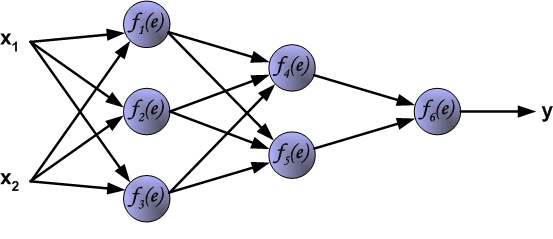
The project describes teaching process of multi-layer neural network employing backpropagation algorithm. To illustrate this process the three layer neural network with two inputs and one output,which is shown in the picture below, is used:
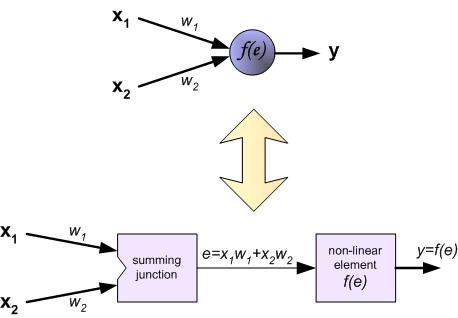
Each neuron is composed of two units. First unit adds products of
weights coefficients and input signals. The second unit realise
nonlinear
function, called neuron activation function. Signal e is adder output signal, and y = f(e) is output signal of nonlinear
element. Signal y is also output signal of neuron.
To teach the neural network we need training data set. The training data set consists of input signals (x1 and
x2 ) assigned with corresponding target (desired output) z.
The network training is an iterative process. In each
iteration weights coefficients of nodes are modified using new data from
training data set. Modification is calculated using algorithm
described below:
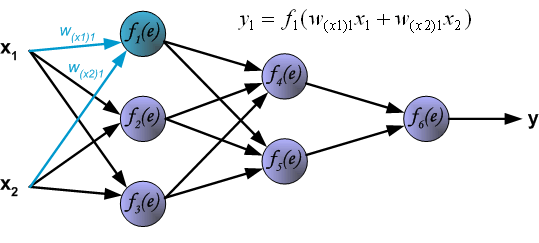
Each teaching step starts with forcing both input signals from training
set. After this stage we can determine output signals values for
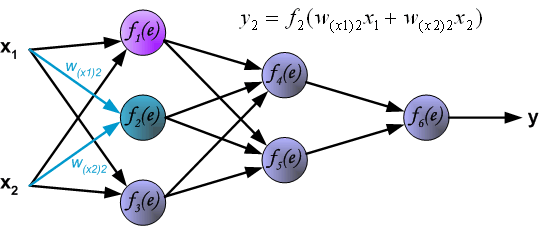
each neuron in each network layer. Pictures below illustrate how signal
is propagating through the network, Symbols w(xm)n
represent weights of connections between network input xm and neuron n in input layer. Symbols yn
represents output signal of neuron n.
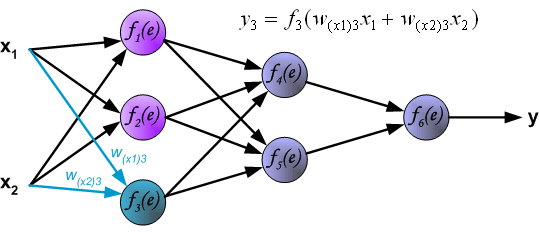
Propagation of signals through the hidden layer. Symbols wmn represent weights of connections between output of neuron
m and input of neuron n in the next layer.
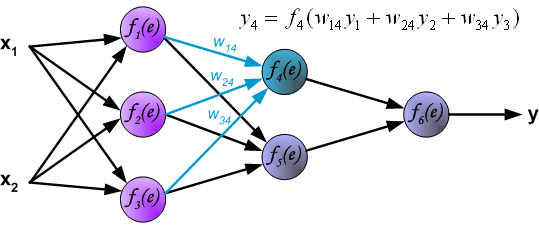
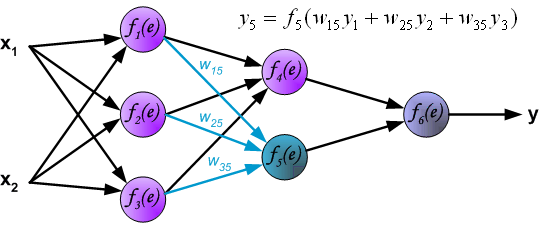
Propagation of signals through the output layer.
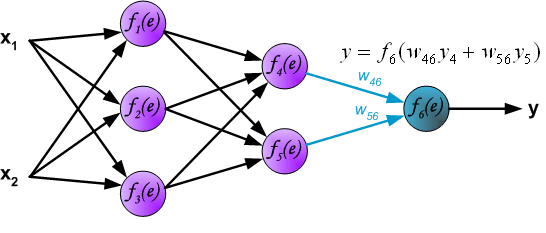
In the next algorithm step the output signal of the network y is compared with the desired output value (the target), which is found
in training data set. The difference is called error signal d of
output layer neuron.
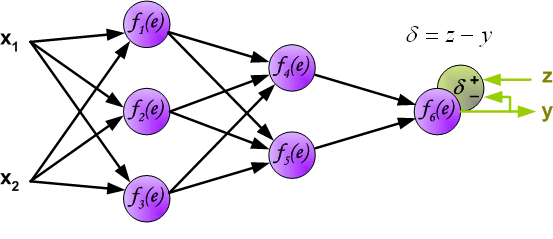
It is impossible to compute error signal for internal neurons directly,
because output values of these neurons are unknown. For many years
the effective method for training multiplayer networks has been
unknown. Only in the middle eighties the backpropagation algorithm has
been
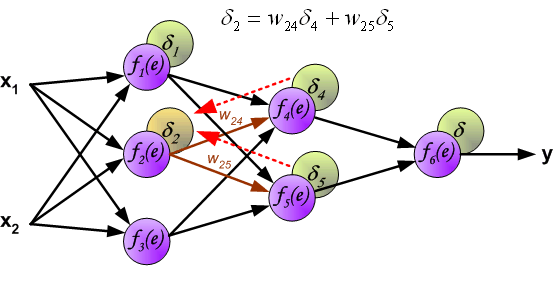
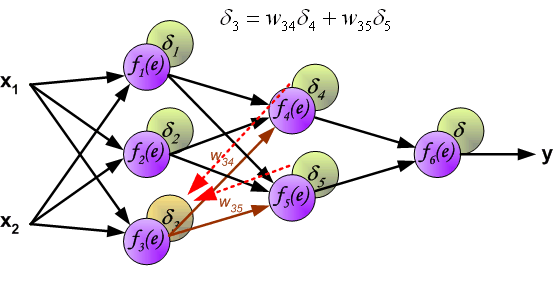
worked out. The idea is to propagate error signal d (computed in
single teaching step) back to all neurons, which output signals were input for discussed neuron.
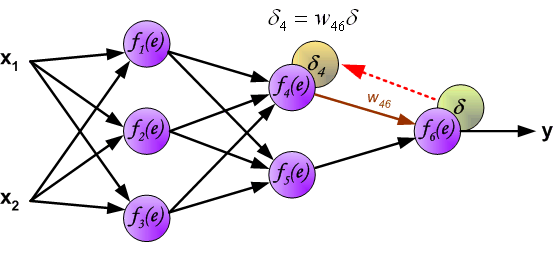
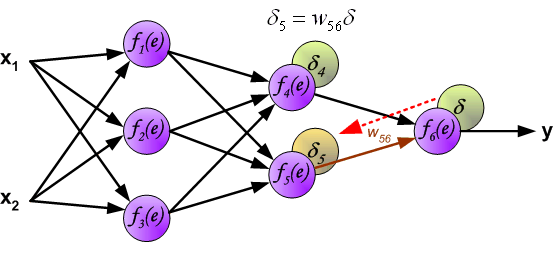
The weights' coefficients wmn used to propagate errors
back are equal to this used during computing output value. Only the
direction of data flow is changed (signals are propagated from output to
inputs one after the other). This technique is used for all network
layers. If propagated errors came from few neurons they are added. The
illustration is below:
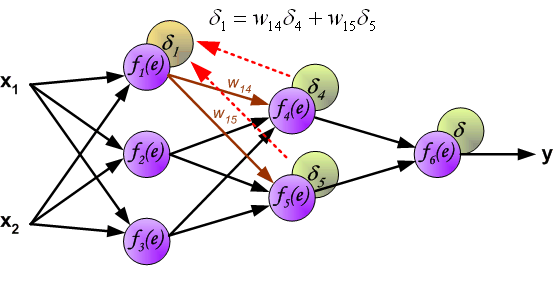
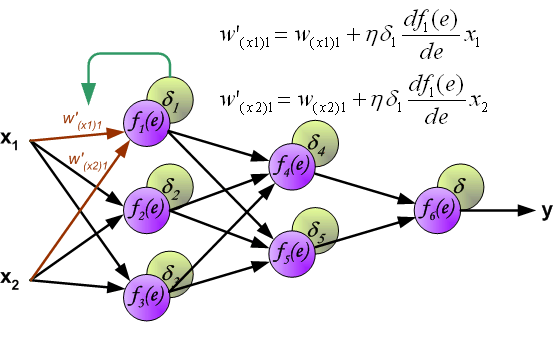
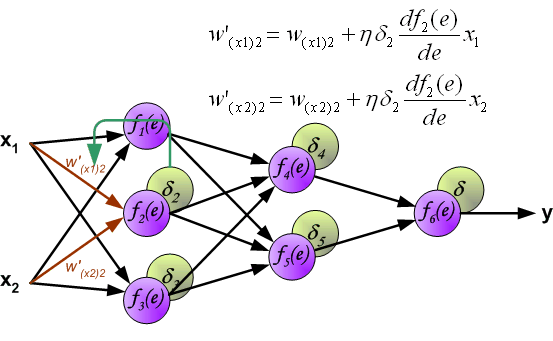
When the error signal for each neuron is computed, the weights
coefficients of each neuron input node may be modified. In formulas
below
df(e)/de represents derivative of neuron activation function (which weights are modified).
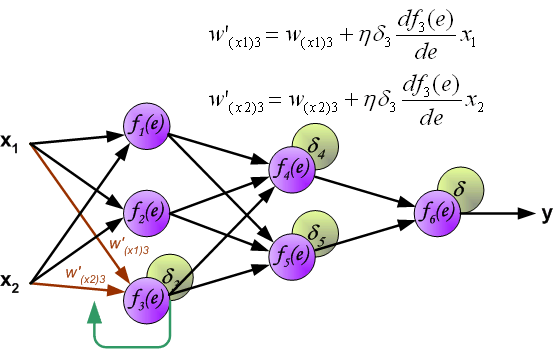
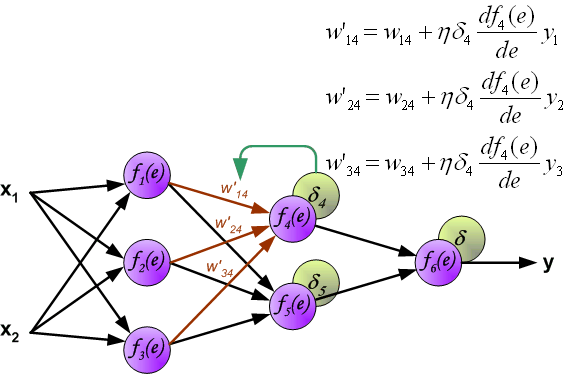
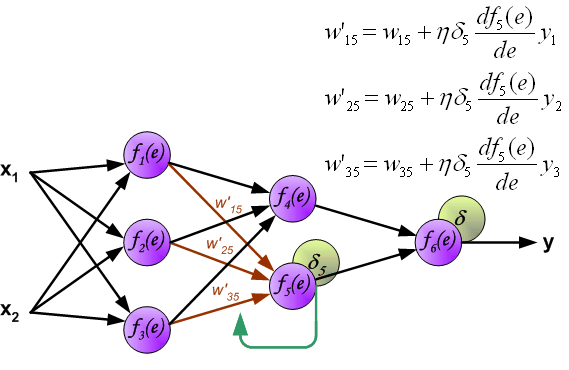
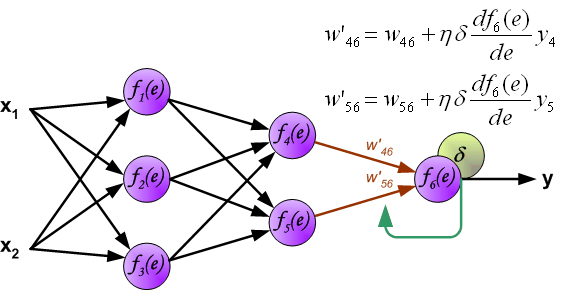
Coefficient h
affects network teaching speed. There are a few
techniques to select this parameter. The first method is to start
teaching process with large value of the parameter. While weights
coefficients are being established the parameter is being decreased
gradually. The second, more complicated, method starts teaching with
small parameter value. During the teaching process the parameter is
being increased when the teaching is advanced and then decreased again
in
the final stage. Starting teaching process with low parameter value
enables to determine weights coefficients signs.
References
Ryszard Tadeusiewcz "Sieci neuronowe", Kraków 1992
【转】Principles of training multi-layer neural network using backpropagation的更多相关文章
- 【论文考古】Training a 3-Node Neural Network is NP-Complete
今天看到一篇1988年的老文章谈到了训练一个简单网络是NPC问题[1].也就是下面的网络结构,在线性激活函数下,如果要找到参数使得输入数据的标签估计准确,这个问题是一个NPC问题.这个文章的意义在于宣 ...
- 用matlab训练数字分类的深度神经网络Training a Deep Neural Network for Digit Classification
This example shows how to use Neural Network Toolbox™ to train a deep neural network to classify ima ...
- CheeseZH: Stanford University: Machine Learning Ex4:Training Neural Network(Backpropagation Algorithm)
1. Feedforward and cost function; 2.Regularized cost function: 3.Sigmoid gradient The gradient for t ...
- A Neural Network in 11 lines of Python
A Neural Network in 11 lines of Python A bare bones neural network implementation to describe the in ...
- [Tensorflow] Cookbook - Neural Network
In this chapter, we'll cover the following recipes: Implementing Operational Gates Working with Gate ...
- 课程一(Neural Networks and Deep Learning),第四周(Deep Neural Networks)——2.Programming Assignments: Building your Deep Neural Network: Step by Step
Building your Deep Neural Network: Step by Step Welcome to your third programming exercise of the de ...
- Deep Learning 28:读论文“Multi Column Deep Neural Network for Traffic Sign Classification”-------MCDNN 简单理解
读这篇论文“ Multi Column Deep Neural Network for Traffic Sign Classification”是为了更加理解,论文“Multi-column Deep ...
- Online handwriting recognition using multi convolution neural networks
w可以考虑从计算机的“机械性.重复性”特征去设计“低效的”算法. https://www.codeproject.com/articles/523074/webcontrols/ Online han ...
- (转)The Neural Network Zoo
转自:http://www.asimovinstitute.org/neural-network-zoo/ THE NEURAL NETWORK ZOO POSTED ON SEPTEMBER 14, ...
随机推荐
- 使用vue-router设置每个页面的title
进入 router 文件夹底下的index.js文件 首先引入: import Vue from 'vue' import Router from 'vue-router' 然后在路由里面配置每个路由 ...
- Oracle11g温习-第十六章:用户管理
2013年4月27日 星期六 10:50 1.概念 (1)schema : user.object 就是用户创建的对象 (2)用户认证方式: ...
- Hadoop介绍-1.基本原理
了解大数据 首先,搞清楚hadoop在处理大数据的定位在哪里 什么是大数据?为什么要处理大数据? 数据量大(Volume) 数据类别复杂(Variety) 数据处理速度快(Velocity) 数据真实 ...
- Python3+smtplib+poplib+imaplib实现发送和收取邮件(以qq邮箱为例)
一.说明 1.1 程序说明 (1)smtp是邮件发送协议:pop和imap都是邮件接收协议,两者的区别通常的说法是imap的操作会同步到邮箱服务器而pop不会,表现上我也不是很清楚 (2)本程序实现使 ...
- Win32汇编环境搭建教程(MASM32 SDK)
一.说明 常用的32位汇编编译器有微软的MASM.Borland的TASM和NASM. 编译器 开发者 优点 缺点 MASM 微软 微软自家软件和系统兼容性好:支持invoke/.if等伪指令将汇编变 ...
- Mybatis排序无效问题解决
在 mybatis 的 xml中,为一个SQL语句配置order by 子句时,需要这个排序的字段是前端传递过来的,而且排序的顺序(升序 OR 降序)也是由前端传递过来的.对于这种需求,我起初写成了下 ...
- python图片识别
python 图像处理模块1. 安装 pytesseract模块是会自动安装Pillow模块.pillow 为标准图像处理库 手册地址 http://pillow-cn.readthedocs.io/ ...
- LY.JAVA面向对象编程.工具类中使用静态、说明书的制作过程、API文档的使用过程
2018-07-08 获取数组中的最大值 某个数字在数组中第一次出现时的索引 制作说明书的过程 对工具类的使用 获取数组中的最大值 获取数字在数组中第一次出现的索引值 API的使用过程 Math
- javascript void函数
<a href="javascript:doTest2();void(0);">here</a> 但这儿的void(0)究竟是何含义呢? Javascrip ...
- 学习Linux系统的方法经验
Linux系统是一个开源的高效的以命令行为主的操作系统,主要用于服务器操作系统领域.对于Linux操作系统更多详细准确的解释大家可以网上找到<Linux就该这么学>的第0章介绍的比较详细: ...