
java之序列化与反序列化
1、这里主要是介绍Protobuf提供的序列化与反序列化的高效性。相对于传统的java提供的序列化来说,Protobuf的效率提高了很多倍。但是也有不足的地方,就是proto在对象序列化的时候抛弃了很多数据。比如:类的相关属性。只保留了数据部分。提高了传输的效率,减少带宽的占用。
2、java的序列化和反序列化
1)对象
import java.io.Serializable;

public class User implements Serializable{

    private String id;

    private String name;

    private String age;

    public User(String id, String name, String age) {

        this.id = id;

        this.name = name;

        this.age = age;

    }

    public String getId() {

        return id;

    }

    public void setId(String id) {

        this.id = id;

    }

    public String getName() {

        return name;

    }

    public void setName(String name) {

        this.name = name;

    }

    public String getAge() {

        return age;

    }

    public void setAge(String age) {

        this.age = age;

    }

    @Override

    public String toString() {

        return "Usr{" +

                "id='" + id + '\'' +

                ", name='" + name + '\'' +

                ", age='" + age + '\'' +

                '}';

    }

}
2)序列化和反序列化
import java.io.ByteArrayInputStream;

import java.io.ByteArrayOutputStream;

import java.io.ObjectInputStream;

import java.io.ObjectOutputStream;

import java.util.Arrays;

public class UserSerializable {

    public static void main(String[] args) {

        try {

            //序列化

            User user = new User("1","user","25");

            //序列化字节流

            ByteArrayOutputStream byteArrayOutputStream = new ByteArrayOutputStream();

            //对象读取

            ObjectOutputStream objectOutputStream = new ObjectOutputStream(byteArrayOutputStream);

            objectOutputStream.writeObject(user);

            //转换成字节

            byte[] bytes = byteArrayOutputStream.toByteArray();

            System.out.println(Arrays.toString(bytes));

            //反序列化

            //直接读取直接,用对象输入流直接读取出来

            ByteArrayInputStream byteArrayInputStream = new ByteArrayInputStream(bytes);

            ObjectInputStream objectInputStream = new ObjectInputStream(byteArrayInputStream);

            //读取后转成对应对象

            User u = (User) objectInputStream.readObject();

            System.out.println(u.toString());

        } catch (Exception e) {

            e.printStackTrace();

        }

    }

}
3)效果(目的对比)
[-84, -19, 0, 5, 115, 114, 0, 30, 99, 111, 109, 46, 116, 114, 111, 121, 46, 97, 112, 112, 108, 105, 99, 97, 116, 105, 111, 110, 46, 106, 97, 118, 97, 46, 85, 115, 101, 114, 122, 36, 125, -10, 11, 54, -23, 51, 2, 0, 3, 76, 0, 3, 97, 103, 101, 116, 0, 18, 76, 106, 97, 118, 97, 47, 108, 97, 110, 103, 47, 83, 116, 114, 105, 110, 103, 59, 76, 0, 2, 105, 100, 113, 0, 126, 0, 1, 76, 0, 4, 110, 97, 109, 101, 113, 0, 126, 0, 1, 120, 112, 116, 0, 2, 50, 53, 116, 0, 1, 49, 116, 0, 4, 117, 115, 101, 114]

Usr{id='1', name='user', age='25'}
3、Protobuf的使用
1)protoc.exe下载:https://pan.baidu.com/s/1gfaULwv 目的:这个主要是用来创建反序列化的Java文件
2)proto文件
编写一个.proto为后缀的文件,文件内容如下:
option java_package = "com.troy.application.proto";

option java_outer_classname = "UsrProto";

message Usr{

    required string id = 1;

    required string name = 2;

    required string age = 3;

}
说明:java_package class里面的package;java_outer_classname为输出类的名称;message可以当成class看;required要求必填;
下面是具体java对应message的写法。
|
.proto类型 |
Java 类型 |
C++类型 |
备注 |
|
double |
double |
double |
|
|
float |
float |
float |
|
|
int32 |
int |
int32 |
使用可变长编码方式。编码负数时不够高效——如果你的字段可能含有负数,那么请使用sint32。 |
|
int64 |
long |
int64 |
使用可变长编码方式。编码负数时不够高效——如果你的字段可能含有负数,那么请使用sint64。 |
|
sint32 |
int |
int32 |
使用可变长编码方式。有符号的整型值。编码时比通常的int32高效。 |
|
sint64 |
long |
int64 |
使用可变长编码方式。有符号的整型值。编码时比通常的int64高效。 |
|
fixed32 |
int |
uint32 |
总是4个字节。如果数值总是比总是比228大的话,这个类型会比uint32高效。 |
|
fixed64 |
long |
uint64 |
总是8个字节。如果数值总是比总是比256大的话,这个类型会比uint64高效。 |
|
sfixed32 |
int |
int32 |
总是4个字节。 |
|
fixed64 |
long |
int64 |
总是8个字节。 |
|
bool |
boolean |
bool |
|
|
string |
String |
string |
一个字符串必须是UTF-8编码或者7-bit ASCII编码的文本。 |
|
bytes |
ByteString |
string |
可能包含任意顺序的字节数据。 |
3)生成Java序列化代码
将.proto文件和protoc.exe 放在同一文件夹
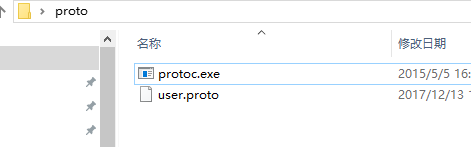
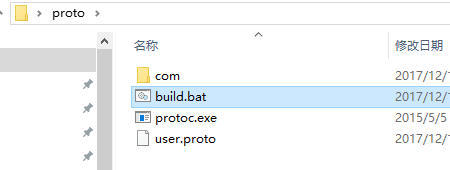
然后编写一个bat文件,或者用cmd命令执行
protoc ./user.proto --java_out=./
最后会在当前目录生成一个文件
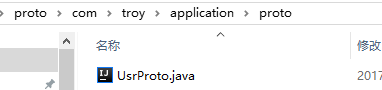
将包里面的java文件拷到对应包下面就可以使用了
4)proto的序列化和反序列化
a、对象(为了检测序列化多少,采用同一个对象只是改了一下名称)
import java.io.Serializable;

public class Usr implements Serializable{

    private String id;

    private String name;

    private String age;

    public Usr(String id, String name, String age) {

        this.id = id;

        this.name = name;

        this.age = age;

    }

    public String getId() {

        return id;

    }

    public void setId(String id) {

        this.id = id;

    }

    public String getName() {

        return name;

    }

    public void setName(String name) {

        this.name = name;

    }

    public String getAge() {

        return age;

    }

    public void setAge(String age) {

        this.age = age;

    }

    @Override

    public String toString() {

        return "Usr{" +

                "id='" + id + '\'' +

                ", name='" + name + '\'' +

                ", age='" + age + '\'' +

                '}';

    }

}
b、proto序列化文件
public final class UsrProto {
private UsrProto() {}
public static void registerAllExtensions(
com.google.protobuf.ExtensionRegistry registry) {
}
public interface UsrOrBuilder extends
// @@protoc_insertion_point(interface_extends:Usr)
com.google.protobuf.MessageOrBuilder {
/**
* <code>required string id = 1;</code>
*/
boolean hasId();
/**
* <code>required string id = 1;</code>
*/
String getId();
/**
* <code>required string id = 1;</code>
*/
com.google.protobuf.ByteString
getIdBytes();
/**
* <code>required string name = 2;</code>
*/
boolean hasName();
/**
* <code>required string name = 2;</code>
*/
String getName();
/**
* <code>required string name = 2;</code>
*/
com.google.protobuf.ByteString
getNameBytes();
/**
* <code>required string age = 3;</code>
*/
boolean hasAge();
/**
* <code>required string age = 3;</code>
*/
String getAge();
/**
* <code>required string age = 3;</code>
*/
com.google.protobuf.ByteString
getAgeBytes();
}
/**
* Protobuf type {@code Usr}
*/
public static final class Usr extends
com.google.protobuf.GeneratedMessage implements
// @@protoc_insertion_point(message_implements:Usr)
UsrOrBuilder {
// Use Usr.newBuilder() to construct.
private Usr(com.google.protobuf.GeneratedMessage.Builder builder) {
super(builder);
}
private Usr() {
id_ = "";
name_ = "";
age_ = "";
}
@Override
public final com.google.protobuf.UnknownFieldSet
getUnknownFields() {
return this.unknownFields;
}
private Usr(
com.google.protobuf.CodedInputStream input,
com.google.protobuf.ExtensionRegistryLite extensionRegistry)
throws com.google.protobuf.InvalidProtocolBufferException {
this();
int mutable_bitField0_ = 0;
com.google.protobuf.UnknownFieldSet.Builder unknownFields =
com.google.protobuf.UnknownFieldSet.newBuilder();
try {
boolean done = false;
while (!done) {
int tag = input.readTag();
switch (tag) {
case 0:
done = true;
break;
default: {
if (!parseUnknownField(input, unknownFields,
extensionRegistry, tag)) {
done = true;
}
break;
}
case 10: {
com.google.protobuf.ByteString bs = input.readBytes();
bitField0_ |= 0x00000001;
id_ = bs;
break;
}
case 18: {
com.google.protobuf.ByteString bs = input.readBytes();
bitField0_ |= 0x00000002;
name_ = bs;
break;
}
case 26: {
com.google.protobuf.ByteString bs = input.readBytes();
bitField0_ |= 0x00000004;
age_ = bs;
break;
}
}
}
} catch (com.google.protobuf.InvalidProtocolBufferException e) {
throw e.setUnfinishedMessage(this);
} catch (java.io.IOException e) {
throw new com.google.protobuf.InvalidProtocolBufferException(
e.getMessage()).setUnfinishedMessage(this);
} finally {
this.unknownFields = unknownFields.build();
makeExtensionsImmutable();
}
}
public static final com.google.protobuf.Descriptors.Descriptor
getDescriptor() {
return UsrProto.internal_static_Usr_descriptor;
}
protected FieldAccessorTable
internalGetFieldAccessorTable() {
return UsrProto.internal_static_Usr_fieldAccessorTable
.ensureFieldAccessorsInitialized(
Usr.class, Builder.class);
}
public static final com.google.protobuf.Parser<Usr> PARSER =
new com.google.protobuf.AbstractParser<Usr>() {
public Usr parsePartialFrom(
com.google.protobuf.CodedInputStream input,
com.google.protobuf.ExtensionRegistryLite extensionRegistry)
throws com.google.protobuf.InvalidProtocolBufferException {
return new Usr(input, extensionRegistry);
}
};
@Override
public com.google.protobuf.Parser<Usr> getParserForType() {
return PARSER;
}
private int bitField0_;
public static final int ID_FIELD_NUMBER = 1;
private Object id_;
/**
* <code>required string id = 1;</code>
*/
public boolean hasId() {
return ((bitField0_ & 0x00000001) == 0x00000001);
}
/**
* <code>required string id = 1;</code>
*/
public String getId() {
Object ref = id_;
if (ref instanceof String) {
return (String) ref;
} else {
com.google.protobuf.ByteString bs =
(com.google.protobuf.ByteString) ref;
String s = bs.toStringUtf8();
if (bs.isValidUtf8()) {
id_ = s;
}
return s;
}
}
/**
* <code>required string id = 1;</code>
*/
public com.google.protobuf.ByteString
getIdBytes() {
Object ref = id_;
if (ref instanceof String) {
com.google.protobuf.ByteString b =
com.google.protobuf.ByteString.copyFromUtf8(
(String) ref);
id_ = b;
return b;
} else {
return (com.google.protobuf.ByteString) ref;
}
}
public static final int NAME_FIELD_NUMBER = 2;
private Object name_;
/**
* <code>required string name = 2;</code>
*/
public boolean hasName() {
return ((bitField0_ & 0x00000002) == 0x00000002);
}
/**
* <code>required string name = 2;</code>
*/
public String getName() {
Object ref = name_;
if (ref instanceof String) {
return (String) ref;
} else {
com.google.protobuf.ByteString bs =
(com.google.protobuf.ByteString) ref;
String s = bs.toStringUtf8();
if (bs.isValidUtf8()) {
name_ = s;
}
return s;
}
}
/**
* <code>required string name = 2;</code>
*/
public com.google.protobuf.ByteString
getNameBytes() {
Object ref = name_;
if (ref instanceof String) {
com.google.protobuf.ByteString b =
com.google.protobuf.ByteString.copyFromUtf8(
(String) ref);
name_ = b;
return b;
} else {
return (com.google.protobuf.ByteString) ref;
}
}
public static final int AGE_FIELD_NUMBER = 3;
private Object age_;
/**
* <code>required string age = 3;</code>
*/
public boolean hasAge() {
return ((bitField0_ & 0x00000004) == 0x00000004);
}
/**
* <code>required string age = 3;</code>
*/
public String getAge() {
Object ref = age_;
if (ref instanceof String) {
return (String) ref;
} else {
com.google.protobuf.ByteString bs =
(com.google.protobuf.ByteString) ref;
String s = bs.toStringUtf8();
if (bs.isValidUtf8()) {
age_ = s;
}
return s;
}
}
/**
* <code>required string age = 3;</code>
*/
public com.google.protobuf.ByteString
getAgeBytes() {
Object ref = age_;
if (ref instanceof String) {
com.google.protobuf.ByteString b =
com.google.protobuf.ByteString.copyFromUtf8(
(String) ref);
age_ = b;
return b;
} else {
return (com.google.protobuf.ByteString) ref;
}
}
private byte memoizedIsInitialized = -1;
public final boolean isInitialized() {
byte isInitialized = memoizedIsInitialized;
if (isInitialized == 1) return true;
if (isInitialized == 0) return false;
if (!hasId()) {
memoizedIsInitialized = 0;
return false;
}
if (!hasName()) {
memoizedIsInitialized = 0;
return false;
}
if (!hasAge()) {
memoizedIsInitialized = 0;
return false;
}
memoizedIsInitialized = 1;
return true;
}
public void writeTo(com.google.protobuf.CodedOutputStream output)
throws java.io.IOException {
getSerializedSize();
if (((bitField0_ & 0x00000001) == 0x00000001)) {
output.writeBytes(1, getIdBytes());
}
if (((bitField0_ & 0x00000002) == 0x00000002)) {
output.writeBytes(2, getNameBytes());
}
if (((bitField0_ & 0x00000004) == 0x00000004)) {
output.writeBytes(3, getAgeBytes());
}
unknownFields.writeTo(output);
}
private int memoizedSerializedSize = -1;
public int getSerializedSize() {
int size = memoizedSerializedSize;
if (size != -1) return size;
size = 0;
if (((bitField0_ & 0x00000001) == 0x00000001)) {
size += com.google.protobuf.CodedOutputStream
.computeBytesSize(1, getIdBytes());
}
if (((bitField0_ & 0x00000002) == 0x00000002)) {
size += com.google.protobuf.CodedOutputStream
.computeBytesSize(2, getNameBytes());
}
if (((bitField0_ & 0x00000004) == 0x00000004)) {
size += com.google.protobuf.CodedOutputStream
.computeBytesSize(3, getAgeBytes());
}
size += unknownFields.getSerializedSize();
memoizedSerializedSize = size;
return size;
}
private static final long serialVersionUID = 0L;
public static Usr parseFrom(
com.google.protobuf.ByteString data)
throws com.google.protobuf.InvalidProtocolBufferException {
return PARSER.parseFrom(data);
}
public static Usr parseFrom(
com.google.protobuf.ByteString data,
com.google.protobuf.ExtensionRegistryLite extensionRegistry)
throws com.google.protobuf.InvalidProtocolBufferException {
return PARSER.parseFrom(data, extensionRegistry);
}
public static Usr parseFrom(byte[] data)
throws com.google.protobuf.InvalidProtocolBufferException {
return PARSER.parseFrom(data);
}
public static Usr parseFrom(
byte[] data,
com.google.protobuf.ExtensionRegistryLite extensionRegistry)
throws com.google.protobuf.InvalidProtocolBufferException {
return PARSER.parseFrom(data, extensionRegistry);
}
public static Usr parseFrom(java.io.InputStream input)
throws java.io.IOException {
return PARSER.parseFrom(input);
}
public static Usr parseFrom(
java.io.InputStream input,
com.google.protobuf.ExtensionRegistryLite extensionRegistry)
throws java.io.IOException {
return PARSER.parseFrom(input, extensionRegistry);
}
public static Usr parseDelimitedFrom(java.io.InputStream input)
throws java.io.IOException {
return PARSER.parseDelimitedFrom(input);
}
public static Usr parseDelimitedFrom(
java.io.InputStream input,
com.google.protobuf.ExtensionRegistryLite extensionRegistry)
throws java.io.IOException {
return PARSER.parseDelimitedFrom(input, extensionRegistry);
}
public static Usr parseFrom(
com.google.protobuf.CodedInputStream input)
throws java.io.IOException {
return PARSER.parseFrom(input);
}
public static Usr parseFrom(
com.google.protobuf.CodedInputStream input,
com.google.protobuf.ExtensionRegistryLite extensionRegistry)
throws java.io.IOException {
return PARSER.parseFrom(input, extensionRegistry);
}
public static Builder newBuilder() { return new Builder(); }
public Builder newBuilderForType() { return newBuilder(); }
public static Builder newBuilder(Usr prototype) {
return newBuilder().mergeFrom(prototype);
}
public Builder toBuilder() { return newBuilder(this); }
@Override
protected Builder newBuilderForType(
BuilderParent parent) {
Builder builder = new Builder(parent);
return builder;
}
/**
* Protobuf type {@code Usr}
*/
public static final class Builder extends
com.google.protobuf.GeneratedMessage.Builder<Builder> implements
// @@protoc_insertion_point(builder_implements:Usr)
UsrOrBuilder {
public static final com.google.protobuf.Descriptors.Descriptor
getDescriptor() {
return UsrProto.internal_static_Usr_descriptor;
}
protected FieldAccessorTable
internalGetFieldAccessorTable() {
return UsrProto.internal_static_Usr_fieldAccessorTable
.ensureFieldAccessorsInitialized(
Usr.class, Builder.class);
}
// Construct using com.troy.application.proto.UsrProto.Usr.newBuilder()
private Builder() {
maybeForceBuilderInitialization();
}
private Builder(
BuilderParent parent) {
super(parent);
maybeForceBuilderInitialization();
}
private void maybeForceBuilderInitialization() {
if (com.google.protobuf.GeneratedMessage.alwaysUseFieldBuilders) {
}
}
public Builder clear() {
super.clear();
id_ = "";
bitField0_ = (bitField0_ & ~0x00000001);
name_ = "";
bitField0_ = (bitField0_ & ~0x00000002);
age_ = "";
bitField0_ = (bitField0_ & ~0x00000004);
return this;
}
public com.google.protobuf.Descriptors.Descriptor
getDescriptorForType() {
return UsrProto.internal_static_Usr_descriptor;
}
public Usr getDefaultInstanceForType() {
return Usr.getDefaultInstance();
}
public Usr build() {
Usr result = buildPartial();
if (!result.isInitialized()) {
throw newUninitializedMessageException(result);
}
return result;
}
public Usr buildPartial() {
Usr result = new Usr(this);
int from_bitField0_ = bitField0_;
int to_bitField0_ = 0;
if (((from_bitField0_ & 0x00000001) == 0x00000001)) {
to_bitField0_ |= 0x00000001;
}
result.id_ = id_;
if (((from_bitField0_ & 0x00000002) == 0x00000002)) {
to_bitField0_ |= 0x00000002;
}
result.name_ = name_;
if (((from_bitField0_ & 0x00000004) == 0x00000004)) {
to_bitField0_ |= 0x00000004;
}
result.age_ = age_;
result.bitField0_ = to_bitField0_;
onBuilt();
return result;
}
public Builder mergeFrom(com.google.protobuf.Message other) {
if (other instanceof Usr) {
return mergeFrom((Usr)other);
} else {
super.mergeFrom(other);
return this;
}
}
public Builder mergeFrom(Usr other) {
if (other == Usr.getDefaultInstance()) return this;
if (other.hasId()) {
bitField0_ |= 0x00000001;
id_ = other.id_;
onChanged();
}
if (other.hasName()) {
bitField0_ |= 0x00000002;
name_ = other.name_;
onChanged();
}
if (other.hasAge()) {
bitField0_ |= 0x00000004;
age_ = other.age_;
onChanged();
}
this.mergeUnknownFields(other.unknownFields);
onChanged();
return this;
}
public final boolean isInitialized() {
if (!hasId()) {
return false;
}
if (!hasName()) {
return false;
}
if (!hasAge()) {
return false;
}
return true;
}
public Builder mergeFrom(
com.google.protobuf.CodedInputStream input,
com.google.protobuf.ExtensionRegistryLite extensionRegistry)
throws java.io.IOException {
Usr parsedMessage = null;
try {
parsedMessage = PARSER.parsePartialFrom(input, extensionRegistry);
} catch (com.google.protobuf.InvalidProtocolBufferException e) {
parsedMessage = (Usr) e.getUnfinishedMessage();
throw e;
} finally {
if (parsedMessage != null) {
mergeFrom(parsedMessage);
}
}
return this;
}
private int bitField0_;
private Object id_ = "";
/**
* <code>required string id = 1;</code>
*/
public boolean hasId() {
return ((bitField0_ & 0x00000001) == 0x00000001);
}
/**
* <code>required string id = 1;</code>
*/
public String getId() {
Object ref = id_;
if (!(ref instanceof String)) {
com.google.protobuf.ByteString bs =
(com.google.protobuf.ByteString) ref;
String s = bs.toStringUtf8();
if (bs.isValidUtf8()) {
id_ = s;
}
return s;
} else {
return (String) ref;
}
}
/**
* <code>required string id = 1;</code>
*/
public com.google.protobuf.ByteString
getIdBytes() {
Object ref = id_;
if (ref instanceof String) {
com.google.protobuf.ByteString b =
com.google.protobuf.ByteString.copyFromUtf8(
(String) ref);
id_ = b;
return b;
} else {
return (com.google.protobuf.ByteString) ref;
}
}
/**
* <code>required string id = 1;</code>
*/
public Builder setId(
String value) {
if (value == null) {
throw new NullPointerException();
}
bitField0_ |= 0x00000001;
id_ = value;
onChanged();
return this;
}
/**
* <code>required string id = 1;</code>
*/
public Builder clearId() {
bitField0_ = (bitField0_ & ~0x00000001);
id_ = getDefaultInstance().getId();
onChanged();
return this;
}
/**
* <code>required string id = 1;</code>
*/
public Builder setIdBytes(
com.google.protobuf.ByteString value) {
if (value == null) {
throw new NullPointerException();
}
bitField0_ |= 0x00000001;
id_ = value;
onChanged();
return this;
}
private Object name_ = "";
/**
* <code>required string name = 2;</code>
*/
public boolean hasName() {
return ((bitField0_ & 0x00000002) == 0x00000002);
}
/**
* <code>required string name = 2;</code>
*/
public String getName() {
Object ref = name_;
if (!(ref instanceof String)) {
com.google.protobuf.ByteString bs =
(com.google.protobuf.ByteString) ref;
String s = bs.toStringUtf8();
if (bs.isValidUtf8()) {
name_ = s;
}
return s;
} else {
return (String) ref;
}
}
/**
* <code>required string name = 2;</code>
*/
public com.google.protobuf.ByteString
getNameBytes() {
Object ref = name_;
if (ref instanceof String) {
com.google.protobuf.ByteString b =
com.google.protobuf.ByteString.copyFromUtf8(
(String) ref);
name_ = b;
return b;
} else {
return (com.google.protobuf.ByteString) ref;
}
}
/**
* <code>required string name = 2;</code>
*/
public Builder setName(
String value) {
if (value == null) {
throw new NullPointerException();
}
bitField0_ |= 0x00000002;
name_ = value;
onChanged();
return this;
}
/**
* <code>required string name = 2;</code>
*/
public Builder clearName() {
bitField0_ = (bitField0_ & ~0x00000002);
name_ = getDefaultInstance().getName();
onChanged();
return this;
}
/**
* <code>required string name = 2;</code>
*/
public Builder setNameBytes(
com.google.protobuf.ByteString value) {
if (value == null) {
throw new NullPointerException();
}
bitField0_ |= 0x00000002;
name_ = value;
onChanged();
return this;
}
private Object age_ = "";
/**
* <code>required string age = 3;</code>
*/
public boolean hasAge() {
return ((bitField0_ & 0x00000004) == 0x00000004);
}
/**
* <code>required string age = 3;</code>
*/
public String getAge() {
Object ref = age_;
if (!(ref instanceof String)) {
com.google.protobuf.ByteString bs =
(com.google.protobuf.ByteString) ref;
String s = bs.toStringUtf8();
if (bs.isValidUtf8()) {
age_ = s;
}
return s;
} else {
return (String) ref;
}
}
/**
* <code>required string age = 3;</code>
*/
public com.google.protobuf.ByteString
getAgeBytes() {
Object ref = age_;
if (ref instanceof String) {
com.google.protobuf.ByteString b =
com.google.protobuf.ByteString.copyFromUtf8(
(String) ref);
age_ = b;
return b;
} else {
return (com.google.protobuf.ByteString) ref;
}
}
/**
* <code>required string age = 3;</code>
*/
public Builder setAge(
String value) {
if (value == null) {
throw new NullPointerException();
}
bitField0_ |= 0x00000004;
age_ = value;
onChanged();
return this;
}
/**
* <code>required string age = 3;</code>
*/
public Builder clearAge() {
bitField0_ = (bitField0_ & ~0x00000004);
age_ = getDefaultInstance().getAge();
onChanged();
return this;
}
/**
* <code>required string age = 3;</code>
*/
public Builder setAgeBytes(
com.google.protobuf.ByteString value) {
if (value == null) {
throw new NullPointerException();
}
bitField0_ |= 0x00000004;
age_ = value;
onChanged();
return this;
}
// @@protoc_insertion_point(builder_scope:Usr)
}
// @@protoc_insertion_point(class_scope:Usr)
private static final Usr defaultInstance;static {
defaultInstance = new Usr();
}
public static Usr getDefaultInstance() {
return defaultInstance;
}
public Usr getDefaultInstanceForType() {
return defaultInstance;
}
}
private static final com.google.protobuf.Descriptors.Descriptor
internal_static_Usr_descriptor;
private static
com.google.protobuf.GeneratedMessage.FieldAccessorTable
internal_static_Usr_fieldAccessorTable;
public static com.google.protobuf.Descriptors.FileDescriptor
getDescriptor() {
return descriptor;
}
private static com.google.protobuf.Descriptors.FileDescriptor
descriptor;
static {
String[] descriptorData = {
"\n\nuser.proto\",\n\003Usr\022\n\n\002id\030\001 \002(\t\022\014\n\004name\030" +
"\002 \002(\t\022\013\n\003age\030\003 \002(\tB&\n\032com.troy.applicati" +
"on.protoB\010UsrProto"
};
com.google.protobuf.Descriptors.FileDescriptor.InternalDescriptorAssigner assigner =
new com.google.protobuf.Descriptors.FileDescriptor. InternalDescriptorAssigner() {
public com.google.protobuf.ExtensionRegistry assignDescriptors(
com.google.protobuf.Descriptors.FileDescriptor root) {
descriptor = root;
return null;
}
};
com.google.protobuf.Descriptors.FileDescriptor
.internalBuildGeneratedFileFrom(descriptorData,
new com.google.protobuf.Descriptors.FileDescriptor[] {
}, assigner);
internal_static_Usr_descriptor =
getDescriptor().getMessageTypes().get(0);
internal_static_Usr_fieldAccessorTable = new
com.google.protobuf.GeneratedMessage.FieldAccessorTable(
internal_static_Usr_descriptor,
new String[] { "Id", "Name", "Age", });
}
// @@protoc_insertion_point(outer_class_scope)
}
c、proto的序列化与反序列化
import java.util.Arrays;

public class UsrSerializable {

    public static void main(String[] args) {

        try {

            //建立工具

            UsrProto.Usr.Builder builder = UsrProto.Usr.newBuilder();

            //设置参数

            builder.setId("1").setName("user").setAge("25");

            //建立对象

            UsrProto.Usr usr = builder.build();

            //序列化

            byte[] bytes = usr.toByteArray();

            System.out.println(Arrays.toString(bytes));

            //反序列化

            UsrProto.Usr u = UsrProto.Usr.parseFrom(bytes);

            System.out.println(u);

        } catch (Exception e) {

            e.printStackTrace();

        }

    }

}
4)结果对比:
[10, 1, 49, 18, 4, 117, 115, 101, 114, 26, 2, 50, 53]

id: "1"

name: "user"

age: "25"
4、总结
1)相对于java本身的序列化,proto的序列化精简了很多很多。
2)从数据上面来看没有任何变化,但是proto抛弃了很多东西。
3)这个在http的数据传输上面可以提高很多效率。
4)相对来说,编写上面多做了很多事情,但是考虑数据传输等问题可以采用这种方式!
java之序列化与反序列化的更多相关文章
- java 对象序列化与反序列化
Java序列化与反序列化是什么? 为什么需要序列化与反序列化? 如何实现Java序列化与反序列化? 本文围绕这些问题进行了探讨. 1.Java序列化与反序列化 Java序列化是指把Java对象转换为 ...
- Java对象序列化与反序列化一 JSON
Java对象序列化与反序列化一 JSON 1. 依赖库 jackson-all-1.6.1.jar 2. 代码 public class Student { private String nam ...
- Java对象序列化和反序列化的工具方法
import java.io.File; import java.io.FileInputStream; import java.io.FileNotFoundException; import ja ...
- Java之序列化和反序列化
序列化的对象: package test_demo.SerializableOper; import java.io.Serializable; /* * 序列化对象需要实现序列号接口 * */ pu ...
- Java基础—序列化与反序列化(转载)
转载自: Java序列化与反序列化 1.Java序列化与反序列化 Java序列化是指把Java对象转换为字节序列的过程:而Java反序列化是指把字节序列恢复为Java对象的过程. 2.为什么需要序列化 ...
- Java 中序列化与反序列化
一. 序列化和反序列化概念 Serialization(序列化)是一种将对象以一连串的字节描述的过程:反序列化deserialization是一种将这些字节重建成一个对象的过程.将程序中的对象,放入文 ...
- JAVA的序列化与反序列化
一.为什么要进行序列化 再介绍之前,我们有必要先了解下对象的生命周期,我们知道Java对象的生命周期,也即Java中的远程方法调用RMI也会被用到,在网络中要传输对象的话,则必须要对对象进行序列化,关 ...
- 深入分析Java的序列化与反序列化
序列化是一种对象持久化的手段.普遍应用在网络传输.RMI等场景中.本文通过分析ArrayList的序列化来介绍Java序列化的相关内容.主要涉及到以下几个问题: 怎么实现Java的序列化 为什么实现了 ...
- Java 对象序列化和反序列化
之前的文章中我们介绍过有关字节流字符流的使用,当时我们对于将一个对象输出到流中的操作,使用DataOutputStream流将该对象中的每个属性值逐个输出到流中,读出时相反.在我们看来这种行 ...
随机推荐
- tomcat config https 443
设置https: <Connector port="443" protocol="HTTP/1.1" SSLEnabled="true" ...
- UOJ #164 【清华集训2015】 V
题目链接:V 这道题由于是单点询问,所以异常好写. 注意到每种修改操作都可以用一个标记\((a,b)\)表示.标记\((a,b)\)的意义就是\(x= \max\{x+a,b\}\) 同时这种标记也是 ...
- Codeforces Round #394 (Div. 2) A,B,C,D,E
A. Dasha and Stairs time limit per test 2 seconds memory limit per test 256 megabytes input standard ...
- SSH基本管理和配置文件的使用
服务端:linl_S IP:10.0.0.15 客户端:lin_C IP:10.0.0.16 SSHD服务 SSH协议:安全外壳协议.为Secure Shell的缩写.SSH为建立在应 ...
- Android Studio之高德地图实现定位和3D地图显示
在应用开发中,地图开发是经常需要使用的“组件”,国内比较出名的是就是百度地图和高德地图. 此博客讲的是高德地图实现定位和3D地图显示,并标注相应位置,话不多说,先看看效果,在上代码. 效果如图: 首先 ...
- Linux CentOS7.0下JAVA安装和配置环境变量
一.前言: CentOS7.0虽然自带JDK1.7和1.8,运行“java -version”命令也可以看到版本信息,但是jdk的安装环境不全,比如缺少tool.jar和dt.jar等,这就导致“ja ...
- APP推广运营经验总结
这片文章来自于我在公司的分享会,主题是关于APP在渠道方面的推广,主要包括3个方面,下载量,留存率,日活跃用户. 首先,在应用市场中,一个APP有四个方面,简介,截图,下载量,评论.用户看这四个方面, ...
- IOS-网络(小文件下载)
// // ViewController.m // IOS_0131_小文件下载 // // Created by ma c on 16/1/31. // Copyright © 2016年 博文科技 ...
- python3连接MySQL数据库实例
#python3连接MySQL实例 import pymysql """导入连接MySQL需要的包,没有安装pymysql需要先安装 使用命令行切换到python的安装路 ...
- 非ie浏览器必备函数常识
场景描述: 我们都知道IE浏览器和非IE浏览器都有很多功能一样但写法不同,或者各自都有一些自己独特的方法,那么为了保持兼容性和便于编写,我们可以通过这两个方法给非IE浏览器的对象增加自己没有,但IE有 ...