
microkernel architecture - Proxy
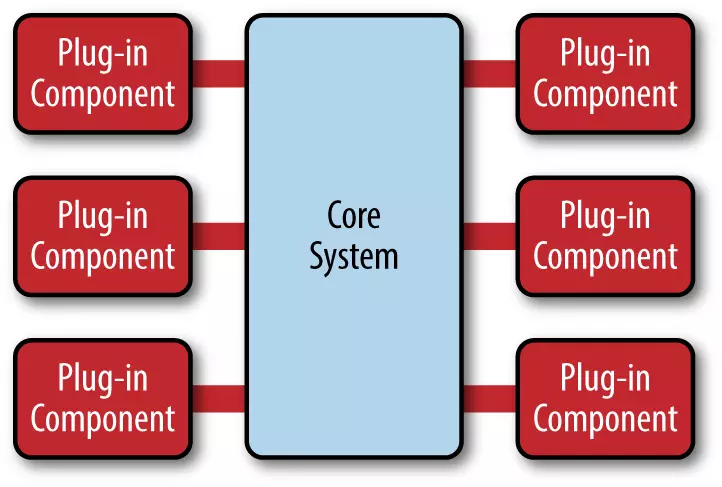
1: Oriented-Interface Plug-in development
2: Using Interceptor to develop Plug-in
3: Poxy or Reflection also can be used in Plug-in development (InvocationHandler)
https://blog.csdn.net/huxiaoyonglan1/article/details/72956184
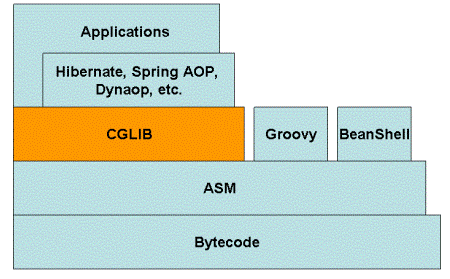
https://blog.csdn.net/danchu/article/details/70238002
public class JavassistProxyFactory extends AbstractProxyFactory {

	@SuppressWarnings("unchecked")

	public <T> T getProxy(Invoker<T> invoker, Class<?>[] interfaces) {

		return (T) Proxy.getProxy(interfaces).newInstance(

		           new InvokerInvocationHandler(invoker)

				);

	}

	public <T> Invoker<T> getInvoker(T proxy, Class<T> type, URL url) {

		final Wrapper wrapper = Wrapper.getWrapper(

		              proxy.getClass().getName().indexOf('$') < 0 ?

					  proxy.getClass() : type);

		return new AbstractProxyInvoker<T>(proxy, type, url) {

			@Override

			protected Object doInvoke(T proxy, String methodName,

									  Class<?>[] parameterTypes,

									  Object[] arguments) throws Throwable {

				return wrapper.invokeMethod(proxy, methodName, parameterTypes, arguments);

			}

		};

	}

}
public static <T> T create(Class<T> interfaceClass) {

        return (T) Proxy.newProxyInstance(interfaceClass.getClassLoader(),new Class<?>[]{interfaceClass},new ObjectProxy<T>(interfaceClass)

        );

    }

    public static <T> IAsyncObjectProxy createAsync(Class<T> interfaceClass) {

        return new ObjectProxy<T>(interfaceClass);

    }

public class ObjectProxy<T> implements InvocationHandler, IAsyncObjectProxy {

    private static final Logger LOGGER = LoggerFactory.getLogger(ObjectProxy.class);

    private Class<T> clazz;

    public ObjectProxy(Class<T> clazz) {

        this.clazz = clazz;

    }

    //for synchronized call, package the call with classname, method, arguments

    @Override

    public Object invoke(Object proxy, Method method, Object[] args) throws Throwable {

        if (Object.class == method.getDeclaringClass()) {

            String name = method.getName();

            if ("equals".equals(name)) {

                return proxy == args[0];

            } else if ("hashCode".equals(name)) {

                return System.identityHashCode(proxy);

            } else if ("toString".equals(name)) {

                return proxy.getClass().getName() + "@" +

                        Integer.toHexString(System.identityHashCode(proxy)) +

                        ", with InvocationHandler " + this;

            } else {

                throw new IllegalStateException(String.valueOf(method));

            }

        }

        //package the classname, method, types of arguments and arguments,additional request id

        RpcRequest request = new RpcRequest();

        request.setRequestId(UUID.randomUUID().toString());

        request.setClassName(method.getDeclaringClass().getName());

        request.setMethodName(method.getName());

        request.setParameterTypes(method.getParameterTypes());

        request.setParameters(args);

        // Debug

        LOGGER.debug(method.getDeclaringClass().getName());

        LOGGER.debug(method.getName());

        for (int i = 0; i < method.getParameterTypes().length; ++i) {

            LOGGER.debug(method.getParameterTypes()[i].getName());

        }

        for (int i = 0; i < args.length; ++i) {

            LOGGER.debug(args[i].toString());

        }

        //get one client from list of client

        RpcClientHandler handler = ConnectManage.getInstance().chooseHandler();

        //send rpc message to rpc server and wait for results

        RPCFuture rpcFuture = handler.sendRequest(request);

        return rpcFuture.get();

    }

    @Override

    public RPCFuture call(String funcName, Object... args) {

        RpcClientHandler handler = ConnectManage.getInstance().chooseHandler();

        RpcRequest request = createRequest(this.clazz.getName(), funcName, args);

        RPCFuture rpcFuture = handler.sendRequest(request);

        return rpcFuture;

    }

}
public class RpcClient implements InvocationHandler {

	@SuppressWarnings("unchecked")

	public <T> T proxy(Class<T> interfaceClass) throws Throwable {

		if (!interfaceClass.isInterface()) {

			throw new IllegalArgumentException(interfaceClass.getName()

					+ " is not an interface");

		}

		return (T) Proxy.newProxyInstance(interfaceClass.getClassLoader(),new Class<?>[] { interfaceClass }, this);

	}

	@Override

	public RpcClient interfaceClass(Class<?> interfaceClass) {

		// TODO Auto-generated method stub

		this.interfaceClass=interfaceClass;

		return this;

	}

	@Override

	public RpcClient version(String version) {

		// TODO Auto-generated method stub

		this.version=version;

		return this;

	}

	@Override

	public RpcClient clientTimeout(int clientTimeout) {

		// TODO Auto-generated method stub

		this.timeout=clientTimeout;

		return this;

	}

	@Override

	public RpcConsumer hook(ConsumerHook hook) {

		// TODO Auto-generated method stub

		this.hook=hook;

		return this;

	}

	@Override

	public Object instance() {

		try {

			return proxy(this.interfaceClass);

		}

		catch (Throwable e)

		{

			e.printStackTrace();

		}

		return null;

	}

	@Override

	public void asynCall(String methodName) {

		 asynCall(methodName, null);

	}

	@Override

	public <T extends ResponseCallbackListener> void asynCall(String methodName, T callbackListener) {

		this.asyncMethods.put(methodName, callbackListener);

		this.connection.setAsyncMethod(asyncMethods);

		for (RpcConnection conn:connection_list)

		{

			conn.setAsyncMethod(asyncMethods);

		}

	}

	@Override

	public void cancelAsyn(String methodName) {

		this.asyncMethods.remove(methodName);

		this.connection.setAsyncMethod(asyncMethods);

		for (RpcConnection conn:connection_list)

		{

			conn.setAsyncMethod(asyncMethods);

		}

	}

	@Override

	public Object invoke(Object proxy, Method method, Object[] args) throws Throwable {

		List<String> parameterTypes = new LinkedList<String>();

		for (Class<?> parameterType : method.getParameterTypes()) {

			parameterTypes.add(parameterType.getName());

		}

		RpcRequest request = new RpcRequest();

		request.setRequestId(UUID.randomUUID().toString());

        request.setClassName(method.getDeclaringClass().getName());

        request.setMethodName(method.getName());

        request.setParameterTypes(method.getParameterTypes());

        request.setParameters(args);

        if(hook!=null)

        	hook.before(request);

		RpcResponse response = null;

		try

		{

			request.setContext(RpcContext.props);

			response = (RpcResponse) select().Send(request,asyncMethods.containsKey(request.getMethodName()));

			if(hook!=null)

            	hook.after(request);

			if(!asyncMethods.containsKey(request.getMethodName())&&response.getExption()!=null)

			{

				Throwable e=(Throwable) Tool.deserialize(response.getExption(),response.getClazz());

				throw e.getCause();

			}

		}

		catch (Throwable t)

		{

			//t.printStackTrace();

			//throw new RuntimeException(t);

			throw t;

		}

		finally

		{

//			if(asyncMethods.containsKey(request.getMethodName())&&asyncMethods.get(request.getMethodName())!=null)

//			{

//				cancelAsyn(request.getMethodName());

//			}

		}

		if(response==null)

		{

			return null;

		}

		else if (response.getErrorMsg() != null)

		{

			throw response.getErrorMsg();

		}

		else

		{

			return response.getAppResponse();

		}

	}

}
public class ProxyFactory implements MethodInterceptor {

    private Object obj;

    public Object createProxy(Object target) {

        this.obj = target;

        Enhancer enhancer = new Enhancer();

        enhancer.setSuperclass(this.obj.getClass());

        enhancer.setCallback(this);

        enhancer.setClassLoader(target.getClass().getClassLoader());

        return enhancer.create();

    }

    @Override

    public Object intercept(Object obj, Method method, Object[] args, MethodProxy proxy) throws Throwable {

        Object result = null;

        try {

            before();

            result = proxy.invokeSuper(obj, args);

            after();

        } catch (Exception e) {

            exception();

        }finally{

            beforeReturning();

        }

        return result;

    }

}

Hello hello = new Hello();

ProxyFactory cglibProxy = new ProxyFactory();

Hello proxy = (Hello) cglibProxy.createProxy(hello);

String result=proxy.sayHello(true);

//////////////////////////////////////////////////////

  Enhancer enhancer = new Enhancer();

  enhancer.setSuperclass(SampleClass.class);

  enhancer.setCallback(new FixedValue() {

    @Override

    public Object loadObject() throws Exception {

      return "Hello cglib!";

    }

  });

  SampleClass proxy = (SampleClass) enhancer.create();

////////////////////////////////////////////////////////

  Enhancer enhancer = new Enhancer();

  enhancer.setSuperclass(SampleClass.class);

  enhancer.setCallback(new InvocationHandler() {

    @Override

    public Object invoke(Object proxy, Method method, Object[] args)

        throws Throwable {

      if(method.getDeclaringClass() != Object.class && method.getReturnType() == String.class) {

        return "Hello cglib!";

      } else {

        throw new RuntimeException("Do not know what to do.");

      }

    }

  });

  SampleClass proxy = (SampleClass) enhancer.create();

/////////////////////////////////////////////////////////////////

  Enhancer enhancer = new Enhancer();

  enhancer.setSuperclass(SampleClass.class);

 enhancer.setCallbackFilter(new filter());

  enhancer.setCallback(new MethodInterceptor() {

    @Override

    public Object intercept(Object obj, Method method, Object[] args, MethodProxy proxy)

        throws Throwable {

      if(method.getDeclaringClass() != Object.class && method.getReturnType() == String.class) {

        return "Hello cglib!";

      } else {

        return proxy.invokeSuper(obj, args);

      }

    }

  });

  SampleClass proxy = (SampleClass) enhancer.create();

//////////////////////////////////////////////////////////////////
https://www.jianshu.com/p/20203286ccd9
microkernel architecture - Proxy的更多相关文章
- 微内核架构(Microkernel Architecture)
微内核架构(Microkernel Architecture) 微内核架构有时也被成为插件架构模式(plug-in architecture pattern),通常用于实现基于产品的应用,如Eclip ...
- Software Architecture Pattern(Mark Richards)笔记
软件架构模式 缺少规范架构的程序通常会变得紧耦合.脆弱.难以更改,缺少清晰的发展方向和愿景.这本小书用50多页介绍了常用的5种常见架构模式,相信不管是大牛还是萌新都会有所收获,特别是对我这种偏爱系统设 ...
- 理解 Dubbo SPI 扩展机制
写在前面 最近接触了 gRPC 体会到虽然众多 RPC 框架各有各的特点但是他们提供的特性和功能有很多的相似之处 , 这就说明他们面对同样的分布式系统带来的问题.从 2016 年左右开始接触到 dub ...
- [转] 理解 Dubbo SPI 扩展机制
写在前面 最近接触了 gRPC 体会到虽然众多 RPC 框架各有各的特点但是他们提供的特性和功能有很多的相似之处 , 这就说明他们面对同样的分布式系统带来的问题.从 2016 年左右开始接触到 dub ...
- iOS动态部署方案
转载: iOS动态部署方案 前言 这里讨论的动态部署方案,就是指通过不发版的方式,将新的内容.新的业务流程部署进已发布的App.因为苹果的审核周期比较长,而且苹果的限制比较多,业界在这里也没有特别多的 ...
- Anatomy of the Linux kernel--转
ref:http://www.ibm.com/developerworks/linux/library/l-linux-kernel/?S_TACT=105AGX52&S_CMP=cn-a-l ...
- ssiOS应用架构谈 本地持久化方案及动态部署
本文转载至 http://casatwy.com/iosying-yong-jia-gou-tan-ben-di-chi-jiu-hua-fang-an-ji-dong-tai-bu-shu.html ...
- iOS应用架构谈part4-本地持久化方案及动态部署
前言 嗯,你们要的大招.跟着这篇文章一起也发布了CTPersistance和CTJSBridge这两个库,希望大家在实际使用的时候如果遇到问题,就给我提issue或者PR或者评论区.每一个issue和 ...
- 操作系统微内核和Dubbo微内核,有何不同?
你好,我是 yes. 在之前的文章已经提到了 RPC 的核心,想必一个 RPC 通信大致的流程和基本原理已经清晰了. 这篇文章借着 Dubbo 来说说微内核这种设计思想,不会扯到 Dubbo 某个具体 ...
随机推荐
- C#基于SQLiteHelper类似SqlHelper类实现存取Sqlite数据库的方法
本文实例讲述了C#基于SQLiteHelper类似SqlHelper类实现存取Sqlite数据库的方法.分享给大家供大家参考.具体如下: 这个类不是我实现的,英文原文地址为http://www.egg ...
- /bin/bash: sshpass: command not found
按照如下命令进行安装即可: apt-get install sshpass
- ELK 实用架构
- win10系统常用操作
1.打开控制面板 (1)选中“此电脑”,右键选择“属性”. (2)可见 控制面板主页 2.设置环境变量和系统变量 (1)选中“此电脑”,右键选择“属性”. (2)可见 控制面板主页 (3)点击高级系统 ...
- 最近研究了一个.NET的DHT网络搜索引擎,顺便重新整理了下引擎思路,供大家分享讨论下。
最近研究了一个.NET的DHT网络搜索引擎,顺便重新整理了下引擎思路,供大家分享讨论下.
- Flask之flask-migrate 数据库迁移
简介 flask-migrate是flask的一个扩展模块,主要是扩展数据库表结构的. 官方文档:http://flask-migrate.readthedocs.io/en/latest/ 使用fl ...
- 【DP】【单调队列】洛谷 P2216 [HAOI2007]理想的正方形 题解
算是单调队列的复习吧,不是很难 题目描述 有一个$a\times b$的整数组成的矩阵,现请你从中找出一个$n\times n$的正方形区域,使得该区域所有数中的最大值和最小值的差最小. 输入 ...
- POJ - 1733 离散化 并查集
题意:求问数列区间奇偶信息正确与否 和上一题一样(甚至弱化),加个离散就ok啦 #include<iostream> #include<algorithm> #include& ...
- PIE SDK矢量分级渲染
1. 功能简介 分级渲染是矢量的一种数据表达方式.通过选取一个字段,并根据实际需要对字段的数据进行分级,并对每一级设置不同的符号,已达到区分显示的效果. 2. 功能实现说明 2.1. 实现思路及原理说 ...
- python 十大经典排序算法
排序算法可以分为内部排序和外部排序,内部排序是数据记录在内存中进行排序,而外部排序是因排序的数据很大,一次不能容纳全部的排序记录,在排序过程中需要访问外存.常见的内部排序算法有:插入排序.希尔排序.选 ...