
Problem B. Full Binary Tree
题目
链接:http://code.google.com/codejam/contest/2984486/dashboard#s=p1
googlde code jam 2014 Round1A
解题报告下载
归类
动态规划,DFS
解法1[最优解]
耗时
1秒左右
分析
使用DFS和DP。目前为止的最优方案。
关键是用二维数组children_nodes[1001][1001]来表示父节点下的子节点的个数,例如
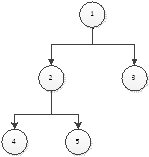
children_nodes[4][2]表示当2节点作为4节点的父亲的时候,4节点极其孩子节点的个数,当然前提是满足full binary tree。
children_nodes[4][2] = 1;
children_nodes[5][2] = 1;
children_nodes[2][1] = 3;
children_nodes[3][1] = 1;
通过children_nodes来记录计算的中间结果,可以大大加速DFS递归。
源码
#include <algorithm>

#include <cstring>

#include <fstream>

#include <iomanip>

#include <iostream>

#include <iterator>

#include <map>

#include <sstream>

#include <string>

#include <vector>

using std::cin;

using std::cout;

using std::endl;

using std::fstream;

using std::map;

using std::stringstream;

using std::string;

using std::vector;

int

get_result(const vector<vector<int> > &_matrix);

int

get_max(const vector<vector<int> > &_matrix, const int _child_row, const int _parent);

int children_nodes[][];

int main(int argc, char *argv[])

{

  int case_amount = ;

  cin >> case_amount;

  for (int i = ; i < case_amount; ++i)

  {

    memset(children_nodes, , sizeof(children_nodes));

    int N = ;

    cin >> N;

    // Step1: Init

    vector<vector<int> > matrix(N + , vector<int>());

    for (int j = ; j < N - ; ++j)

    {

      int row = , column = ;

      cin >> row >> column;

      matrix[row].push_back(column);

      matrix[column].push_back(row);

    }

    const int result = get_result(matrix);

    cout << "Case #" <<  + i << ": " << result << endl;

  }

  return ;

}

int

get_result(const vector<vector<int> > &_matrix)

{

  int max = ;

  for (int i = ; i < _matrix.size(); ++i)

  {

    const int result = get_max(_matrix, i, );

    if (max < result)

      max = result;

  }

  return _matrix.size() - max - ;

}

int

get_max(const vector<vector<int> > &_matrix, const int _child_row, const int _parent)

{

  if ( == children_nodes[_child_row][_parent])

  {

    vector<int> children;

    for (int i = ; i < _matrix[_child_row].size(); ++i)

    {

      if (_parent != _matrix[_child_row][i])

        children.push_back(get_max(_matrix, _matrix[_child_row][i], _child_row));

    }

    std::sort(children.begin(), children.end(), std::greater<int>());

    if (children.size() < )

      children_nodes[_child_row][_parent] = ;

    else

      children_nodes[_child_row][_parent] =  + children[] + children[];

  }

  return children_nodes[_child_row][_parent];

}
解法2[原来递归不会超时]
耗时
20秒左右
分析
使用DFS,深度优先搜索。
实例
Step1:初始化
|
1 |
2 |
3 |
|
|
2 |
1 |
4 |
|
|
3 |
1 |
7 |
|
|
4 |
2 |
5 |
6 |
|
5 |
4 |
||
|
6 |
4 |
||
|
7 |
3 |
Step2:遍历1-7行
分别计算以每行为root节点的最大节点数;
节点数最多的行,就是root节点,即可得知答案。
源码
#include <algorithm>

#include <fstream>

#include <iomanip>

#include <iostream>

#include <iterator>

#include <map>

#include <sstream>

#include <string>

#include <vector>

using std::cout;

using std::endl;

using std::fstream;

using std::map;

using std::stringstream;

using std::string;

using std::vector;

fstream fs("input.txt", fstream::in);

fstream fout("output.txt", fstream::out);

int

get_int_from_next_line();

string

get_string_from_next_line();

int

get_result(const vector<vector<int> > &_matrix);

int

get_max(const vector<vector<int> > &_matrix, const int _child_row, const int _parent);

int main(int argc, char *argv[])

{

  if (fs.good())

  {

    const int case_amount = get_int_from_next_line();

    for (int i = ; i < case_amount; ++i)

    {

      const int N = get_int_from_next_line();

      // Step1: Init

      vector<vector<int> > matrix(N, vector<int>());

      for (int j = ; j < N - ; ++j)

      {

        const string line = get_string_from_next_line();

        int row = , column = ;

        stringstream temp_stream(line);

        temp_stream >> row >> column;

        matrix[row-].push_back(column-);

        matrix[column-].push_back(row-);

      }

      const int result = get_result(matrix);

      fout << "Case #" <<  + i << ": " << result << endl;

    }

  }

  fs.close();

  fout.close();

  return ;

}

int

get_int_from_next_line()

{

  string line = "";

  getline(fs, line);

  stringstream stream(line);

  int temp = ;

  stream >> temp;

  return temp;

}

string

get_string_from_next_line()

{

  string line = "";

  getline(fs, line);

  return line;

}

int

get_result(const vector<vector<int> > &_matrix)

{

  int max = ;

  for (int i = ; i < _matrix.size(); ++i)

  {

    int result = get_max(_matrix, i, -);

    if (max < result)

      max = result;

  }

  return _matrix.size() - max;

}

int

get_max(const vector<vector<int> > &_matrix, const int _child_row, const int _parent)

{

  vector<int> children;

  for (int i = ; i < _matrix[_child_row].size(); ++i)

  {

    if (_parent != _matrix[_child_row][i])

       children.push_back(get_max(_matrix, _matrix[_child_row][i], _child_row));

   }

  std::sort(children.begin(), children.end(), std::greater<int>());

  if (children.size() < )

    return ;

  else

    return  + children[] + children[];

}
解法3[很笨的方法,自作聪明了]
耗时
3分钟
分析
注意:
题目中给出了Full Binary Tree的定义,只要满足root的每一个子节点有2个或0个子节点。
题目中给出X-Y,说X距离root节点比Y近,没有用。
题目中给出树G没有环。
顶点V与n(n>=3)个点有边
1. 有1,2,3,…,N个顶点,根据输入的关系,初始化二维数组array[N][N]
例如:
1.1 默认初始值为-2
1.2 有边相连,则设置为-1
2 如果N=1直接返回0,N=2直接返回1;如果N>2,则预处理,设row表示第几行,row=0àN-1,即第row节点
如果row行只有一个-1,则继续,否则row++
row节点就是叶子节点,第column列为-1,设置array[row][column]=0,并将与该节点相连的另一个节点,对应的值设置为1,array[column][row]=1
3 设row表示第几行,row=0àN-1,即第row节点
3.0 bool isHasNegtiveOne = false; 表示是否含有-1
3.1 如果row行只有一个-1,则继续,否则跳到3.4;isHasNegtiveOne= true,假设array[row][column]==-1,如果第column行除了第row列没有-1,那么跳到3.2,否则跳到3.3
3.2 如果第column行,除了第row列,非-2的列的数目大于等于2,则
跳到3.2.1,否则跳到3.2.2
3.2.1 在column行选择最大的两列,假设最大两列的和为max,设置array[row][column] = 1 + max;跳到3.3
3.2.2 顶点row作为顶点column的父节点,column节点可以提供1个顶点给row节点,设置array[row][column] = 1;跳到3.3
3.3 如果第row行,除了第column列,非-2的列的数目大于等于2,则跳到3.3.1,否则跳到3.3.2
3.3.1 在row行选择最大的两列,例如下图,最大的两列为4和3,那么顶点column作为顶点row的父节点,row节点可以提供4+3+1个节点给column节点,设置array[column][row] = 8;跳到3.4
|
-2 |
4 |
-1 |
3 |
2 |
3.3.2 顶点column作为顶点row的父节点,row节点可以提供1个顶点给column节点,设置array[column][row] = 1;跳到3.4
3.4 row是否为最后一行,如果不是,则row++继续3.1,如果是,且isHasNegtiveOne为false,则跳到4,否则继续3
4 分别以每一个顶点作为root,计算最大的节点数目
5 删除节点数 = 总结点数 - 最大节点数目
实例
7
4 5 4 2 1 2 3 1 6 4 3 7
Step1:初始化
|
1 |
2 |
3 |
4 |
5 |
6 |
7 |
|
|
1 |
-2 |
-1 |
-1 |
-2 |
-2 |
-2 |
-2 |
|
2 |
-1 |
-2 |
-2 |
-1 |
-2 |
-2 |
-2 |
|
3 |
-1 |
-2 |
-2 |
-2 |
-2 |
-2 |
-1 |
|
4 |
-2 |
-1 |
-2 |
-2 |
-1 |
-1 |
-2 |
|
5 |
-2 |
-2 |
-2 |
-1 |
-2 |
-2 |
-2 |
|
6 |
-2 |
-2 |
-2 |
-1 |
-2 |
-2 |
-2 |
|
7 |
-2 |
-2 |
-1 |
-2 |
-2 |
-2 |
-2 |
Step2:预处理
对初始的array进行预处理
根据上图,5,6,7行都只有一个-1,例如第5行,存在边(5,4),分别设置array[4][3]=0, array[3][4]=1,即顶点5作为顶点4的孩子只能提供1个节点。
|
1 |
2 |
3 |
4 |
5 |
6 |
7 |
|
|
1 |
-2 |
-1 |
-1 |
-2 |
-2 |
-2 |
-2 |
|
2 |
-1 |
-2 |
-2 |
-1 |
-2 |
-2 |
-2 |
|
3 |
-1 |
-2 |
-2 |
-2 |
-2 |
-2 |
1 |
|
4 |
-2 |
-1 |
-2 |
-2 |
1 |
1 |
-2 |
|
5 |
-2 |
-2 |
-2 |
0 |
-2 |
-2 |
-2 |
|
6 |
-2 |
-2 |
-2 |
0 |
-2 |
-2 |
-2 |
|
7 |
-2 |
-2 |
0 |
-2 |
-2 |
-2 |
-2 |
Step3: 遍历
根据上图,3,4行只有1个-1,例如第3行,array[2][0] == -1,可推出从顶点1到顶点3,顶点1作为3的父节点,由于顶点3只有一个孩子7,所以顶点3只能提供给顶点1,1个节点,设置array[0][2]=1,同理设置array[1][3]=3。
|
1 |
2 |
3 |
4 |
5 |
6 |
7 |
|
|
1 |
-2 |
-1 |
1 |
-2 |
-2 |
-2 |
-2 |
|
2 |
-1 |
-2 |
-2 |
3 |
-2 |
-2 |
-2 |
|
3 |
-1 |
-2 |
-2 |
-2 |
-2 |
-2 |
1 |
|
4 |
-2 |
-1 |
-2 |
-2 |
1 |
1 |
-2 |
|
5 |
-2 |
-2 |
-2 |
0 |
-2 |
-2 |
-2 |
|
6 |
-2 |
-2 |
-2 |
0 |
-2 |
-2 |
-2 |
|
7 |
-2 |
-2 |
0 |
-2 |
-2 |
-2 |
-2 |
Step3: 遍历
根据上图,1,2,3,4行只有1个-1,例如第1行,array[0][1] == -1,可推出从顶点2到顶点1,顶点2作为1的父节点,顶点1只有顶点3一个孩子,那么顶点1只能提供顶点2, 1个节点,设置array[1][0]=1,同理设置array[0][1]=1,array[2][0]=1,array[3][1]=1。
|
1 |
2 |
3 |
4 |
5 |
6 |
7 |
|
|
1 |
-2 |
1 |
1 |
-2 |
-2 |
-2 |
-2 |
|
2 |
1 |
-2 |
-2 |
3 |
-2 |
-2 |
-2 |
|
3 |
1 |
-2 |
-2 |
-2 |
-2 |
-2 |
1 |
|
4 |
-2 |
1 |
-2 |
-2 |
1 |
1 |
-2 |
|
5 |
-2 |
-2 |
-2 |
0 |
-2 |
-2 |
-2 |
|
6 |
-2 |
-2 |
-2 |
0 |
-2 |
-2 |
-2 |
|
7 |
-2 |
-2 |
0 |
-2 |
-2 |
-2 |
-2 |
Step4:
根据上图,每一行都不含有-1,计算每一个顶点作为root节点的最大节点数。
|
1 |
2 |
3 |
4 |
5 |
6 |
7 |
||
|
3 |
1 |
-2 |
1 |
1 |
-2 |
-2 |
-2 |
-2 |
|
5 |
2 |
1 |
-2 |
-2 |
3 |
-2 |
-2 |
-2 |
|
3 |
3 |
1 |
-2 |
-2 |
-2 |
-2 |
-2 |
1 |
|
3 |
4 |
-2 |
1 |
-2 |
-2 |
1 |
1 |
-2 |
|
1 |
5 |
-2 |
-2 |
-2 |
0 |
-2 |
-2 |
-2 |
|
1 |
6 |
-2 |
-2 |
-2 |
0 |
-2 |
-2 |
-2 |
|
1 |
7 |
-2 |
-2 |
0 |
-2 |
-2 |
-2 |
-2 |
Step4:
节点2作为root节点,最多有5个节点,去掉2个节点即可。
|
1 |
2 |
3 |
4 |
5 |
6 |
7 |
||
|
3 |
1 |
-2 |
1 |
1 |
-2 |
-2 |
-2 |
-2 |
|
5 |
2 |
1 |
-2 |
-2 |
3 |
-2 |
-2 |
-2 |
|
3 |
3 |
1 |
-2 |
-2 |
-2 |
-2 |
-2 |
1 |
|
3 |
4 |
-2 |
1 |
-2 |
-2 |
1 |
1 |
-2 |
|
1 |
5 |
-2 |
-2 |
-2 |
0 |
-2 |
-2 |
-2 |
|
1 |
6 |
-2 |
-2 |
-2 |
0 |
-2 |
-2 |
-2 |
|
1 |
7 |
-2 |
-2 |
0 |
-2 |
-2 |
-2 |
-2 |
源码
#include <algorithm>

#include <fstream>

#include <iomanip>

#include <iostream>

#include <iterator>

#include <map>

#include <sstream>

#include <string>

#include <vector>

using std::cout;

using std::endl;

using std::fstream;

using std::map;

using std::stringstream;

using std::string;

using std::vector;

fstream fs("input.txt", fstream::in);

fstream fout("output.txt", fstream::out);

int

get_int_from_next_line();

string

get_string_from_next_line();

int

get_result(vector<vector<int> > _matrix);

int

get_max_children(const vector<vector<int> > &_matrix, const int _row, const int _column);

int main(int argc, char *argv[])

{

  if (fs.good())

  {

    const int case_amount = get_int_from_next_line();

    for (int i = ; i < case_amount; ++i)

    {

      const int N = get_int_from_next_line();

      // Step1: Init

      vector<vector<int> > matrix(N, vector<int>(N, -));

      for (int j = ; j < N - ; ++j)

      {

        const string line = get_string_from_next_line();

        int row = , column = ;

        stringstream temp_stream(line);

        temp_stream >> row >> column;

        matrix[row-][column-] = -;

        matrix[column-][row-] = -;

      }

      const int result = get_result(matrix);

      fout << "Case #" <<  + i << ": " << result << endl;

    }

  }

  fs.close();

  fout.close();

  return ;

}

int

get_int_from_next_line()

{

  string line = "";

  getline(fs, line);

  stringstream stream(line);

  int temp = ;

  stream >> temp;

  return temp;

}

string

get_string_from_next_line()

{

  string line = "";

  getline(fs, line);

  return line;

}

int

get_result(vector<vector<int> > _matrix)

{

  if ( == _matrix.size())

  {

    return ;

  }

  else if ( == _matrix.size())

  {

    return ;

  }

  // Step2: Preprocess

  for (int row = ; row < _matrix.size(); ++row)

  {

    const int count_not_n2 = _matrix.size() - std::count(_matrix[row].begin(), _matrix[row].end(), -);

    if ( == count_not_n2)

    {

      const vector<int>::const_iterator it = std::find(_matrix[row].begin(), _matrix[row].end(), -);

      const int column = it - _matrix[row].begin();

      _matrix[row][column] = ;

      _matrix[column][row] = ;

    }

  }

  // Step3: loop

  while (true)

  {

    bool isHasNegtiveOne = false;

    for (int row = ; row < _matrix.size(); ++row)

    {

      const int count_1 = std::count(_matrix[row].begin(), _matrix[row].end(), -);

      if ( < count_1)

        isHasNegtiveOne = true;

      if ( == count_1)

      {

        const vector<int>::const_iterator r_it = std::find(_matrix[row].begin(), _matrix[row].end(), -);

        const int column = r_it - _matrix[row].begin();

        // Step: 3.1

        {

          vector<int> column_vec = _matrix[column];

          column_vec.erase(row + column_vec.begin());

          const vector<int>::const_iterator c_it = std::find(column_vec.begin(), column_vec.end(), -);

          if (c_it == column_vec.end())

          {

            // Step: 3.2

            const int column_max_children = get_max_children(_matrix, column, row);

            _matrix[row][column] =  + column_max_children;

          }

        }

        // Step: 3.3

        // column as the parent, row as the child

        // calculate how many nodes can row have

        const int row_max_children = get_max_children(_matrix, row, column);

        _matrix[column][row] =  + row_max_children;

      }

    }

    if (!isHasNegtiveOne)

      break;

  }

  // Step: 4

  int max = ;

  for (int row = ; row < _matrix.size(); ++row)

  {

    std::sort(_matrix[row].begin(), _matrix[row].end(), std::greater<int>());

    int current_max = _matrix[row][] + _matrix[row][];

    if (max < current_max)

      max = current_max;

  }

  return _matrix.size() - max - ;

}

// column as the parent, row as the child

// calculate how many nodes can row have

int

get_max_children(const vector<vector<int> > &_matrix, const int _row, const int _column)

{

  int max_children = ;

  // count of negtive 2

  const int count_n2 = std::count(_matrix[_row].begin(), _matrix[_row].end(), -);

  const int count_not_n2 = _matrix.size() - count_n2;

  if ( >= count_not_n2)

  {

    // Step: 3.3

    max_children = ;

  }

  else

  {

    // Step: 3.2

    // Find the max 2 of _matrix[_row] which can not be _matrix[_row][_column]

    vector<int> m_row = _matrix[_row];

    m_row.erase(_column + m_row.begin());

    std::sort(m_row.begin(), m_row.end(), std::greater<int>());

    max_children = m_row[] + m_row[];

  }

  return max_children;

}
总结
DP+DFS需要1秒;纯DFS需要20秒,我的自作聪明的DP需要3分钟。算法很关键哇!
Problem B. Full Binary Tree的更多相关文章
- [LeetCode&Python] Problem 226. Invert Binary Tree
Invert a binary tree. Example: Input: 4 / \ 2 7 / \ / \ 1 3 6 9 Output: 4 / \ 7 2 / \ / \ 9 6 3 1 Tr ...
- Google Code Jam 2014 Round 1 A:Problem B. Full Binary Tree
Problem A tree is a connected graph with no cycles. A rooted tree is a tree in which one special ver ...
- Given a binary tree, determine if it is height-balanced. For this problem, a height-balanced binary tree is defined as a binary tree in which the depth of the two subtrees of every node never diffe
class TreeNode { int val; TreeNode left; TreeNode right; TreeNode(int x) { val = x; } } public class ...
- Leetcode 笔记 110 - Balanced Binary Tree
题目链接:Balanced Binary Tree | LeetCode OJ Given a binary tree, determine if it is height-balanced. For ...
- [LeetCode] Balanced Binary Tree 平衡二叉树
Given a binary tree, determine if it is height-balanced. For this problem, a height-balanced binary ...
- LeetCode——Balanced Binary Tree(判断是否平衡二叉树)
问题: Given a binary tree, determine if it is height-balanced. For this problem, a height-balanced bin ...
- Balanced Binary Tree [LeetCode]
Given a binary tree, determine if it is height-balanced. For this problem, a height-balanced binary ...
- 110.Balanced Binary Tree Leetcode解题笔记
110.Balanced Binary Tree Given a binary tree, determine if it is height-balanced. For this problem, ...
- [Leetcode][JAVA] Minimum Depth of Binary Tree && Balanced Binary Tree && Maximum Depth of Binary Tree
Minimum Depth of Binary Tree Given a binary tree, find its minimum depth. The minimum depth is the n ...
随机推荐
- js 判断数组重复元素以及重复的个数
知识点: .sort()方法用于对数组元素排序,并返回数组. var _arr = ['旅行箱', '旅行箱', '小米', '大米']; var _res = []; // _arr.sort(); ...
- hdu3507 Print Article[斜率优化dp入门题]
Print Article Time Limit: 9000/3000 MS (Java/Others) Memory Limit: 131072/65536 K (Java/Others)To ...
- vue过滤动画
一.使用<transition name="fade"></transition>标签 name="fade", 是创建个fade的类名 ...
- 基本类型算法题目学习(EPI)
1.关于奇偶校验的方法中,如何快速的求取一个64-bit的数字的奇偶校验位.(如果1的位数为奇数,则奇偶校验位为1,如果1的位数为偶数,则奇偶校验位为0) a.暴力枚举法采用一位一位进行计算,一位一位 ...
- IOS开发 REST请求 ASIHTTPRequest用法
ASIHTTPRequest类库简介和使用说明 官方网站: http://allseeing-i.com/ASIHTTPRequest/ .可以从上面下载到最新源码,以及获取到相关的资料. 使用iOS ...
- Unity3D笔记 英保通六 角色控制器
一.角色控制器 U3D有两种角色控制方式:Rigidbody刚体.角色控制器组件(胶囊体组件) 面试的题目中经常会遇到这个问题: CharacterController和Rigidbody的区别? 这 ...
- iOS - 开发屏幕及视图层次
//屏幕视图分层 .UIWindow .UILayoutContainerView .UITransitionView .UIViewControllerWrpaperView .UILayoutCo ...
- jQuery ajax的前台代码编写
jQuery ajax的前台代码: <script type="text/javascript" src="/include/jquery/jquery-1.1.3 ...
- Scala学习笔记(3)-表达式归纳
语法:使用表达式定义值和变量 val <identifier>[:<type>]=<expression> 字面值类型 var <identifier> ...
- POJ 1417 - True Liars - [带权并查集+DP]
题目链接:http://poj.org/problem?id=1417 Time Limit: 1000MS Memory Limit: 10000K Description After having ...