
一文看尽Java-Thread
一、前言
主要分成两部说起:Thread源码解读和常见面试题解答,废话不多说开始;
二、源码解读
首先看下构造函数,构造函数都是通过调用init方法对属性进行初始化,主要是对线程组、线程名字、栈大小等信息进行初始化;init内部通过调用currentThread本地方法,获取当前的线程,这个本地方法封装在JVM中,有兴趣的可以看下这个这个链接查找下JVM实现https://hg.openjdk.java.net/jdk8u,接下来对ThreadGroup的判断,如果没有传入线程组的话, 第一是使用SecurityManager中的ThreadGroup, 如果从SecurityManager 中获取不到ThreadGroup(), 那么就从当前线程中获取线程组,最后做了检验和些参数的赋值,整体上相对比较简单;
  private void init(ThreadGroup g, Runnable target, String name,

                    long stackSize) {

      init(g, target, name, stackSize, null);

  }

  private void init(ThreadGroup g, Runnable target, String name,

                    long stackSize, AccessControlContext acc) {

      if (name == null) {

          throw new NullPointerException("name cannot be null");

      }

      this.name = name.toCharArray();

      Thread parent = currentThread();

      SecurityManager security = System.getSecurityManager();

      if (g == null) {

          /* Determine if it's an applet or not */

          /* If there is a security manager, ask the security manager

             what to do. */

          if (security != null) {

              g = security.getThreadGroup();

          }

          /* If the security doesn't have a strong opinion of the matter

             use the parent thread group. */

          if (g == null) {

              g = parent.getThreadGroup();

          }

      }

      /* checkAccess regardless of whether or not threadgroup is

         explicitly passed in. */

      g.checkAccess();

      /*

       * Do we have the required permissions?

       */

      if (security != null) {

          if (isCCLOverridden(getClass())) {

              security.checkPermission(SUBCLASS_IMPLEMENTATION_PERMISSION);

          }

      }

      g.addUnstarted();

      this.group = g;

      this.daemon = parent.isDaemon();

      this.priority = parent.getPriority();

      if (security == null || isCCLOverridden(parent.getClass()))

          this.contextClassLoader = parent.getContextClassLoader();

      else

          this.contextClassLoader = parent.contextClassLoader;

      this.inheritedAccessControlContext =

              acc != null ? acc : AccessController.getContext();

      this.target = target;

      setPriority(priority);

      if (parent.inheritableThreadLocals != null)

          this.inheritableThreadLocals =

              ThreadLocal.createInheritedMap(parent.inheritableThreadLocals);

      /* Stash the specified stack size in case the VM cares */

      this.stackSize = stackSize;

      /* Set thread ID */

      tid = nextThreadID();

  }

  public Thread() {

      init(null, null, "Thread-" + nextThreadNum(), 0);

  }

  public Thread(Runnable target) {

      init(null, target, "Thread-" + nextThreadNum(), 0);

  }

  Thread(Runnable target, AccessControlContext acc) {

      init(null, target, "Thread-" + nextThreadNum(), 0, acc);

  }

 // 线程名

  public Thread(String name) {

      init(null, null, name, 0);

  }

  //线程组和线程名

  public Thread(ThreadGroup group, String name) {

      init(group, null, name, 0);

  }

  //线程任务,线程名

  public Thread(Runnable target, String name){

      init(null, target, name, 0);

  }

  // 线程组, 线程任务, 线程名 ,栈大小

  public Thread(ThreadGroup group, Runnable target, String name, long stackSize) {

      init(group, target, name, stackSize);

  }
接下来看下主要的属性:
// 类加载的时候,调用本地的注册本地方静态方法, 这个方法是本地方法

  private static native void registerNatives();

  static {

      registerNatives();

  }

  private volatile char  name[];

  private int            priority;

  private Thread         threadQ;

  private long           eetop;

  /* Whether or not to single_step this thread. */

  private boolean     single_step;

  /* Whether or not the thread is a daemon thread. */

  // 设设置这个线程是否是守护线程

  private boolean     daemon = false;

  /* JVM state */

  private boolean     stillborn = false;

  /* What will be run. */

  // 要执行的run方法的对象

  private Runnable target;

  /* The group of this thread */

  // 这个线程的线程组

  private ThreadGroup group;

  /* The context ClassLoader for this thread */

  // 这个线程的上下文类加载器

  private ClassLoader contextClassLoader;

  /* The inherited AccessControlContext of this thread */

  private AccessControlContext inheritedAccessControlContext;

  /* For autonumbering anonymous threads. */

  private static int threadInitNumber;

  private static synchronized int nextThreadNum() {

      return threadInitNumber++;

  }

  /* ThreadLocal values pertaining to this thread. This map is maintained

   * by the ThreadLocal class. */

  ThreadLocal.ThreadLocalMap threadLocals = null;

  /*

   * InheritableThreadLocal values pertaining to this thread. This map is

   * maintained by the InheritableThreadLocal class.

   */

  ThreadLocal.ThreadLocalMap inheritableThreadLocals = null;

  /*

   * The requested stack size for this thread, or 0 if the creator did

   * not specify a stack size.  It is up to the VM to do whatever it

   * likes with this number; some VMs will ignore it.

   */

   // 给这个线程设置的栈的大小,默认为0

  private long stackSize;

  /*

   * JVM-private state that persists after native thread termination.

   */

  private long nativeParkEventPointer;

  /*

   * Thread ID

   */

   //线程id

  private long tid;

  /* For generating thread ID */

  private static long threadSeqNumber;

  /* Java thread status for tools,

   * initialized to indicate thread 'not yet started'

   */

  private volatile int threadStatus = 0;

  private static synchronized long nextThreadID() {

      return ++threadSeqNumber;

  }

  /**

   * The argument supplied to the current call to

   * java.util.concurrent.locks.LockSupport.park.

   * Set by (private) java.util.concurrent.locks.LockSupport.setBlocker

   * Accessed using java.util.concurrent.locks.LockSupport.getBlocker

   */

  volatile Object parkBlocker;

  /* The object in which this thread is blocked in an interruptible I/O

   * operation, if any.  The blocker's interrupt method should be invoked

   * after setting this thread's interrupt status.

   */

  private volatile Interruptible blocker;

  private final Object blockerLock = new Object();

  /* Set the blocker field; invoked via sun.misc.SharedSecrets from java.nio code

   */

  void blockedOn(Interruptible b) {

      synchronized (blockerLock) {

          blocker = b;

      }

  }

  /**

   * The minimum priority that a thread can have.

   */

   // 线程执行的最低优先级 为1

  public final static int MIN_PRIORITY = 1;

 /**

   * The default priority that is assigned to a thread.

   */

   // 线程默认的执行优先级为 5

  public final static int NORM_PRIORITY = 5;

  /**

   * The maximum priority that a thread can have.

   */

   // 线程执行的最高的优先级为 10

  public final static int MAX_PRIORITY = 10;
最后介绍下方法的作用和线程状态,源码都比较简单,没必进行过多的介绍,都是通过调用JVM的本地方法实现;
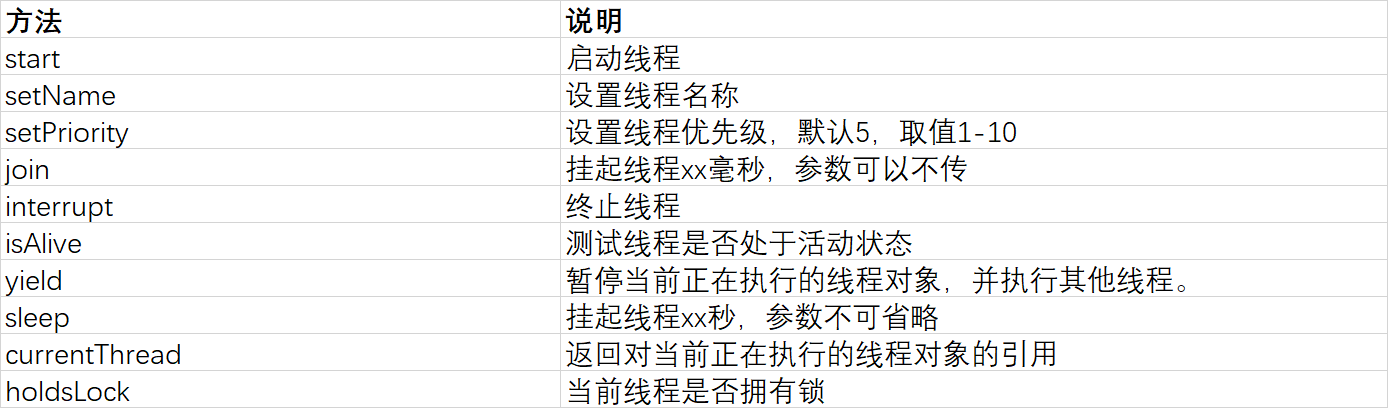
线程状态:

三、常见面试题
1.线程与进程的区别?
进程是资源分配最小的单位,线程是CPU调度最小的单位;
线程属于进程,共享进程分配的资源;
进程属于抢占式调度,资源不相互共享;
2.start和run的区别?
run是Thread的一个普通的方法;
start方法会创建一个新的子线程并启动;
3.sleep与wait的区别?
sleep是Thread方法,wait是Object的方法;
wait方法只能在synchroized方法或者块中使用;
Thread.sleep只会让出CPU,不会改变锁的行为;
Object.wait不仅会让出CPU,同时还会释放占有同步资源的锁;
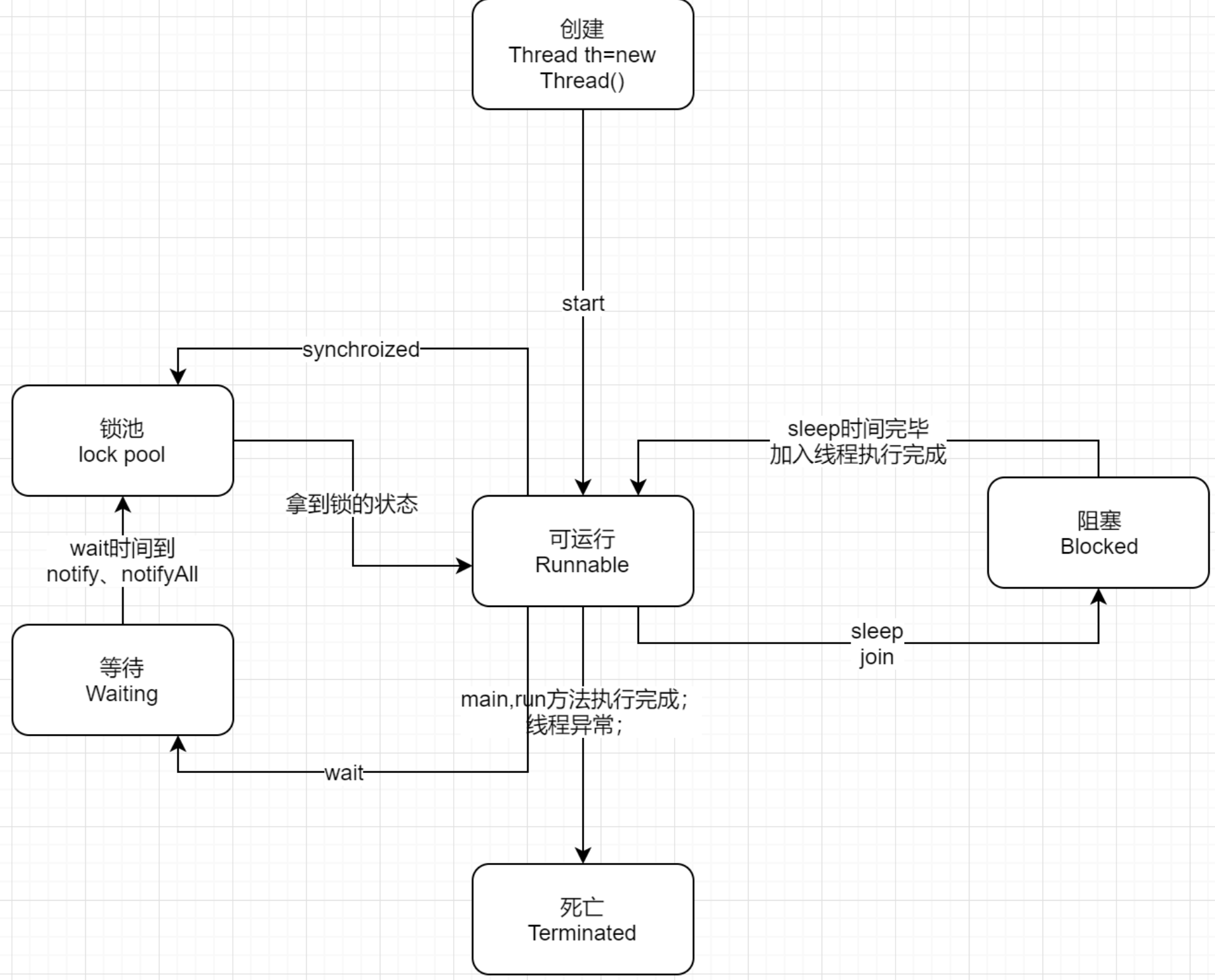
4.线程状态的转化?
图中将WAITING 和TIMED_WAITING 两个状态合并为WAITING ,没有分开,大家不要搞错;
5.如何处理线程的返回值?
主线程等待法,使用while等待主线程返回值;
join阻塞当前线程以等待子线程;
通过FuTureTask获取子线程的返回值;
public class MyCallable implements Callable<String> {

    @Override

    public String call() throws Exception {

        String value="test";

        System.out.println("start");

        Thread.sleep(5000);

        System.out.println("end");

        return value;

    }

}

public class FutureTaskDemo {

    public static void main(String[] main) throws ExecutionException, InterruptedException {

        FutureTask<String> futureTask=new FutureTask<String>(new MyCallable());

        new Thread(futureTask).start();

        if (!futureTask.isDone()){

            System.out.println("waiting");

        }

        System.out.println("return"+futureTask.get());

    }

}
通过线程池获取返回值;
public class ThreadPoolDemo {

    public static void main(String[] args){

        ExecutorService executorService= Executors.newCachedThreadPool();

        Future<String> futureTask=executorService.submit(new MyCallable());

        if (!futureTask.isDone()){

            System.out.println("wait");

        }

        try {

            System.out.println(futureTask.get());

        }catch (InterruptedException ex){

            ex.printStackTrace();

        }catch (ExecutionException ex){

            ex.printStackTrace();

        }finally {

            executorService.shutdown();

        }

    }

}
6.Thread和Runnable?
Thread是类,Runnable是接口,Thread是Runnable实现;
类的继承单一原则,Runnable是更高层次的抽象;
四、结束
欢迎大家加群438836709!欢迎大家关注我!

一文看尽Java-Thread的更多相关文章
- 一文看懂Java序列化
一文看懂Java序列化 简介 Java实现 Serializable 最基本情况 类的成员为引用 同一对象多次序列化 子父类引用序列化 可自定义的可序列化 Externalizable:强制自定义序列 ...
- 一文看懂java io系统 (转)
出处: 一文看懂java io系统 学习java IO系统,重点是学会IO模型,了解了各种IO模型之后就可以更好的理解java IO Java IO 是一套Java用来读写数据(输入和输出)的A ...
- 一文看懂Java Worker 设计模式
Worker模式 想解决的问题 异步执行一些任务,有返回或无返回结果 使用动机 有些时候想执行一些异步任务,如异步网络通信.daemon任务,但又不想去管理这任务的生命周.这个时候可以使用Worker ...
- 一文看懂Java序列化之serialVersionUID
serialVersionUID适用于Java的序列化机制.简单来说,Java的序列化机制是通过判断类的serialVersionUID来验证版本一致性的.在进行反序列化时,JVM会把传来的字节流中的 ...
- 一文看懂java的IO流
废话不多说,直接上代码 import com.fasterxml.jackson.databind.ObjectMapper; import java.io.*; import java.nio.ch ...
- Java Thread.interrupt interrupted
Java Thread.interrupt @(Base)[JDK, 线程, interrupt] 原文地址,转载请注明 下面这个场景你可能很熟悉,我们调用Thread.sleep(),conditi ...
- 一文读懂JAVA多线程
背景渊源 摩尔定律 提到多线程好多书上都会提到摩尔定律,它是由英特尔创始人之一Gordon Moore提出来的.其内容为:当价格不变时,集成电路上可容纳的元器件的数目,约每隔18-24个月便会增加一倍 ...
- Java Thread 的 sleep() 和 wait() 的区别
Java Thread 的使用 Java Thread 的 run() 与 start() 的区别 Java Thread 的 sleep() 和 wait() 的区别 1. sleep ...
- Java Thread wait, notify and notifyAll Example
Java Thread wait, notify and notifyAll Example Java线程中的使用的wait,notify和nitifyAll方法示例. The Object clas ...
- 性能分析之-- JAVA Thread Dump 分析综述
性能分析之-- JAVA Thread Dump 分析综述 一.Thread Dump介绍 1.1什么是Thread Dump? Thread Dump是非常有用的诊断Java应用问题的工 ...
随机推荐
- PHP正则匹配到2个字符串之间的内容,匹配HTML便签内容
PHP正则匹配到2个字符串之间的内容 $preg= '/xue[\s\S]*?om/i'; preg_match_all($preg,"学并思网址xuebingsi.com",$r ...
- zabbix 支持的主要监控方式
zabbix 支持的主要监控方式 一.zabbix支持的主要监控方式: zabbix主要Agent,Trapper,SNMP,JMX,IPMI这几种监控方式,本文章主要通过监控理论和实际操作测试等方式 ...
- 如何阅读zstack源码
个人的gitbook将会持续更新 https://www.gitbook.com/book/jingtyu/how-to-learn-zstack-code
- ES 22 - Elasticsearch中如何进行日期(数值)范围查询
目录 1 范围查询的符号 2 数值范围查询 3 时间范围查询 3.1 简单查询示例 3.2 关于时间的数学表达式(date-math) 3.3 关于时间的四舍五入 4 日期格式化范围查询(format ...
- nested exception is java.io.FileNotFoundException: class path resource [applicationContext.xml] cannot be opened because it does not exist
org.apache.ibatis.exceptions.PersistenceException: ### Error building SqlSession. ### The error may ...
- tab切换echarts无法正常显示问题
项目中使用到了Echarts来在展示图表,两个tab切换页面中都存在图表,页面加载完成后 对所有图表进行了初始化和绘制,然后切换查看时,发现图表的宽度不正确.,第一个tab显示是很正常的,但是第二个t ...
- Java小白进阶之值传递-引用传递
class ClassA{ int value;//成员变量 } public class TestClassA{ public static void main(String args[]){ in ...
- 喜大普奔 | 微信小程序支持PC端打开了
微信小程序可以在PC端打开啦 微信PC版发布了v2.7.0测试版,其中一个重磅的功能就是:支持打开聊天中分享的小程序 咖啡君这么喜欢尝鲜的人自然是在第一时间下载进行了体验 安装成功,会有功能更新说明 ...
- 如何用Hexo+Github创建自己的技术博客
注册一个github GitHub官网.按照一般的网站注册登录执行就好了,不详细说. 安装git 安装很简单,一直下一步 git安装教程 很多教程里都说要配置环境变量,我本人安装过5次左右的git,一 ...
- JVM类生命周期概述:加载时机与加载过程
一个.java文件在编译后会形成相应的一个或多个Class文件,这些Class文件中描述了类的各种信息,并且它们最终都需要被加载到虚拟机中才能被运行和使用.事实上,虚拟机把描述类的数据从Class文件 ...