
Spring Session原理解析
前景提要:
@EnableRedisHttpSession导入RedisHttpSessionConfiguration.class
Ⅰ、被RedisHttpSessionConfiguration继承的SpringHttpSessionConfiguration中添加了SessionRepositoryFilter(session过滤器);
Ⅱ、SessionRepositoryFilter创建时自动获取到SessionRepository;
Ⅲ、SessionRepositoryFilter的doFilterInternal方法把原生的request和response被包装成wrappedRequest和wrappedResponse,以后获取session将不再通过原生的request.session()方法而是通过wrappedRequest.getsession(),wrappedRequest.getsession()方法,wrappedRequest.getsession()的session是从SessionRepository获取得到的,做到从redis获取session。
一:getSession流程:
SessionRepositoryFilter :负责用一个由SessionRepository支持的HttpSession实现包装HttpServletRequest。
当请求进来后会被先进入过滤器进行过滤,SessionRepositoryFilter类的doFilterInternal方法就会生效(代码1-1):
public static final String SESSION_REPOSITORY_ATTR = SessionRepository.class.getName();
@Override
protected void doFilterInternal(HttpServletRequest request, HttpServletResponse response, FilterChain filterChain)
throws ServletException, IOException {
// 设置SessionRepository至Request的“会话存储库请求属性名称【SessionRepository】”属性中。
request.setAttribute(SESSION_REPOSITORY_ATTR, this.sessionRepository);
// 包装原始HttpServletRequest响应至SessionRepositoryRequestWrapper
SessionRepositoryRequestWrapper wrappedRequest = new SessionRepositoryRequestWrapper(request, response);
// 包装原始HttpServletResponse响应至SessionRepositoryResponseWrapper
SessionRepositoryResponseWrapper wrappedResponse = new SessionRepositoryResponseWrapper(wrappedRequest,response);
try {
//将封装好后的request、response置入过滤链中
filterChain.doFilter(wrappedRequest, wrappedResponse);
}
finally {
wrappedRequest.commitSession();
}
}
在将request、response封装好后进入doFilter过滤链中,因为filterChain.doFilter(wrappedRequest, wrappedResponse)方法debugg流程太长,这里只提主要功能:
①、获取当前请求并进行解析为HttpMethod,根据请求方式(GET\POST\PUT\DELETE)分派给在对应的doMethod方法,;
②、当HandlerMethod处理完请求后就会触发SessionFlashMapManager,从HTTP会话中检索保存的FlashMap实例(如果有的话)。FlashMap为一个请求提供了一种方法来存储用于另一个请求的属性。当从一个URL重定向到另一个URL时,这是最常见的需要——例如Post/Redirect/Get模式。一个FlashMap在重定向之前被保存(通常在会话中),在重定向之后可用并立即删除。
③、因为②的原因,服务端会获取一次请求的session,这时候就会使用request.getSession(false)方法【获取但如果不存在不会进行创建】,这时候就会调用SessionRepositoryFilter类中的getSession(boolean create)方法(代码1-2):
        @Override

        public HttpSessionWrapper getSession(boolean create) {

            //获取当前会话中CURRENT_SESSION_ATTR的session属性

            HttpSessionWrapper currentSession = getCurrentSession();

            if (currentSession != null) {

                return currentSession;

            }

              //获取请求会话的session

            S requestedSession = getRequestedSession();

              //如果请求会话session不为空

            if (requestedSession != null) {

                  //如果sessionId存在且当前request的attribute中的session未失效

                if (getAttribute(INVALID_SESSION_ID_ATTR) == null) {

                        //设置新的最后访问时间

                    requestedSession.setLastAccessedTime(Instant.now());

                        //表示此sessionId的session属性是有效的

                    this.requestedSessionIdValid = true;

                        //将session和Servlet上下文环境置入生成currentSession

                    currentSession = new HttpSessionWrapper(requestedSession, geServletContext());

                        //表示当前会话并不是第一次建立,防止同一个request频繁访问存储器DB中获取session(有点类似缓存)

                    currentSession.markNotNew();

                        //把当前的请求session置入,以便下一次

                    setCurrentSession(currentSession);

                    return currentSession;

                }

            }
           ......


        }

        @SuppressWarnings("unchecked")

        private HttpSessionWrapper getCurrentSession() {

            //获取当前会话中CURRENT_SESSION_ATTR的属性

            return (HttpSessionWrapper) getAttribute(CURRENT_SESSION_ATTR);

        }

        private void setCurrentSession(HttpSessionWrapper currentSession) {

            //如果当前会话不存在,则清除掉attribute中CURRENT_SESSION_ATTR的属性

            if (currentSession == null) {

                removeAttribute(CURRENT_SESSION_ATTR);

            }

            //如果会话存在,则设置CURRENT_SESSION_ATTR的属性

            else {

                setAttribute(CURRENT_SESSION_ATTR, currentSession);

            }

        }

        private S getRequestedSession() {

              //这是针对getRequestedSession()在处理请求期间被调用多次的情况的一种优化。它将立即返回找到的会话,而不是在会话存储库中再次查找它以节省时间。

            if (!this.requestedSessionCachedhed) {

                   //如果requestedSessionCached为false,解析出当前的HttpServletRequest关联的所有会话id。

                List<String> sessionIds = SessionRepositoryFilter.this.httpSessionIdResolver.resolveSessionIds(this);

                for (String sessionId : sessionIds) {

                    if (this.requestedSessionId == null) {

                        this.requestedSessionId = sessionId;

                    }

                        //SessionRepository是管理Spring Session的模块,利用sessionId获取session信息

                    S session = SessionRepositoryFilter.this.sessionRepository.findById(sessionId);

                    if (session != null) {

                        this.requestedSession = session;

                        this.requestedSessionId = sessionId;

                        break;

                    }

                }

                this.requestedSessionCached = true;

            }

            return this.requestedSession;

        }
在以上步骤执行完之后才会正式进入我们编写的自定义拦截器中request.getSession().getAttribute(AuthServerConstant.LONG_USER):
在执行request.getSession()中会再次执行public HttpSessionWrapper getSession(boolean create)方法,因为上一步已经执行了setCurrentSession(HttpSessionWrapper currentSession)方法,即此时currentSession不再为空直接返回。
最后调用SessionRepositryFilter.commitSession将发生变更的seesion提交到redis中进行存储,实现分布式会话(代码1-3):
    //SessionRepositoryFilter类中的commitSession方法
     private void commitSession() {

              //获取当前封装的wrappedSession

            HttpSessionWrapper wrappedSession = getCurrentSession();

            if (wrappedSession == null) {

                if (isInvalidateClientSession()) {

                    // 如果没有session,并且已经被标记为失效时,指令客户端结束当前会话。当会话无效时调用此方法,并应通知客户端会话id不再有效.

                    SessionRepositoryFilter.this.httpSessionIdResolver.expireSession(this, this.response);

                }

            }

            else {

                   //获取session

                S session = wrappedSession.getSession();

                    //将requestedSessionCached置为false,表明当前会话为第一次置入或者已经进行修改

                clearRequestedSessionCache();

                   //调用RedisIndexedSessionRepository中的方法对进行的session在redis中进行保存,保存已更改的所有属性,并更新此会话的到期时间。

                SessionRepositoryFilter.this.sessionRepository.save(session);

                   //获取session唯一Id

                String sessionId = session.getId();

                   //判断之前的session是否失效 或则 当前的sessionId与之前的sessionId不一致

                if (!isRequestedSessionIdValid() || !sessionId.equals(getRequestedSessionId())) {

                        //让Cookie中的seesionId失效

                    SessionRepositoryFilter.this.httpSessionIdResolver.setSessionId(this, this.response, sessionId);

                }

            }

        }
二:setSession流程:
SpringSession在redis中的格式: 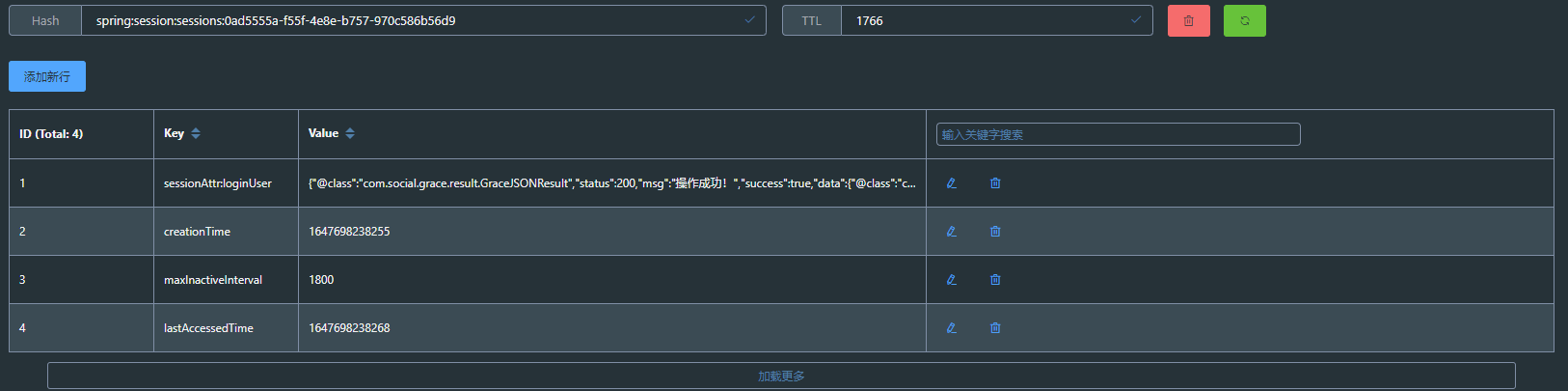
最开始步骤也是执行filterChain.doFilter(wrappedRequest, wrappedResponse)方法,之后开始执行我们自己编写的session.setAttribute(AuthServerConstant.LONG_USER,result);(代码2-1)
    //HttpSessionAdapte类中的方法和属性

    private static final Log logger = LogFactory.getLog(HttpSessionAdapter.class);

    private S session;

    private final ServletContext servletContext;

    private boolean invalidated;

    private boolean old;

    @Override

    public void setAttribute(String name, Object value) {

        checkState();

          //根据传过来的属性名先在服务器内存中存储的session中获取旧的属性值

        Object oldValue = this.session.getAttribute(name);

          //新置入服务器内的session

        this.session.setAttribute(name, value);

          //如果新值与旧值不同表明session已经更新

        if (value != oldValue) {

            if (oldValue instanceof HttpSessionBindingListener) {

                try {

                    ((HttpSessionBindingListener) oldValue)

                            .valueUnbound(new HttpSessionBindingEvent(this, name, oldValue));

                }

                catch (Throwable th) {

                    logger.error("Error invoking session binding event listener", th);

                }

            }

            if (value instanceof HttpSessionBindingListener) {

                try {

                    ((HttpSessionBindingListener) value).valueBound(new HttpSessionBindingEvent(this, name, value));

                }

                catch (Throwable th) {

                    logger.error("Error invoking session binding event listener", th);

                }

            }

        }

    }
这里重点讲解黄色标记的this.session.setAttribute(name, value)方法,它调用的是RedisIndexedSessionRepository类中的setAttribute(String attributeName, Object attributeValue)方法(代码2-2):
  //RedisIndexedSessionRepository类中方法

  //使用构造函数设置session中基本参数

   RedisSession(MapSession cached, boolean isNew) {

     this.cached = cached;

     this.isNew = isNew;

     this.originalSessionId = cached.getId();

     Map<String, String> indexes = RedisIndexedSessionRepository.this.indexResolver.resolveIndexesFor(this);

     this.originalPrincipalName = indexes.get(PRINCIPAL_NAME_INDEX_NAME);

      //此处可以对比上面的截图

     if (this.isNew) {

        this.delta.put(RedisSessionMapper.CREATION_TIME_KEY, cached.getCreationTime().toEpochMilli());

        this.delta.put(RedisSessionMapper.MAX_INACTIVE_INTERVAL_KEY,

              (int) cached.getMaxInactiveInterval().getSeconds());

        this.delta.put(RedisSessionMapper.LAST_ACCESSED_TIME_KEY, cached.getLastAccessedTime().toEpochMilli());

    //Ⅰ:如果seesion为新的,则将如上的参数置入名为delta的Map函数中

     if (this.isNew || (RedisIndexedSessionRepository.this.saveMode == SaveMode.ALWAYS)) {

        getAttributeNames().forEach((attributeName) -> this.delta.put(getSessionAttrNameKey(attributeName),

            cached.getAttribute(attributeName)));

   }

}


  static String getSessionAttrNameKey(String attributeName) {

      return RedisSessionMapper.ATTRIBUTE_PREFIX + attributeName;

   }

   public void setAttribute(String attributeName, Object attributeValue) {

            ///调用MapSeesion类中setAttribute(String attributeName, Object attributeValue)方法,也是一个Map类型。这里之所以整一个cached是为了起到暂存的作用

            this.cached.setAttribute(attributeName, attributeValue);

      //Ⅱ:将以sessionAttr:attributName为Map的key,attribute值为value以Map形式存储在物理内存中
      //getSessionAttrNameKey方法是将key格式拼接成sessionAttr:attributName

            this.delta.put(getSessionAttrNameKey(attributeName), attributeValue);

            flushImmediateIfNecessary();

   }

   //MapSeesion类中

   public void setAttribute(String attributeName, Object attributeValue) {

        if (attributeValue == null) {

            removeAttribute(attributeName);

        }

        else {

         //也是以Map方法将以attributName为Map的key,attribute值为value存储在物理内存中

            this.sessionAttrs.put(attributeName, attributeValue);

        }

    }
在此之后依然是调用SessionRepositryFilter.commitSession方法对seesion进行提交到redis进行分布式会话存储,下面着重说以下提交流程:
在SessionRepositryFilter.commitSession中调用了RedisIndexedSessionRepository类中的save(session)方法(具体可以查看代码1-3),关于此方法如下(代码2-3):
  public void save(RedisSession session) {

        session.save();

       //当seesion更新的时候

        if (session.isNew) {

            //获取会话通道,session.getId()获取的是cached.Id

            String sessionCreatedKey = getSessionCreatedChannel(session.getId());

            //根据Key找到通到发布消息,告诉订阅者此sessionId更新了:delta此处为空,

       this.sessionRedisOperations.convertAndSend(sessionCreatedKey, session.delta);

       //置为false下次无更新不需要再进行上面操作

            session.isNew = false;

        }

    }

        private void save() {

      //保存发生了变化的session

            saveChangeSessionId();

            //保存session

            saveDelta();

        }

        private void saveDelta() {

            if (this.delta.isEmpty()) {

                return;

            }

            String sessionId = getId();

            //将物理内存中以sessionAttr:attributName为Map的key,attribute值为value存储入redis中,redis的存储键格式为:spring:session:sessions:UUID

            getSessionBoundHashOperations(sessionId).putAll(this.delta);

            ......

            //将delta置空

            this.delta = new HashMap<>(this.delta.size());

       }

    private BoundHashOperations<Object, Object, Object> getSessionBoundHashOperations(String sessionId) {

        String key = getSessionKey(sessionId);

     return this.sessionRedisOperations.boundHashOps(key);

    }

  String getSessionKey(String sessionId) {

      //  namespace=spring:session

     return this.namespace + "sessions:" + sessionId;

  }
至此整个SrpingSession运行原理到此结束,如果本人注释有问题或则理解有偏差请在评论区指出。
Spring Session原理解析的更多相关文章
- Spring MVC原理解析
SpringMVC Spring MVC的工作原理 ①客户端的所有请求都交给前端控制器DispatcherServlet来处理,它会负责调用系统的其他模块来真正处理用户的请求. ② Dispatche ...
- session原理解析
cookie机制采用的是在客户端保持状态的方案,而session机制采用的是在服务器端保持状态的方案: 由于采用服务器端保持状态的方案在客户端也需要保存一个标识,所以session机制可能需要借助于c ...
- spring底层原理解析
注解测试:如何使用注解(去掉配置文件)开发 新建MainConfig类 注解测试:新建MainTest2注解测试,用来测试//AnnoatationConfigApplicationContext: ...
- spring boot 原理解析一(spring boot 基础特征)
spring boot 提供了完整的介绍 文档:https://docs.spring.io/spring-boot/docs/2.2.2.RELEASE/reference/html/documen ...
- Spring AOP原理解析
原文链接请参见:http://blog.csdn.net/u010723709/article/details/47839307
- 【Spring】Spring IOC原理及源码解析之scope=request、session
一.容器 1. 容器 抛出一个议点:BeanFactory是IOC容器,而ApplicationContex则是Spring容器. 什么是容器?Collection和Container这两个单词都有存 ...
- Spring IOC设计原理解析:本文乃学习整理参考而来
Spring IOC设计原理解析:本文乃学习整理参考而来 一. 什么是Ioc/DI? 二. Spring IOC体系结构 (1) BeanFactory (2) BeanDefinition 三. I ...
- Spring Session工作原理
本文首发于 vivo互联网技术 微信公众号 https://mp.weixin.qq.com/s/KCOFv0nRuymkX79-RZi9eg 作者:张正林 目录:1.引入背景2.使用方法3.工作流程 ...
- Spring Security 解析(六) —— 基于JWT的单点登陆(SSO)开发及原理解析
Spring Security 解析(六) -- 基于JWT的单点登陆(SSO)开发及原理解析 在学习Spring Cloud 时,遇到了授权服务oauth 相关内容时,总是一知半解,因此决定先把 ...
随机推荐
- Loadrunner 11 中的Java Vuser
Java vuser是自定义的java虚拟用户脚本,脚本中可以使用标准的java语言. 1.安装jdk 注意,lr11最高支持jdk1.6 2.配置环境变量 3.在lr中选择java vuser协议 ...
- Eclipse 堆栈和内存大小设置(转载)
1, 设置Eclipse内存使用情况 修改eclipse根目录下的eclipse.ini文件 -vmargs //虚拟机设置 -Xms40m -Xmx256m -XX:PermSize=128M ...
- Python—经典练手题目汇总
Python-经典练手题目汇总 # 1.有1020个西瓜,第一天卖掉总数的一半后又多卖出两个,以后每天卖剩下的一半多两# 个,问几天以后能卖完? day=0 xg=1020 for i in rang ...
- 微服务如何聚合 API 文档?这波秀~
今天这篇文章介绍一下微服务如何聚合Swagger实现接口文档管理. 文章目录如下: 为什么需要聚合? 微服务模块众多,如果不聚合文档,则访问每个服务的API文档都需要单独访问一个Swagger UI界 ...
- Solution -「ZJOI2012」「洛谷 P2597」灾难
\(\mathcal{Description}\) link. 给定一个捕食网络,对于每个物种,求其灭绝后有多少消费者失去所有食物来源.(一些名词与生物学的定义相同 w.) 原图结点数 \ ...
- CVE-2021-33739 EOP漏洞分析
背景 CVE-2021-33739是一个UAF漏洞,成因是由于在对象CInteractionTrackerBindingManagerMarshaler与对象CInteractionTracker ...
- .Net Core Aop之IResourceFilter
一.简介 在.net core 中Filter分为一下六大类: 1.AuthorizeAttribute(权限验证) 2.IResourceFilter(资源缓存) 3.IActionFilter(执 ...
- python-利用random模块生成测试数据封装方法总结
1.前言: 在测试中经常有需要用到参数化,我们可以用random模块,faker模块生成测试数据,也可以用到pymysql,此文主要针对random模块生成任意个数的随机整数,随机字符串,随机手机号, ...
- python-利用shutil模块rmtree方法可以将文件及其文件夹下的内容删除
import shutil import os image_path = os.path.join(os.path.dirname(__file__),'image') # 如果存在image目录则删 ...
- [自动化]基于kolla的自动化部署ceph集群
kolla-ceph来源: 项目中的部分代码来自于kolla和kolla-ansible kolla-ceph的介绍: 1.镜像的构建很方便, 基于容器的方式部署,创建.删除方便 2.kolla-ce ...