
Java之IO(四)DataInputStream和DataOutputStream
转载请注明源出处:http://www.cnblogs.com/lighten/p/6986155.html
1.前言
DataInputStream和DataOutputStream分别继承了FilterInputStream和FilterOutputStream,这块内容在第二节介绍BufferedInputStream和BufferedOutputStream的时候介绍过了,这里不再介绍。Java中针对于IO有许多现有的封装类可以使用,但是每个封装类都有各自的特点,使用场景不一样。本章介绍的这对IO还实现了其它的接口,DataInput和DataOutput。之前所讲到的流都是字节流,但是实际上对我们而言,字节流是没有什么太大的意义,单个字节人是无法知道含义的,所以通常需要对字节进行解析,获取真正有价值的意义。而这对流就完成了一个对基本数据类型(boolean,byte,unsignedByte,short,unsignedShort,char,int,long,float,double)的写入和读取和一些常用的读一行,读取UTF格式等方法,不需要我们自己重复写。当然Java的IO体系针对字符流有专门的Reader和Writer进行操作字符流。这在之后的章节进行介绍。
2.DataInputStream

DataInputStream需要接受一个输入源流。


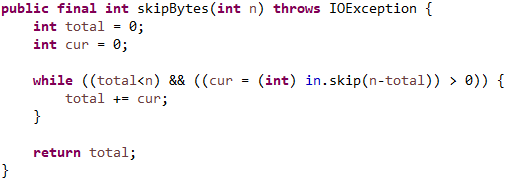
这些基础的InputStream的方法都是使用输入源的基本方法。
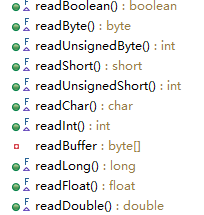
这些方法其实也十分的简单,都是针对每个类型的特点,将其读取出来,当然写入流的时候也要这样才行。
// 读取一个整形,根据是否为0返回boolean值

public final boolean readBoolean() throws IOException {

        int ch = in.read();

        if (ch < 0)

            throw new EOFException();

        return (ch != 0);

}

// 读取一个整形,转成byte类型(实际上存的就是byte类型)

public final byte readByte() throws IOException {

        int ch = in.read();

        if (ch < 0)

            throw new EOFException();

        return (byte)(ch);

}

// 读取一个整形,直接返回就是无符号的byte类型值了

public final int readUnsignedByte() throws IOException {

        int ch = in.read();

        if (ch < 0)

            throw new EOFException();

        return ch;

}

// 读取两个字节,short是占两个字节,把第一读出来的左移8位到高8位。最后强转成short

public final short readShort() throws IOException {

        int ch1 = in.read();

        int ch2 = in.read();

        if ((ch1 | ch2) < 0)

            throw new EOFException();

        return (short)((ch1 << 8) + (ch2 << 0));

}

// 和short的方式一样,不进行强转就是无符合short

public final int readUnsignedShort() throws IOException {

        int ch1 = in.read();

        int ch2 = in.read();

        if ((ch1 | ch2) < 0)

            throw new EOFException();

        return (ch1 << 8) + (ch2 << 0);

}

// char也是两个字节,方法和short一样,最后强转成char

public final char readChar() throws IOException {

        int ch1 = in.read();

        int ch2 = in.read();

        if ((ch1 | ch2) < 0)

            throw new EOFException();

        return (char)((ch1 << 8) + (ch2 << 0));

}

// int是4个字节,第一个左移24位到最高8位,之后的依次就是最后的结果

public final int readInt() throws IOException {

        int ch1 = in.read();

        int ch2 = in.read();

        int ch3 = in.read();

        int ch4 = in.read();

        if ((ch1 | ch2 | ch3 | ch4) < 0)

            throw new EOFException();

        return ((ch1 << 24) + (ch2 << 16) + (ch3 << 8) + (ch4 << 0));

}

// long是8个字节,读入一个数组,然后按照一定的转换方式进行转换

public final long readLong() throws IOException {

        readFully(readBuffer, 0, 8);

        return (((long)readBuffer[0] << 56) +

                ((long)(readBuffer[1] & 255) << 48) +

                ((long)(readBuffer[2] & 255) << 40) +

                ((long)(readBuffer[3] & 255) << 32) +

                ((long)(readBuffer[4] & 255) << 24) +

                ((readBuffer[5] & 255) << 16) +

                ((readBuffer[6] & 255) <<  8) +

                ((readBuffer[7] & 255) <<  0));

}

// float是调用readInt再通过Float的方法来转成float

public final float readFloat() throws IOException {

        return Float.intBitsToFloat(readInt());

}

// double与float类似,不过是8位所以用readLong()

public final double readDouble() throws IOException {

        return Double.longBitsToDouble(readLong());

}
最后的readline()方法已经被废弃了。不过可以看看源代码,比较有意思:
public final String readLine() throws IOException {

        char buf[] = lineBuffer;

        if (buf == null) {

            buf = lineBuffer = new char[128];

        }

        int room = buf.length;

        int offset = 0;

        int c;

loop:   while (true) {

            switch (c = in.read()) {

              case -1:

              case '\n':

                break loop;

              case '\r':

                int c2 = in.read();

                if ((c2 != '\n') && (c2 != -1)) {

                    if (!(in instanceof PushbackInputStream)) {

                        this.in = new PushbackInputStream(in);

                    }

                    ((PushbackInputStream)in).unread(c2);

                }

                break loop;

              default:

                if (--room < 0) {

                    buf = new char[offset + 128];

                    room = buf.length - offset - 1;

                    System.arraycopy(lineBuffer, 0, buf, 0, offset);

                    lineBuffer = buf;

                }

                buf[offset++] = (char) c;

                break;

            }

        }

        if ((c == -1) && (offset == 0)) {

            return null;

        }

        return String.copyValueOf(buf, 0, offset);

    }
用了一个无限循环,读取到换行符才进行break,因为换行符根据操作系统不同,有两种'\r\n'和'\n'。所以'\r'的时候还判断了一下后面的字符是不是\n。不是的话使用了一个PushbackInputStream,这个很有意思,一般流读取了是无法反悔的(不能再次读取),但是专门有了个反悔的输入流。这个其实也简单,和BufferedInputStream原理类似,就是里面有个数组,不同的是BufferedInputStream是为了存从流中取得的字节,PushbackInputStream是放入反悔的字节,pos计数还是从缓存大小倒数的,这也是个不同点。最后是将流读取成UTF格式的字符串。但是只限于DataOutputStream输出的,其解析有固定的格式,前一个Int是字符串长度。
3.DataOutputStream

DataOutputStream也需要一个输出源,里面有一个计数字段written,计算写入了多少字节的数据,是int类型。如果长度超多了int类型的最大值,就会使用Integer.MAX_VALUE来标记。
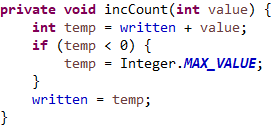
超过了就会变成负数,就是变成了Integer.MAX_VALUE。接下来就是与DataInputStream解析方法对应的写入方法了。
public final void writeBoolean(boolean v) throws IOException {

        out.write(v ? 1 : 0);

        incCount(1);

}

public final void writeByte(int v) throws IOException {

        out.write(v);

        incCount(1);

}

public final void writeShort(int v) throws IOException {

        out.write((v >>> 8) & 0xFF);

        out.write((v >>> 0) & 0xFF);

        incCount(2);

}

public final void writeChar(int v) throws IOException {

        out.write((v >>> 8) & 0xFF);

        out.write((v >>> 0) & 0xFF);

        incCount(2);

}

public final void writeInt(int v) throws IOException {

        out.write((v >>> 24) & 0xFF);

        out.write((v >>> 16) & 0xFF);

        out.write((v >>>  8) & 0xFF);

        out.write((v >>>  0) & 0xFF);

        incCount(4);

}

public final void writeLong(long v) throws IOException {

        writeBuffer[0] = (byte)(v >>> 56);

        writeBuffer[1] = (byte)(v >>> 48);

        writeBuffer[2] = (byte)(v >>> 40);

        writeBuffer[3] = (byte)(v >>> 32);

        writeBuffer[4] = (byte)(v >>> 24);

        writeBuffer[5] = (byte)(v >>> 16);

        writeBuffer[6] = (byte)(v >>>  8);

        writeBuffer[7] = (byte)(v >>>  0);

        out.write(writeBuffer, 0, 8);

        incCount(8);

}

public final void writeFloat(float v) throws IOException {

        writeInt(Float.floatToIntBits(v));

}

public final void writeDouble(double v) throws IOException {

        writeLong(Double.doubleToLongBits(v));

}
还有一些方法比如writeBytes(String)和writeUTF方法就不介绍了。
4.例子与结语
        @Test

	public void test() throws IOException {

		ByteArrayOutputStream baos = new ByteArrayOutputStream(1024);

		DataOutputStream dos = new DataOutputStream(baos);

		dos.writeByte(1);

		dos.writeInt(234);

		dos.writeShort(56);

		dos.writeLong(789L);

		dos.writeDouble(11.11);

		dos.writeFloat(22.22f);

		dos.writeChar('a');

		dos.writeBoolean(false);

		dos.writeUTF("你好!");

		dos.close();

		ByteArrayInputStream bais = new ByteArrayInputStream(baos.toByteArray());

		DataInputStream dis = new DataInputStream(bais);

		System.out.println(dis.readByte());

		System.out.println(dis.readInt());

		System.out.println(dis.readShort());

		System.out.println(dis.readLong());

		System.out.println(dis.readDouble());

		System.out.println(dis.readFloat());

		System.out.println(dis.readChar());

		System.out.println(dis.readBoolean());

		System.out.println(dis.readUTF());

		dis.close();

	}
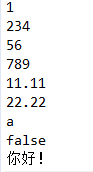
上述就是一个简单的例子了。这里还需要说明的是:这对流是线程不安全的,如果你要在多线程下使用,需要自己保证线程安全。
Java之IO(四)DataInputStream和DataOutputStream的更多相关文章
- java代码----------实现创建DataInputStream和DataOutputStream进行读写
总结: 主要是 捕获异常 package com.a.b; import java.io.*; public class testData { public static void main(Stri ...
- Java之IO(零)总结
转载请注明原出处:http://www.cnblogs.com/lighten/p/7274378.html 1.前言 本章是对之前所讲述的整个Java的IO包的一个总结,抽出个人认为比较重要的知识点 ...
- Java IO(十一) DataInputStream 和 DataOutputStream
Java IO(十一) DataInputStream 和 DataOutputStream 一.介绍 DataInputStream 和 DataOutputStream 是数据字节流,分别继承自 ...
- Java基础-IO流对象之数据流(DataOutputStream与DataInputStream)
Java基础-IO流对象之数据流(DataOutputStream与DataInputStream) 作者:尹正杰 版权声明:原创作品,谢绝转载!否则将追究法律责任. 一.数据流特点 操作基本数据类型 ...
- Java面向对象 IO (四)
Java面向对象 IO (四) 知识概要: (1)打印流 (2)序列流 SequenceInputStream (3)ObjectInputStream与Ob ...
- java io系列15之 DataOutputStream(数据输出流)的认知、源码和示例
本章介绍DataOutputStream.我们先对DataOutputStream有个大致认识,然后再深入学习它的源码,最后通过示例加深对它的了解. 转载请注明出处:http://www.cnblog ...
- java下DataInputStream与DataOutputStream写入数据的同时写入数据类型
package cn.stat.p2.demo; import java.io.DataInputStream; import java.io.DataOutputStream; import jav ...
- Java基础——IO流
今天刚刚看完java的io流操作,把主要的脉络看了一遍,不能保证以后使用时都能得心应手,但是最起码用到时知道有这么一个功能可以实现,下面对学习进行一下简单的总结: IO流主要用于硬板.内存.键盘等处理 ...
- 从Decorator,Adapter模式看Java的IO库
我想任何一本介绍模式的书在讲到Decorator模式的时候不能不提到它的实际应用--在Java/IO库里面的应用,<<Java与模式>>这本书也不例外,有点不一样的是,这本书在 ...
随机推荐
- head first 设计模式文摘
1 欢迎来到设计模式世界:设计模式入门 2 让你的对象知悉现况:观察者模式 3 装饰对象:装饰者模式 4 工厂模式:烘烤OO的精华 5 单件模式:独一无二的对象 6 命令模式:封装调用 7 适配器模式 ...
- Python 爬取数据入库mysql
# -*- enconding:etf-8 -*- import pymysql import os import time import re serveraddr="localhost& ...
- 13.A={1,2,3,5}和为10的问题
题目:集合A={1,2,3,5},从中任取几个数相加等于10,并打印各得哪几个数?补充参照:http://www.cnblogs.com/tinaluo/p/5294341.html上午弄明白了幂集的 ...
- 《Forward团队-爬虫豆瓣top250项目-设计文档》
成员:马壮,李志宇,刘子轩,年光宇,邢云淇,张良 设计方案: 1.能分析HTML语言: 2.提取重要数据,并保存为文本文档: 3.用PY代码调取文本文档的数据: 4.编写提取部分数据的python代码 ...
- noip第11课作业
1. 数字比较 定义一个函数check(n,d),让它返回一个布尔值,如果数字d在正整数n的某位中出现则返回true,否则返回false. 例如:check(325719,3)==true:ch ...
- Codeforces735C Tennis Championship 2016-12-13 12:06 77人阅读 评论(0) 收藏
C. Tennis Championship time limit per test 2 seconds memory limit per test 256 megabytes input stand ...
- alpha七天冲刺计划(更新ing)
alpha七天冲刺计划 第一天: http://note.youdao.com/noteshare?id=ff0c24feec21b1d74a176a0d88815933 第二天: http://no ...
- java web service wsdlLocation 不写死 可动态配置
本解决方案用例Maven 如果项目没用Maven的客园参考扩展一下思路 寻找下适合解决自己项目的方式
- From Alpha to Gamma (I)
What we think of as conventional alpha-blending is basically wrong. --Tom Forsyth 前段时间在Amazon上淘的三本二手 ...
- Python廖雪峰学习笔记——单元测试
定义:对一个模块.一个类.一个函数进行进行正确性检验的测试性工作.当我们对函数或者模块等进行修改时,单元测试就显得尤为重要. 单元测试 = 测试用例(用来测试的数据)+测试模块