
mybatis一级缓存与二级缓存的原理
1.mybatis中的缓存是在mybatis框架中的Executor中来实现的,我们来看一下Executor的继承图
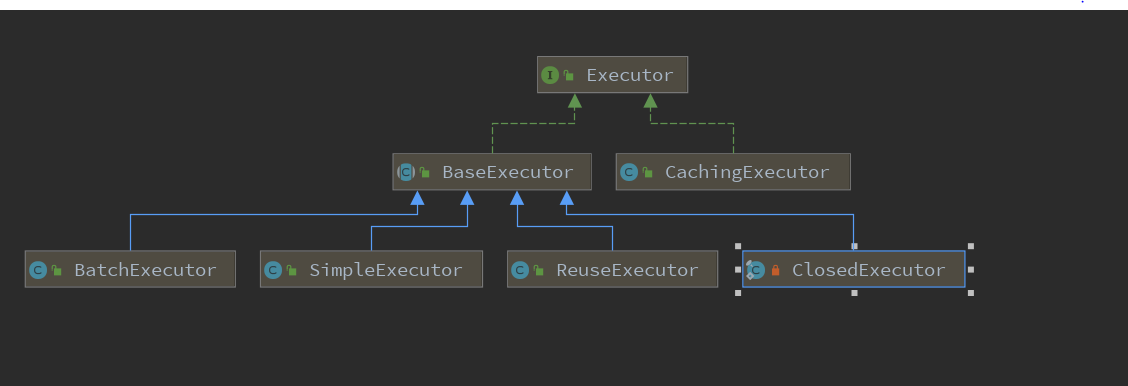
2.通过以上类图我们可以发现Executor接口下有两大实现类BaseExecutor与CachingExecutor
(1)BaseExecutor(用来存储我们的一级缓存)
@Override

  public <E> List<E> query(MappedStatement ms, Object parameter, RowBounds rowBounds, ResultHandler resultHandler, CacheKey key, BoundSql boundSql) throws SQLException {

    ErrorContext.instance().resource(ms.getResource()).activity("executing a query").object(ms.getId());

    if (closed) {

      throw new ExecutorException("Executor was closed.");

    }

    if (queryStack == 0 && ms.isFlushCacheRequired()) {

      clearLocalCache();

    }

    List<E> list;

    try {

      queryStack++;

      list = resultHandler == null ? (List<E>) localCache.getObject(key) : null;  //会先去localCache中去查找我们的数据

      if (list != null) {

        handleLocallyCachedOutputParameters(ms, key, parameter, boundSql);

      } else {

        list = queryFromDatabase(ms, parameter, rowBounds, resultHandler, key, boundSql);  //如不存在则会去数据库中查找

      }

    } finally {

      queryStack--;

    }

    if (queryStack == 0) {

      for (DeferredLoad deferredLoad : deferredLoads) {

        deferredLoad.load();

      }

      // issue #601

      deferredLoads.clear();

      if (configuration.getLocalCacheScope() == LocalCacheScope.STATEMENT) {

        // issue #482

        clearLocalCache();

      }

    }

    return list;

  }
(2)CachingExecutor(是装饰器模式的实现,用来查询我们的二级缓存)
@Override

  public <E> List<E> query(MappedStatement ms, Object parameterObject, RowBounds rowBounds, ResultHandler resultHandler, CacheKey key, BoundSql boundSql)

      throws SQLException {

    Cache cache = ms.getCache();    //在MappedStatement中去获取二级缓存的类型。

    if (cache != null) {

      flushCacheIfRequired(ms);

      if (ms.isUseCache() && resultHandler == null) {

        ensureNoOutParams(ms, boundSql);

        @SuppressWarnings("unchecked")

        List<E> list = (List<E>) tcm.getObject(cache, key); //通过tcm来查询缓存,而tcm是CachingExecutor中的变量TransactionalCacheManager

        if (list == null) {

          list = delegate.<E> query(ms, parameterObject, rowBounds, resultHandler, key, boundSql); //delegate为CachingExecutor中保存的BaseExecutor的引用,若二级缓存不存在回去调用BaseExecutor的方法。

          tcm.putObject(cache, key, list); // issue #578 and #116

        }

        return list;

      }

    }
3.当我们开启二级缓存后Mybatis会使用CachingExecutor去装饰我们的BaseExecutor,所以会先查询二级缓存后再去查询一级缓存。
Configuration中的newExecutor方法
public Executor newExecutor(Transaction transaction, ExecutorType executorType) {

    executorType = executorType == null ? defaultExecutorType : executorType;

    executorType = executorType == null ? ExecutorType.SIMPLE : executorType;

    Executor executor;

    if (ExecutorType.BATCH == executorType) {    //判断Executor的类型

      executor = new BatchExecutor(this, transaction);

    } else if (ExecutorType.REUSE == executorType) {

      executor = new ReuseExecutor(this, transaction);

    } else {

      executor = new SimpleExecutor(this, transaction);

    }

    if (cacheEnabled) {                          //如果二级缓存开启则使用CachingExecutor去装饰我们的executor;

      executor = new CachingExecutor(executor);

    }

    executor = (Executor) interceptorChain.pluginAll(executor);

    return executor;

  }
4.一级缓存与二级缓存的作用范围
(1)一级缓存(由于一级缓存是存在BaseExecutor中的,而Executor又作为创建SqlSession的参数,因此一级缓存具有和sqlsession一样的生命周期)
这是在SqlSessionFactory中调用openSession()中调用的方法
private SqlSession openSessionFromDataSource(ExecutorType execType, TransactionIsolationLevel level, boolean autoCommit) {

    Transaction tx = null;

    try {

      final Environment environment = configuration.getEnvironment();

      final TransactionFactory transactionFactory = getTransactionFactoryFromEnvironment(environment);

      tx = transactionFactory.newTransaction(environment.getDataSource(), level, autoCommit);

      final Executor executor = configuration.newExecutor(tx, execType);  //新建一个Executor作为参数传给DefaultSqlSession

      return new DefaultSqlSession(configuration, executor, autoCommit);

    } catch (Exception e) {

      closeTransaction(tx); // may have fetched a connection so lets call close()

      throw ExceptionFactory.wrapException("Error opening session.  Cause: " + e, e);

    } finally {

      ErrorContext.instance().reset();

    }

  }
(2)二级缓存(使用CachingExecutor来装饰)
//CachingExecutor中的query方法
@Override

  public <E> List<E> query(MappedStatement ms, Object parameterObject, RowBounds rowBounds, ResultHandler resultHandler, CacheKey key, BoundSql boundSql)

      throws SQLException {

    Cache cache = ms.getCache();        //由此可见我们的二级缓存并不是储存在CachingExecutor中的,而是从MappedStatement中去获取。因此mybatis的二级缓存的生命周期为mapper级别的

    if (cache != null) {

      flushCacheIfRequired(ms);

      if (ms.isUseCache() && resultHandler == null) {

        ensureNoOutParams(ms, boundSql);

        @SuppressWarnings("unchecked")

        List<E> list = (List<E>) tcm.getObject(cache, key);

        if (list == null) {

          list = delegate.<E> query(ms, parameterObject, rowBounds, resultHandler, key, boundSql);

          tcm.putObject(cache, key, list); // issue #578 and #116

        }

        return list;

      }

    }

    return delegate.<E> query(ms, parameterObject, rowBounds, resultHandler, key, boundSql);

  }
mybatis一级缓存与二级缓存的原理的更多相关文章
- Mybatis 一级缓存和二级缓存原理区别 (图文详解)
Java面试经常问到Mybatis一级缓存和二级缓存,今天就给大家重点详解Mybatis一级缓存和二级缓存原理与区别@mikechen Mybatis缓存 缓存就是内存中的数据,常常来自对数据库查询结 ...
- MyBatis 延迟加载,一级缓存,二级缓存设置
什么是延迟加载 resultMap中的association和collection标签具有延迟加载的功能. 延迟加载的意思是说,在关联查询时,利用延迟加载,先加载主信息.使用关联信息时再去加载关联信息 ...
- 9.Mybatis一级缓存和二级缓存
所谓的缓存呢?其实原理很简单,就是在保证你查询的数据是正确的情况下,没有去查数据库,而是直接查找的内存,这样做有利于缓解数据库的压力,提高数据库的性能,Mybatis中有提供一级缓存和二级缓存. 学习 ...
- 八 mybatis查询缓存(一级缓存,二级缓存)和ehcache整合
1 查询缓存 1.1 什么是查询缓存 mybatis提供查询缓存,用于减轻数据压力,提高数据库性能. mybaits提供一级缓存,和二级缓存.
- mybatis 详解(九)------ 一级缓存、二级缓存
上一章节,我们讲解了通过mybatis的懒加载来提高查询效率,那么除了懒加载,还有什么方法能提高查询效率呢?这就是我们本章讲的缓存. mybatis 为我们提供了一级缓存和二级缓存,可以通过下图来理解 ...
- Mybatis第八篇【一级缓存、二级缓存、与ehcache整合】
Mybatis缓存 缓存的意义 将用户经常查询的数据放在缓存(内存)中,用户去查询数据就不用从磁盘上(关系型数据库数据文件)查询,从缓存中查询,从而提高查询效率,解决了高并发系统的性能问题. myba ...
- MyBatis 一级缓存,二级缓存,延迟加载设置
1 什么是延迟加载 resultMap中的association和collection标签具有延迟加载的功能. 延迟加载的意思是说,在关联查询时,利用延迟加载,先加载主信息.使用关联信息时再 ...
- mybatis的延迟加载、一级缓存、二级缓存
mybatis的延迟加载.一级缓存.二级缓存 mybatis是什么? mybatis是一个持久层框架,是apache下的开源项目,前身是itbatis,是一个不完全的ORM框架,mybatis提供输入 ...
- 深入理解MyBatis中的一级缓存与二级缓存
http://blog.csdn.net/weixin_36380516/article/details/73194758 先说缓存,合理使用缓存是优化中最常见的,将从数据库中查询出来的数据放入缓 ...
随机推荐
- 两个链表的交叉 · Intersection of Two Linked Lists
[抄题]: Write a program to find the node at which the intersection of two singly linked lists begins. ...
- Golang之一个简单的聊天机器人
翠花,上代码 package main import ( "bufio" "fmt" "os" "strings" ) ...
- Laravel 5 项目部署到生产环境的实践
作者:mrcn链接:https://www.zhihu.com/question/35537084/answer/181734431来源:知乎著作权归作者所有.商业转载请联系作者获得授权,非商业转载请 ...
- 14 Finding a Shared Motif
Problem A common substring of a collection of strings is a substring of every member of the collecti ...
- Spring Boot配置FastJson报错'Content-Type' cannot contain wildcard type '*'
升级到最新版本的fastjson以后报的错,查了一下资料,发现 fastjson从1.1.41升级到1.2.28之后,请求报错:json java.lang.IllegalArgumentExcept ...
- curl工具
在Linux中curl是一个利用URL规则在命令行下工作的文件传输工具,可以说是一款很强大的http命令行工具.它支持文件的上传和下载,是综合传输工具,但按传统,习惯称url为下载工具. 用法: cu ...
- 从Objective-C到Swift,你必须会的(一)#pragma mark
在Objective-C里,为了让代码组织的有序也方便用control+6的快捷键在Xcode中查找,所以出现了一个大家都很熟悉的东东.这就是:#prama mark. #pragma mark 但 ...
- 如何打开Tango的ADF文件?
3ds max? opengl? ... Excel? vs? UltraEdit OpenGL Android API ADF文件数据结构:链接
- POJ1679 The Unique MST 2017-04-15 23:34 29人阅读 评论(0) 收藏
The Unique MST Time Limit: 1000MS Memory Limit: 10000K Total Submissions: 29902 Accepted: 10697 ...
- MFC中的乱起八糟----字符编码:LPTSTR,LPCTSTR, TCHAR等
注意,编写有 Unicode 意识的代码总是一件好事,比如: CString graycat = CString(_T("Gray")) + _T("Cat") ...