
Linear Regression and Gradient Descent (English version)
1.Problem and Loss Function
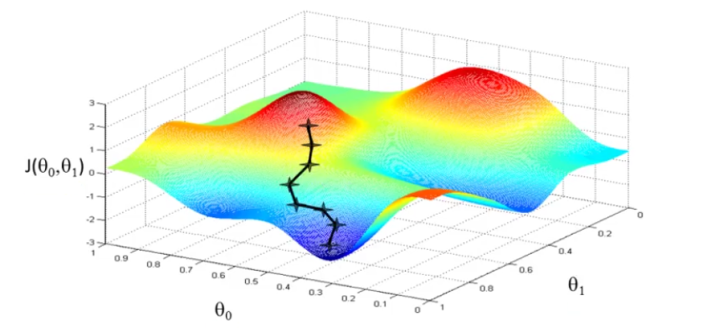
From the initial state, we probably have a really poor system (may be only output zero). By using X and Y to train, we try to derive a better parameter θ. The training process (learning process) may be time-consuming, because the algorithm updates parameters only a little on every training step.
2. Cost Function?
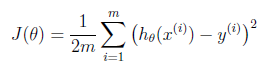
Suppose driving from somewhere to Toronto: it is easy to know the coordinates of Toronto, but it is more important to know where we are now! Cost function is the tool giving us how different between Hypothesis and label Y, so that we can drive to the target. For regression problem, we use MSE as the cost function.

Linear Regression and Gradient Descent (English version)的更多相关文章
- Linear Regression Using Gradient Descent 代码实现
参考吴恩达<机器学习>, 进行 Octave, Python(Numpy), C++(Eigen) 的原理实现, 同时用 scikit-learn, TensorFlow, dlib 进行 ...
- 线性回归、梯度下降(Linear Regression、Gradient Descent)
转载请注明出自BYRans博客:http://www.cnblogs.com/BYRans/ 实例 首先举个例子,假设我们有一个二手房交易记录的数据集,已知房屋面积.卧室数量和房屋的交易价格,如下表: ...
- 斯坦福机器学习视频笔记 Week1 Linear Regression and Gradient Descent
最近开始学习Coursera上的斯坦福机器学习视频,我是刚刚接触机器学习,对此比较感兴趣:准备将我的学习笔记写下来, 作为我每天学习的签到吧,也希望和各位朋友交流学习. 这一系列的博客,我会不定期的更 ...
- 斯坦福机器学习视频笔记 Week1 线性回归和梯度下降 Linear Regression and Gradient Descent
最近开始学习Coursera上的斯坦福机器学习视频,我是刚刚接触机器学习,对此比较感兴趣:准备将我的学习笔记写下来, 作为我每天学习的签到吧,也希望和各位朋友交流学习. 这一系列的博客,我会不定期的更 ...
- Linear Regression and Gradient Descent
随着所学算法的增多,加之使用次数的增多,不时对之前所学的算法有新的理解.这篇博文是在2018年4月17日再次编辑,将之前的3篇博文合并为一篇. 1.Problem and Loss Function ...
- Logistic Regression and Gradient Descent
Logistic Regression and Gradient Descent Logistic regression is an excellent tool to know for classi ...
- Logistic Regression Using Gradient Descent -- Binary Classification 代码实现
1. 原理 Cost function Theta 2. Python # -*- coding:utf8 -*- import numpy as np import matplotlib.pyplo ...
- flink 批量梯度下降算法线性回归参数求解(Linear Regression with BGD(batch gradient descent) )
1.线性回归 假设线性函数如下: 假设我们有10个样本x1,y1),(x2,y2).....(x10,y10),求解目标就是根据多个样本求解theta0和theta1的最优值. 什么样的θ最好的呢?最 ...
- machine learning (7)---normal equation相对于gradient descent而言求解linear regression问题的另一种方式
Normal equation: 一种用来linear regression问题的求解Θ的方法,另一种可以是gradient descent 仅适用于linear regression问题的求解,对其 ...
随机推荐
- 01 spring循环依赖
作者:Mythsman原文:https://blog.mythsman.com/post/5d838c7c2db8a452e9b7082c/转载自:猿天地原文来自:https://mp.weixin. ...
- go语言从例子开始之Example31.定时器
我们常常需要在后面一个时刻运行 Go 代码,或者在某段时间间隔内重复运行. Go 的内置 定时器 和 打点器 特性让这些很容易实现.我们将先学习定时器,然后再学习打点器. Example: packa ...
- Android listview子控件的的点击事件(转)
1.先看图,是否是你想要的 2.布局文件<?xml version="1.0" encoding="utf-8"?><LinearLayout ...
- HTML基础:<a>标签 编写个人收藏夹
编写个人收藏夹 <!DOCTYPE html> <html> <head> <meta charset="utf-8"> <t ...
- 系列(1) Note.Js的安装和部署
一.检测电脑上是否安装node 首先确认下你的node是否已经安装并且配置到了环境变量中了,直接按下快捷键[win+R],调出运行框,然后在里面输入cmd,进入windows的命令窗口. 在命令窗口中 ...
- ivew 绑定时间控件
<FormItem label="开始时间" style="width: 100%" prop="startDate"> < ...
- vagrant up ----失败 问题解决
命令行启动提示信息 there was an error while executing `vboxmanage`, a cli used by vagrant for controlling vir ...
- linux的块设备层
ll_rw_block()是块设备驱动层,向上提供按block读写块设备到某个内存地址的(是以page为目标单位)方法. bread()是块设备缓冲层,磁盘上的block用页缓存.先从这个缓存里找,找 ...
- python每日练习--基础题
""" 1. 现有面包.热狗.番茄酱.芥末酱以及洋葱,数字显 示有多少种订购组合, 其中面包必订,0 不订,1 订,比如 10000,表示只订购面包 "&quo ...
- 每天一个Linux命令:find(20)
find find命令在目录结构中搜索文件,并执行指定的操作.Linux下find命令提供了相当多的查找条件,功能很强大.由于find具有强大的功能,所以它的选项也很多,其中大部分选项都值得我们花时间 ...