
第8章 Spark SQL实战
第8章 Spark SQL实战
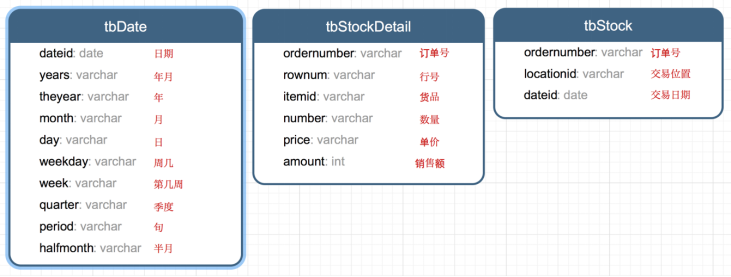
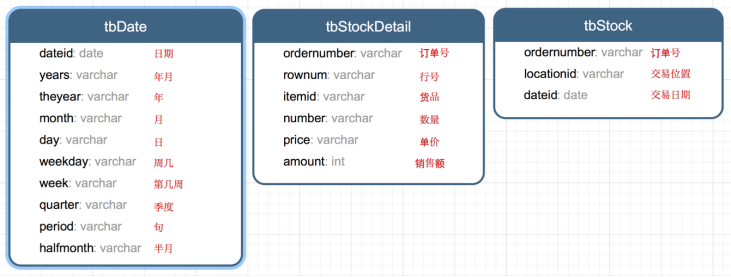
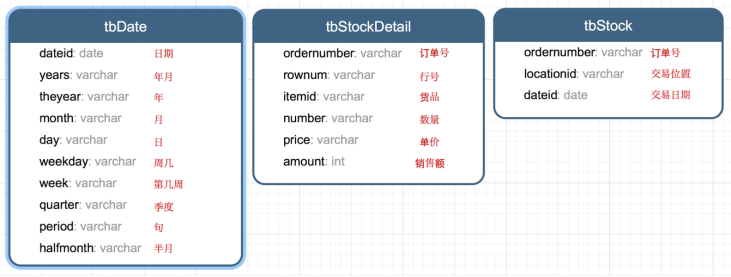
8.1 数据说明
数据集是货品交易数据集。

每个订单可能包含多个货品,每个订单可以产生多次交易,不同的货品有不同的单价。
8.2 加载数据
tbStock:
scala> case class tbStock(ordernumber:String,locationid:String,dateid:String) extends Serializable

defined class tbStock

scala> val tbStockRdd = spark.sparkContext.textFile("tbStock.txt")

tbStockRdd: org.apache.spark.rdd.RDD[String] = tbStock.txt MapPartitionsRDD[1] at textFile at <console>:23

scala> val tbStockDS = tbStockRdd.map(_.split(",")).map(attr=>tbStock(attr(0),attr(1),attr(2))).toDS

tbStockDS: org.apache.spark.sql.Dataset[tbStock] = [ordernumber: string, locationid: string ... 1 more field]

scala> tbStockDS.show()

+------------+----------+---------+

| ordernumber|locationid|   dataid|

+------------+----------+---------+

|BYSL00000893|      ZHAO|2007-8-23|

|BYSL00000897|      ZHAO|2007-8-24|

|BYSL00000898|      ZHAO|2007-8-25|

|BYSL00000899|      ZHAO|2007-8-26|

|BYSL00000900|      ZHAO|2007-8-26|

|BYSL00000901|      ZHAO|2007-8-27|

|BYSL00000902|      ZHAO|2007-8-27|

|BYSL00000904|      ZHAO|2007-8-28|

|BYSL00000905|      ZHAO|2007-8-28|

|BYSL00000906|      ZHAO|2007-8-28|

|BYSL00000907|      ZHAO|2007-8-29|

|BYSL00000908|      ZHAO|2007-8-30|

|BYSL00000909|      ZHAO| 2007-9-1|

|BYSL00000910|      ZHAO| 2007-9-1|

|BYSL00000911|      ZHAO|2007-8-31|

|BYSL00000912|      ZHAO| 2007-9-2|

|BYSL00000913|      ZHAO| 2007-9-3|

|BYSL00000914|      ZHAO| 2007-9-3|

|BYSL00000915|      ZHAO| 2007-9-4|

|BYSL00000916|      ZHAO| 2007-9-4|

+------------+----------+---------+

only showing top 20 rows
tbStockDetail:
scala> case class tbStockDetail(ordernumber:String, rownum:Int, itemid:String, number:Int, price:Double, amount:Double) extends Serializable

defined class tbStockDetail

scala> val tbStockDetailRdd = spark.sparkContext.textFile("tbStockDetail.txt")

tbStockDetailRdd: org.apache.spark.rdd.RDD[String] = tbStockDetail.txt MapPartitionsRDD[13] at textFile at <console>:23

scala> val tbStockDetailDS = tbStockDetailRdd.map(_.split(",")).map(attr=> tbStockDetail(attr(0),attr(1).trim().toInt,attr(2),attr(3).trim().toInt,attr(4).trim().toDouble, attr(5).trim().toDouble)).toDS

tbStockDetailDS: org.apache.spark.sql.Dataset[tbStockDetail] = [ordernumber: string, rownum: int ... 4 more fields]

scala> tbStockDetailDS.show()

+------------+------+--------------+------+-----+------+

| ordernumber|rownum|        itemid|number|price|amount|

+------------+------+--------------+------+-----+------+

|BYSL00000893|     0|FS527258160501|    -1|268.0|-268.0|

|BYSL00000893|     1|FS527258169701|     1|268.0| 268.0|

|BYSL00000893|     2|FS527230163001|     1|198.0| 198.0|

|BYSL00000893|     3|24627209125406|     1|298.0| 298.0|

|BYSL00000893|     4|K9527220210202|     1|120.0| 120.0|

|BYSL00000893|     5|01527291670102|     1|268.0| 268.0|

|BYSL00000893|     6|QY527271800242|     1|158.0| 158.0|

|BYSL00000893|     7|ST040000010000|     8|  0.0|   0.0|

|BYSL00000897|     0|04527200711305|     1|198.0| 198.0|

|BYSL00000897|     1|MY627234650201|     1|120.0| 120.0|

|BYSL00000897|     2|01227111791001|     1|249.0| 249.0|

|BYSL00000897|     3|MY627234610402|     1|120.0| 120.0|

|BYSL00000897|     4|01527282681202|     1|268.0| 268.0|

|BYSL00000897|     5|84126182820102|     1|158.0| 158.0|

|BYSL00000897|     6|K9127105010402|     1|239.0| 239.0|

|BYSL00000897|     7|QY127175210405|     1|199.0| 199.0|

|BYSL00000897|     8|24127151630206|     1|299.0| 299.0|

|BYSL00000897|     9|G1126101350002|     1|158.0| 158.0|

|BYSL00000897|    10|FS527258160501|     1|198.0| 198.0|

|BYSL00000897|    11|ST040000010000|    13|  0.0|   0.0|

+------------+------+--------------+------+-----+------+

only showing top 20 rows
tbDate:
scala> case class tbDate(dateid:String, years:Int, theyear:Int, month:Int, day:Int, weekday:Int, week:Int, quarter:Int, period:Int, halfmonth:Int) extends Serializable

defined class tbDate

scala> val tbDateRdd = spark.sparkContext.textFile("tbDate.txt")

tbDateRdd: org.apache.spark.rdd.RDD[String] = tbDate.txt MapPartitionsRDD[20] at textFile at <console>:23

scala> val tbDateDS = tbDateRdd.map(_.split(",")).map(attr=> tbDate(attr(0),attr(1).trim().toInt, attr(2).trim().toInt,attr(3).trim().toInt, attr(4).trim().toInt, attr(5).trim().toInt, attr(6).trim().toInt, attr(7).trim().toInt, attr(8).trim().toInt, attr(9).trim().toInt)).toDS

tbDateDS: org.apache.spark.sql.Dataset[tbDate] = [dateid: string, years: int ... 8 more fields]

scala> tbDateDS.show()

+---------+------+-------+-----+---+-------+----+-------+------+---------+

|   dateid| years|theyear|month|day|weekday|week|quarter|period|halfmonth|

+---------+------+-------+-----+---+-------+----+-------+------+---------+

| 2003-1-1|200301|   2003|    1|  1|      3|   1|      1|     1|        1|

| 2003-1-2|200301|   2003|    1|  2|      4|   1|      1|     1|        1|

| 2003-1-3|200301|   2003|    1|  3|      5|   1|      1|     1|        1|

| 2003-1-4|200301|   2003|    1|  4|      6|   1|      1|     1|        1|

| 2003-1-5|200301|   2003|    1|  5|      7|   1|      1|     1|        1|

| 2003-1-6|200301|   2003|    1|  6|      1|   2|      1|     1|        1|

| 2003-1-7|200301|   2003|    1|  7|      2|   2|      1|     1|        1|

| 2003-1-8|200301|   2003|    1|  8|      3|   2|      1|     1|        1|

| 2003-1-9|200301|   2003|    1|  9|      4|   2|      1|     1|        1|

|2003-1-10|200301|   2003|    1| 10|      5|   2|      1|     1|        1|

|2003-1-11|200301|   2003|    1| 11|      6|   2|      1|     2|        1|

|2003-1-12|200301|   2003|    1| 12|      7|   2|      1|     2|        1|

|2003-1-13|200301|   2003|    1| 13|      1|   3|      1|     2|        1|

|2003-1-14|200301|   2003|    1| 14|      2|   3|      1|     2|        1|

|2003-1-15|200301|   2003|    1| 15|      3|   3|      1|     2|        1|

|2003-1-16|200301|   2003|    1| 16|      4|   3|      1|     2|        2|

|2003-1-17|200301|   2003|    1| 17|      5|   3|      1|     2|        2|

|2003-1-18|200301|   2003|    1| 18|      6|   3|      1|     2|        2|

|2003-1-19|200301|   2003|    1| 19|      7|   3|      1|     2|        2|

|2003-1-20|200301|   2003|    1| 20|      1|   4|      1|     2|        2|

+---------+------+-------+-----+---+-------+----+-------+------+---------+

only showing top 20 rows
注册表:
scala> tbStockDS.createOrReplaceTempView("tbStock")

scala> tbDateDS.createOrReplaceTempView("tbDate")

scala> tbStockDetailDS.createOrReplaceTempView("tbStockDetail")
8.3 计算所有订单中每年的销售单数、销售总额
统计所有订单中每年的销售单数、销售总额
三个表连接后以count(distinct a.ordernumber)计销售单数,sum(b.amount)计销售总额
SELECT c.theyear, COUNT(DISTINCT a.ordernumber), SUM(b.amount)

FROM tbStock a

    JOIN tbStockDetail b ON a.ordernumber = b.ordernumber

    JOIN tbDate c ON a.dateid = c.dateid

GROUP BY c.theyear

ORDER BY c.theyear
spark.sql("SELECT c.theyear, COUNT(DISTINCT a.ordernumber), SUM(b.amount) FROM tbStock a JOIN tbStockDetail b ON a.ordernumber = b.ordernumber JOIN tbDate c ON a.dateid = c.dateid GROUP BY c.theyear ORDER BY c.theyear").show
结果如下:
+-------+---------------------------+--------------------+

|theyear|count(DISTINCT ordernumber)|         sum(amount)|

+-------+---------------------------+--------------------+

|   2004|                       1094|   3268115.499199999|

|   2005|                       3828|1.3257564149999991E7|

|   2006|                       3772|1.3680982900000006E7|

|   2007|                       4885|1.6719354559999993E7|

|   2008|                       4861| 1.467429530000001E7|

|   2009|                       2619|   6323697.189999999|

|   2010|                         94|  210949.65999999997|

+-------+---------------------------+--------------------+
8.4 计算所有订单每年最大金额订单的销售额
目标:统计每年最大金额订单的销售额:
1)统计每年,每个订单一共有多少销售额
SELECT a.dateid, a.ordernumber, SUM(b.amount) AS SumOfAmount

FROM tbStock a

    JOIN tbStockDetail b ON a.ordernumber = b.ordernumber

GROUP BY a.dateid, a.ordernumber
spark.sql("SELECT a.dateid, a.ordernumber, SUM(b.amount) AS SumOfAmount FROM tbStock a JOIN tbStockDetail b ON a.ordernumber = b.ordernumber GROUP BY a.dateid, a.ordernumber").show
结果如下:
+----------+------------+------------------+

|    dateid| ordernumber|       SumOfAmount|

+----------+------------+------------------+

|  2008-4-9|BYSL00001175|             350.0|

| 2008-5-12|BYSL00001214|             592.0|

| 2008-7-29|BYSL00011545|            2064.0|

|  2008-9-5|DGSL00012056|            1782.0|

| 2008-12-1|DGSL00013189|             318.0|

|2008-12-18|DGSL00013374|             963.0|

|  2009-8-9|DGSL00015223|            4655.0|

| 2009-10-5|DGSL00015585|            3445.0|

| 2010-1-14|DGSL00016374|            2934.0|

| 2006-9-24|GCSL00000673|3556.1000000000004|

| 2007-1-26|GCSL00000826| 9375.199999999999|

| 2007-5-24|GCSL00001020| 6171.300000000002|

|  2008-1-8|GCSL00001217|            7601.6|

| 2008-9-16|GCSL00012204|            2018.0|

| 2006-7-27|GHSL00000603|            2835.6|

|2006-11-15|GHSL00000741|           3951.94|

|  2007-6-6|GHSL00001149|               0.0|

| 2008-4-18|GHSL00001631|              12.0|

| 2008-7-15|GHSL00011367|             578.0|

|  2009-5-8|GHSL00014637|            1797.6|

+----------+------------+------------------+
2)以上一步查询结果为基础表,和表tbDate使用dateid join,求出每年最大金额订单的销售额
SELECT theyear, MAX(c.SumOfAmount) AS SumOfAmount

FROM (SELECT a.dateid, a.ordernumber, SUM(b.amount) AS SumOfAmount

    FROM tbStock a

        JOIN tbStockDetail b ON a.ordernumber = b.ordernumber

    GROUP BY a.dateid, a.ordernumber

    ) c

    JOIN tbDate d ON c.dateid = d.dateid

GROUP BY theyear

ORDER BY theyear DESC
spark.sql("SELECT theyear, MAX(c.SumOfAmount) AS SumOfAmount FROM (SELECT a.dateid, a.ordernumber, SUM(b.amount) AS SumOfAmount FROM tbStock a JOIN tbStockDetail b ON a.ordernumber = b.ordernumber GROUP BY a.dateid, a.ordernumber ) c JOIN tbDate d ON c.dateid = d.dateid GROUP BY theyear ORDER BY theyear DESC").show
结果如下:
+-------+------------------+

|theyear|       SumOfAmount|

+-------+------------------+

|   2010|13065.280000000002|

|   2009|25813.200000000008|

|   2008|           55828.0|

|   2007|          159126.0|

|   2006|           36124.0|

|   2005|38186.399999999994|

|   2004| 23656.79999999997|

+-------+------------------+
8.5 计算所有订单中每年最畅销货品
目标:统计每年最畅销货品(哪个货品销售额amount在当年最高,哪个就是最畅销货品)
第一步、求出每年每个货品的销售额
SELECT c.theyear, b.itemid, SUM(b.amount) AS SumOfAmount

FROM tbStock a

    JOIN tbStockDetail b ON a.ordernumber = b.ordernumber

    JOIN tbDate c ON a.dateid = c.dateid

GROUP BY c.theyear, b.itemid
spark.sql("SELECT c.theyear, b.itemid, SUM(b.amount) AS SumOfAmount FROM tbStock a JOIN tbStockDetail b ON a.ordernumber = b.ordernumber JOIN tbDate c ON a.dateid = c.dateid GROUP BY c.theyear, b.itemid").show
结果如下:
+-------+--------------+------------------+

|theyear|        itemid|       SumOfAmount|

+-------+--------------+------------------+

|   2004|43824480810202|           4474.72|

|   2006|YA214325360101|             556.0|

|   2006|BT624202120102|             360.0|

|   2007|AK215371910101|24603.639999999992|

|   2008|AK216169120201|29144.199999999997|

|   2008|YL526228310106|16073.099999999999|

|   2009|KM529221590106| 5124.800000000001|

|   2004|HT224181030201|2898.6000000000004|

|   2004|SG224308320206|           7307.06|

|   2007|04426485470201|14468.800000000001|

|   2007|84326389100102|           9134.11|

|   2007|B4426438020201|           19884.2|

|   2008|YL427437320101|12331.799999999997|

|   2008|MH215303070101|            8827.0|

|   2009|YL629228280106|           12698.4|

|   2009|BL529298020602|            2415.8|

|   2009|F5127363019006|             614.0|

|   2005|24425428180101|          34890.74|

|   2007|YA214127270101|             240.0|

|   2007|MY127134830105|          11099.92|

+-------+--------------+------------------+
第二步、在第一步的基础上,统计每年单个货品中的最大金额
SELECT d.theyear, MAX(d.SumOfAmount) AS MaxOfAmount

FROM (SELECT c.theyear, b.itemid, SUM(b.amount) AS SumOfAmount

    FROM tbStock a

        JOIN tbStockDetail b ON a.ordernumber = b.ordernumber

        JOIN tbDate c ON a.dateid = c.dateid

    GROUP BY c.theyear, b.itemid

    ) d

GROUP BY d.theyear
spark.sql("SELECT d.theyear, MAX(d.SumOfAmount) AS MaxOfAmount FROM (SELECT c.theyear, b.itemid, SUM(b.amount) AS SumOfAmount FROM tbStock a JOIN tbStockDetail b ON a.ordernumber = b.ordernumber JOIN tbDate c ON a.dateid = c.dateid GROUP BY c.theyear, b.itemid ) d GROUP BY d.theyear").show
结果如下:
+-------+------------------+

|theyear|       MaxOfAmount|

+-------+------------------+

|   2007|           70225.1|

|   2006|          113720.6|

|   2004|53401.759999999995|

|   2009|           30029.2|

|   2005|56627.329999999994|

|   2010|            4494.0|

|   2008| 98003.60000000003|

+-------+------------------+
第三步、用最大销售额和统计好的每个货品的销售额join,以及用年join,集合得到最畅销货品那一行信息
SELECT DISTINCT e.theyear, e.itemid, f.MaxOfAmount

FROM (SELECT c.theyear, b.itemid, SUM(b.amount) AS SumOfAmount

    FROM tbStock a

        JOIN tbStockDetail b ON a.ordernumber = b.ordernumber

        JOIN tbDate c ON a.dateid = c.dateid

    GROUP BY c.theyear, b.itemid

    ) e

    JOIN (SELECT d.theyear, MAX(d.SumOfAmount) AS MaxOfAmount

        FROM (SELECT c.theyear, b.itemid, SUM(b.amount) AS SumOfAmount

            FROM tbStock a

                JOIN tbStockDetail b ON a.ordernumber = b.ordernumber

                JOIN tbDate c ON a.dateid = c.dateid

            GROUP BY c.theyear, b.itemid

            ) d

        GROUP BY d.theyear

        ) f ON e.theyear = f.theyear

        AND e.SumOfAmount = f.MaxOfAmount

ORDER BY e.theyear
spark.sql("SELECT DISTINCT e.theyear, e.itemid, f.maxofamount FROM (SELECT c.theyear, b.itemid, SUM(b.amount) AS sumofamount FROM tbStock a JOIN tbStockDetail b ON a.ordernumber = b.ordernumber JOIN tbDate c ON a.dateid = c.dateid GROUP BY c.theyear, b.itemid ) e JOIN (SELECT d.theyear, MAX(d.sumofamount) AS maxofamount FROM (SELECT c.theyear, b.itemid, SUM(b.amount) AS sumofamount FROM tbStock a JOIN tbStockDetail b ON a.ordernumber = b.ordernumber JOIN tbDate c ON a.dateid = c.dateid GROUP BY c.theyear, b.itemid ) d GROUP BY d.theyear ) f ON e.theyear = f.theyear AND e.sumofamount = f.maxofamount ORDER BY e.theyear").show
结果如下:
+-------+--------------+------------------+

|theyear|        itemid|       maxofamount|

+-------+--------------+------------------+

|   2004|JY424420810101|53401.759999999995|

|   2005|24124118880102|56627.329999999994|

|   2006|JY425468460101|          113720.6|

|   2007|JY425468460101|           70225.1|

|   2008|E2628204040101| 98003.60000000003|

|   2009|YL327439080102|           30029.2|

|   2010|SQ429425090101|            4494.0|

+-------+--------------+------------------+
第8章 Spark SQL实战的更多相关文章
- 第7章 Spark SQL 的运行原理(了解)
第7章 Spark SQL 的运行原理(了解) 7.1 Spark SQL运行架构 Spark SQL对SQL语句的处理和关系型数据库类似,即词法/语法解析.绑定.优化.执行.Spark SQL会先将 ...
- 第1章 Spark SQL概述
第1章 Spark SQL概述 1.1 什么是Spark SQL Spark SQL是Spark用来处理结构化数据的一个模块,它提供了一个编程抽象叫做DataFrame并且作为分布式SQL查询引擎的作 ...
- Spark SQL实战
一.程序 package sparklearning import org.apache.log4j.Logger import org.apache.spark.SparkConf import o ...
- 大数据技术之_19_Spark学习_03_Spark SQL 应用解析 + Spark SQL 概述、解析 、数据源、实战 + 执行 Spark SQL 查询 + JDBC/ODBC 服务器
第1章 Spark SQL 概述1.1 什么是 Spark SQL1.2 RDD vs DataFrames vs DataSet1.2.1 RDD1.2.2 DataFrame1.2.3 DataS ...
- Spark SQL知识点大全与实战
Spark SQL概述 1.什么是Spark SQL Spark SQL是Spark用于结构化数据(structured data)处理的Spark模块. 与基本的Spark RDD API不同,Sp ...
- Spark SQL知识点与实战
Spark SQL概述 1.什么是Spark SQL Spark SQL是Spark用于结构化数据(structured data)处理的Spark模块. 与基本的Spark RDD API不同,Sp ...
- 以慕课网日志分析为例-进入大数据Spark SQL的世界
下载地址.请联系群主 第1章 初探大数据 本章将介绍为什么要学习大数据.如何学好大数据.如何快速转型大数据岗位.本项目实战课程的内容安排.本项目实战课程的前置内容介绍.开发环境介绍.同时为大家介绍项目 ...
- 以某课网日志分析为例 进入大数据 Spark SQL 的世界
第1章 初探大数据 本章将介绍为什么要学习大数据.如何学好大数据.如何快速转型大数据岗位.本项目实战课程的内容安排.本项目实战课程的前置内容介绍.开发环境介绍.同时为大家介绍项目中涉及的Hadoop. ...
- Spark SQL 源代码分析系列
从决定写Spark SQL文章的源代码分析,到现在一个月的时间,一个又一个几乎相同的结束很快,在这里也做了一个综合指数,方便阅读,下面是读取顺序 :) 第一章 Spark SQL源代码分析之核心流程 ...
随机推荐
- Oracle DataGuard故障转移(failover)后使用RMAN还原失败的主库
(一)DG故障转移后切换为备库的方法 在DG执行故障转移之后,主库与从库的关系就被破坏了.这个时候如果要恢复主从关系,可以使用下面的3种方法: 将失败的主库重新搭建为备库,该方法比较耗时: 使用数据库 ...
- 每日一道 LeetCode (1):两数之和
引言 前段时间看到一篇刷 LeetCode 的文章,感触很深,我本身自己上大学的时候,没怎么研究过算法这一方面,导致自己直到现在算法都不咋地. 一直有心想填补下自己的这个短板,实际上又一直给自己找理由 ...
- day19:os模块&shutil模块&tarfile模块
os模块:对系统进行操作(6+3) system popen listdir getcwd chdir environ / name sep linesep import os #### ...
- 下载excel模板,导入数据时需要用到
页面代码: <form id="form1" enctype="multipart/form-data"> <div style=" ...
- 7.9 NOI模拟赛 C.走路 背包 dp 特异性
(啊啊啊 什么考试的时候突然降智这题目硬生生没想出来. 容易发现是先走到某个地方 然后再走回来的 然后在倒着走的路径上选择一些点使得最后的得到的最多. 设\(f_{i,j}\)表示到达i这个点选择的价 ...
- luogu P3223 [HNOI2012]排队
LINK:排队\ 原谅我没学过组合数学 没有高中数学基础水平... 不过凭着隔板法的应用还是可以推出来的. 首先考虑女生 发现一个排列数m! 两个女生不能相邻 那么理论上来说存在无解的情况 而这道题好 ...
- 文件操作之File 和 Path
转载:https://blog.csdn.net/u010889616/article/details/52694061 Java7中文件IO发生了很大的变化,专门引入了很多新的类: import j ...
- Linux下利用docker搭建elasticsearch(单节点)
1. 拉取镜像 #elasticsearch 6.x和7.x版本有很多不一样需要确认 docker pull docker.elastic.co/elasticsearch/elasticsearch ...
- Django自学教程PDF高清电子书百度云网盘免费领取
点击获取提取码:x3di 你一定可以学会,Django 很简单! <Django自学教程>的作者学习了全部的 Django英文的官方文档,觉得国内比较好的Django学习资源不多,所以决定 ...
- jmeter如何设置全局变量
场景:性能测试或者接口测试,如果想跨线程引用(案例:A线程组里面的一个输出,是B线程组里面的一个输入,这个时候如果要引用),这个时候你就必须要设置全局变量;全链路压测也需要分不同场景,通常情况,一个场 ...