
第8章 Spark SQL实战
第8章 Spark SQL实战
8.1 数据说明
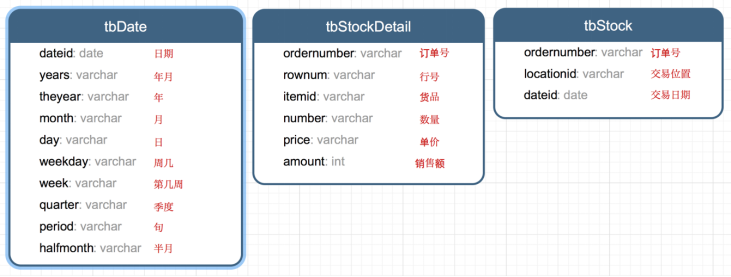
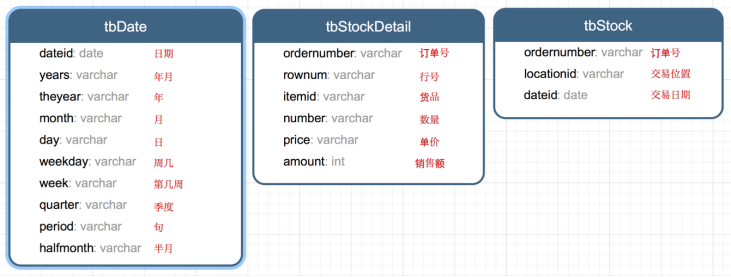
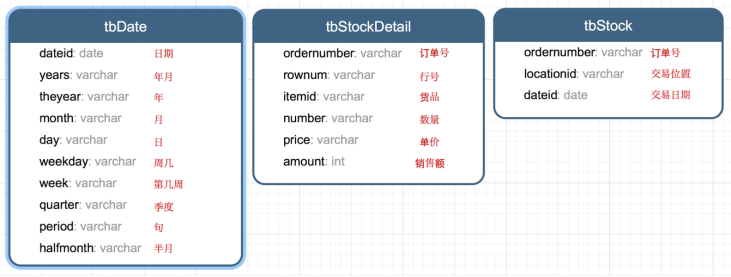
数据集是货品交易数据集。

每个订单可能包含多个货品,每个订单可以产生多次交易,不同的货品有不同的单价。
8.2 加载数据
tbStock:
scala> case class tbStock(ordernumber:String,locationid:String,dateid:String) extends Serializable

defined class tbStock

scala> val tbStockRdd = spark.sparkContext.textFile("tbStock.txt")

tbStockRdd: org.apache.spark.rdd.RDD[String] = tbStock.txt MapPartitionsRDD[1] at textFile at <console>:23

scala> val tbStockDS = tbStockRdd.map(_.split(",")).map(attr=>tbStock(attr(0),attr(1),attr(2))).toDS

tbStockDS: org.apache.spark.sql.Dataset[tbStock] = [ordernumber: string, locationid: string ... 1 more field]

scala> tbStockDS.show()

+------------+----------+---------+

| ordernumber|locationid|   dataid|

+------------+----------+---------+

|BYSL00000893|      ZHAO|2007-8-23|

|BYSL00000897|      ZHAO|2007-8-24|

|BYSL00000898|      ZHAO|2007-8-25|

|BYSL00000899|      ZHAO|2007-8-26|

|BYSL00000900|      ZHAO|2007-8-26|

|BYSL00000901|      ZHAO|2007-8-27|

|BYSL00000902|      ZHAO|2007-8-27|

|BYSL00000904|      ZHAO|2007-8-28|

|BYSL00000905|      ZHAO|2007-8-28|

|BYSL00000906|      ZHAO|2007-8-28|

|BYSL00000907|      ZHAO|2007-8-29|

|BYSL00000908|      ZHAO|2007-8-30|

|BYSL00000909|      ZHAO| 2007-9-1|

|BYSL00000910|      ZHAO| 2007-9-1|

|BYSL00000911|      ZHAO|2007-8-31|

|BYSL00000912|      ZHAO| 2007-9-2|

|BYSL00000913|      ZHAO| 2007-9-3|

|BYSL00000914|      ZHAO| 2007-9-3|

|BYSL00000915|      ZHAO| 2007-9-4|

|BYSL00000916|      ZHAO| 2007-9-4|

+------------+----------+---------+

only showing top 20 rows
tbStockDetail:
scala> case class tbStockDetail(ordernumber:String, rownum:Int, itemid:String, number:Int, price:Double, amount:Double) extends Serializable

defined class tbStockDetail

scala> val tbStockDetailRdd = spark.sparkContext.textFile("tbStockDetail.txt")

tbStockDetailRdd: org.apache.spark.rdd.RDD[String] = tbStockDetail.txt MapPartitionsRDD[13] at textFile at <console>:23

scala> val tbStockDetailDS = tbStockDetailRdd.map(_.split(",")).map(attr=> tbStockDetail(attr(0),attr(1).trim().toInt,attr(2),attr(3).trim().toInt,attr(4).trim().toDouble, attr(5).trim().toDouble)).toDS

tbStockDetailDS: org.apache.spark.sql.Dataset[tbStockDetail] = [ordernumber: string, rownum: int ... 4 more fields]

scala> tbStockDetailDS.show()

+------------+------+--------------+------+-----+------+

| ordernumber|rownum|        itemid|number|price|amount|

+------------+------+--------------+------+-----+------+

|BYSL00000893|     0|FS527258160501|    -1|268.0|-268.0|

|BYSL00000893|     1|FS527258169701|     1|268.0| 268.0|

|BYSL00000893|     2|FS527230163001|     1|198.0| 198.0|

|BYSL00000893|     3|24627209125406|     1|298.0| 298.0|

|BYSL00000893|     4|K9527220210202|     1|120.0| 120.0|

|BYSL00000893|     5|01527291670102|     1|268.0| 268.0|

|BYSL00000893|     6|QY527271800242|     1|158.0| 158.0|

|BYSL00000893|     7|ST040000010000|     8|  0.0|   0.0|

|BYSL00000897|     0|04527200711305|     1|198.0| 198.0|

|BYSL00000897|     1|MY627234650201|     1|120.0| 120.0|

|BYSL00000897|     2|01227111791001|     1|249.0| 249.0|

|BYSL00000897|     3|MY627234610402|     1|120.0| 120.0|

|BYSL00000897|     4|01527282681202|     1|268.0| 268.0|

|BYSL00000897|     5|84126182820102|     1|158.0| 158.0|

|BYSL00000897|     6|K9127105010402|     1|239.0| 239.0|

|BYSL00000897|     7|QY127175210405|     1|199.0| 199.0|

|BYSL00000897|     8|24127151630206|     1|299.0| 299.0|

|BYSL00000897|     9|G1126101350002|     1|158.0| 158.0|

|BYSL00000897|    10|FS527258160501|     1|198.0| 198.0|

|BYSL00000897|    11|ST040000010000|    13|  0.0|   0.0|

+------------+------+--------------+------+-----+------+

only showing top 20 rows
tbDate:
scala> case class tbDate(dateid:String, years:Int, theyear:Int, month:Int, day:Int, weekday:Int, week:Int, quarter:Int, period:Int, halfmonth:Int) extends Serializable

defined class tbDate

scala> val tbDateRdd = spark.sparkContext.textFile("tbDate.txt")

tbDateRdd: org.apache.spark.rdd.RDD[String] = tbDate.txt MapPartitionsRDD[20] at textFile at <console>:23

scala> val tbDateDS = tbDateRdd.map(_.split(",")).map(attr=> tbDate(attr(0),attr(1).trim().toInt, attr(2).trim().toInt,attr(3).trim().toInt, attr(4).trim().toInt, attr(5).trim().toInt, attr(6).trim().toInt, attr(7).trim().toInt, attr(8).trim().toInt, attr(9).trim().toInt)).toDS

tbDateDS: org.apache.spark.sql.Dataset[tbDate] = [dateid: string, years: int ... 8 more fields]

scala> tbDateDS.show()

+---------+------+-------+-----+---+-------+----+-------+------+---------+

|   dateid| years|theyear|month|day|weekday|week|quarter|period|halfmonth|

+---------+------+-------+-----+---+-------+----+-------+------+---------+

| 2003-1-1|200301|   2003|    1|  1|      3|   1|      1|     1|        1|

| 2003-1-2|200301|   2003|    1|  2|      4|   1|      1|     1|        1|

| 2003-1-3|200301|   2003|    1|  3|      5|   1|      1|     1|        1|

| 2003-1-4|200301|   2003|    1|  4|      6|   1|      1|     1|        1|

| 2003-1-5|200301|   2003|    1|  5|      7|   1|      1|     1|        1|

| 2003-1-6|200301|   2003|    1|  6|      1|   2|      1|     1|        1|

| 2003-1-7|200301|   2003|    1|  7|      2|   2|      1|     1|        1|

| 2003-1-8|200301|   2003|    1|  8|      3|   2|      1|     1|        1|

| 2003-1-9|200301|   2003|    1|  9|      4|   2|      1|     1|        1|

|2003-1-10|200301|   2003|    1| 10|      5|   2|      1|     1|        1|

|2003-1-11|200301|   2003|    1| 11|      6|   2|      1|     2|        1|

|2003-1-12|200301|   2003|    1| 12|      7|   2|      1|     2|        1|

|2003-1-13|200301|   2003|    1| 13|      1|   3|      1|     2|        1|

|2003-1-14|200301|   2003|    1| 14|      2|   3|      1|     2|        1|

|2003-1-15|200301|   2003|    1| 15|      3|   3|      1|     2|        1|

|2003-1-16|200301|   2003|    1| 16|      4|   3|      1|     2|        2|

|2003-1-17|200301|   2003|    1| 17|      5|   3|      1|     2|        2|

|2003-1-18|200301|   2003|    1| 18|      6|   3|      1|     2|        2|

|2003-1-19|200301|   2003|    1| 19|      7|   3|      1|     2|        2|

|2003-1-20|200301|   2003|    1| 20|      1|   4|      1|     2|        2|

+---------+------+-------+-----+---+-------+----+-------+------+---------+

only showing top 20 rows
注册表:
scala> tbStockDS.createOrReplaceTempView("tbStock")

scala> tbDateDS.createOrReplaceTempView("tbDate")

scala> tbStockDetailDS.createOrReplaceTempView("tbStockDetail")
8.3 计算所有订单中每年的销售单数、销售总额
统计所有订单中每年的销售单数、销售总额
三个表连接后以count(distinct a.ordernumber)计销售单数,sum(b.amount)计销售总额
SELECT c.theyear, COUNT(DISTINCT a.ordernumber), SUM(b.amount)

FROM tbStock a

    JOIN tbStockDetail b ON a.ordernumber = b.ordernumber

    JOIN tbDate c ON a.dateid = c.dateid

GROUP BY c.theyear

ORDER BY c.theyear
spark.sql("SELECT c.theyear, COUNT(DISTINCT a.ordernumber), SUM(b.amount) FROM tbStock a JOIN tbStockDetail b ON a.ordernumber = b.ordernumber JOIN tbDate c ON a.dateid = c.dateid GROUP BY c.theyear ORDER BY c.theyear").show
结果如下:
+-------+---------------------------+--------------------+

|theyear|count(DISTINCT ordernumber)|         sum(amount)|

+-------+---------------------------+--------------------+

|   2004|                       1094|   3268115.499199999|

|   2005|                       3828|1.3257564149999991E7|

|   2006|                       3772|1.3680982900000006E7|

|   2007|                       4885|1.6719354559999993E7|

|   2008|                       4861| 1.467429530000001E7|

|   2009|                       2619|   6323697.189999999|

|   2010|                         94|  210949.65999999997|

+-------+---------------------------+--------------------+
8.4 计算所有订单每年最大金额订单的销售额
目标:统计每年最大金额订单的销售额:
1)统计每年,每个订单一共有多少销售额
SELECT a.dateid, a.ordernumber, SUM(b.amount) AS SumOfAmount

FROM tbStock a

    JOIN tbStockDetail b ON a.ordernumber = b.ordernumber

GROUP BY a.dateid, a.ordernumber
spark.sql("SELECT a.dateid, a.ordernumber, SUM(b.amount) AS SumOfAmount FROM tbStock a JOIN tbStockDetail b ON a.ordernumber = b.ordernumber GROUP BY a.dateid, a.ordernumber").show
结果如下:
+----------+------------+------------------+

|    dateid| ordernumber|       SumOfAmount|

+----------+------------+------------------+

|  2008-4-9|BYSL00001175|             350.0|

| 2008-5-12|BYSL00001214|             592.0|

| 2008-7-29|BYSL00011545|            2064.0|

|  2008-9-5|DGSL00012056|            1782.0|

| 2008-12-1|DGSL00013189|             318.0|

|2008-12-18|DGSL00013374|             963.0|

|  2009-8-9|DGSL00015223|            4655.0|

| 2009-10-5|DGSL00015585|            3445.0|

| 2010-1-14|DGSL00016374|            2934.0|

| 2006-9-24|GCSL00000673|3556.1000000000004|

| 2007-1-26|GCSL00000826| 9375.199999999999|

| 2007-5-24|GCSL00001020| 6171.300000000002|

|  2008-1-8|GCSL00001217|            7601.6|

| 2008-9-16|GCSL00012204|            2018.0|

| 2006-7-27|GHSL00000603|            2835.6|

|2006-11-15|GHSL00000741|           3951.94|

|  2007-6-6|GHSL00001149|               0.0|

| 2008-4-18|GHSL00001631|              12.0|

| 2008-7-15|GHSL00011367|             578.0|

|  2009-5-8|GHSL00014637|            1797.6|

+----------+------------+------------------+
2)以上一步查询结果为基础表,和表tbDate使用dateid join,求出每年最大金额订单的销售额
SELECT theyear, MAX(c.SumOfAmount) AS SumOfAmount

FROM (SELECT a.dateid, a.ordernumber, SUM(b.amount) AS SumOfAmount

    FROM tbStock a

        JOIN tbStockDetail b ON a.ordernumber = b.ordernumber

    GROUP BY a.dateid, a.ordernumber

    ) c

    JOIN tbDate d ON c.dateid = d.dateid

GROUP BY theyear

ORDER BY theyear DESC
spark.sql("SELECT theyear, MAX(c.SumOfAmount) AS SumOfAmount FROM (SELECT a.dateid, a.ordernumber, SUM(b.amount) AS SumOfAmount FROM tbStock a JOIN tbStockDetail b ON a.ordernumber = b.ordernumber GROUP BY a.dateid, a.ordernumber ) c JOIN tbDate d ON c.dateid = d.dateid GROUP BY theyear ORDER BY theyear DESC").show
结果如下:
+-------+------------------+

|theyear|       SumOfAmount|

+-------+------------------+

|   2010|13065.280000000002|

|   2009|25813.200000000008|

|   2008|           55828.0|

|   2007|          159126.0|

|   2006|           36124.0|

|   2005|38186.399999999994|

|   2004| 23656.79999999997|

+-------+------------------+
8.5 计算所有订单中每年最畅销货品
目标:统计每年最畅销货品(哪个货品销售额amount在当年最高,哪个就是最畅销货品)
第一步、求出每年每个货品的销售额
SELECT c.theyear, b.itemid, SUM(b.amount) AS SumOfAmount

FROM tbStock a

    JOIN tbStockDetail b ON a.ordernumber = b.ordernumber

    JOIN tbDate c ON a.dateid = c.dateid

GROUP BY c.theyear, b.itemid
spark.sql("SELECT c.theyear, b.itemid, SUM(b.amount) AS SumOfAmount FROM tbStock a JOIN tbStockDetail b ON a.ordernumber = b.ordernumber JOIN tbDate c ON a.dateid = c.dateid GROUP BY c.theyear, b.itemid").show
结果如下:
+-------+--------------+------------------+

|theyear|        itemid|       SumOfAmount|

+-------+--------------+------------------+

|   2004|43824480810202|           4474.72|

|   2006|YA214325360101|             556.0|

|   2006|BT624202120102|             360.0|

|   2007|AK215371910101|24603.639999999992|

|   2008|AK216169120201|29144.199999999997|

|   2008|YL526228310106|16073.099999999999|

|   2009|KM529221590106| 5124.800000000001|

|   2004|HT224181030201|2898.6000000000004|

|   2004|SG224308320206|           7307.06|

|   2007|04426485470201|14468.800000000001|

|   2007|84326389100102|           9134.11|

|   2007|B4426438020201|           19884.2|

|   2008|YL427437320101|12331.799999999997|

|   2008|MH215303070101|            8827.0|

|   2009|YL629228280106|           12698.4|

|   2009|BL529298020602|            2415.8|

|   2009|F5127363019006|             614.0|

|   2005|24425428180101|          34890.74|

|   2007|YA214127270101|             240.0|

|   2007|MY127134830105|          11099.92|

+-------+--------------+------------------+
第二步、在第一步的基础上,统计每年单个货品中的最大金额
SELECT d.theyear, MAX(d.SumOfAmount) AS MaxOfAmount

FROM (SELECT c.theyear, b.itemid, SUM(b.amount) AS SumOfAmount

    FROM tbStock a

        JOIN tbStockDetail b ON a.ordernumber = b.ordernumber

        JOIN tbDate c ON a.dateid = c.dateid

    GROUP BY c.theyear, b.itemid

    ) d

GROUP BY d.theyear
spark.sql("SELECT d.theyear, MAX(d.SumOfAmount) AS MaxOfAmount FROM (SELECT c.theyear, b.itemid, SUM(b.amount) AS SumOfAmount FROM tbStock a JOIN tbStockDetail b ON a.ordernumber = b.ordernumber JOIN tbDate c ON a.dateid = c.dateid GROUP BY c.theyear, b.itemid ) d GROUP BY d.theyear").show
结果如下:
+-------+------------------+

|theyear|       MaxOfAmount|

+-------+------------------+

|   2007|           70225.1|

|   2006|          113720.6|

|   2004|53401.759999999995|

|   2009|           30029.2|

|   2005|56627.329999999994|

|   2010|            4494.0|

|   2008| 98003.60000000003|

+-------+------------------+
第三步、用最大销售额和统计好的每个货品的销售额join,以及用年join,集合得到最畅销货品那一行信息
SELECT DISTINCT e.theyear, e.itemid, f.MaxOfAmount

FROM (SELECT c.theyear, b.itemid, SUM(b.amount) AS SumOfAmount

    FROM tbStock a

        JOIN tbStockDetail b ON a.ordernumber = b.ordernumber

        JOIN tbDate c ON a.dateid = c.dateid

    GROUP BY c.theyear, b.itemid

    ) e

    JOIN (SELECT d.theyear, MAX(d.SumOfAmount) AS MaxOfAmount

        FROM (SELECT c.theyear, b.itemid, SUM(b.amount) AS SumOfAmount

            FROM tbStock a

                JOIN tbStockDetail b ON a.ordernumber = b.ordernumber

                JOIN tbDate c ON a.dateid = c.dateid

            GROUP BY c.theyear, b.itemid

            ) d

        GROUP BY d.theyear

        ) f ON e.theyear = f.theyear

        AND e.SumOfAmount = f.MaxOfAmount

ORDER BY e.theyear
spark.sql("SELECT DISTINCT e.theyear, e.itemid, f.maxofamount FROM (SELECT c.theyear, b.itemid, SUM(b.amount) AS sumofamount FROM tbStock a JOIN tbStockDetail b ON a.ordernumber = b.ordernumber JOIN tbDate c ON a.dateid = c.dateid GROUP BY c.theyear, b.itemid ) e JOIN (SELECT d.theyear, MAX(d.sumofamount) AS maxofamount FROM (SELECT c.theyear, b.itemid, SUM(b.amount) AS sumofamount FROM tbStock a JOIN tbStockDetail b ON a.ordernumber = b.ordernumber JOIN tbDate c ON a.dateid = c.dateid GROUP BY c.theyear, b.itemid ) d GROUP BY d.theyear ) f ON e.theyear = f.theyear AND e.sumofamount = f.maxofamount ORDER BY e.theyear").show
结果如下:
+-------+--------------+------------------+

|theyear|        itemid|       maxofamount|

+-------+--------------+------------------+

|   2004|JY424420810101|53401.759999999995|

|   2005|24124118880102|56627.329999999994|

|   2006|JY425468460101|          113720.6|

|   2007|JY425468460101|           70225.1|

|   2008|E2628204040101| 98003.60000000003|

|   2009|YL327439080102|           30029.2|

|   2010|SQ429425090101|            4494.0|

+-------+--------------+------------------+
第8章 Spark SQL实战的更多相关文章
- 第7章 Spark SQL 的运行原理(了解)
第7章 Spark SQL 的运行原理(了解) 7.1 Spark SQL运行架构 Spark SQL对SQL语句的处理和关系型数据库类似,即词法/语法解析.绑定.优化.执行.Spark SQL会先将 ...
- 第1章 Spark SQL概述
第1章 Spark SQL概述 1.1 什么是Spark SQL Spark SQL是Spark用来处理结构化数据的一个模块,它提供了一个编程抽象叫做DataFrame并且作为分布式SQL查询引擎的作 ...
- Spark SQL实战
一.程序 package sparklearning import org.apache.log4j.Logger import org.apache.spark.SparkConf import o ...
- 大数据技术之_19_Spark学习_03_Spark SQL 应用解析 + Spark SQL 概述、解析 、数据源、实战 + 执行 Spark SQL 查询 + JDBC/ODBC 服务器
第1章 Spark SQL 概述1.1 什么是 Spark SQL1.2 RDD vs DataFrames vs DataSet1.2.1 RDD1.2.2 DataFrame1.2.3 DataS ...
- Spark SQL知识点大全与实战
Spark SQL概述 1.什么是Spark SQL Spark SQL是Spark用于结构化数据(structured data)处理的Spark模块. 与基本的Spark RDD API不同,Sp ...
- Spark SQL知识点与实战
Spark SQL概述 1.什么是Spark SQL Spark SQL是Spark用于结构化数据(structured data)处理的Spark模块. 与基本的Spark RDD API不同,Sp ...
- 以慕课网日志分析为例-进入大数据Spark SQL的世界
下载地址.请联系群主 第1章 初探大数据 本章将介绍为什么要学习大数据.如何学好大数据.如何快速转型大数据岗位.本项目实战课程的内容安排.本项目实战课程的前置内容介绍.开发环境介绍.同时为大家介绍项目 ...
- 以某课网日志分析为例 进入大数据 Spark SQL 的世界
第1章 初探大数据 本章将介绍为什么要学习大数据.如何学好大数据.如何快速转型大数据岗位.本项目实战课程的内容安排.本项目实战课程的前置内容介绍.开发环境介绍.同时为大家介绍项目中涉及的Hadoop. ...
- Spark SQL 源代码分析系列
从决定写Spark SQL文章的源代码分析,到现在一个月的时间,一个又一个几乎相同的结束很快,在这里也做了一个综合指数,方便阅读,下面是读取顺序 :) 第一章 Spark SQL源代码分析之核心流程 ...
随机推荐
- MySQL之高级操作
新增数据: 基本语法: insert into 表名 [(字段列表)] values(列表值) 在数据插入的时候,假设主键对应的值已经存在,插入一定会失败 主键冲突: 当主键存在冲突的时候(Dupl ...
- SQL语句中带有EXISTS谓词的子查询的理解与使用
EXISTS:代表存在量词. 在SQL中,把具有全称量词的谓词查询问题转换成等价的存在量词的谓词查询予以实现. 如有三个表,Student(Sno,Sname),Course(Cno,Cname),S ...
- freeRTOS内核学习笔记(1)-编程标准
在开始具体的学习之前,你应该先了解freeRTOS的编程标准.这能够方便你在接下来的阅读中快速的了解一些内容 的基本信息,并方便记忆.此外,良好的编程风格也是工作效率的保障. 你可以在https:// ...
- Java基础篇(03):流程控制语句,和算法应用
本文源码:GitHub·点这里 || GitEE·点这里 一.分支语句 流程控制语句对任何一门编程语言都是非常重要的,Java中基于流程控制程序执行的不同步骤和代码块. 1.IF条件 IF条件语句会根 ...
- 选择排序的实现以及如何编写测试 #CS61B-sp18-3.1
Selection Sort的思想: 就是在一系列数字中先找到一个最小的放在所有数字的第一个位置上,然后再从余下的数字里面找最小个放在余下的数字里的第一个位置上. 例如: 在这段数据里面我们找到最小的 ...
- Blash数组 c++
//输入一个数作为Blash数组的根, //对于该数组的每一个数x,x*2+1 x*3+1均在该数组 //并且该数组没有其他数字 //该数组升序排列 //输入a,n 输出该数组第n个数 // // # ...
- 第四章 常用API(上)
4.1.Object类 描述:该类是所有类的最终根类 方法 描述 public boolean equals(Object obj) 表示某个其它对象是否"等于"此对象 publi ...
- Springboot中的CommandLineRunner
CommandLineRunner接口的作用 在平常开发中可能需要实现在启动后执行的功能,Springboot提供了一种简单的实现方案,即实现CommandLineRunner接口,实现功能的代码在接 ...
- 【SDOI2010】猪国杀 题解(模拟)
前言:嗅到了一丝头秃的味道…… ------------------ 题目链接 题目实在太长,变量也很多.建议至少读个三五遍再做题.不要忽略任何细节,不要想当然.(因为真正玩三国杀肯定不像猪一样出牌啊 ...
- [NLP]LSTM理解
简介 LSTM(Long short-term memory,长短期记忆)是一种特殊的RNN,主要是为了解决长序列训练过程中的梯度消失问题.以下先从RNN介绍. 简说RNN RNN(Recurrent ...