
Arrays.sort() ----- TimSort
Arrays.sort()
Arrays.sort()对于基本类型使用的是DualPivotQuicksort双轴快速排序,而对于非基本类型使用的是TimSort,一种源自合并排序和插入排序的混合稳定算法。
算法
划分run
找出数组中按升序排序的区域(arr[i]<=arr[i+1])或者按严格降序排序的区域(arr[i]>arr[i+1]),这块区域就叫run。
翻转严格降序的区域,严格降序就是为了这步不破坏稳定性。
run长度如果小于minRun,将binarySort扩展到minRun。
minRun,每块run的最小长度。定义引用wiki上的一段话:Because merging is most efficient when the number of runs is equal to, or slightly less than, a power of two, and notably less efficient when the number of runs is slightly more than a power of two, Timsort chooses minrun to try to ensure the former condition.
大意是说合并只有在run的个数在等于或者稍小于2^n才最有效,TimSort用minRun来保证。
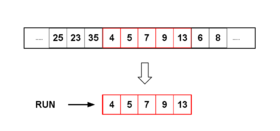
压栈
栈保存run的起始位置和长度合并
合并是为了是合并的run长度达到接近。
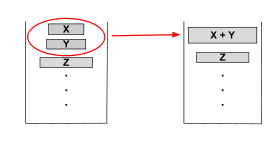
为了追求平衡的合并,Timsort考虑了堆栈顶部的三个run,X,Y,Z,并维护不变量:
1.| Z | > | Y | + | X |
2.| Y | > | X |
如果违反了不变量,则Y与X或Z中的较小者合并,并再次检查不变量。
重复以上步骤直到数组都划分完成
合并栈上剩下的run
jdk1.8源码
static <T> void sort(T[] a, int lo, int hi, Comparator<? super T> c,

                     T[] work, int workBase, int workLen) {

    assert c != null && a != null && lo >= 0 && lo <= hi && hi <= a.length;

    int nRemaining  = hi - lo;

    if (nRemaining < 2)

        return;

	//数组长度小于32,直接用二分插入排序

    if (nRemaining < MIN_MERGE) {

        int initRunLen = countRunAndMakeAscending(a, lo, hi, c);

        binarySort(a, lo, hi, lo + initRunLen, c);

        return;

    }

    TimSort<T> ts = new TimSort<>(a, c, work, workBase, workLen);

	//计算minRun

    int minRun = minRunLength(nRemaining);

    do {

        //1.1-1.2 获取run的长度,并翻转严格降序run

        int runLen = countRunAndMakeAscending(a, lo, hi, c);

        //1.3 如果长度小于minRun,扩展run

        if (runLen < minRun) {

            int force = nRemaining <= minRun ? nRemaining : minRun;

            binarySort(a, lo, lo + force, lo + runLen, c);

            runLen = force;

        }

        //2. 压栈

        ts.pushRun(lo, runLen);

		//3. 合并run

        ts.mergeCollapse();

        // Advance to find next run

        lo += runLen;

        nRemaining -= runLen;

    } while (nRemaining != 0);//4.重复步骤1-3

    //5.合并剩下的run

    assert lo == hi;

    ts.mergeForceCollapse();

    assert ts.stackSize == 1;

}
countRunAndMakeAscending 获取run的长度并翻转严格降序run
private static <T> int countRunAndMakeAscending(T[] a, int lo, int hi,

                                                Comparator<? super T> c) {

    assert lo < hi;

    int runHi = lo + 1;

    if (runHi == hi)

        return 1;

    // Find end of run, and reverse range if descending

    if (c.compare(a[runHi++], a[lo]) < 0) { // Descending

        while (runHi < hi && c.compare(a[runHi], a[runHi - 1]) < 0)

            runHi++;

        reverseRange(a, lo, runHi);

    } else {                              // Ascending

        while (runHi < hi && c.compare(a[runHi], a[runHi - 1]) >= 0)

            runHi++;

    }

    return runHi - lo;

}
binarySort 二分插入排序
private static <T> void binarySort(T[] a, int lo, int hi, int start,

                                   Comparator<? super T> c) {

    assert lo <= start && start <= hi;

    if (start == lo)

        start++;

    for ( ; start < hi; start++) {

        T pivot = a[start];

        // Set left (and right) to the index where a[start] (pivot) belongs

        int left = lo;

        int right = start;

        assert left <= right;

        /*

         * Invariants:

         *   pivot >= all in [lo, left).

         *   pivot <  all in [right, start).

         */

        while (left < right) {

            int mid = (left + right) >>> 1;

            if (c.compare(pivot, a[mid]) < 0)

                right = mid;

            else

                left = mid + 1;

        }

        assert left == right;

        /*

         * The invariants still hold: pivot >= all in [lo, left) and

         * pivot < all in [left, start), so pivot belongs at left.  Note

         * that if there are elements equal to pivot, left points to the

         * first slot after them -- that's why this sort is stable.

         * Slide elements over to make room for pivot.

         */

        int n = start - left;  // The number of elements to move

        // Switch is just an optimization for arraycopy in default case

        switch (n) {

            case 2:  a[left + 2] = a[left + 1];

            case 1:  a[left + 1] = a[left];

                     break;

            default: System.arraycopy(a, left, a, left + 1, n);

        }

        a[left] = pivot;

    }

}
minRunLength 计算minRun
如果数组长度为2^n,minRun为16(MIN_MERGE/2);
否则取长度的高4位,奇数补1,MIN_MERGE/2<=minRun<MIN_MERGE。
private static int minRunLength(int n) {

    assert n >= 0;

    int r = 0;      // Becomes 1 if any 1 bits are shifted off

    while (n >= MIN_MERGE) {

        r |= (n & 1);

        n >>= 1;

    }

    return n + r;

}
pushRun 压栈
runBase存run的起始位置
runLen存run的长度
runBase[i]+runLen[i]=runBase[i+1]
private void pushRun(int runBase, int runLen) {

    this.runBase[stackSize] = runBase;

    this.runLen[stackSize] = runLen;

    stackSize++;

}
mergeCollapse 合并
//判断数组尾部,即刚入栈的三个run是否符合上述的不变量。不满足即合并。

private void mergeCollapse() {

    while (stackSize > 1) {

        int n = stackSize - 2;

        if (n > 0 && runLen[n-1] <= runLen[n] + runLen[n+1]) {

            if (runLen[n - 1] < runLen[n + 1])

                n--;

            mergeAt(n);

        } else if (runLen[n] <= runLen[n + 1]) {

            mergeAt(n);

        } else {

            break; // Invariant is established

        }

    }

}
合并时相对归并排序做了很多优化,如:
1.先找出第二个数组第一个元素在第一个数组中的位置,小于这个位置的不用排序,直接合并;
2.再找出第一个数组最后一个元素再第二个数组中的位置,大于这个位置的不用排序,直接合并;
3.查找位置会用到Galloping mode
private void mergeAt(int i) {

    assert stackSize >= 2;

    assert i >= 0;

    assert i == stackSize - 2 || i == stackSize - 3;

    int base1 = runBase[i];

    int len1 = runLen[i];

    int base2 = runBase[i + 1];

    int len2 = runLen[i + 1];

    assert len1 > 0 && len2 > 0;

    assert base1 + len1 == base2;

    //如果合并的是数组倒数第二和第三个run,将最后一个向前移动

    runLen[i] = len1 + len2;

    if (i == stackSize - 3) {

        runBase[i + 1] = runBase[i + 2];

        runLen[i + 1] = runLen[i + 2];

    }

    stackSize--;

    //1.先找出第二个数组第一个元素在第一个数组中的位置,小于这个位置的不用排序

    int k = gallopRight(a[base2], a, base1, len1, 0, c);

    assert k >= 0;

    base1 += k;

    len1 -= k;

    if (len1 == 0)

        return;

    //2. 再找出第一个数组最后一个元素再第二个数组中的位置,大于这个位置的不用排序

    len2 = gallopLeft(a[base1 + len1 - 1], a, base2, len2, len2 - 1, c);

    assert len2 >= 0;

    if (len2 == 0)

        return;

    // Merge remaining runs, using tmp array with min(len1, len2) elements

    if (len1 <= len2)

        mergeLo(base1, len1, base2, len2);

    else

        mergeHi(base1, len1, base2, len2);

}
Galloping mode
1.先找到arr[i(n-1)]<key<=arr[i(n)],i(n)=2^n+1。即比较key与第1,3,5,7...个数据。
2.再在i(n-1)~i(n)的范围内二分查找key。
private static <T> int gallopLeft(T key, T[] a, int base, int len, int hint,

                                  Comparator<? super T> c) {

    assert len > 0 && hint >= 0 && hint < len;

    int lastOfs = 0;

    int ofs = 1;

    if (c.compare(key, a[base + hint]) > 0) {

        // Gallop right until a[base+hint+lastOfs] < key <= a[base+hint+ofs]

        int maxOfs = len - hint;

        while (ofs < maxOfs && c.compare(key, a[base + hint + ofs]) > 0) {

            lastOfs = ofs;

            ofs = (ofs << 1) + 1;

            if (ofs <= 0)   // int overflow

                ofs = maxOfs;

        }

        if (ofs > maxOfs)

            ofs = maxOfs;

        // Make offsets relative to base

        lastOfs += hint;

        ofs += hint;

    } else { // key <= a[base + hint]

        // Gallop left until a[base+hint-ofs] < key <= a[base+hint-lastOfs]

        final int maxOfs = hint + 1;

        while (ofs < maxOfs && c.compare(key, a[base + hint - ofs]) <= 0) {

            lastOfs = ofs;

            ofs = (ofs << 1) + 1;

            if (ofs <= 0)   // int overflow

                ofs = maxOfs;

        }

        if (ofs > maxOfs)

            ofs = maxOfs;

        // Make offsets relative to base

        int tmp = lastOfs;

        lastOfs = hint - ofs;

        ofs = hint - tmp;

    }

    assert -1 <= lastOfs && lastOfs < ofs && ofs <= len;

    /*

     * Now a[base+lastOfs] < key <= a[base+ofs], so key belongs somewhere

     * to the right of lastOfs but no farther right than ofs.  Do a binary

     * search, with invariant a[base + lastOfs - 1] < key <= a[base + ofs].

     */

    lastOfs++;

    while (lastOfs < ofs) {

        int m = lastOfs + ((ofs - lastOfs) >>> 1);

        if (c.compare(key, a[base + m]) > 0)

            lastOfs = m + 1;  // a[base + m] < key

        else

            ofs = m;          // key <= a[base + m]

    }

    assert lastOfs == ofs;    // so a[base + ofs - 1] < key <= a[base + ofs]

    return ofs;

}
真正合并数组也会用到Galloping mode,当一个数组连续小于某个数的次数达到一定阈值,会切换为Galloping mode,找到连续小于这个值的数量。
private void mergeLo(int base1, int len1, int base2, int len2) {

    assert len1 > 0 && len2 > 0 && base1 + len1 == base2;

    // Copy first run into temp array

    T[] a = this.a; // For performance

    T[] tmp = ensureCapacity(len1);

    int cursor1 = tmpBase; // Indexes into tmp array

    int cursor2 = base2;   // Indexes int a

    int dest = base1;      // Indexes int a

	//将较小的数组放入临时数组

    System.arraycopy(a, base1, tmp, cursor1, len1);

    // Move first element of second run and deal with degenerate cases

    a[dest++] = a[cursor2++];

    if (--len2 == 0) {

        System.arraycopy(tmp, cursor1, a, dest, len1);

        return;

    }

    if (len1 == 1) {

        System.arraycopy(a, cursor2, a, dest, len2);

        a[dest + len2] = tmp[cursor1]; // Last elt of run 1 to end of merge

        return;

    }

    Comparator<? super T> c = this.c;  // Use local variable for performance

    //出现多少次连续事件切换到Galloping mode的阈值

	int minGallop = this.minGallop;    //  "    "       "     "      "

outer:

    while (true) {

        int count1 = 0; // 连续第一个run小于第二个run的次数

        int count2 = 0; // 连续第二个run小于第一个run的次数

        //用顺序插入排序

        do {

            assert len1 > 1 && len2 > 0;

            if (c.compare(a[cursor2], tmp[cursor1]) < 0) {

                a[dest++] = a[cursor2++];

                count2++;

                count1 = 0;

                if (--len2 == 0)

                    break outer;

            } else {

                a[dest++] = tmp[cursor1++];

                count1++;

                count2 = 0;

                if (--len1 == 1)

                    break outer;

            }

        } while ((count1 | count2) < minGallop);//达到阈值,切换到Galloping mode

        //达到阈值后,用Galloping mode获取到小于该值的个数,减少copy次数

        do {

            assert len1 > 1 && len2 > 0;

            count1 = gallopRight(a[cursor2], tmp, cursor1, len1, 0, c);

            if (count1 != 0) {

                System.arraycopy(tmp, cursor1, a, dest, count1);

                dest += count1;

                cursor1 += count1;

                len1 -= count1;

                if (len1 <= 1) // len1 == 1 || len1 == 0

                    break outer;

            }

            a[dest++] = a[cursor2++];

            if (--len2 == 0)

                break outer;

            count2 = gallopLeft(tmp[cursor1], a, cursor2, len2, 0, c);

            if (count2 != 0) {

                System.arraycopy(a, cursor2, a, dest, count2);

                dest += count2;

                cursor2 += count2;

                len2 -= count2;

                if (len2 == 0)

                    break outer;

            }

            a[dest++] = tmp[cursor1++];

            if (--len1 == 1)

                break outer;

            minGallop--;

        } while (count1 >= MIN_GALLOP | count2 >= MIN_GALLOP);

        if (minGallop < 0)

            minGallop = 0;

        minGallop += 2;  // Penalize for leaving gallop mode

    }  // End of "outer" loop

    this.minGallop = minGallop < 1 ? 1 : minGallop;  // Write back to field

    if (len1 == 1) {

        assert len2 > 0;

        System.arraycopy(a, cursor2, a, dest, len2);

        a[dest + len2] = tmp[cursor1]; //  Last elt of run 1 to end of merge

    } else if (len1 == 0) {

        throw new IllegalArgumentException(

            "Comparison method violates its general contract!");

    } else {

        assert len2 == 0;

        assert len1 > 1;

        System.arraycopy(tmp, cursor1, a, dest, len1);

    }

}
时间复杂度和空间复杂度
在部分排序的数组上运行时,需要远远少于n lg(n)的比较,同时在随机数组上运行时性能堪比传统的mergesort。像所有合并排序一样,这种类型是稳定的,并运行O(n log n)时间(最坏情况)。在最坏的情况下,这种类型需要临时存储空间来存放n / 2个对象引用; 在最好的情况下,它只需要很小的恒定空间。
参考资料
https://en.wikipedia.org/wiki/Timsort#cite_note-python_timsort-8
https://www.jianshu.com/p/10aa41b780f2
Arrays.sort() ----- TimSort的更多相关文章
- Arrays.sort() ----- DualPivotQuicksort
Arrays.sort() ----- DualPivotQuicksort DualPivotQuicksort是Arrays.sort()对基本类型的排序算法,它不止使用了双轴快速排序,还使用了T ...
- Arrays.sort的粗略讲解
排序算法,基本的高级语言都有一些提供.C语言有qsort()函数,C++有sort()函数,java语言有Arrays类(不是Array).用这些排序时,都可以写自己的排序规则. Java API对A ...
- 关于Java中Arrays.sort()方法TLE
最近一直在练用Java写题,今天无意发现一道很简单的二分题(链接),我一开始是直接开int[]数组调用Arrays.sort()去排序,没想到TLE了,原来是因为jdk中对于int[]的排序是使用快速 ...
- Java 容器 & 泛型:四、Colletions.sort 和 Arrays.sort 的算法
Writer:BYSocket(泥沙砖瓦浆木匠) 微博:BYSocket 豆瓣:BYSocket 本来准备讲 Map集合 ,还是喜欢学到哪里总结吧.最近面试期准备准备,我是一员,成功被阿里在线笔试秒杀 ...
- Arrays.sort和Collections.sort实现原理解析
Arrays.sort和Collections.sort实现原理解析 1.使用 排序 2.原理 事实上Collections.sort方法底层就是调用的array.sort方法,而且不论是Collec ...
- Arrays.Sort()中的那些排序算法
本文基于JDK 1.8.0_211撰写,基于java.util.Arrays.sort()方法浅谈目前Java所用到的排序算法,仅个人见解和笔记,若有问题欢迎指证,着重介绍其中的TimSort排序,其 ...
- 关于Java中Collections.sort和Arrays.sort的稳定性问题
一 问题的提出 关于Java中Collections.sort和Arrays.sort的使用,需要注意的是,在本文中,比较的只有Collections.sort(List<T> ele ...
- Arrays.sort实现原理
Collections.sort方法底层就是调用的array.sort方法 比较器的方式 TimSort static void sort(Object[] a, int lo, int hi, Ob ...
- java源码分析:Arrays.sort
仔细分析java的Arrays.sort(version 1.71, 04/21/06)后发现,java对primitive(int,float等原型数据)数组采用快速排序,对Object对象数组采用 ...
随机推荐
- elasticsearch中query和filter的区别
参考博客来自: https://mp.weixin.qq.com/s/tiiveCW3W-oDIgxvlwsmXA?utm_medium=hao.caibaojian.com&utm_sour ...
- Flink1.10全文跟读翻译
前言 突然的一个想法,我想把flink官网英语版全部看一遍翻译出来,并且带上自己的理解.自己不是什么大神,只是想这样做一遍,有人说不是有中文版,因为我自己想练习一下英语和对flink的理解吧!工作是一 ...
- Spring IoC 自定义标签解析
前言 本系列全部基于 Spring 5.2.2.BUILD-SNAPSHOT 版本.因为 Spring 整个体系太过于庞大,所以只会进行关键部分的源码解析. 本篇文章主要介绍 Spring IoC 容 ...
- 如何用Tesseract做日文OCR(c#实现)
首先做一下背景介绍,Tesseract是一个开源的OCR组件,主要针对的是打印体的文字识别,对手写的文字识别能力较差,支持多国语言(中文.英文.日文.韩文等).是开源世界里最强的一款OCR组件.当然和 ...
- 一.2.序列化使用之用户资源功能app
1.环境准备:(1).新建功能app: (python36env) [vagrant@CentOS7 devops]$ python manage.py startapp users ---建议以后用 ...
- CSS让一个图片显示在另一个图片上面
思路,在两个图片的父元素上设置 position:relative , 然后给小图片设置 position:absolute ,位置通过top,bottom,left,right来修改,然后用 ...
- linux安装phantomjs
一.下载PhantomJS: 从官网http://phantomjs.org/download.html下载linux64位的安装包即 phantomjs-2.1.1-linux-x86_64.ta ...
- day04 python入门(变量,基本数据类型)
python入门学习 来自egon的学习套路 在每次遇到一个新事物的时候,要学三步: xxx是什么? 为什么要有xxx? 大前提:python中所有出现的语法都是为了让计算机能够具有人的某一个功能 ...
- Spring @Value注解使用${}进行注入(转)
原文:http://my.oschina.net/js99st/blog/632104 spring3中新增的@value注解 http://bijian1013.iteye.com/blog/202 ...
- python positional argument follows keyword argument
关键字参数必须跟随在位置参数后面! 因为python函数在解析参数时, 是按照顺序来的, 位置参数是必须先满足, 才能考虑其他可变参数.