
haproxy + keepalived 实现网站高可靠
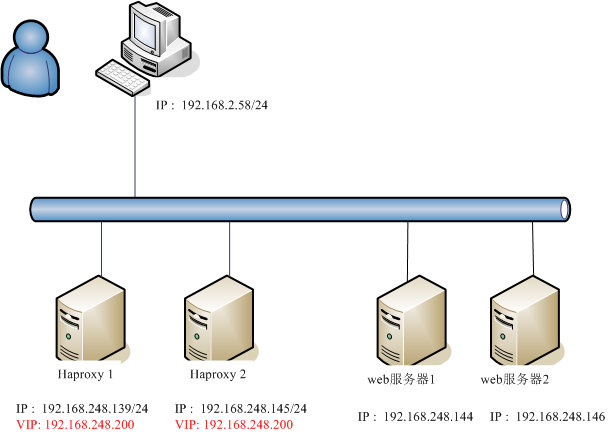
haproxy 1的配置文件,包括 keepalived 和 haproxy 的配置,分别如下:
【haproxy 1的keepalived 配置文件】 /etc/keepalived/keepalived.conf
global_defs {
router_id NodeB
}
vrrp_instance VI_1 {
state BACKUP #设置为主服务器
interface ens33 #监测网络接口
virtual_router_id 51 #主、备必须一样
priority 90 #(主、备机取不同的优先级,主机值较大,备份机值较小,值越大优先级越高)
advert_int 1 #VRRP Multicast广播周期秒数
authentication {
auth_type PASS #VRRP认证方式,主备必须一致
auth_pass 1111 #(密码)
}
virtual_ipaddress {
192.168.248.200
}
【haproxy 1的haproxy.conf 配置文件】 /etc/haproxy/haproxy.cfg
#---------------------------------------------------------------------
# Example configuration for a possible web application. See the
# full configuration options online.
#
# http://haproxy.1wt.eu/download/1.4/doc/configuration.txt
#
#---------------------------------------------------------------------
#---------------------------------------------------------------------
# Global settings
#---------------------------------------------------------------------
global
# to have these messages end up in /var/log/haproxy.log you will
# need to:
#
# 1) configure syslog to accept network log events. This is done
# by adding the '-r' option to the SYSLOGD_OPTIONS in
# /etc/sysconfig/syslog
#
# 2) configure local2 events to go to the /var/log/haproxy.log
# file. A line like the following can be added to
# /etc/sysconfig/syslog
#
# local2.* /var/log/haproxy.log
#
log 127.0.0.1 local2
chroot /var/lib/haproxy
pidfile /var/run/haproxy.pid
maxconn 4000
user haproxy
group haproxy
daemon
# turn on stats unix socket
stats socket /var/lib/haproxy/stats
#---------------------------------------------------------------------
# common defaults that all the 'listen' and 'backend' sections will
# use if not designated in their block
#---------------------------------------------------------------------
defaults
mode http
log global
option httplog
option dontlognull
option http-server-close
option forwardfor except 127.0.0.0/8
option redispatch
retries 3
timeout http-request 10s
timeout queue 1m
timeout connect 10s
timeout client 1m
timeout server 1m
timeout http-keep-alive 10s
timeout check 10s
maxconn 3000
#---------------------------------------------------------------------
# main frontend which proxys to the backends
#---------------------------------------------------------------------
frontend web *:80
frontend web1 192.168.248.200:80
# bind 192.168.248.200:80
mode http
use_backend app
#---------------------------------------------------------------------
# static backend for serving up images, stylesheets and such
#---------------------------------------------------------------------
backend static
balance roundrobin
server static 127.0.0.1:4331 check
#---------------------------------------------------------------------
# round robin balancing between the various backends
#---------------------------------------------------------------------
backend app
balance roundrobin
server app1 192.168.248.144:80 check
server app2 192.168.248.146:80 check
【haproxy 2的keepalived 配置文件】
global_defs {
router_id NodeB
}
vrrp_instance VI_1 {
state BACKUP #设置为主服务器
interface ens33 #监测网络接口
virtual_router_id 51 #主、备必须一样
priority 90 #(主、备机取不同的优先级,主机值较大,备份机值较小,值越大优先级越高)
advert_int 1 #VRRP Multicast广播周期秒数
authentication {
auth_type PASS #VRRP认证方式,主备必须一致
auth_pass 1111 #(密码)
}
virtual_ipaddress {
192.168.248.200
}
【haproxy 2的haproxy.cfg】 /etc/haproxy/haproxy.cfg
#---------------------------------------------------------------------
# Example configuration for a possible web application. See the
# full configuration options online.
#
# http://haproxy.1wt.eu/download/1.4/doc/configuration.txt
#
#---------------------------------------------------------------------
#---------------------------------------------------------------------
# Global settings
#---------------------------------------------------------------------
global
# to have these messages end up in /var/log/haproxy.log you will
# need to:
#
# 1) configure syslog to accept network log events. This is done
# by adding the '-r' option to the SYSLOGD_OPTIONS in
# /etc/sysconfig/syslog
#
# 2) configure local2 events to go to the /var/log/haproxy.log
# file. A line like the following can be added to
# /etc/sysconfig/syslog
#
# local2.* /var/log/haproxy.log
#
log 127.0.0.1 local2
chroot /var/lib/haproxy
pidfile /var/run/haproxy.pid
maxconn 4000
user haproxy
group haproxy
daemon
# turn on stats unix socket
stats socket /var/lib/haproxy/stats
#---------------------------------------------------------------------
# common defaults that all the 'listen' and 'backend' sections will
# use if not designated in their block
#---------------------------------------------------------------------
defaults
mode http
log global
option httplog
option dontlognull
option http-server-close
option forwardfor except 127.0.0.0/8
option redispatch
retries 3
timeout http-request 10s
timeout queue 1m
timeout connect 10s
timeout client 1m
timeout server 1m
timeout http-keep-alive 10s
timeout check 10s
maxconn 3000
#---------------------------------------------------------------------
# main frontend which proxys to the backends
#---------------------------------------------------------------------
frontend web *:80
frontend web1 192.168.248.200:80
# bind 192.168.248.200:80
mode http
use_backend app
#---------------------------------------------------------------------
# static backend for serving up images, stylesheets and such
#---------------------------------------------------------------------
backend static
balance roundrobin
server static 127.0.0.1:4331 check
#---------------------------------------------------------------------
# round robin balancing between the various backends
#---------------------------------------------------------------------
backend app
balance roundrobin
server app1 192.168.248.144:80 check
server app2 192.168.248.146:80 check
【web 服务器1 的http index文件内容】
[root@localhost zhou]# yum install -y httpd
[root@localhost zhou]# echo "Hello I am nginx-backend 1. " > /var/www/html/index.html
[root@localhost zhou]# service httpd start
Redirecting to /bin/systemctl start httpd.service
[root@localhost zhou]# firewall-cmd --permanent --add-port=80/tcp
success
[root@localhost zhou]# firewall-cmd --reload
success
[root@localhost zhou]#
【web 服务器2 的http index文件内容】
[root@localhost zhou]# yum install -y httpd
[root@localhost zhou]# echo "Hello I am nginx-backend 2. " > /var/www/html/index.html
[root@localhost zhou]# service httpd start
Redirecting to /bin/systemctl start httpd.service
[root@localhost zhou]# firewall-cmd --permanent --add-port=80/tcp
success
[root@localhost zhou]# firewall-cmd --reload
success
[root@localhost zhou]#
【haproxy 1的服务启动】 haproxy 2与之相同。
keepalived -f /etc/keepalived/keepalived.conf
haproxy -f /etc/haproxy/haproxy.cfg
firewall-cmd --permenant --add-port=80/tcp
firewall-cmd --reload
【验证结果】


如果关闭掉一个haproxy ,则不影响系统的正常工作,web网站还是可以正常访问,并且是轮询的结果。
haproxy + keepalived 实现网站高可靠的更多相关文章
- 实现基于Haproxy+Keepalived负载均衡高可用架构
1.项目介绍: 上上期我们实现了keepalived主从高可用集群网站架构,随着公司业务的发展,公司负载均衡服务已经实现四层负载均衡,但业务的复杂程度提升,公司要求把mobile手机站点作为单独的服务 ...
- Haproxy+Keepalived搭建Weblogic高可用负载均衡集群
配置环境说明: KVM虚拟机配置 用途 数量 IP地址 机器名 虚拟IP地址 硬件 内存3G 系统盘20G cpu 4核 Haproxy keepalived 2台 192.168.1.10 192 ...
- keepalived + lvs 网站高可用集群
一 ,四台服务器 master 端 : 192.168.1.3 backup 端: 192.168.1.4 REserver1 端 : 192.168.1.5 REserver2 端: 192.168 ...
- HAProxy & Keepalived L4-L7 高可用负载均衡解决方案
目录 文章目录 目录 HAProxy 负载均衡器 应用特性 性能优势 会话保持 健康检查 配置文件 负载均衡策略 ACL 规则 Web 监控平台 Keepalived 虚拟路由器 核心组件 VRRP ...
- rabbitmq+haproxy+keepalived高可用集群环境搭建
1.先安装centos扩展源: # yum -y install epel-release 2.安装erlang运行环境以及rabbitmq # yum install erlang ... # yu ...
- Haproxy+Keepalived高可用环境部署梳理(主主和主从模式)
Nginx.LVS.HAProxy 是目前使用最广泛的三种负载均衡软件,本人都在多个项目中实施过,通常会结合Keepalive做健康检查,实现故障转移的高可用功能. 1)在四层(tcp)实现负载均衡的 ...
- 基于HAProxy+Keepalived高可用负载均衡web服务的搭建
一 原理简介 1.HAProxyHAProxy提供高可用性.负载均衡以及基于TCP和HTTP应用的代理,支持虚拟主机,它是免费.快速并且可靠的一种解决方案.HAProxy特别适用于那些负载特大的web ...
- RabbitMQ集群安装配置+HAproxy+Keepalived高可用
RabbitMQ集群安装配置+HAproxy+Keepalived高可用 转自:https://www.linuxidc.com/Linux/2016-10/136492.htm rabbitmq 集 ...
- HAProxy实现网站高并发集群
简介:HAProxy提供高可用性.负载均衡以及基于TCP和HTTP应用的代理,支持虚拟主机,它是免费.快速并且可靠的一种解决方案.HAProxy特别适用于那些负载特大的web站点,这些站点通常又需要会 ...
随机推荐
- 【Java学习笔记之三十三】详解Java中try,catch,finally的用法及分析
这一篇我们将会介绍java中try,catch,finally的用法 以下先给出try,catch用法: try { //需要被检测的异常代码 } catch(Exception e) { //异常处 ...
- 带你简单了解python协程和异步
带你简单了解python的协程和异步 前言 对于学习异步的出发点,是写爬虫.从简单爬虫到学会了使用多线程爬虫之后,在翻看别人的博客文章时偶尔会看到异步这一说法.而对于异步的了解实在困扰了我好久好久,看 ...
- C 语言 define 变参__VA_ARGS__使用
在C语言的标准库中,printf.scanf.sscanf.sprintf.sscanf这些标准库的输入输出函数,参数都是可变的.在调试程序时,我们可能希望定义一个参数可变的输出函数来记录日志,那么用 ...
- 个人作业2 — 英语学习APP的案例分析
一.调研准备: 1.软件:必应词典 2.平台:安卓 3.bug定义:(引用自<构建之法>13.1节) Bug:软件的缺陷 Bug可以分解为:症状(Symptom). ...
- css样式实现立方体制作
<!doctype html> <html> <head> <meta charset="utf-8"> <title> ...
- 团队作业8——第二次项目冲刺(Bata版本)--第二天
一.Daily Scrum Meeting照片 二.燃尽图 三.项目进展 学号 成员 贡献比 201421123001 廖婷婷 15% 201421123002 翁珊 17% 201421123004 ...
- 个人作业2-英语学习案例app分析
第一部分 调研, 评测 (软件的bug,功能评测,黑箱测试, 第8章 用户调研, 12 章 软件的用户体验) 下载并使用,描述最简单直观的个人第一次上手体验. ①个人感觉还不错,词典的首页页面挺好看的 ...
- 蓝桥杯PREV-11:横向打印二叉树
嗯,没错我还报了蓝桥杯. 这是题目 问题描述 二叉树可以用于排序.其原理很简单:对于一个排序二叉树添加新节点时,先与根节点比较,若小则交给左子树继续处理,否则交给右子树. 当遇到空子树时,则把该节点放 ...
- 201521123034《Java程序设计》第十三周学习总结
1. 本周学习总结 以你喜欢的方式(思维导图.OneNote或其他)归纳总结多网络相关内容. 2. 书面作业 1. 网络基础 1.1 比较ping www.baidu.com与ping cec.jmu ...
- PHP字符串常用操作
常用操作有: PHP中有两个内建的函数:count() 和sizeof(),可以实现得到数组的长度 count($sttr);数组长度 字符串长度:strlen(string $a); 判断是否相同, ...