
C++之运行时类型识别RTTI
|
1
2 3 4 5 6 7 8 9 10 11 12 13 14 15 16 17 18 19 20 21 22 23 24 25 26 27 28 29 30 31 32 33 34 35 36 37 38 39 40 41 42 43 44 45 46 47 48 49 50 51 52 53 54 55 56 57 58 59 60 61 62 63 64 65 66 67 68 69 70 71 72 73 74 75 76 77 78 79 80 81 82 83 84 85 86 87 88 89 90 91 92 93 94 95 96 97 98 99 100 101 102 103 104 105 106 107 108 109 110 111 112 113 114 115 116 117 118 119 120 121 122 123 124 125 126 127 128 129 130 131 132 133 134 |
/*
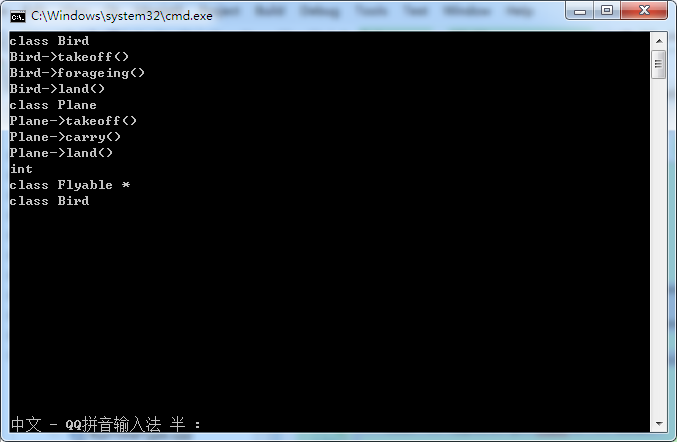
名称:C++ 运行时类型识别 作者:Michael Joessy 日期:2017-06-06 知识:Run-Time Type Information 通过运行时类型信息程序能够使用基类的指针或引用来检查这些指针或引用所指的对象的实际派生类型。 typeid dynamic_cast 注意: dynamic_cast: 只能用于指针和引用的转换; 要转换的类型中必须包含虚函数; 转换成功返回子类的地址,失败返回NULL. typeid: typeid返回一个type_info(#include <typeinfo>)对象的引用; 如果想通过基类的指针获得派生类的数据类型,基类必须带有虚函数; 只能获取对象的实际类型. */ /* #include <iostream> class Flyable class Bird : public Flyable class Plane : public Flyable void doSomething(Flyable* pObj) int main(void) /************************************************************************/ Flyable* p = new Bird; cin.get(); |
C++之运行时类型识别RTTI的更多相关文章
- C++学习之显式类型转换与运行时类型识别RTTI
static_cast const_cast reinterpret_cast 运行时类型识别(RTTI) dynamic_cast 哪种情况下dynamic_cast和static_cast使用的情 ...
- c++运行时类型识别(rtti)
一个简单运行时类型识别 namespace rtti_ex { /* * 类型信息基类 */ class i_type_info { public: // 判断是否是指定类型 bool is(cons ...
- 运行时类型识别RTTI
1.RTTI的工作原理 例1. 用Class加载对象示例. package RTTI; public class Candy { static{ System.out.println("Lo ...
- C++——运行时类型识别RTTI
1.实现方式 typeid运算符,返回表达式的类型 dynamic_cast运算符,基类的指针或引用安全地转换成派生类的指针或引用 2.适用于:使用基类的指针或引用执行派生类的操作,且该操作不是虚函数 ...
- Java基础之RTTI 运行时类型识别
运行时类型识别(RTTI, Run-Time Type Identification)是Java中非常有用的机制,在Java运行时,RTTI维护类的相关信息. 多态(polymorphism)是基于R ...
- RTTI 运行时类型识别 及异常处理
RTTI 运行时类型识别 typeid ------ dynamic_cast dynamic_cast 注意事项: 1.只能应用于指针和引用之间的转化 2.要转换的类型中必须包含虚函数 3. ...
- RTTI (Run-Time Type Identification,通过运行时类型识别) 转
参考一: RTTI(Run-Time Type Identification,通过运行时类型识别)程序能够使用基类的指针或引用来检查这些指针或引用所指的对象的实际派生类型. RTTI提供了以下两个 ...
- MFC六大核心机制之二:运行时类型识别(RTTI)
上一节讲的是MFC六大核心机制之一:MFC程序的初始化,本节继续讲解MFC六大核心机制之二:运行时类型识别(RTTI). typeid运算子 运行时类型识别(RTTI)即是程序执行过程中知道某个对象属 ...
- 框架原理第二讲,RTTI,运行时类型识别.(以MFC框架讲解)
框架原理第二讲,RTTI,运行时类型识别.(以MFC框架讲解) 一丶什么是RTTI,以及RTTI怎么设计 通过第一讲,我们知道了怎么样升成一个窗口了,以及简单的消息循环. 第二讲则是主要讲解RTTI ...
随机推荐
- js经常使用功能代码
js经常使用功能代码(持续更新): 1---折叠与展开 <input id="btnDisplay" type="button" class=" ...
- 【Leet Code】Palindrome Number
Palindrome Number Total Accepted: 19369 Total Submissions: 66673My Submissions Determine whether an ...
- centos 配置 samba 与windows共享文件夹
yum install samba /etc/samba/smb.conf directory mask = 0777 ← 指定新建目录的属性(以下4行) force directory mode = ...
- VS2010 DLL库生成和使用
一.生成dll文件(VS2010 Win32 程序) CreateDll.h // 下列 ifdef 块是创建使从 DLL 导出更简单的// 宏的标准方法.此 DLL 中的所有文件都是用命令行上定义的 ...
- USES_CONVERSION的使用和注意
USES_CONVERSION是用来转换类型的,比如我们很常见的问题: 在Socket编程时候,我们的IP地址从界面上输进去一般都使用CString类型的,可是在SOCKADDR_IN中的inet_a ...
- powerdesigner 画ER图
ER图 即为 CDM图 - Conceptual Data Modal CDM可以转换成PDM.OOM.LDM等图,具体请详查 一般,CDM图示在概要设计阶段创建,PDM图示根据CDM图的基础上产生的 ...
- centos中安装openjdk
openjdk的java环境还是简单好用,至于其他的,现在又用不到,为啥要费事安装它们? 步骤: 1.yum search java | grep jdk [root@noi ~]# yum sear ...
- CCOrbitCamera
Cocos2d-x提供了一中根据球面坐标轨迹旋转的方式CCOrbitCamera CC_DEPRECATED_ATTRIBUTE static CCOrbitCamera* actionWithDur ...
- EAV/ESS 8.x 自定义服务器正确方法+更新服务器列表
下面用64位的ESET Smart Security 8.0.319.1进行设置自定义更新服务器说明(注:修改方法32位和64位通用) 1. 让我们先看一下ESET Smart Security 8 ...
- Git和Repo管理使用简要介绍
在Linux平台下进行Android系统项目开发时,需要Git或repo管理. 一. Git和Repo的区别: 1. Git:Git是一个开源的分布式版本控制系统,用以有效.高速的处理从很小到非常大的 ...