
PCB genesis 大孔扩孔(不用G84命令)实现方法
PCB钻孔时,当钻刀>6.3mm时,超出钻孔范围,钻孔工序是没有这么大的钻刀,当这种情况,工程CAM会都采用G84命令用小孔扩孔的方式制作, 在这里介绍一种如果不用G84命令,用程序实现将大孔生成小孔钻孔达到扩孔的目的。
一.我们先了解一下G84命令扩孔
孔尺寸大小

孔密度

连一篇文章有关于孔数计算方式: https://www.cnblogs.com/pcbren/p/9379178.html
二.求解思路
1.通过孔密度,求出孔与孔中心距离
2.求出单次增量方位角
3.以大孔中心为,长度为(大孔半径-小孔半径), 任选择一个方位角作为起始方位角,并增加一个起始孔,并围绕这个起始方位角不断递增方位角,直到360度递增完成后即结束。
三.C#简易代码实现:
1.扩孔钻孔代码
            string drilllayer = "drl";

            gLayer layer = g.getFEATURES($"{drilllayer}", g.STEP, g.JOB, "mm", true);

            List<gPP> pList = new List<gPP>();

            double HoleSize = ;  //扩孔所用钻刀大小

            foreach (var pad in layer.Plist)

            {

                if (pad.width > )  //钻孔>6300需扩孔

                {

                    gA arc = calc2.p_2A(new gP(pad.p, pad.width - HoleSize));

                    arc.width = HoleSize;

                    var HoleCenterDi = calc2.p_Convex(arc.width * 0.0005)*;

                    pList.AddRange(calc2.a_2Plist(arc, HoleCenterDi, , true));

                }

            }

            addCOM.pad(pList);
2.计算函数
/// <summary>

        /// 通过孔半径与凸高位求  孔中心距

        /// </summary>

        /// <param name="Rradius">孔半径</param>

        /// <param name="tol_">凸位高度值</param>

        /// <returns></returns>

        public double p_Convex(double Rradius, double tol_ = 0.0127)

        {

            return Math.Sqrt(Math.Pow(Rradius, ) - Math.Pow(Rradius - tol_, )) * ;

        }

        /// <summary>

        /// 求方位角

        /// </summary>

        /// <param name="ps"></param>

        /// <param name="pe"></param>

        /// <returns></returns>

        public double p_ang(gPoint ps, gPoint pe)

        {

            double a_ang = Math.Atan((pe.y - ps.y) / (pe.x - ps.x)) / Math.PI * ;

            //象限角  转方位角   计算所属象限   并求得方位角

            if (pe.x >= ps.x && pe.y >= ps.y)  //↗    第一象限

            {

                return a_ang;

            }

            else if (!(pe.x >= ps.x) && pe.y >= ps.y)  // ↖   第二象限

            {

                return a_ang + ;

            }

            else if (!(pe.x >= ps.x) && !(pe.y >= ps.y))  //↙   第三象限

            {

                return a_ang + ;

            }

            else if (pe.x >= ps.x && !(pe.y >= ps.y))  // ↘   第四象限

            {

                return a_ang + ;

            }

            else

            {

                return a_ang;

            }

        }//求方位角

        /// <summary>

        /// 求增量坐标

        /// </summary>

        /// <param name="ps">起点</param>

        /// <param name="val">增量值</param>

        /// <param name="ang_direction">角度</param>

        /// <returns></returns>

        public gPP p_val_ang(gPP ps, double val, double ang_direction)

        {

            gPP pe = ps;

            pe.p.x = ps.p.x + val * Math.Cos(ang_direction * Math.PI / );

            pe.p.y = ps.p.y + val * Math.Sin(ang_direction * Math.PI / );

            return pe;

        }

        /// <summary>

        /// 弧Arc 转点P组集

        /// </summary>

        /// <param name="a"></param>

        /// <param name="val_">此数值表示:分段数值</param>

        /// <param name="type_">代表值数值类型 【0】弧长 【1】角度  【2】弦长 </param>

        /// <param name="is_avg">是否平均分布 </param>

        /// <returns></returns>

        public List<gPP> a_2Plist(gA a, double val_ = 0.1d, int type_ = , bool is_avg = false)

        {

            List<gPP> list_point = new List<gPP>();

            gPP tempP;

            tempP.p = a.ps;

            tempP.symbols = a.symbols;

            tempP.width = a.width;

            list_point.Add(tempP);

            double avg_count;

            double angle_val = ;

            double rad_ = p2p_di(a.pc, a.pe);

            double sum_alge = a_Angle(a);

            if (type_ == )  //    【1】角度

            {

                angle_val = val_;

                avg_count = (int)(Math.Ceiling(sum_alge / angle_val)) - ;  //  总角度/单角度

            }

            else if (type_ == )  //【2】弦长

            {

                angle_val = Math.Asin(val_ / (rad_ * )) *  / pi;

                avg_count = (int)(Math.Ceiling(sum_alge / angle_val)) - ;  //  总角度/单角度

            }

            else  //                【0】弧长

            {

                angle_val = val_ *  / (pi * rad_);

                avg_count = (int)(Math.Ceiling(sum_alge / angle_val)) - ;  //  总角度/单角度

                //avg_count = (int)(Math.Ceiling(a_Lenght(a) / val_)) - 1;  //  或  总弧长/单弧长

            }

            if (is_avg)

                angle_val = sum_alge / avg_count;

            if (avg_count > )

            {

                gPP centerP = tempP;

                centerP.p = a.pc;

                double angle_s = p_ang(a.pc, a.ps);

                if (a.ccw) { angle_val =  - angle_val; }

                for (int i = ; i < avg_count; i++)

                {

                    tempP = p_val_ang(centerP, rad_, angle_s - angle_val * i);

                    list_point.Add(tempP);

                }

            }

            if (!(zero(a.ps.x - a.pe.x) && zero(a.ps.y - a.pe.y)))

            {

                tempP.p = a.pe;

                list_point.Add(tempP);

            }

            return list_point;

        }

        /// <summary>

        /// 返回两点之间欧氏距离

        /// </summary>

        /// <param name="p1"></param>

        /// <param name="p2"></param>

        /// <returns></returns>

        public double p2p_di(gPoint p1, gPoint p2)

        {

            return Math.Sqrt((p1.x - p2.x) * (p1.x - p2.x) + (p1.y - p2.y) * (p1.y - p2.y));

        }

        /// <summary>

        /// 求弧Arc圆心角       //后续改进  用叉积 与3P求角度求解  验证哪个效率高

        /// </summary>

        /// <param name="a"></param>

        /// <returns></returns>

        public double a_Angle(gA a)

        {

            double angle_s, angle_e, angle_sum;

            if (a.ccw)

            {

                angle_s = p_ang(a.pc, a.pe);

                angle_e = p_ang(a.pc, a.ps);

            }

            else

            {

                angle_s = p_ang(a.pc, a.ps);

                angle_e = p_ang(a.pc, a.pe);

            }

            if (angle_s == ) { angle_s = ; }

            if (angle_e >= angle_s)

                angle_sum =  - Math.Abs(angle_s - angle_e);

            else

                angle_sum = Math.Abs(angle_s - angle_e);

            return angle_sum;

        }

        /// <summary>

        ///  检查值决对值 小于 (eps = 0.001)    浮点误差处理

        /// </summary>

        /// <param name="x"></param>

        /// <returns></returns>

        public bool zero(double x)

        {

            return (((x) >  ? (x) : (-x)) < eps);

        }
3.Point,PAD,Arc数据结构
/// <summary>

    /// 精简 PAD  数据类型

    /// </summary>

    public struct gPP

    {

        public gPP(double x_val, double y_val, double width_)

        {

            this.p = new gPoint(x_val, y_val);

            this.symbols = "r";

            this.width = width_;

        }

        public gPP(gPoint p_, double width_)

        {

            this.p = p_;

            this.symbols = "r";

            this.width = width_;

        }

        public gPP(gPoint p_, string symbols_, double width_)

        {

            this.p = p_;

            this.symbols = symbols_;

            this.width = width_;

        }

        public gPoint p;

        public string symbols;

        public double width;

        public static gPP operator +(gPP p1, gPP p2)

        {

            p1.p += p2.p;

            return p1;

        }

        public static gPP operator +(gPP p1, gPoint p2)

        {

            p1.p += p2;

            return p1;

        }

        public static gPP operator -(gPP p1, gPP p2)

        {

            p1.p -= p2.p;

            return p1;

        }

        public static gPP operator -(gPP p1, gPoint p2)

        {

            p1.p -= p2;

            return p1;

        }

    }

    /// <summary>

    /// 点  数据类型 (XY)

    /// </summary>

    public struct gPoint

    {

        public gPoint(gPoint p_)

        {

            this.x = p_.x;

            this.y = p_.y;

        }

        public gPoint(double x_val, double y_val)

        {

            this.x = x_val;

            this.y = y_val;

        }

        public double x;

        public double y;

        public static gPoint operator +(gPoint p1, gPoint p2)

        {

            p1.x += p2.x;

            p1.y += p2.y;

            return p1;

        }

        public static gPoint operator -(gPoint p1, gPoint p2)

        {

            p1.x -= p2.x;

            p1.y -= p2.y;

            return p1;

        }

    }

    /// <summary>

    /// ARC 数据类型

    /// </summary>

    public struct gA

    {

        public gA(double ps_x, double ps_y, double pc_x, double pc_y, double pe_x, double pe_y, double width_, bool ccw_)

        {

            this.ps = new gPoint(ps_x, ps_y);

            this.pc = new gPoint(pc_x, pc_y);

            this.pe = new gPoint(pe_x, pe_y);

            this.negative = false;

            this.ccw = ccw_;

            this.symbols = "r";

            this.attribut = string.Empty;

            this.width = width_;

        }

        public gA(gPoint ps_, gPoint pc_, gPoint pe_, double width_, bool ccw_ = false)

        {

            this.ps = ps_;

            this.pc = pc_;

            this.pe = pe_;

            this.negative = false;

            this.ccw = ccw_;

            this.symbols = "r";

            this.attribut = string.Empty;

            this.width = width_;

        }

        public gPoint ps;

        public gPoint pe;

        public gPoint pc;

        public bool negative;//polarity-- positive  negative

        public bool ccw; //direction-- cw ccw

        public string symbols;

        public string attribut;

        public double width;

        public static gA operator +(gA arc1, gPoint move_p)

        {

            arc1.ps += move_p;

            arc1.pe += move_p;

            arc1.pc += move_p;

            return arc1;

        }

        public static gA operator +(gA arc1, gP move_p)

        {

            arc1.ps += move_p.p;

            arc1.pe += move_p.p;

            arc1.pc += move_p.p;

            return arc1;

        }

        public static gA operator -(gA arc1, gPoint move_p)

        {

            arc1.ps -= move_p;

            arc1.pe -= move_p;

            arc1.pc -= move_p;

            return arc1;

        }

        public static gA operator -(gA arc1, gP move_p)

        {

            arc1.ps -= move_p.p;

            arc1.pe -= move_p.p;

            arc1.pc -= move_p.p;

            return arc1;

        }

    }
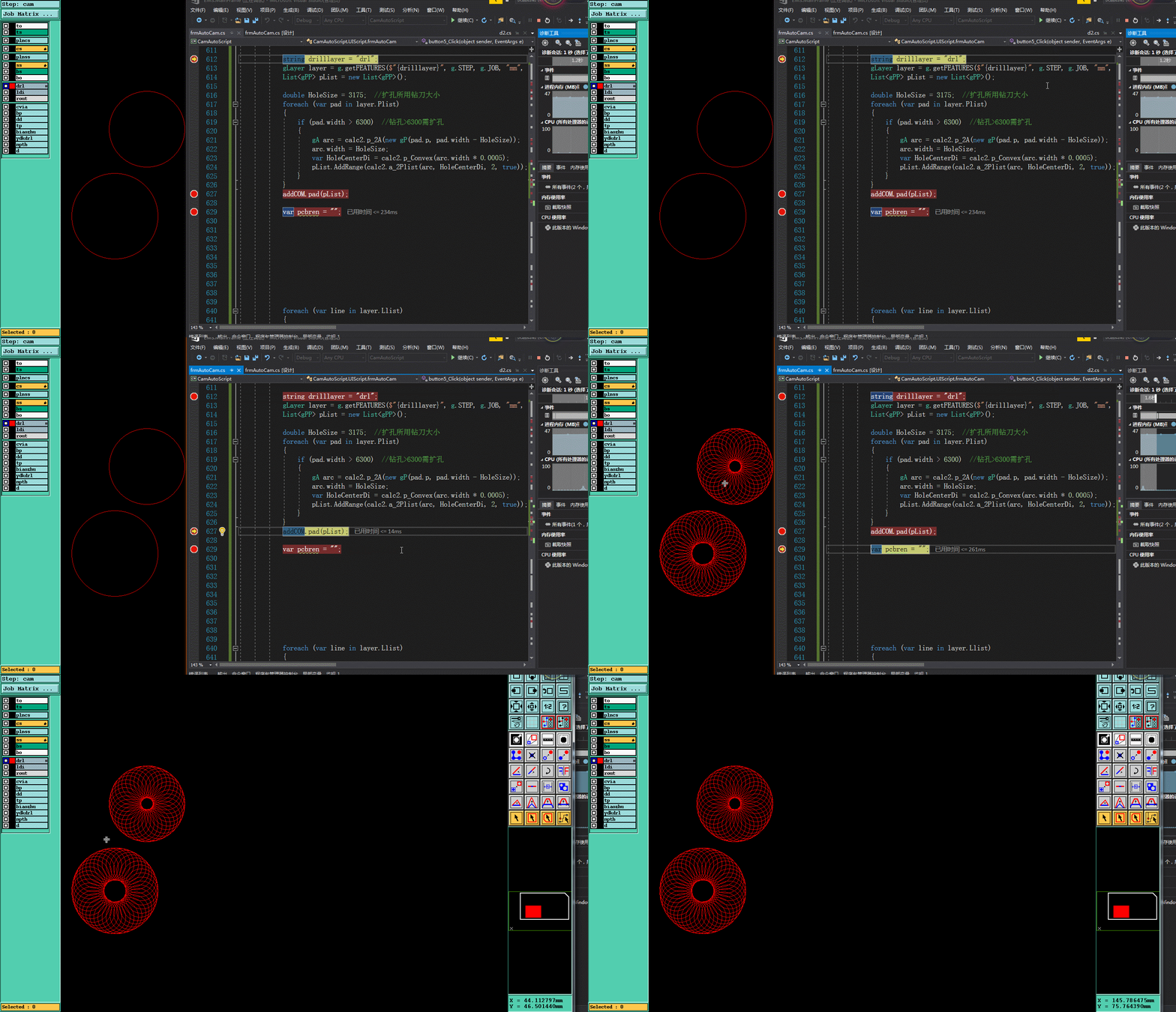
四.实现效果
PCB genesis 大孔扩孔(不用G84命令)实现方法的更多相关文章
- PCB genesis大孔加小孔(即卸力孔)实现方法
一.为什么 大孔中要加小孔(即卸力孔) 这其实跟钻刀的排屑有关了,当钻刀越大孔,排屑量也越大(当然这也得跟转速,下刀速的参数有关系),通常当钻刀越大,转速越慢,下刀速也越慢(因为要保证它的排屑通畅). ...
- PCB genesis Slot槽转钻孔(不用G85命令)实现方法
PCB钻Slot槽一般都采用G85命令钻槽孔,而采用G85命令工程CAM无法准确的知道Slot槽钻多少个孔,并不能决定钻槽孔的顺序,因为采用G85命令钻孔密度与钻槽顺序由钻机本身决定的.在这里介绍一种 ...
- PCB genesis自制孔点 Font字体实现方法
一.先看genesis原有Font字体 在PCB工程CAM加孔点字体要求时,通常我们直接用Geneis软件给我们提供了2种孔点字体canned_57与canned_67,但此字体可能不能满足各个工厂个 ...
- PCB genesis连孔加除毛刺孔(槽孔与槽孔)实现方法(三)
一.为什么 连孔加除毛刺孔 原因是 PCB板材中含有玻璃纤维, 毛刺产生位置在于2个孔相交位置,由于此处钻刀受力不均导致纤维切削不断形成毛刺 ,为了解决这个问题:在钻完2个连孔后,在相交处再钻一个孔, ...
- PCB genesis连孔加除毛刺孔(圆孔与槽孔)实现方法(二)
一.为什么 连孔加除毛刺孔 原因是 PCB板材中含有玻璃纤维, 毛刺产生位置在于2个孔相交位置,由于此处钻刀受力不均导致纤维切削不断形成毛刺 ,为了解决这个问题:在钻完2个连孔后,在相交处再钻一个孔, ...
- PCB genesis连孔加除毛刺孔(圆孔与圆孔)实现方法(一)
一.为什么 连孔加除毛刺孔 原因是 PCB板材中含有玻璃纤维, 毛刺产生位置在于2个孔相交位置,由于此处钻刀受力不均导致纤维切削不断形成毛刺 ,为了解决这个问题:在钻完2个连孔后,在相交处再钻一个孔, ...
- PCB genesis孔符制作实现方法
一.先看genesis原始孔符 孔符的作用:用于表示孔径的大小的一种代号, 当孔径检测时,可以按分孔图中的孔符对应的孔径尺寸对孔径检测. 在实际PCB行业通常不使用原始(图形)孔符,而使用字母孔符(如 ...
- PCB Genesis 外形加内角孔实现方法
在PCB工程制作CAM时,经常会遇到外形拐角处直角的,而客户对内角是要求,比如最大内角要求R0.5mm或者不接受内角, 但成型方式为铣方式,又不是啤板成型,那怎么处理才可以达到要求效果呢,在这里介绍2 ...
- Linux 服务器配置、运行、不用敲命令(新手必备!) - 宝塔全攻略建站一条龙
Linux 服务器配置.运行.不用敲命令 WordPress 建站攻略 本文提供全流程,中文翻译. Chinar 坚持将简单的生活方式,带给世人!(拥有更好的阅读体验 -- 高分辨率用户请根据需求调整 ...
随机推荐
- ExtJs如何判断form表单是否被修改过详解
1.Extjs表单提交主要有三种方式: 1, EXT的form表单ajax提交(默认提交方式) 相对单独的ajax提交来说优点在于能省略写参数数组 ,form.getForm().submi ...
- Bullet:关于ORACLE中的HASH JOIN的参数变化
Oracle在7.3引入了hash join. 但是在Oracle 10g及其以后的Oracle数据库版本中,优化器,实际是CBO,也是因为HASH JOIN仅适用于CBO,在解析目标SQL时是否考虑 ...
- ubuntu安装nvidia驱动以及cuda教程
最近尝试在ubuntu中安装nvidia的显卡驱动以及cuda.花了近三天时间,真的如网上所说错误百出,期间甚至重装了一次ubuntu系统,搞到怀疑人生,整个都是泪- -.最终经过百般“磨难”总算安装 ...
- Socket中BufferedReader.readLine()的阻塞特性导致的数据无法多次发送的问题
https://blog.csdn.net/shenpibaipao/article/details/70236657
- C++ Primer(第4版)-学习笔记-第3部分:类和数据抽象
第12章 类 每个类可以没有成员,也可以定义多个成员,成员可以是数据.函数或类型别名. 成员函数必须在类内部声明,可以在类内部定义,也可以在类外部定义.如果在类内部定义,就默认是内联函数. ...
- HDU - 2018 - 母牛的故事(dp)
题意: 如题 思路: 递推的思想,牛只能在第4年才能开始生小牛,对于 第n年有多少牛 = n-1年的牛数量 + 新出生的牛的数量 新出生的牛的数量 = 已经出生满4年的牛的数量 = n-3年时候牛的数 ...
- WIndows 系统下的常用命令 和 检测方法
### 一.检测硬盘速度(Windows 自带工具) #### 使用windows 系统自带的工具测试硬盘读写速度 > 在使用下面命令前,需要获得管理员权限,才会在Dos窗口上显示(否则,一闪而 ...
- <Zookeeper>入门 概念
分布式协调服务 Zookeeper 分布式环境的特点 1.分布性 基于一个硬件或者多个硬件设备以及多个软件组成的分布在不同网络计算机上的系统架构,通过消息传递进行通信协调.在空间上部署是可以任意的,网 ...
- ecshop笔记
***ecshop在线入门手册***:http://book.ecmoban.com/ 解决ecshop与jquery冲突问题1.修改文件:/js/transport.js在文件最底部增加代码: if ...
- msdn的原版windows下载地址链接
http://msdn.itellyou.cn/ 所有版本的下载地址 进去点左边操作系统