
mysql path妙用
CREATE TABLE `lc_c_user_path` (

  `id` INT (  ) UNSIGNED NOT NULL AUTO_INCREMENT,

  `user_id` VARCHAR (  ) NOT NULL COMMENT '用户标识',

  `username` VARCHAR (  ) DEFAULT NULL COMMENT '用户名',

  `store_id` VARCHAR (  ) DEFAULT NULL COMMENT '店铺id',

  `user_id_path` text COMMENT '当前用户上级用户标识',

  `username_path` text COMMENT '当前用户上级用户账号',

  `store_id_path` text COMMENT '当前用户上级用户店铺',

  `complete_path` text COMMENT '绑定邀请码的用户path',

  PRIMARY KEY ( `id` ),

  UNIQUE KEY `IDX_U_I` ( `user_id` ) USING BTREE

) ENGINE = INNODB AUTO_INCREMENT =  DEFAULT CHARSET = utf8 COMMENT = '用户user_id,username,store之间转化';
INSERT INTO `lc_c_user_path`(`id`, `user_id`, `username`, `store_id`, `user_id_path`, `username_path`, `store_id_path`, `complete_path`) VALUES (, 'us1', 'un1', 's1', 'us0', 'un0', 's0', 'us0');

INSERT INTO `lc_c_user_path`(`id`, `user_id`, `username`, `store_id`, `user_id_path`, `username_path`, `store_id_path`, `complete_path`) VALUES (, 'us2', 'un2', 's2', 'us1/us0', 'un1/un0', 's1/s0', 'us1/us0');

INSERT INTO `lc_c_user_path`(`id`, `user_id`, `username`, `store_id`, `user_id_path`, `username_path`, `store_id_path`, `complete_path`) VALUES (, 'us3', 'un3', 's3', 'us2/us1/us0', 'un2/un1/un0', 's2/s1/s0', 'us2/us1/us0');

INSERT INTO `lc_c_user_path`(`id`, `user_id`, `username`, `store_id`, `user_id_path`, `username_path`, `store_id_path`, `complete_path`) VALUES (, 'us4', 'un4', NULL, 'us3/us2/us1/us0', 'un3/un2/un1/un0', 's3/s2/s1/s0', 'us3/us2/us1/us0');

INSERT INTO `lc_c_user_path`(`id`, `user_id`, `username`, `store_id`, `user_id_path`, `username_path`, `store_id_path`, `complete_path`) VALUES (, 'us5', 'un5', 's5', 'us3/us2/us1/us0', 'un3/un2/un1/un0', 's3/s2/s1/s0', 'us4/us3/us2/us1/us0');

INSERT INTO `lc_c_user_path`(`id`, `user_id`, `username`, `store_id`, `user_id_path`, `username_path`, `store_id_path`, `complete_path`) VALUES (, 'us6', 'un6', 's6', 'us5/us3/us2/us1/us0', 'un5/un3/un2/un1/un0', 's5/s3/s2/s1/s0', 'us5/us4/us3/us2/us1/us0');

INSERT INTO `lc_c_user_path`(`id`, `user_id`, `username`, `store_id`, `user_id_path`, `username_path`, `store_id_path`, `complete_path`) VALUES (, 'us7', 'un7', 's7', 'us6/us5/us3/us2/us1/us0', 'un6/un5/un3/un2/un1/un0', 's6/s5/s3/s2/s1/s0', 'us6/us5/us4/us3/us2/us1/us0');

INSERT INTO `lc_c_user_path`(`id`, `user_id`, `username`, `store_id`, `user_id_path`, `username_path`, `store_id_path`, `complete_path`) VALUES (, 'us8', 'un8', 's8', 'us7/us6/us5/us3/us2/us1/us0', 'un7/un6/un5/un3/un2/un1/un0', 's7/s6/s5/s3/s2/s1/s0', 'us7/us6/us5/us4/us3/us2/us1/us0');

INSERT INTO `lc_c_user_path`(`id`, `user_id`, `username`, `store_id`, `user_id_path`, `username_path`, `store_id_path`, `complete_path`) VALUES (, 'us9', 'un9', '', 'us8/us7/us6/us5/us3/us2/us1/us0', 'un8/un7/un6/un5/un3/un2/un1/un0', 's8/s7/s6/s5/s3/s2/s1/s0', 'us8/us7/us6/us5/us4/us3/us2/us1/us0');

INSERT INTO `lc_c_user_path`(`id`, `user_id`, `username`, `store_id`, `user_id_path`, `username_path`, `store_id_path`, `complete_path`) VALUES (, 'us10', 'un10', 's10', 'us8/us7/us6/us5/us3/us2/us1/us0', 'un8/un7/un6/un5/un3/un2/un1/un0', 's8/s7/s6/s5/s3/s2/s1/s0', 'us9/us8/us7/us6/us5/us4/us3/us2/us1/us0');

INSERT INTO `lc_c_user_path`(`id`, `user_id`, `username`, `store_id`, `user_id_path`, `username_path`, `store_id_path`, `complete_path`) VALUES (, 'us11', 'un11', 's11', 'us10/us8/us7/us6/us5/us3/us2/us1/us0', 'un10/un8/un7/un6/un5/un3/un2/un1/un0', 's10/s8/s7/s6/s5/s3/s2/s1/s0', 'us10/us9/us8/us7/us6/us5/us4/us3/us2/us1/us0');

INSERT INTO `lc_c_user_path`(`id`, `user_id`, `username`, `store_id`, `user_id_path`, `username_path`, `store_id_path`, `complete_path`) VALUES (, 'us12', 'un12', '', 'us11/us10/us8/us7/us6/us5/us3/us2/us1/us0', 'un11/un10/un8/un7/un6/un5/un3/un2/un1/un0', 's11/s10/s8/s7/s6/s5/s3/s2/s1/s0', 'us11/us10/us9/us8/us7/us6/us5/us4/us3/us2/us1/us0');

INSERT INTO `lc_c_user_path`(`id`, `user_id`, `username`, `store_id`, `user_id_path`, `username_path`, `store_id_path`, `complete_path`) VALUES (, 'us13', 'un13', 's13', 'us11/us10/us8/us7/us6/us5/us3/us2/us1/us0', 'un11/un10/un8/un7/un6/un5/un3/un2/un1/un0', 's11/s10/s8/s7/s6/s5/s3/s2/s1/s0', 'us12/us11/us10/us9/us8/us7/us6/us5/us4/us3/us2/us1/us0');

INSERT INTO `lc_c_user_path`(`id`, `user_id`, `username`, `store_id`, `user_id_path`, `username_path`, `store_id_path`, `complete_path`) VALUES (, 'us14', 'un14', 's14', 'us13/us11/us10/us8/us7/us6/us5/us3/us2/us1/us0', 'un13/un11/un10/un8/un7/un6/un5/un3/un2/un1/un0', 's13/s11/s10/s8/s7/s6/s5/s3/s2/s1/s0', 'us13/us12/us11/us10/us9/us8/us7/us6/us5/us4/us3/us2/us1/us0');

INSERT INTO `lc_c_user_path`(`id`, `user_id`, `username`, `store_id`, `user_id_path`, `username_path`, `store_id_path`, `complete_path`) VALUES (, 'us15', 'un15', 's15', 'us14/us13/us11/us10/us8/us7/us6/us5/us3/us2/us1/us0', 'un14/un13/un11/un10/un8/un7/un6/un5/un3/un2/un1/un0', 's14/s13/s11/s10/s8/s7/s6/s5/s3/s2/s1/s0', 'us14/us13/us12/us11/us10/us9/us8/us7/us6/us5/us4/us3/us2/us1/us0');

INSERT INTO `lc_c_user_path`(`id`, `user_id`, `username`, `store_id`, `user_id_path`, `username_path`, `store_id_path`, `complete_path`) VALUES (, 'us16', 'un16', 's16', 'us1/us0', 'un1/un0', 's1/s0', 'us1/us0');

INSERT INTO `lc_c_user_path`(`id`, `user_id`, `username`, `store_id`, `user_id_path`, `username_path`, `store_id_path`, `complete_path`) VALUES (, 'us17', 'un17', 's17', 'us16/us1/us0', 'un16/un1/un0', 's16/s1/s0', 'us16/us1/us0');

INSERT INTO `lc_c_user_path`(`id`, `user_id`, `username`, `store_id`, `user_id_path`, `username_path`, `store_id_path`, `complete_path`) VALUES (, 'us18', 'un18', 's18', 'us3/us2/us1/us0', 'un3/un2/un1/un0', 's3/s2/s1/s0', 'us3/us2/us1/us0');

INSERT INTO `lc_c_user_path`(`id`, `user_id`, `username`, `store_id`, `user_id_path`, `username_path`, `store_id_path`, `complete_path`) VALUES (, 'us19', 'un19', 's19', 'us18/us3/us2/us1/us0', 'un18/un3/un2/un1/un0', 's18/s3/s2/s1/s0', 'us18/us3/us2/us1/us0');
CREATE TABLE `lc_c_customer` (

  `id` int() unsigned NOT NULL AUTO_INCREMENT,

  `user_id` varchar() NOT NULL COMMENT '用户标识',

  `partent_user_id` varchar() DEFAULT NULL COMMENT '上级店铺id',

  `pid` varchar() DEFAULT NULL COMMENT '当前用户上级用户标识',

  PRIMARY KEY (`id`),

  UNIQUE KEY `IDX_U_I` (`user_id`) USING BTREE

) ENGINE=InnoDB AUTO_INCREMENT= DEFAULT CHARSET=utf8 COMMENT='用户表';
INSERT INTO `lc_c_customer`(`id`, `user_id`, `partent_user_id`, `pid`) VALUES (, 'us1', NULL, 'us0');

INSERT INTO `lc_c_customer`(`id`, `user_id`, `partent_user_id`, `pid`) VALUES (, 'us2', 'us1', 'us1');

INSERT INTO `lc_c_customer`(`id`, `user_id`, `partent_user_id`, `pid`) VALUES (, 'us3', 'us2', 'us2');

INSERT INTO `lc_c_customer`(`id`, `user_id`, `partent_user_id`, `pid`) VALUES (, 'us4', 'us3', 'us3');

INSERT INTO `lc_c_customer`(`id`, `user_id`, `partent_user_id`, `pid`) VALUES (, 'us5', 'us3', 'us4');

INSERT INTO `lc_c_customer`(`id`, `user_id`, `partent_user_id`, `pid`) VALUES (, 'us6', 'us5', 'us5');

INSERT INTO `lc_c_customer`(`id`, `user_id`, `partent_user_id`, `pid`) VALUES (, 'us7', 'us6', 'us6');

INSERT INTO `lc_c_customer`(`id`, `user_id`, `partent_user_id`, `pid`) VALUES (, 'us8', 'us7', 'us7');

INSERT INTO `lc_c_customer`(`id`, `user_id`, `partent_user_id`, `pid`) VALUES (, 'us9', 'us8', 'us8');

INSERT INTO `lc_c_customer`(`id`, `user_id`, `partent_user_id`, `pid`) VALUES (, 'us10', 'us8', 'us9');

INSERT INTO `lc_c_customer`(`id`, `user_id`, `partent_user_id`, `pid`) VALUES (, 'us11', 'us10', 'us10');

INSERT INTO `lc_c_customer`(`id`, `user_id`, `partent_user_id`, `pid`) VALUES (, 'us12', 'us11', 'us11');

INSERT INTO `lc_c_customer`(`id`, `user_id`, `partent_user_id`, `pid`) VALUES (, 'us13', 'us11', 'us12');

INSERT INTO `lc_c_customer`(`id`, `user_id`, `partent_user_id`, `pid`) VALUES (, 'us14', 'us13', 'us13');

INSERT INTO `lc_c_customer`(`id`, `user_id`, `partent_user_id`, `pid`) VALUES (, 'us15', 'us14', 'us14');

INSERT INTO `lc_c_customer`(`id`, `user_id`, `partent_user_id`, `pid`) VALUES (, 'us16', 'us1', 'us15');

INSERT INTO `lc_c_customer`(`id`, `user_id`, `partent_user_id`, `pid`) VALUES (, 'us17', 'us16', 'us16');

INSERT INTO `lc_c_customer`(`id`, `user_id`, `partent_user_id`, `pid`) VALUES (, 'us18', 'us3', 'us17');

INSERT INTO `lc_c_customer`(`id`, `user_id`, `partent_user_id`, `pid`) VALUES (, 'us19', 'us18', 'us18');
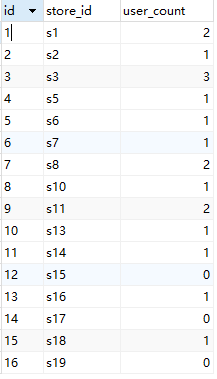
CREATE TABLE `lc_c_store` (

  `id` varchar() NOT NULL,

  `user_id` varchar() NOT NULL DEFAULT '' COMMENT '客户id',

  `name` varchar() DEFAULT '' COMMENT '店铺名字',

  PRIMARY KEY (`id`),

  UNIQUE KEY `IDX_U` (`user_id`)

) ENGINE=InnoDB DEFAULT CHARSET=utf8 COMMENT='店铺表';
INSERT INTO `lc_c_store`(`id`, `user_id`, `name`) VALUES ('s1', 'us1', 'us1的云店');

INSERT INTO `lc_c_store`(`id`, `user_id`, `name`) VALUES ('s10', 'us10', 'us10的云店');

INSERT INTO `lc_c_store`(`id`, `user_id`, `name`) VALUES ('s11', 'us11', 'us11的云店');

INSERT INTO `lc_c_store`(`id`, `user_id`, `name`) VALUES ('s13', 'us13', 'us13的云店');

INSERT INTO `lc_c_store`(`id`, `user_id`, `name`) VALUES ('s14', 'us14', 'us14的云店');

INSERT INTO `lc_c_store`(`id`, `user_id`, `name`) VALUES ('s15', 'us15', 'us15的云店');

INSERT INTO `lc_c_store`(`id`, `user_id`, `name`) VALUES ('s16', 'us16', 'us16的云店');

INSERT INTO `lc_c_store`(`id`, `user_id`, `name`) VALUES ('s17', 'us17', 'us17的云店');

INSERT INTO `lc_c_store`(`id`, `user_id`, `name`) VALUES ('s18', 'us18', 'us18的云店');

INSERT INTO `lc_c_store`(`id`, `user_id`, `name`) VALUES ('s19', 'us19', 'us19的云店');

INSERT INTO `lc_c_store`(`id`, `user_id`, `name`) VALUES ('s2', 'us2', 'us2的云店');

INSERT INTO `lc_c_store`(`id`, `user_id`, `name`) VALUES ('s3', 'us3', 'us3的云店');

INSERT INTO `lc_c_store`(`id`, `user_id`, `name`) VALUES ('s5', 'us5', 'us5的云店');

INSERT INTO `lc_c_store`(`id`, `user_id`, `name`) VALUES ('s6', 'us6', 'us6的云店');

INSERT INTO `lc_c_store`(`id`, `user_id`, `name`) VALUES ('s7', 'us7', 'us7的云店');

INSERT INTO `lc_c_store`(`id`, `user_id`, `name`) VALUES ('s8', 'us8', 'us8的云店');
CREATE TABLE `lc_c_store_general` (

  `id` bigint() unsigned NOT NULL AUTO_INCREMENT,

  `store_id` varchar() DEFAULT NULL COMMENT '对应店铺表id',

  `user_count` bigint() DEFAULT '' COMMENT '客户数,即 下一级别的用户数',

  PRIMARY KEY (`id`)

) ENGINE=InnoDB AUTO_INCREMENT= DEFAULT CHARSET=utf8 COMMENT='店铺销售数据表';
INSERT INTO `lc_c_store_general`(`id`, `store_id`, `user_count`) VALUES (, 's1', );

INSERT INTO `lc_c_store_general`(`id`, `store_id`, `user_count`) VALUES (, 's2', );

INSERT INTO `lc_c_store_general`(`id`, `store_id`, `user_count`) VALUES (, 's3', );

INSERT INTO `lc_c_store_general`(`id`, `store_id`, `user_count`) VALUES (, 's5', );

INSERT INTO `lc_c_store_general`(`id`, `store_id`, `user_count`) VALUES (, 's6', );

INSERT INTO `lc_c_store_general`(`id`, `store_id`, `user_count`) VALUES (, 's7', );

INSERT INTO `lc_c_store_general`(`id`, `store_id`, `user_count`) VALUES (, 's8', );

INSERT INTO `lc_c_store_general`(`id`, `store_id`, `user_count`) VALUES (, 's10', );

INSERT INTO `lc_c_store_general`(`id`, `store_id`, `user_count`) VALUES (, 's11', );

INSERT INTO `lc_c_store_general`(`id`, `store_id`, `user_count`) VALUES (, 's13', );

INSERT INTO `lc_c_store_general`(`id`, `store_id`, `user_count`) VALUES (, 's14', );

INSERT INTO `lc_c_store_general`(`id`, `store_id`, `user_count`) VALUES (, 's15', );

INSERT INTO `lc_c_store_general`(`id`, `store_id`, `user_count`) VALUES (, 's16', );

INSERT INTO `lc_c_store_general`(`id`, `store_id`, `user_count`) VALUES (, 's17', );

INSERT INTO `lc_c_store_general`(`id`, `store_id`, `user_count`) VALUES (, 's18', );

INSERT INTO `lc_c_store_general`(`id`, `store_id`, `user_count`) VALUES (, 's19', );
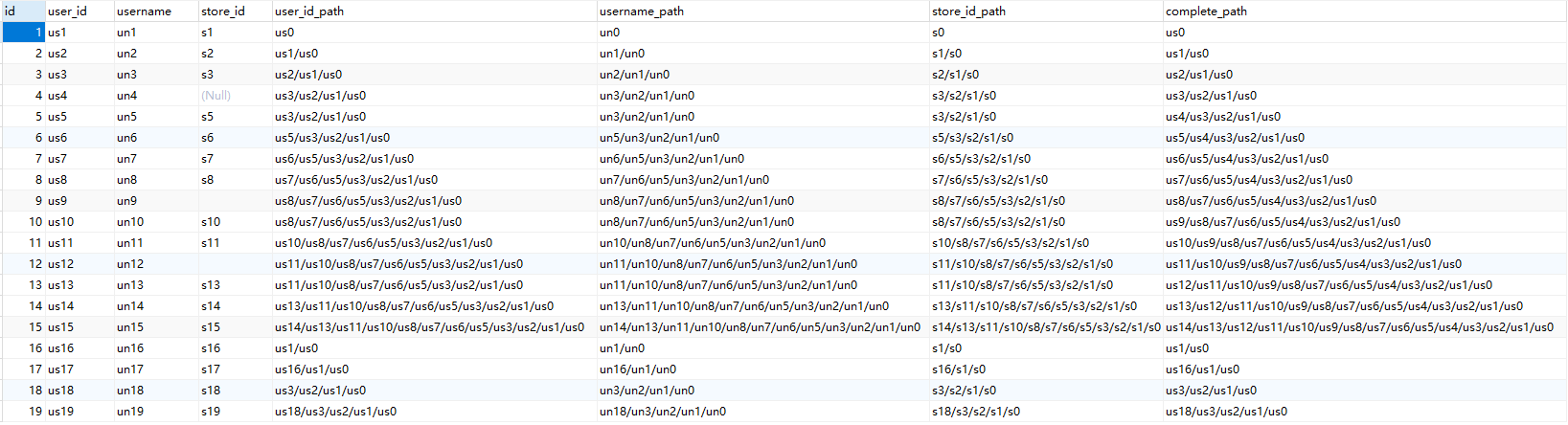
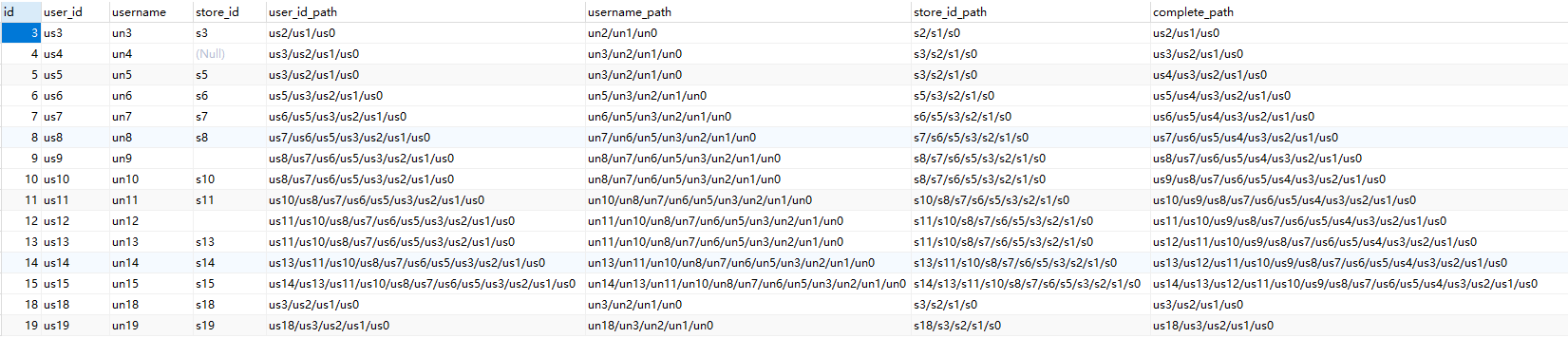
查看用户us2的上级path complete_path
select * from lc_c_user_path where user_id='us2';

查看用户us2的所有下级用户
select * from lc_c_user_path where complete_path like '%us2/us1/us0';
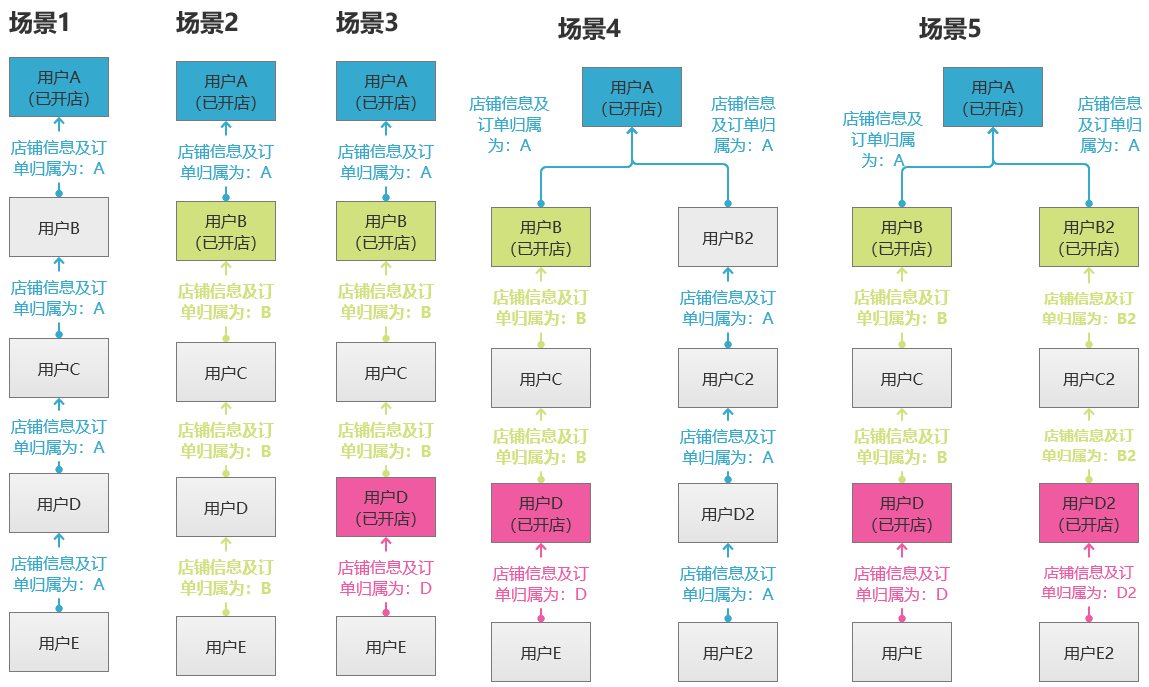
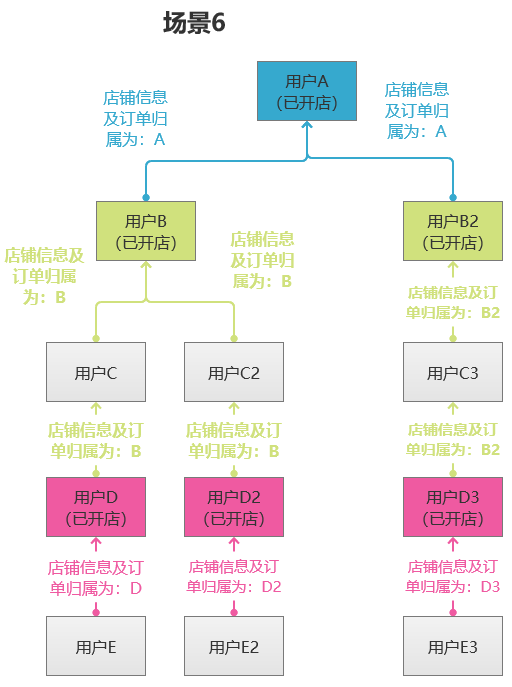
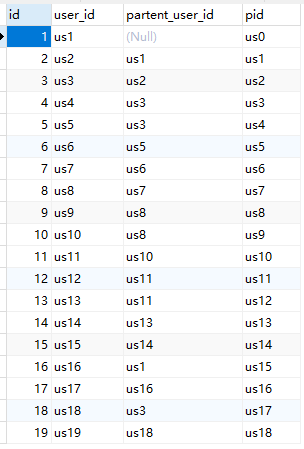
某个开店用户下的客户数
select partent_user_id,count(1) as count from lc_c_customer where 1=1 GROUP BY partent_user_id
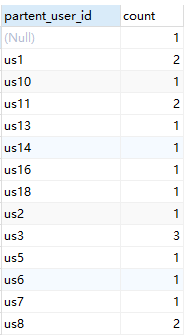
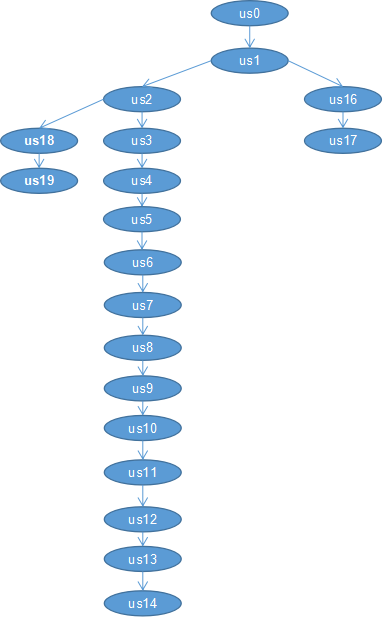
当某个店铺开店,更新lc_c_customer表的partent_user_id字段,即更新当前开店用户的所有下级的partent_user_id,此partent_user_id为最近的已开店的上级的user_id

partent_user_id可以通过获取user_id_path的第一个就是它的直接上级的已开店的partent_user_id
参考代码:
   /**

    * desc 更新用户链条关系

    */

    public function upUserChain(){

        $where['create_time']=array('gt',"2016-01-01 00:00:00");

        $storeM=M('c_store');

        $data=$storeM->where($where)->order('create_time asc')->find();

        if(empty($data)){

            exit('没有数据需要更新');

        }

        $openStoreUserId=$data['user_id'];

        $up_date=$data['create_time'];

        //查询当前店铺的 对应的userPath信息

        $userPathM=M('c_user_path');

        $whereUP['user_id']=$openStoreUserId;

        $field='user_id,username,store_id,user_id_path,username_path,store_id_path,complete_path';

        $currentUserInfo=$userPathM->where($whereUP)->field($field)->find();

        if(empty($currentUserInfo)){

            exit('当前店铺不存在user_path');

        }

        //查询当前店铺的 对应的所有下级

        $pidPath=$openStoreUserId.'/'.$currentUserInfo['complete_path'];

        $whereAllSubordinate['complete_path']=array('like',"%{$pidPath}");

        //按id升序

        $list=$userPathM->where($whereAllSubordinate)->order('id asc')->field($field)->select();

        //需要更新lc_store_general数据的店铺 -- 开店 + 开店所有下级(开店)+ 直接上级(开店)

        $needUpStoreArr=array();

        $needUpStoreArr[]=$currentUserInfo['store_id'];//开店

        $store_id_path=$currentUserInfo['store_id_path'];

        $storeIdPathArr=explode('/',$store_id_path);

        $needUpStoreArr[]=reset($storeIdPathArr);//上级蜂店

        try{

            if(empty($list)){

                exit('当前店铺无下级,更新完毕!');

            }

            //存在下级的情况

            //更新lc_user_path 几个上级蜂店path

            //更新所有下级的parent_user_id

            $needUpPUIArr=array();

            M()->startTrans();

            foreach ($list as $key => $value) {

                //当前用户的直接上级

                $complete_path=$value['complete_path'];

                $completePathArr=explode('/',$complete_path);

                $firstLevel=reset($completePathArr);

                //判断当前用户是否开店

                if(!empty($value['store_id'])){//说明已经开店--更新lc_store_general数据

                    $needUpStoreArr[]=$value['store_id'];

                }

                //判断当前用户的直接上级

                $wherCurrenSuperior['user_id']=$firstLevel;

                $currenSuperiorInfo=$userPathM->where($wherCurrenSuperior)->field($field)->find();

                //判断当前用户的上级是否开店

                if(!empty($currenSuperiorInfo['store_id'])){//说明已经开店

                    $newUserIdPath=$currenSuperiorInfo['user_id'].'/'.$currenSuperiorInfo['user_id_path'];//上级蜂店用户编号+上级蜂店用户父级编号=当前用户的上级蜂店用户编号

                    $newUserNamePath=$currenSuperiorInfo['username'].'/'.$currenSuperiorInfo['username_path'];//上级蜂店用户username+上级蜂店用户父级username=当前用户的上级蜂店用户username

                    $newStoreIdPath=$currenSuperiorInfo['store_id'].'/'.$currenSuperiorInfo['store_id_path'];//上级蜂店用户店铺编号+上级蜂店用户父级店铺编号=当前用户的上级蜂店用户店铺编号

                    //当前用户的上级蜂店

                    $firstStoreUserLevel=$currenSuperiorInfo['user_id'];

                }else{

                    //上级没有开店 所有的店铺相关path 都和上级一样

                    $newUserIdPath=$currenSuperiorInfo['user_id_path'];

                    $newUserNamePath=$currenSuperiorInfo['username_path'];

                    $newStoreIdPath=$currenSuperiorInfo['store_id_path'];

                    //当前用户的上级蜂店

                    $userIdPathArr=explode('/',$newUserIdPath);

                    $firstStoreUserLevel=reset($userIdPathArr);

                }

                $needUpPUIArr[$value['user_id']]=$firstStoreUserLevel;

                $whereUp['user_id']=$value['user_id'];

                $upData=array(

                    'user_id_path'=>$newUserIdPath,

                    'username_path'=>$newUserNamePath,

                    'store_id_path'=>$newStoreIdPath,

                );

                $reUp=$userPathM->where($whereUp)->data($upData)->save();

                if($reUp===false){

                    E('','更新user_path失败');

                }

            }

            M()->commit();

            exit('执行成功');

        }catch (Exception $ex) {

            M()->rollback();

            $curCode=$ex->getErrorCode();

            $curmsg=$ex->getMessage();

            exit($curmsg);

        }

    }
mysql path妙用的更多相关文章
- WPF Binding Path妙用
<Window x:Class="XamlTest.Window9" xmlns="http://schemas.microsoft.com/winf ...
- WPF Binding Path妙用代码实现
using System;using System.Collections.Generic;using System.Linq;using System.Text;using System.Threa ...
- mysql学习(4)-mysqldump备份和恢复数据
背景 最近在公司做数据迁移方面的工作,使用mysql数据库在测试环境模拟数据迁移,在迁移测试的过程中需要做数据备份和恢复 mysql数据备份和恢复比较简单,可以选择mysqldump工具,这里简单提一 ...
- CentOS6.5 安装Sphinx 配置MySQL数据源
前提安装完mysql,并创建测试表和数据 DROP TABLE IF EXISTS `documents`; CREATE TABLE IF NOT EXISTS `documents` ( `i ...
- CentOS6.4 安装Sphinx 配置MySQL数据源
前提安装完mysql,并创建测试表和数据 DROP TABLE IF EXISTS `documents`; CREATE TABLE IF NOT EXISTS `documents` ( `id` ...
- MySQL备份学习
备份分类 物理和逻辑备份 物理备份直接拷贝数据库目录和文件,适合数据量大.重要且需要在出现问题时快速恢复的数据库 逻辑备份保存信息包括逻辑数据库结构(数据库表的创建脚本)和内容(插入语句或者分隔符平面 ...
- 基于PXC的MySQL高可用环境简单部署
PXC简介 Percona XtraDB Cluster(简称PXC集群)提供了MySQL高可用的一种实现方法. 1.集群是有节点组成的,推荐配置至少3个节点,但是也可以运行在2个节点上. 2.每个节 ...
- windows MySQL 5+ 服务手动安装
一.手动安装mysql 1.准备一个mysql免安装版本(把原来安装好的版本复制一份即可.一次安装多次使用^_^),将mysql复制到指定目录. 2.配置my.ini文件(本例使用的是5.0.22版本 ...
- MySQL配置文件-my.ini
下面允许我介绍一下MySQL的my.ini配置文件: my.ini是什么? my.ini是MySQL数据库中使用的配置文件,修改这个文件可以达到更新配置的目的. my.ini存放在哪里? my.ini ...
随机推荐
- oracle常见的函数
1.字符函数 -- initcap函数只针对英文 select * from tb_user where user_name = initcap('张三'); -- ltrim 左剪切 select ...
- P1428
AC: #include <stdio.h> #define rep(i, a, b) for(int i = a; i <= b; i++) #define min(a, b) ( ...
- tomcat 开机自启
d /usr/lib/systemd/system touch tomcat.service chmod 777 tomcat.service vi tomcat.service [Unit]Desc ...
- GIT 协同开发
Git 是一个开源的分布式版本控制系统,用于敏捷高效的处理任何项目的版本问题.Git 是 Linus Torvalds 为了帮助管理 Linux 内核开发而开发的一个开放源码的版本控制软件.与cvs, ...
- 模块学习-shutil
高级的 文件.文件夹.压缩包 处理模块 shutil.copyfileobj(fsrc, fdst[, length]) 将文件内容拷贝到另一个文件中,可以部分内容 shutil.copyfile(s ...
- DC-DC芯片
KIS-3R33S:同步整流7V-24V转5V/3A DC-DC降压模块 稳压电源模块 效率超过LM2576
- MySQL数据库备份还原
本文以CentOS 7 yum安装的MariaDB-server5.5为例,说明MySQL的几种 备份还原方式 将服务器A(192.168.1.100)上的数据库备份,还原到B(192.168.1.2 ...
- HttpClient和HtmlUnit的比较总结以及使用技巧
本文转自: https://blog.csdn.net/zstu_cc/article/details/39250903 https://blog.csdn.net/zstu_cc/article/d ...
- Android Studio 使用入门及问题汇总
声明:转载自http://blog.csdn.net/wei_chong_chong/article/details/56280383 之前一直用eclipse+adt做Android开发.曾经尝试使 ...
- 洛谷 P1119 灾后重建(Floyd)
嗯... 题目链接:https://www.luogu.org/problem/P1119 这道题是一个Floyd的很好的题目,在Floyd的基础上加一点优化: 中转点k在这里不能暴力枚举,否则会超时 ...