
微服务笔记之Euraka(2)
Eureka Server启动过程
- Eureka-server的jar包,发现在MERA-INF下面有配置文件spring.factories
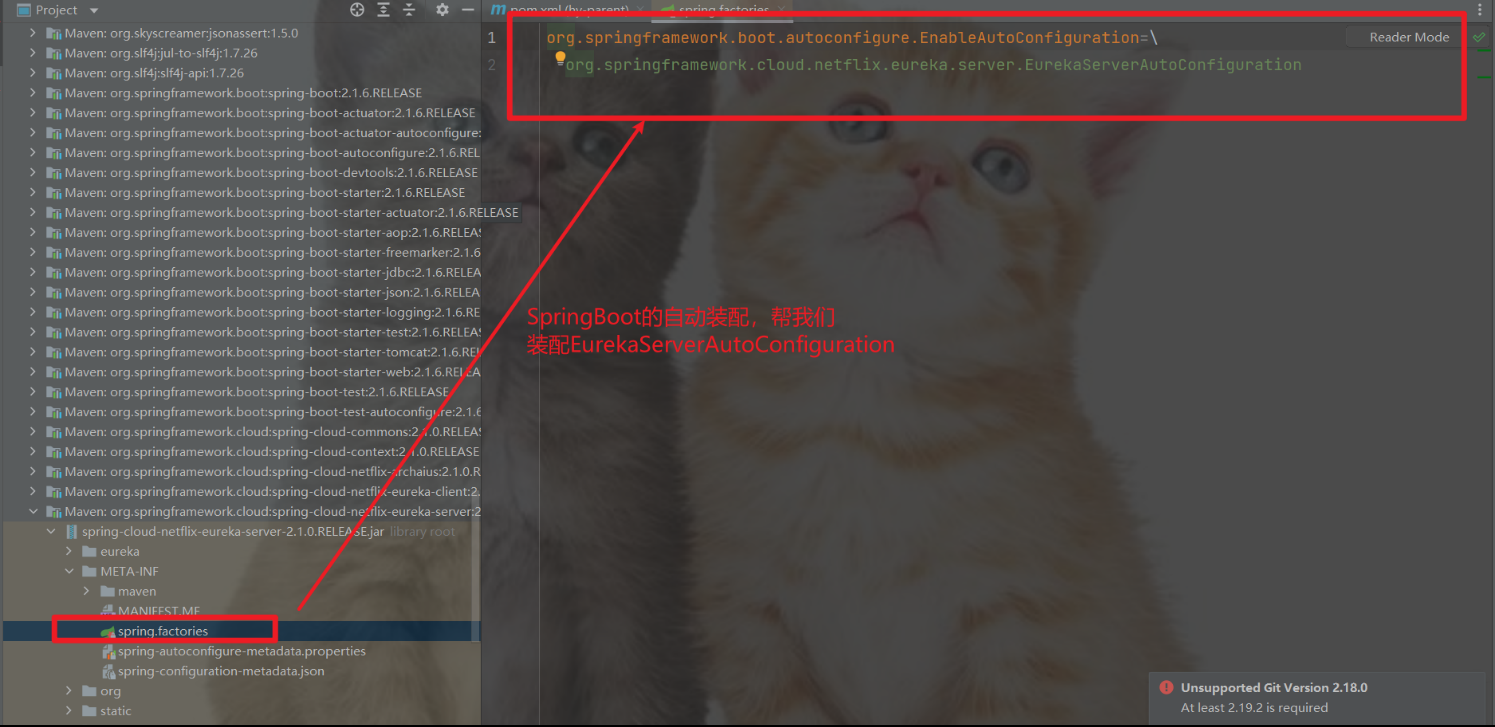
SpringBoot应用启动时会加载EurekaServerAutoConfiguration自动配置
EurekaServerAutoConfiguration类
先看头部信息
@Configuration

@Import(EurekaServerInitializerConfiguration.class)   //导入初始化类

@ConditionalOnBean(EurekaServerMarkerConfiguration.Marker.class)  //加载Bean对象----> Marker

@EnableConfigurationProperties({ EurekaDashboardProperties.class,

        InstanceRegistryProperties.class })

@PropertySource("classpath:/eureka/server.properties")  // 配置类和配置信息

public class EurekaServerAutoConfiguration extends WebMvcConfigurerAdapter {

         //...

}
主要分析EurekaServerInitializerConfiguration、Marker、EurekaServerAutoConfiguration这三个类
1、先看Marker这个类,它是什么时候注入的?
其实是由@EnableEurekaServer注解决定的,如下:
@SpringBootApplication

@EnableEurekaServer  //在我们启动类添加该注解,声明是一个EurekaServer

public class EurekaApplication {

    public static void main(String[] args) {

        SpringApplication.run(EurekaApplication.class, args);

    }

}
进入EnableEurekaServer注解,会发现他导入了一个EurekaServerMarkerConfiguration类
@Target(ElementType.TYPE)

@Retention(RetentionPolicy.RUNTIME)

@Documented

@Import(EurekaServerMarkerConfiguration.class)  // 导入该类,和我们的Marker类很相像

public @interface EnableEurekaServer {

}
再进入EurekaServerMarkerConfiguration类,在该类中将Marker注入到容器中
@Configuration

public class EurekaServerMarkerConfiguration {

    @Bean   // 此处将Marker注入到容器中

    public Marker eurekaServerMarkerBean() {

        return new Marker();

    }

    class Marker {

    }

}
但是Marker这个类什么都没写,不知道导入它有什么用???
2、再看EurekaServerAutoConfiguration这个类
主要分析以下几个重要的方法
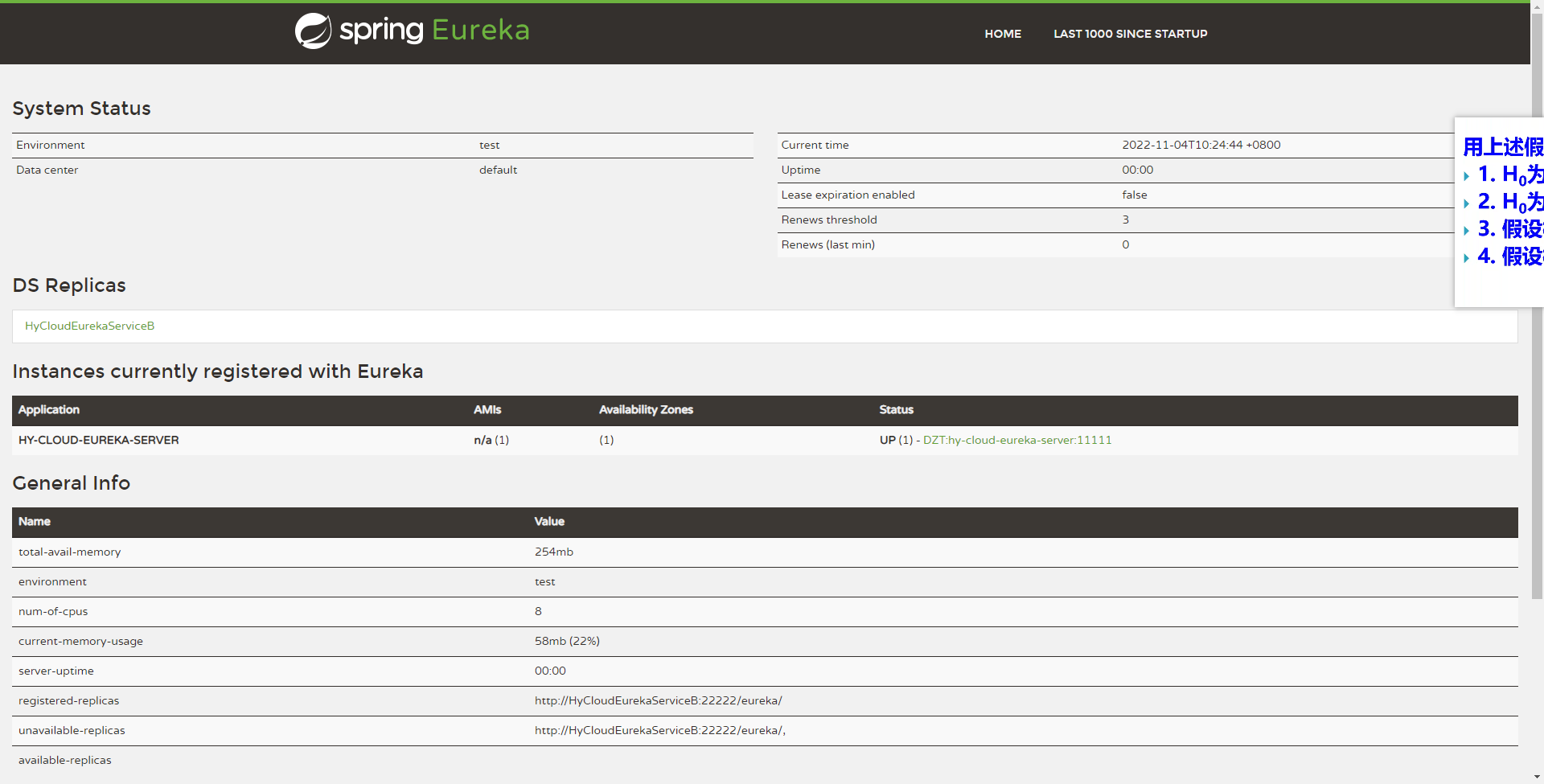
eurekaController这个方法:它注入一个对外的接口(通过这个接口我们可以访问后台界面),这个后台界面我们可以通过配置来修改它是否让它显示,在配置文件中加入eureka.dashboard.enabled = false即可
@Bean

@ConditionalOnProperty(prefix = "eureka.dashboard", name = "enabled", matchIfMissing = true)

public EurekaController eurekaController() {

    return new EurekaController(this.applicationInfoManager);

}
后台界面就是下图
peerAwareInstanceRegistry这个方法:它是对等节点感知实例注册器,在集群模式下,注册服务使用到的注册器
@Bean

public PeerAwareInstanceRegistry peerAwareInstanceRegistry(

    ServerCodecs serverCodecs) {

    this.eurekaClient.getApplications(); // force initialization

    return new InstanceRegistry(this.eurekaServerConfig, this.eurekaClientConfig,serverCodecs, this.eurekaClient,                this.instanceRegistryProperties.getExpectedNumberOfClientsSendingRenews(),

                this.instanceRegistryProperties.getDefaultOpenForTrafficCount());

}
peerEurekaNodes这个方法:它的作用是注入对等的实例节点信息,辅助封装对等节点相关的信息和操作。在EurekaServer集群中,更新集群中对等的节点,因为EurekaServer集群节点可能发生变化,更新节点在PeerEurekaNodes类中的start方法中实现
@Bean

@ConditionalOnMissingBean

public PeerEurekaNodes peerEurekaNodes(PeerAwareInstanceRegistry registry,

    ServerCodecs serverCodecs) {

        return new RefreshablePeerEurekaNodes(registry, this.eurekaServerConfig,this.eurekaClientConfig,serverCodecs, this.applicationInfoManager);

}
PeerEurekaNodes类中的start方法
public void start() {

        this.taskExecutor = Executors.newSingleThreadScheduledExecutor(new ThreadFactory() {

            public Thread newThread(Runnable r) {

                Thread thread = new Thread(r, "Eureka-PeerNodesUpdater");

                thread.setDaemon(true);

                return thread;

            }

        });

        try {

            this.updatePeerEurekaNodes(this.resolvePeerUrls());

            Runnable peersUpdateTask = new Runnable() {

                public void run() {

                    try {
                        // 该方法进行更新节点

                        PeerEurekaNodes.this.updatePeerEurekaNodes(PeerEurekaNodes.this.resolvePeerUrls());

                    } catch (Throwable var2) {

                        PeerEurekaNodes.logger.error("Cannot update the replica Nodes", var2);

                    }

                }

            };

            this.taskExecutor.scheduleWithFixedDelay(peersUpdateTask, (long)this.serverConfig.getPeerEurekaNodesUpdateIntervalMs(), (long)this.serverConfig.getPeerEurekaNodesUpdateIntervalMs(), TimeUnit.MILLISECONDS);

        } catch (Exception var3) {

            throw new IllegalStateException(var3);

        }

        Iterator var4 = this.peerEurekaNodes.iterator();

        while(var4.hasNext()) {

            PeerEurekaNode node = (PeerEurekaNode)var4.next();

            logger.info("Replica node URL:  {}", node.getServiceUrl());

        }

}
那么什么时候执行start方法呢?且往下看
eurekaServerContext这个方法:注入EurekaServer的上下文对象,返回的是一个DefaultEurekaServerContext对象,
@Bean

public EurekaServerContext eurekaServerContext(ServerCodecs serverCodecs,PeerAwareInstanceRegistry registry, PeerEurekaNodes peerEurekaNodes) {

    return new DefaultEurekaServerContext(this.eurekaServerConfig, serverCodecs,registry, peerEurekaNodes, this.applicationInfoManager);

}
DefaultEurekaServerContext类中有个Initialize方法,他会在DefaultEurekaServerContext初始化完成后执行,在它里面会执行上述的start方法
@PostConstruct

public void initialize() {

   logger.info("Initializing ...");

   this.peerEurekaNodes.start();

   try {

       this.registry.init(this.peerEurekaNodes);

   } catch (Exception var2) {

       throw new RuntimeException(var2);

   }

   logger.info("Initialized");

}
eurekaServerBootstrap这个方法:注入一个EurekaServerBootstrap对象,后续启动会使用该对象
@Bean

public EurekaServerBootstrap eurekaServerBootstrap(PeerAwareInstanceRegistry registry,EurekaServerContext serverContext) {

    return new EurekaServerBootstrap(this.applicationInfoManager, this.eurekaClientConfig, this.eurekaServerConfig, registry,serverContext);

}
jerseyFilterRegistration这个方法:它会注册Jersey过滤器。Jersey它是一个rest框架,帮我们发布resetful服务接口的(类似于springmvc)。EurekaServer端和EurekaClient进行通信,Server端发送的是http服务,该服务就是由Jersey发送。
@Bean

public FilterRegistrationBean jerseyFilterRegistration(

            javax.ws.rs.core.Application eurekaJerseyApp) {

    FilterRegistrationBean bean = new FilterRegistrationBean();

    bean.setFilter(new ServletContainer(eurekaJerseyApp));

    bean.setOrder(Ordered.LOWEST_PRECEDENCE);

    bean.setUrlPatterns(Collections.singletonList(EurekaConstants.DEFAULT_PREFIX + "/*"));

    return bean;

}
jerseyApplication这个方法:它会注入一个Application对象,它的作用就是作为jerseyFilterRegistration方法的参数注册Jersey过滤器
@Bean

public javax.ws.rs.core.Application jerseyApplication(Environment environment,ResourceLoader resourceLoader) {

       //...

}
3、再看EurakaServerInitializerConfiguration这个类
它实现了SmartLifecycle这个接口,该接口的父类是Lifecycle(此接口中有一个start方法),实现该接口,可以在Spring容器的Bean创建完成之后做一些事情(如执行start方法)
@Configuration

public class EurekaServerInitializerConfiguration implements ServletContextAware, SmartLifecycle, Ordered {

        //...

}
下面我们看一下start方法实现(其中上面我们所讲的EurekaServerBootStrap注册的对象就是在此处使用的)
@Override

public void start() {

    new Thread(new Runnable() {

        @Override

        public void run() {

            try {

                //TODO: is this class even needed now?
                // 初始化EurekaServerContext细节

                eurekaServerBootstrap.contextInitialized(EurekaServerInitializerConfiguration.this.servletContext);

                log.info("Started Eureka Server");
                // 发布事件

                publish(new EurekaRegistryAvailableEvent(getEurekaServerConfig()));
                // 状态属性设置

                EurekaServerInitializerConfiguration.this.running = true;
                // 发布事件

                publish(new EurekaServerStartedEvent(getEurekaServerConfig()));

            }catch (Exception ex) {

                // Help!

                log.error("Could not initialize Eureka servlet context", ex);

            }

        }

   }).start();
}
下面看一下contextInitialized这个方法
public void contextInitialized(ServletContext context) {

   try {

        // 初始化环境信息

        initEurekaEnvironment();

        // 初始化context细节

        initEurekaServerContext();

        context.setAttribute(EurekaServerContext.class.getName(), this.serverContext);

   }catch (Throwable e) {

        log.error("Cannot bootstrap eureka server :", e);

        throw new RuntimeException("Cannot bootstrap eureka server :", e);

    }

}
看一下initEurekaServerContext这个方法
protected void initEurekaServerContext() throws Exception {

    // For backward compatibility

    JsonXStream.getInstance().registerConverter(new V1AwareInstanceInfoConverter(),XStream.PRIORITY_VERY_HIGH);

    XmlXStream.getInstance().registerConverter(new V1AwareInstanceInfoConverter(),XStream.PRIORITY_VERY_HIGH);

    if (isAws(this.applicationInfoManager.getInfo())) {

         this.awsBinder = new AwsBinderDelegate(this.eurekaServerConfig,

         this.eurekaClientConfig, this.registry, this.applicationInfoManager);

         this.awsBinder.start();

    }
    // 此处是给非IOC容器提供获取EurekaServerContext对象的接口

    EurekaServerContextHolder.initialize(this.serverContext);

    log.info("Initialized server context");

    // 某一个server实例启动的时候,从集群中其他的server拷贝注册信息过来(同步其他节点信息),每一个server对于其他server来说也是一个客户端
    int registryCount = this.registry.syncUp();
    // 更改实例状态为UP,对外提供服务
    this.registry.openForTraffic(this.applicationInfoManager, registryCount);

    // 注册统计器

    EurekaMonitors.registerAllStats();

 }
先看一下syncUp这个方法
public int syncUp() {

    // Copy entire entry from neighboring DS node

    int count = 0;   // 统计节点个数

    // serverConfig.getRegistrySyncRetries() 可能由于远程server没有连接上,做重试操作

    for (int i = 0; ((i < serverConfig.getRegistrySyncRetries()) && (count == 0)); i++) {

        if (i > 0) {

            try {

                Thread.sleep(serverConfig.getRegistrySyncRetryWaitMs());

            } catch (InterruptedException e) {

                logger.warn("Interrupted during registry transfer..");

                break;

            }

        }

        // 获取其他server的注册表信息

        Applications apps = eurekaClient.getApplications();

        for (Application app : apps.getRegisteredApplications()) {

            for (InstanceInfo instance : app.getInstances()) {

                try {

                   if (isRegisterable(instance)) {

                       // 把从远程获取到的注册表信息注册到自己的注册表中(map)

                       register(instance, instance.getLeaseInfo().getDurationInSecs(), true);

                       count++;

                   }

                } catch (Throwable t) {

                   logger.error("During DS init copy", t);

                }

            }

        }

    }

    return count;

}
看一下register方法
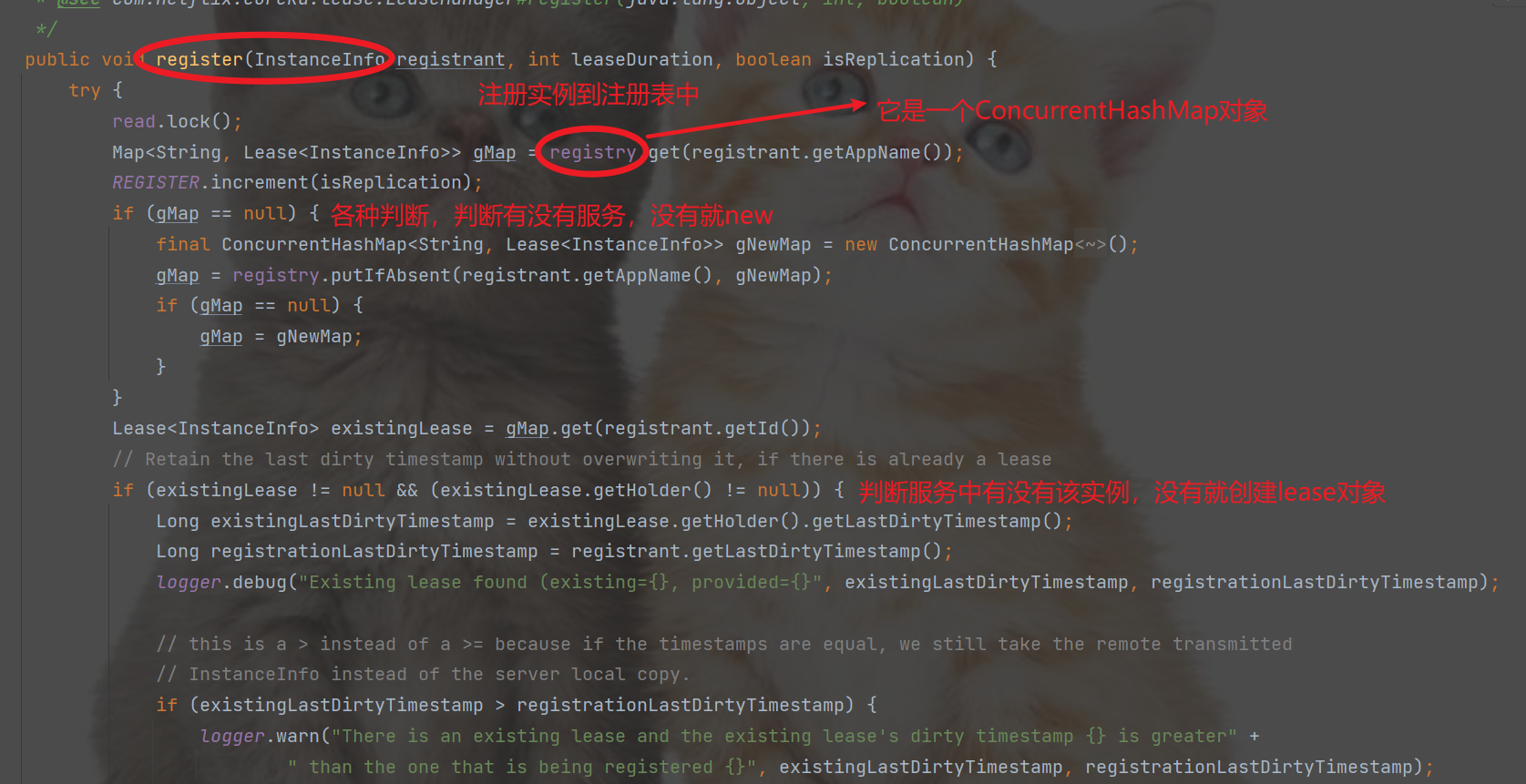
回过头来在看一下openForTraffic方法
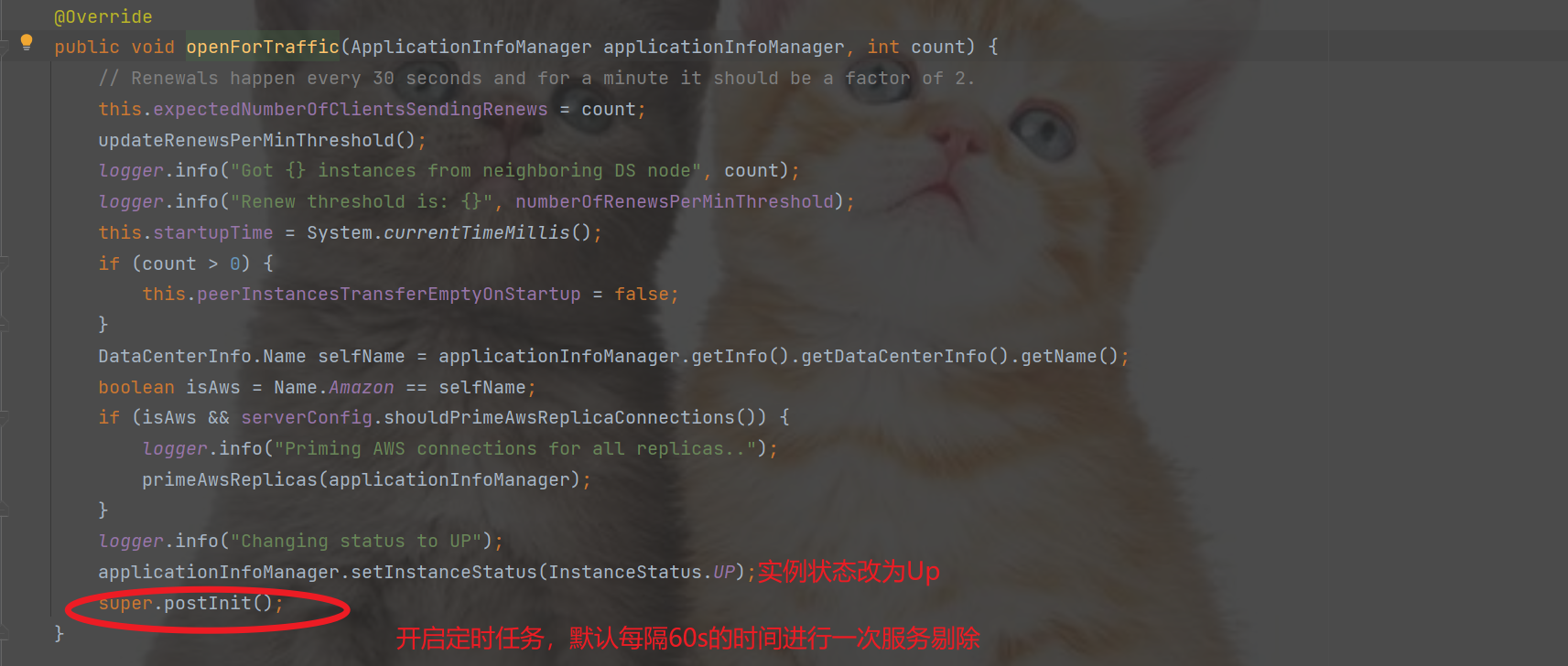
以上就是EurekaServer启动过程分析
微服务笔记之Euraka(2)的更多相关文章
- Spring Cloud微服务笔记(二)Spring Cloud 简介
Spring Cloud 简介 Spring Cloud的设计理念是Integrate Everything,即充分利用现有的开源组件, 在它们之上设计一套统一的规范/接口使它们能够接入Spring ...
- Spring Cloud微服务笔记(三)服务治理:Spring Cloud Eureka快速入门
服务治理:Spring Cloud Eureka 一.服务治理 服务治理是微服务架构中最为核心和基础的模块,它主要用来实现各个微服务实例的自动化注册与发现. 1.服务注册: 在服务治理框架中,通常会构 ...
- Spring Cloud微服务笔记(一)微服务概念
微服务概念 一.什么是微服务架构 微服务,是一个小的.松耦合的分布式服务. 为什么需要微服务: 1)单体系统部署在一个进程中,修改了一个小功能,为了部署上线就会影响其他功能. 2)单体应用各个功能模块 ...
- SpringCloud微服务笔记-Nginx实现网关反向代理
背景 当前在SpringCloud微服务架构下,网关作为服务的入口尤为重要,一旦网关发生单点故障会导致整个服务集群瘫痪,为了保证网关的高可用可以通过Nginx的反向代理功能实现网关的高可用. 项目源码 ...
- Spring Cloud 微服务笔记(七) Zuul入门
Zuul入门 Zuul是从设备和网站到后端应用程序所有请求的前门,为内部服务提供可配置的对外URL到服务的 映射关系,基于JVM的后端路由器.其具备一下功能: 1)认证与授权 2)压力控制 3)金丝雀 ...
- Spring Cloud 微服务笔记(六)Spring Cloud Hystrix
Spring Cloud Hystrix Hystrix是一个延迟和容错库,旨在隔离远程系统.服务和第三方库,阻止链接故障,在复杂的分布式系统中实现恢复能力. 一.快速入门 1)依赖: <dep ...
- Spring Cloud微服务笔记(五)Feign
Feign 一.Feign概述 Feign是一个声明式的Web Service客户端.在Spring Cloud 中使用Feign,可以做到 使用HTTP请求访问远程服务,就像调用本地方法一样,同时它 ...
- Spring Cloud微服务笔记(四)客户端负载均衡:Spring Cloud Ribbon
客户端负载均衡:Spring Cloud Ribbon 一.负载均衡概念 负载均衡在系统架构中是一个非常重要,并且是不得不去实施的内容.因为负载均衡对系统的高可用性. 网络压力的缓解和处理能力的扩容的 ...
- 将微服务注册到Euraka
1.添加依赖 <dependency> <groupId>org.springframework.cloud</groupId> <artifactId> ...
- 一起学习 微服务(MicroServices)-笔记
笔记 微服务特性: 1. 小 专注与做一件事(适合团队就是最好的) 2. 松耦合 独立部署 3. 进程独立 4. 轻量级通信机制 实践: 1. 微服务周边的一系列基础建设 Load Balancing ...
随机推荐
- 如何使用 JuiceFS 创建 WebDAV 共享
WebDAV 是一种基于 HTTP 的文件共享协议,最初被设计用于多用户文档协作编辑的场景,也被广泛应用在基于互联网的文件存储.数据同步等网盘类应用场景. 手机端和 PC 端有大量的应用内置了对 We ...
- ClickHouse(12)ClickHouse合并树MergeTree家族表引擎之AggregatingMergeTree详细解析
目录 建表语法 查询和插入数据 数据处理逻辑 ClickHouse相关资料分享 AggregatingMergeTree引擎继承自 MergeTree,并改变了数据片段的合并逻辑.ClickHouse ...
- socket模块实现网络编程及struct模块解决黏包问题
目录 一.socket模块 1.简介 2.基于文件类型的套接字家族 3.基于网络类型的套接字家族 二.socket代码简介 三.socket代码优化 1.聊天内容自定义 2.让聊天循环起来 3.用户输 ...
- 0x04_My-OS实现自定义颜色
前言: 0x03我们提到: 把12(红色)用循环写入显存,每个像素点怎么显示都要看对应的显存地址,比如0xa0000到0xaffff就是每一个像素点的显存 你问为什么12就是红色,这些东西在主板出厂的 ...
- Java开发环境配置(win7-64bit)
Java开发环境配置(win7-64bit) java Java开发环境配置(win7-64bit) Java开发环境配置(win7-64bit) 1.概述 2.文本用到的工具 3.环境变量配置 4. ...
- debug补充、员工管理系统、字符编码、文件操作
一.debug补充 在当前行的代码左侧点击一下,会出现一个红点(打断点) 在代码编辑区域右键选择debug,不要在选择run 二.员工管理系统 # 创建大列表 staff_info_list = [] ...
- MRI病变能否预测已获临床缓解的早期RA未来放射学进展
MRI病变能否预测已获临床缓解的早期RA未来放射学进展 Tamai M, et al. EULAR 2015. Present ID: FRI0048. 原文 译文 FRI0048 MRI BONE ...
- leaflet动态加载/手动绘制(圆、多边形)demo
<script src="https://code.jquery.com/jquery-3.6.0.min.js" integrity="sha256-/xUj+3 ...
- vscode+eslint项目规范化,自动格式化配置(项目中用到的)
项目如果没有格式化插件就会变得十分拥挤,并且因为个人的开发习惯不同,会导致多人配合的时候,某些人的格式不能与你的兼容 导致项目大面积冲突,这样一来统一的格式和开发规范就十分必要了. 1.下载使用vsc ...
- Integer使用==比较的问题
Integer使用==比较的问题 new一个对象 public Integer(int value) { this.value = value; } 自动装箱 public static Intege ...