
Java动态代理底层实现
Java实现源码
上一节我们提到了Java动态代理的使用,接下来我们看一下他的具体实现。
HelloInterface proxyHello = (HelloInterface) Proxy.newProxyInstance(helloInterface.getClass().getClassLoader(),helloInterface.getClass().getInterfaces(),handler);
他通过Proxy创建了一个代理类对象。我们查看一下具体的源码:
  public static Object newProxyInstance(ClassLoader loader,

                                          Class<?>[] interfaces,

                                          InvocationHandler h)

        throws IllegalArgumentException

    {

        Objects.requireNonNull(h);

        final Class<?>[] intfs = interfaces.clone();

        final SecurityManager sm = System.getSecurityManager();

        if (sm != null) {

            checkProxyAccess(Reflection.getCallerClass(), loader, intfs);

        }

        /*

         * Look up or generate the designated proxy class.

         * 查找获取生成对应的代理类对象

         */

        Class<?> cl = getProxyClass0(loader, intfs);

        /*

         * Invoke its constructor with the designated invocation handler.

         */

        try {

            if (sm != null) {

                checkNewProxyPermission(Reflection.getCallerClass(), cl);

            }

            final Constructor<?> cons = cl.getConstructor(constructorParams);

            final InvocationHandler ih = h;

            if (!Modifier.isPublic(cl.getModifiers())) {

                AccessController.doPrivileged(new PrivilegedAction<Void>() {

                    public Void run() {

                        cons.setAccessible(true);

                        return null;

                    }

                });

            }

            return cons.newInstance(new Object[]{h});

        } catch (IllegalAccessException|InstantiationException e) {

            throw new InternalError(e.toString(), e);

        } catch (InvocationTargetException e) {

            Throwable t = e.getCause();

            if (t instanceof RuntimeException) {

                throw (RuntimeException) t;

            } else {

                throw new InternalError(t.toString(), t);

            }

        } catch (NoSuchMethodException e) {

            throw new InternalError(e.toString(), e);

        }

    }
通过getProxyClass0查找或者生成代理类对象:
    private static Class<?> getProxyClass0(ClassLoader loader,

                                           Class<?>... interfaces) {

        // 如果接口数量大于65535 抛出错误

        if (interfaces.length > 65535) {

            throw new IllegalArgumentException("interface limit exceeded");

        }

        // If the proxy class defined by the given loader implementing

        // the given interfaces exists, this will simply return the cached copy;

        // otherwise, it will create the proxy class via the ProxyClassFactory

        // 如果对象已经存在于缓存中,直接返回;否则通过ProxyClassFactory生成。

        return proxyClassCache.get(loader, interfaces);

    }
ProxyClassFactory内部类创建、定义代理类:
private static final class ProxyClassFactory

        implements BiFunction<ClassLoader, Class<?>[], Class<?>>

    {

        // prefix for all proxy class names

        private static final String proxyClassNamePrefix = "$Proxy";

        // next number to use for generation of unique proxy class names

        private static final AtomicLong nextUniqueNumber = new AtomicLong();

        @Override

        public Class<?> apply(ClassLoader loader, Class<?>[] interfaces) {

            Map<Class<?>, Boolean> interfaceSet = new IdentityHashMap<>(interfaces.length);

            for (Class<?> intf : interfaces) {

                /*

                 * Verify that the class loader resolves the name of this

                 * interface to the same Class object.

                 */

                Class<?> interfaceClass = null;

                try {

                	// 根据接口创建对象

                    interfaceClass = Class.forName(intf.getName(), false, loader);

                } catch (ClassNotFoundException e) {

                }

                if (interfaceClass != intf) {

                    throw new IllegalArgumentException(

                        intf + " is not visible from class loader");

                }

                /*

                 * Verify that the Class object actually represents an

                 * interface.

                 */

                if (!interfaceClass.isInterface()) {

                    throw new IllegalArgumentException(

                        interfaceClass.getName() + " is not an interface");

                }

                /*

                 * Verify that this interface is not a duplicate.

                 */

                 // 将接口对象存入interfaceSet中

                if (interfaceSet.put(interfaceClass, Boolean.TRUE) != null) {

                    throw new IllegalArgumentException(

                        "repeated interface: " + interfaceClass.getName());

                }

            }

            String proxyPkg = null;     // package to define proxy class in

            int accessFlags = Modifier.PUBLIC | Modifier.FINAL;

            /*

             * Record the package of a non-public proxy interface so that the

             * proxy class will be defined in the same package.  Verify that

             * all non-public proxy interfaces are in the same package.

             */

            for (Class<?> intf : interfaces) {

                int flags = intf.getModifiers();

                if (!Modifier.isPublic(flags)) {

                    accessFlags = Modifier.FINAL;

                    String name = intf.getName();

                    int n = name.lastIndexOf('.');

                    String pkg = ((n == -1) ? "" : name.substring(0, n + 1));

                    if (proxyPkg == null) {

                        proxyPkg = pkg;

                    } else if (!pkg.equals(proxyPkg)) {

                        throw new IllegalArgumentException(

                            "non-public interfaces from different packages");

                    }

                }

            }

            if (proxyPkg == null) {

                // if no non-public proxy interfaces, use com.sun.proxy package

                proxyPkg = ReflectUtil.PROXY_PACKAGE + ".";

            }

            /*

             * Choose a name for the proxy class to generate.

             */

            long num = nextUniqueNumber.getAndIncrement();

            String proxyName = proxyPkg + proxyClassNamePrefix + num;

            /*

             * Generate the specified proxy class.

             * 生成指定代理类的字节码文件

             */

            byte[] proxyClassFile = ProxyGenerator.generateProxyClass(

                proxyName, interfaces, accessFlags);

            try {

                return defineClass0(loader, proxyName,

                                    proxyClassFile, 0, proxyClassFile.length);

            } catch (ClassFormatError e) {

                /*

                 * A ClassFormatError here means that (barring bugs in the

                 * proxy class generation code) there was some other

                 * invalid aspect of the arguments supplied to the proxy

                 * class creation (such as virtual machine limitations

                 * exceeded).

                 */

                throw new IllegalArgumentException(e.toString());

            }

        }

    }
ProxyGenerator.generateProxyClass生成字节码文件:
   public static byte[] generateProxyClass(final String name,

                                            Class<?>[] interfaces,

                                            int accessFlags)

    {

        ProxyGenerator gen = new ProxyGenerator(name, interfaces, accessFlags);

        // 生成字节码文件

        final byte[] classFile = gen.generateClassFile();

		// 保存字节码文件

        if (saveGeneratedFiles) {

            java.security.AccessController.doPrivileged(

            new java.security.PrivilegedAction<Void>() {

                public Void run() {

                    try {

                        int i = name.lastIndexOf('.');

                        Path path;

                        if (i > 0) {

                            Path dir = Paths.get(name.substring(0, i).replace('.', File.separatorChar));

                            Files.createDirectories(dir);

                            path = dir.resolve(name.substring(i+1, name.length()) + ".class");

                        } else {

                            path = Paths.get(name + ".class");

                        }

                        Files.write(path, classFile);

                        return null;

                    } catch (IOException e) {

                        throw new InternalError(

                            "I/O exception saving generated file: " + e);

                    }

                }

            });

        }

        return classFile;

    }
真正生成字节码的地方:
    private byte[] generateClassFile() {

        /* ============================================================

         * Step 1: Assemble ProxyMethod objects for all methods to

         * generate proxy dispatching code for.

         * 第一步:组装所有方法到代理类中

         */

        /*

         * Record that proxy methods are needed for the hashCode, equals,

         * and toString methods of java.lang.Object.  This is done before

         * the methods from the proxy interfaces so that the methods from

         * java.lang.Object take precedence over duplicate methods in the

         * proxy interfaces.

         * 组装hashCode/equals/toString方法

         */

        addProxyMethod(hashCodeMethod, Object.class);

        addProxyMethod(equalsMethod, Object.class);

        addProxyMethod(toStringMethod, Object.class);

        /*

         * Now record all of the methods from the proxy interfaces, giving

         * earlier interfaces precedence over later ones with duplicate

         * methods.

         * 获取接口中的方法组装到代理中

         */

        for (Class<?> intf : interfaces) {

            for (Method m : intf.getMethods()) {

                addProxyMethod(m, intf);

            }

        }

        /*

         * For each set of proxy methods with the same signature,

         * verify that the methods' return types are compatible.

         */

        for (List<ProxyMethod> sigmethods : proxyMethods.values()) {

            checkReturnTypes(sigmethods);

        }

        /* ============================================================

         * Step 2: Assemble FieldInfo and MethodInfo structs for all of

         * fields and methods in the class we are generating.

         * 第二步:将属性值和方法体塞到class中

         */

        try {

            methods.add(generateConstructor());

            for (List<ProxyMethod> sigmethods : proxyMethods.values()) {

                for (ProxyMethod pm : sigmethods) {

                    // add static field for method's Method object

                    fields.add(new FieldInfo(pm.methodFieldName,

                        "Ljava/lang/reflect/Method;",

                         ACC_PRIVATE | ACC_STATIC));

                    // generate code for proxy method and add it

                    methods.add(pm.generateMethod());

                }

            }

            methods.add(generateStaticInitializer());

        } catch (IOException e) {

            throw new InternalError("unexpected I/O Exception", e);

        }

        if (methods.size() > 65535) {

            throw new IllegalArgumentException("method limit exceeded");

        }

        if (fields.size() > 65535) {

            throw new IllegalArgumentException("field limit exceeded");

        }

        /* ============================================================

         * Step 3: Write the final class file.

         * 第三步: 写最后的class文件

         */

        /*

         * Make sure that constant pool indexes are reserved for the

         * following items before starting to write the final class file.

         */

        cp.getClass(dotToSlash(className));

        cp.getClass(superclassName);

        for (Class<?> intf: interfaces) {

            cp.getClass(dotToSlash(intf.getName()));

        }

        /*

         * Disallow new constant pool additions beyond this point, since

         * we are about to write the final constant pool table.

         */

        cp.setReadOnly();

        ByteArrayOutputStream bout = new ByteArrayOutputStream();

        DataOutputStream dout = new DataOutputStream(bout);

        try {

            /*

             * Write all the items of the "ClassFile" structure.

             * See JVMS section 4.1.

             */

                                        // u4 magic;

            dout.writeInt(0xCAFEBABE);

                                        // u2 minor_version;

            dout.writeShort(CLASSFILE_MINOR_VERSION);

                                        // u2 major_version;

            dout.writeShort(CLASSFILE_MAJOR_VERSION);

            cp.write(dout);             // (write constant pool)

                                        // u2 access_flags;

            dout.writeShort(accessFlags);

                                        // u2 this_class;

            dout.writeShort(cp.getClass(dotToSlash(className)));

                                        // u2 super_class;

            dout.writeShort(cp.getClass(superclassName));

                                        // u2 interfaces_count;

            dout.writeShort(interfaces.length);

                                        // u2 interfaces[interfaces_count];

            for (Class<?> intf : interfaces) {

                dout.writeShort(cp.getClass(

                    dotToSlash(intf.getName())));

            }

                                        // u2 fields_count;

            dout.writeShort(fields.size());

                                        // field_info fields[fields_count];

            for (FieldInfo f : fields) {

                f.write(dout);

            }

                                        // u2 methods_count;

            dout.writeShort(methods.size());

                                        // method_info methods[methods_count];

            for (MethodInfo m : methods) {

                m.write(dout);

            }

                                         // u2 attributes_count;

            dout.writeShort(0); // (no ClassFile attributes for proxy classes)

        } catch (IOException e) {

            throw new InternalError("unexpected I/O Exception", e);

        }

        return bout.toByteArray();

    }
字节码生成后,调用defineClass0来解析字节码,生成了Proxy的Class对象。
其中,在ProxyGenerator.generateProxyClass函数中 saveGeneratedFiles定义如下,其指代是否保存生成的代理类class文件,默认false不保存。
因此我们修改系统变量来保存文件:
System.getProperties().setProperty("sun.misc.ProxyGenerator.saveGeneratedFiles", "true");
他生成了如下文件:

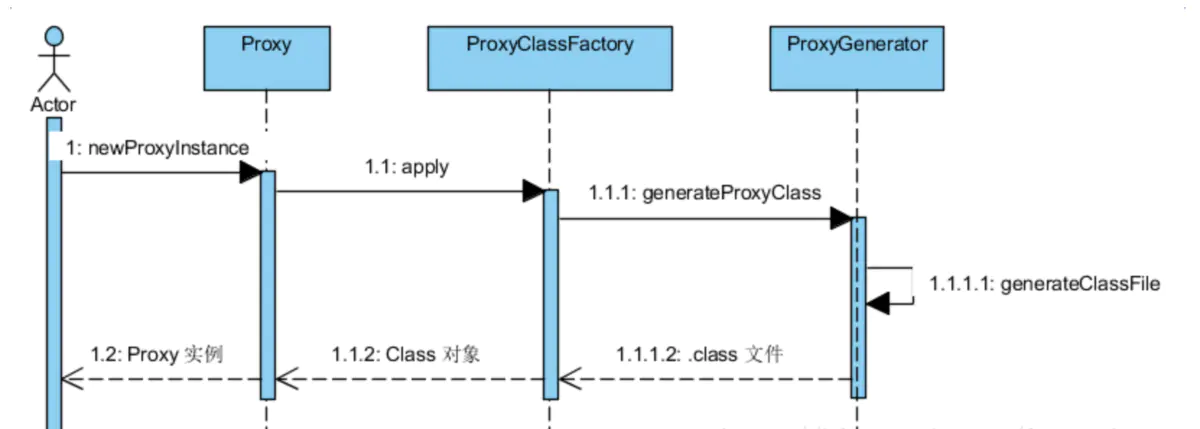
动态代理流程图
我们总结了动态代理流程图:
附录 生成的类:$Proxy0 文件代码
//

// Source code recreated from a .class file by IntelliJ IDEA

// (powered by FernFlower decompiler)

//

package com.sun.proxy;

import framework.spring.aop.invoke.HelloInterface;

import java.lang.reflect.InvocationHandler;

import java.lang.reflect.Method;

import java.lang.reflect.Proxy;

import java.lang.reflect.UndeclaredThrowableException;

public final class $Proxy0 extends Proxy implements HelloInterface {

    private static Method m1;

    private static Method m3;

    private static Method m2;

    private static Method m0;

    public $Proxy0(InvocationHandler var1) throws  {

        super(var1);

    }

    public final boolean equals(Object var1) throws  {

        try {

            return (Boolean)super.h.invoke(this, m1, new Object[]{var1});

        } catch (RuntimeException | Error var3) {

            throw var3;

        } catch (Throwable var4) {

            throw new UndeclaredThrowableException(var4);

        }

    }

    public final void sayHello() throws  {

        try {

            super.h.invoke(this, m3, (Object[])null);

        } catch (RuntimeException | Error var2) {

            throw var2;

        } catch (Throwable var3) {

            throw new UndeclaredThrowableException(var3);

        }

    }

    public final String toString() throws  {

        try {

            return (String)super.h.invoke(this, m2, (Object[])null);

        } catch (RuntimeException | Error var2) {

            throw var2;

        } catch (Throwable var3) {

            throw new UndeclaredThrowableException(var3);

        }

    }

    public final int hashCode() throws  {

        try {

            return (Integer)super.h.invoke(this, m0, (Object[])null);

        } catch (RuntimeException | Error var2) {

            throw var2;

        } catch (Throwable var3) {

            throw new UndeclaredThrowableException(var3);

        }

    }

    static {

        try {

            m1 = Class.forName("java.lang.Object").getMethod("equals", Class.forName("java.lang.Object"));

            m3 = Class.forName("framework.spring.aop.invoke.HelloInterface").getMethod("sayHello");

            m2 = Class.forName("java.lang.Object").getMethod("toString");

            m0 = Class.forName("java.lang.Object").getMethod("hashCode");

        } catch (NoSuchMethodException var2) {

            throw new NoSuchMethodError(var2.getMessage());

        } catch (ClassNotFoundException var3) {

            throw new NoClassDefFoundError(var3.getMessage());

        }

    }

}
Java动态代理底层实现的更多相关文章
- Java动态代理简单应用
概念 代理模式是基本的设计模式之一,它是开发者为了提供额外的或不同的操作,而插入的用来代替“实际”对象的对象.这些操作通常涉及与“实际”对象的通信,因此代理通常充当着中间人的角色. Java动态代理比 ...
- Java 动态代理机制详解
在学习Spring的时候,我们知道Spring主要有两大思想,一个是IoC,另一个就是AOP,对于IoC,依赖注入就不用多说了,而对于Spring的核心AOP来说,我们不但要知道怎么通过AOP来满足的 ...
- Java动态代理全面分析
代理模式 解说:给某一个对象提供一个代理,并由代理对象控制对原对象的引用: 代理模式需要以下几个角色: 1 主题:规定代理类和真实对象共同对外暴露的接口: 2 代理类:专门代理真实对象的类: 3 ...
- java高级---->Java动态代理的原理
Java动态代理机制的出现,使得 Java 开发人员不用手工编写代理类,只要简单地指定一组接口及委托类对象,便能动态地获得代理类.代理类会负责将所有的方法调用分派到委托对象上反射执行,在分派执行的过程 ...
- Java动态代理学习【Spring AOP基础之一】
Spring AOP使用的其中一个底层技术就是Java的动态代理技术.Java的动态代理技术主要围绕两个类进行的 java.lang.reflect.InvocationHandler java.la ...
- JAVA 动态代理学习记录
打算用JAVA实现一个简单的RPC框架,看完RPC参考代码之后,感觉RPC的实现主要用到了两个方面的JAVA知识:网络通信和动态代理.因此,先补补动态代理的知识.---多看看代码中写的注释 参考:Ja ...
- Java 动态代理 两种实现方法
AOP的拦截功能是由java中的动态代理来实现的.说白了,就是在目标类的基础上增加切面逻辑,生成增强的目标类(该切面逻辑或者在目标类函数执行之前,或者目标类函数执行之后,或者在目标类函数抛出异常时候执 ...
- JAVA动态代理基础
Java动态代理机制详解(JDK 和CGLIB,Javassist,ASM) 彻底理解JAVA动态代理 class文件简介及加载 Java编译器编译好Java文件之后,产生.class 文件在磁盘中. ...
- Java动态代理的实现方法
AOP的拦截功能是由java中的动态代理来实现的.说白了,就是在目标类的基础上增加切面逻辑,生成增强的目标类(该切面逻辑或者在目标类函数执行之前,或者目标类函数执行之后,或者在目标类函数抛出异常时候执 ...
随机推荐
- 算法优化---素数(质数)(Java版)
4.1优化算法-----输出素数 最简代码请直接移步文末 原代码:https://www.cnblogs.com/Tianhaoblog/p/15077840.html 对应优化如下 优化一:在遍历内 ...
- Vue项目发布的问题--http://localhost:8088/static/fonts/fontawesome-webfont.af7ae50.woff2
问题:ngnix将8080转成80对外访问,找不对woff2等文件 一\ 搭建环境 ngnix-->conf中 server { listen 80; server_name 10.9.240. ...
- ES6 属性方法简写一例:vue methods 属性定义方法
const o = { method() { return "Hello!"; } }; // 等同于 const o = { method: function() { retur ...
- 使用C#winform编写渗透测试工具--敏感目录扫描
使用C#winform编写渗透测试工具--敏感目录扫描 由于之前在做渗透测试的时候,发现使用的工具较多,切换起来较麻烦,便萌生了开发一个包含各种渗透测试工具的小程序,包括敏感目录扫描.端口查询.子域名 ...
- 关于win7+cenos 7双系统安装
---恢复内容开始--- 1,cenos 0 7制作U盘启动 制作工具 http://pan.baidu.com/s/1nv9lpmp 镜像自备 2,安装centos 7 释放磁盘空间,如:20G.用 ...
- P2470 压缩 TJ
前言 洛谷题解 题目传送门 正解:区间/线性 dp(本篇题解介绍线性做法) 人生第一道紫题! 也是今天考试看自闭了就没做的 T4,结果没想到是紫,虽然是一道水紫呢-- 考试的 T5 是跳房子,蓝题 q ...
- Oracle中使用虚拟表DUAL或XMLTABLE返回顺序数列
在Oracle中使用虚拟表DUAL或XMLTABLE返回顺序数列 使用DUAL表和CONNECT BY LEVEL的特殊用法,返回一个1-10的顺序数列,示例代码如下: SELECT LEVEL FR ...
- Java基础——自增自减及初识Math类
自增自减及初识Math类 public class Demon05 { public static void main(String[] args) { // ++ -- 自 ...
- 字节跳动五面都过了,结果被刷了,问了hr原因竟说是...
说在前面,面试时最好不要虚报工资.本来字节跳动是很想去的,几轮面试也通过了,最后没offer,自己只想到几个原因:1.虚报工资,比实际高30%:2.有更好的人选,这个可能性不大,我看还在招聘.我是面试 ...
- 记一次在Windows10桌面环境搭建Jekins的吐血经历
目录 写在前面 故事背景 踩坑详情 最后总结 写在前面 首先声明,除非万不得已,千万不要在Windows环境做这个事情,否则就等着各种坑吧. 本人一贯的立场都是坚持用正确的方法做事,显然在Window ...