
Lecture 1
Principles of GIS( UNSW Metternicht )
outline:data input---data management---data manipulation+data analysis---spatial modelling
Definition
1. GIS is a tool to digitally abstract the real world, information is connected to its physical location and organized into layers.
2. a GIS consists at least information database( with attribute ), map information, computer-based link between them.
GIS storement
1. people manage database information by layer or theme
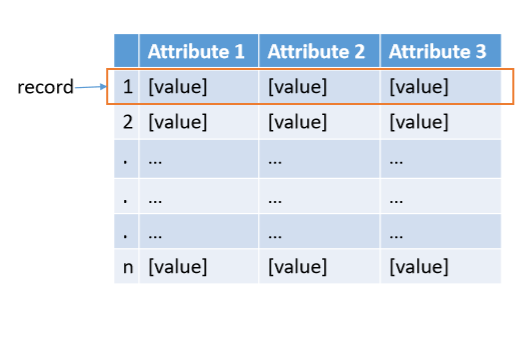
2. a value can be a number or a text
type of data( vector矢量 raster栅格)
1. spatial data (空间数据): has location information, giving the information about where is it, can be mapped, spatial data models begin with conceptualization, how you will represent the real world phenomena or entities( road, river, etc.), which is the objects in a spatial database plus the relationships among them.
2. attribute data: giving the information about what is it.
3. topology(拓扑): what related to this feature
attribute data
1. nominal attributes: provide descriptive information about an object (for example, colors、city names or vegetation type), which can also be images, audios or other kinds of descriptive information.
2. ordinal attributes: imply rank order or scale by their values ( for example, small、medium、large, ranking from 1 to 10 ).
3. interval or ratio attributes: are used for numeric items where both order and difference in magnitudes( 量级 ) are reflected in number( real number in a linear scale, for example: height、weight, etc.)
data model concept
1. vector data model: discrete objects (point,lines)
2. raster data model: continuous phenomena (use grid cells)
vector data model
1. point: to represent the location
2. line: to represent linear features
3. polygon: represents entities which covers an area
raster data model (cells)
rasters are digital aerial photographs, imagery from satellites, digital pictures, or even scanned maps
TIN data model---tesselations (Triangulated Irregular Network)
1. TIN is a data model commonly used to represent terrain (地势) heights, which will be describes as x,y, and z locations.
2. TIN used for digital elevation models (DEM) or digital terrain models (DTM).
vector data
1. can be multipart
2. polygons can have holes
3. holes can contain islands
4. can overlap
vector model
the direction of a line is determined by the order of its vertices (制高点)
polygon exteriors (外观) are stored in an anticlockwise(逆时针) order
顺时针方向为内孔方向(Internal holes)
total area of the polygon areas is the sum of the part areas
raster data
a cell’s coordinate is inferred from its file order, the cell size and corner coordinates (坐标)
nodata means the value is not known or is not relevant
Lecture 1的更多相关文章
- [C2P3] Andrew Ng - Machine Learning
##Advice for Applying Machine Learning Applying machine learning in practice is not always straightf ...
- note of introduction of Algorithms(Lecture 3 - Part1)
Lecture 3(part 1) Divide and conquer 1. the general paradim of algrithm as bellow: 1. divide the pro ...
- codeforces 499B.Lecture 解题报告
题目链接:http://codeforces.com/problemset/problem/499/B 题目意思:给出两种语言下 m 个单词表(word1, word2)的一一对应,以及 profes ...
- Nobel Lecture, December 12, 1929 Thermionic phenomena and the laws which govern them
http://www.nobelprize.org/nobel_prizes/physics/laureates/1928/richardson-lecture.pdf OWEN W. RICHARD ...
- Jordan Lecture Note-1: Introduction
Jordan Lecture Note-1: Introduction 第一部分要整理的是Jordan的讲义,这份讲义是我刚进实验室时我们老师给我的第一个任务,要求我把讲义上的知识扩充出去,然后每周都 ...
- Jordan Lecture Note-3: 梯度投影法
Jordan Lecture Note-3:梯度投影法 在这一节,我们介绍如何用梯度投影法来解如下的优化问题: \begin{align} \mathop{\min}&\quad f(x)\n ...
- Jordan Lecture Note-2: Maximal Margin Classifier
Maximal Margin Classifier Logistic Regression 与 SVM 思路的不同点:logistic regression强调所有点尽可能远离中间的那条分割线,而SV ...
- [CF Round #294 div2] E. A and B and Lecture Rooms 【树上倍增】
题目链接:E. A and B and Lecture Rooms 题目大意 给定一颗节点数10^5的树,有10^5个询问,每次询问树上到xi, yi这两个点距离相等的点有多少个. 题目分析 若 x= ...
- Codeforces Round #287 D.The Maths Lecture
The Maths Lecture 题意:求存在后缀Si mod k =0,的n位数的数目.(n <=1000,k<=100); 用f[i][j]代表 长为i位,模k等于j的数的个数. 可 ...
- Lecture Halls
Lecture Halls (会议安排) 时间限制(普通/Java):1000MS/10000MS 运行内存限制:65536KByte 总提交: 38 测试通过: 2 ...
随机推荐
- 长春理工大学第十四届程序设计竞赛(重现赛)H.Arithmetic Sequence
题意: 数竞选手小r最喜欢做的题型是数列大题,并且每一道都能得到满分. 你可能不相信,但其实他发现了一个结论:只要是数列,无论是给了通项还是给了递推式,无论定义多复杂,都可以被搞成等差数列.这样,只要 ...
- bzoj3811 uoj36 玛里苟斯
做题前问了一下miaom,得到了一个奇怪的回答 mmp 这题分类讨论 k=1sb题 k=2按位计算,把每个数看成几个2的幂次的和,按位跑期望 k>2线性基sb题 没了 #include<i ...
- Hive进阶_Hive的子查询
- 集合中如果含null数据,不可使用not in, 可以使用in- hive只支持where和from子句中的子查询- 主查询和自查询可以不是同一张表 select e.ename from emp ...
- scrapy-redis 分布式哔哩哔哩网站用户爬虫
scrapy里面,对每次请求的url都有一个指纹,这个指纹就是判断url是否被请求过的.默认是开启指纹即一个URL请求一次.如果我们使用分布式在多台机上面爬取数据,为了让爬虫的数据不重复,我们也需要一 ...
- CellSet 遍历
CellSet 结构: 查询MDX: SELECT NON EMPTY {{ {{ {{ {{ {{ AddCalculatedMembers([店铺.店铺ID].[店铺ID].Members)}} ...
- java类在eclipse上打jar包,Linux上成功运行的实例
1 eclipse下的java项目结构如下图所示: 2 打包的步骤如下: 3 修改minifest.mf文件: 4 .上传需要的三方jar包们和主类打的jar(案例是topV.jar)并且执行jav ...
- php时间戳存在8小时误差
当将PHP时间戳转化为正常的时间格式一般的操作方法如下: $mytime=time(); echo $mytime.'<br />'; echo date('Y-m-d H:i:s',$m ...
- GreenDao使用踩过的坑
本来想用litePal,看了郭大婶的说明,真的是好用! 后来发现网上说比较流行的还是 GREENDAO,且效率不错! 不用管那么多了,直接用吧. --------------------------- ...
- 访问权限修饰符-static-final-this-super-匿名对象
1.this关键字的作用 1)调用本类中的属性; 2)调用本类中的构造方法;且只能放首行,且必须留一个构造方法作为出口,即不能递归调用 3)表示当前对象; 2.匿名对象 ...
- GreenDao 3.x 注解中ToOne和ToMany的个人理解
GreenDao是什么东西这个就不用多说了.自从GreenDao升级到3.0之后,编译的方法发生了改变.当然这个改变是有助于快速开发的. 区别在哪随便百度一下都可以知道.这里就不多说了. 这里主要说的 ...