
java对象equals方法的重写
根类Object中的equals方法描述:
public boolean equals(Object obj)
Theequalsmethod for classObjectimplements the most discriminating possible equivalence relation on objects; that is, for any non-null reference valuesxandy, this method returnstrueif and only ifxandyrefer to the same object (x == yhas the valuetrue).
String类重写了equals方法:
public boolean equals(Object anObject)
Compares this string to the specified object. The result istrueif and only if the argument is notnulland is aStringobject that represents the same sequence of characters as this object
1.基本数据类型,也称原始数据类型。byte,short,char,int,long,float,double,boolean
他们之间的比较,应用双等号(==),比较的是他们的值。
2.复合数据类型(类)
当他们用(==)进行比较的时候,比较的是他们在内存中的存放地址,所以,除非是同一个new出来的对象,他们的比较后的结果为true,否则比较后结果为false。
JAVA当中所有的类都是继承于Object这个基类的,在Object中的基类中定义了一个equals的方法,这个方法的初始行为是比较对象的内存地址(即引用里的内容),但在一些类库当中这个方法被覆盖掉了,如String,Integer,Date在这些类当中equals有其自身的实现,而不再是比较类在堆内存中的存放地址了。
对于复合数据类型之间进行equals比较,在没有覆写equals方法的情况下,他们之间的比较还是基于他们在内存中的存放位置的地址值的,因为Object的equals方法也是用双等号(==)进行比较的,所以比较后的结果跟双等号(==)的结果相同。
public boolean equals(Object obj)

{

    if(obj == null)    return false; //keep the object compared not be null

    else{

        if(obj instanceof Cat)   //keep the object input be Cat

        {

            Cat c = (Cat) obj;    //Cast to Cat

            if(c.color == this.color&& c.height == this.hright)

            {

                   return true;

            }

        }

       }

    return false;

}
hashCode method whenever this method is overridden, so as to maintain the general contract for the hashCode method, which states that equal objects must have equal hash codes.package com.zj.unit;
import java.util.Arrays; public class Unit {
private short ashort;
private char achar;
private byte abyte;
private boolean abool;
private long along;
private float afloat;
private double adouble;
private Unit aObject;
private int[] ints;
private Unit[] units; public boolean equals(Object o) {
if (!(o instanceof Unit))
return false;
Unit unit = (Unit) o;
return unit.ashort == ashort
&& unit.achar == achar
&& unit.abyte == abyte
&& unit.abool == abool
&& unit.along == along
&& Float.floatToIntBits(unit.afloat) == Float
.floatToIntBits(afloat)
&& Double.doubleToLongBits(unit.adouble) == Double
.doubleToLongBits(adouble)
&& unit.aObject.equals(aObject)
&& equalsInts(unit.ints)
&& equalsUnits(unit.units);
} private boolean equalsInts(int[] aints) {
return Arrays.equals(ints, aints);
} private boolean equalsUnits(Unit[] aUnits) {
return Arrays.equals(units, aUnits);
} public int hashCode() {
int result = 17;
result = 37 * result + (int) ashort;
result = 37 * result + (int) achar;
result = 37 * result + (int) abyte;
result = 37 * result + (abool ? 0 : 1);
result = 37 * result + (int) (along ^ (along >>> 32));
result = 37 * result + Float.floatToIntBits(afloat);
long tolong = Double.doubleToLongBits(adouble);
result = 37 * result + (int) (tolong ^ (tolong >>> 32));
result = 37 * result + aObject.hashCode();
result = 37 * result + intsHashCode(ints);
result = 37 * result + unitsHashCode(units);
return result;
} private int intsHashCode(int[] aints) {
int result = 17;
for (int i = 0; i < aints.length; i++)
result = 37 * result + aints[i];
return result;
} private int unitsHashCode(Unit[] aUnits) {
int result = 17;
for (int i = 0; i < aUnits.length; i++)
result = 37 * result + aUnits[i].hashCode();
return result;
}
}
关键是如何计算hashcode值.
此外要注意如何在Java中避免equals方法的隐藏陷阱(http://coolshell.cn/articles/1051.html)
下面给出比较成熟的equals()代码:
 public boolean equals(Object obj)

 {

     if(this == obj)

     {

         return true;

     }

     if(obj != null && obj.getClass() == Person.class)

     {

         Person personObj = (Person) obj;

         if(this.getldStr().equals(personObj.getldStr()))

         {

             return true;

         }

     }

     return false;

 }
忠告:1、覆盖equals时总要覆盖hashcode; 2、Don’t try to be too clever不要试图让equals方法过于智能; 3、Don’t substitute another type for Object in the equals declaration.不要将equals声明中Object对象替换为其他对象
public boolean equals(MyClass o) {
...
}需使用Object o
附转载:http://www.importnew.com/8701.html 或 http://www.programcreek.com/2011/07/java-equals-and-hashcode-contract/
The Java super class java.lang.Object has two very important methods defined:
public boolean equals(Object obj) |
They have been proved to be extremely important to understand, especially when user-defined objects are added to Maps. However, even advanced-level developers sometimes can’t figure out how they should be used properly. In this post, I will first show an example of a common mistake, and then explain how equals() and hashCode contract works.
1. A common mistake
Common mistake is shown in the example below.
import java.util.HashMap; |
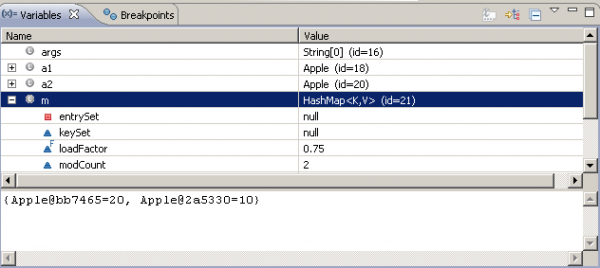
In this example, a green apple object is stored successfully in a hashMap, but when the map is asked to retrieve this object, the apple object is not found. The program above prints null. However, we can be sure that the object is stored in the hashMap by inspecting in the debugger:
2. Problem caused by hashCode()
The problem is caused by the un-overridden method “hashCode()”. The contract between equals() and hasCode() is that:
1. If two objects are equal, then they must have the same hash code.
2. If two objects have the same hashcode, they may or may not be equal.
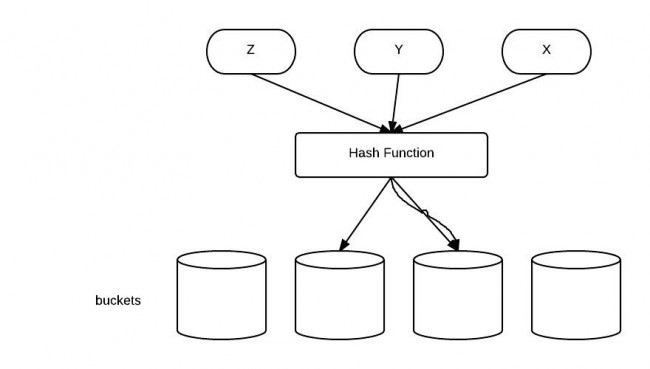
The idea behind a Map is to be able to find an object faster than a linear search. Using hashed keys to locate objects is a two-step process. Internally the Map stores objects as an array of arrays. The index for the first array is the hashcode() value of the key. This locates the second array which is searched linearly by using equals() to determine if the object is found.
The default implementation of hashCode() in Object class returns distinct integers for different objects. Therefore, in the example above, different objects(even with same type) have different hashCode.
Hash Code is like a sequence of garages for storage, different stuff can be stored in different garages. It is more efficient if you organize stuff to different place instead of the same garage. So it’s a good practice to equally distribute the hashCode value. (Not the main point here though)
The solution is to add hashCode method to the class. Here I just use the color string’s length for demonstration.
public int hashCode(){
|
java对象equals方法的重写的更多相关文章
- 关于重写对象equals方法的问题
1.==和equals的区别 a.基本数据类型使用 == 进行值的比较 b.引用类型使用 == 进行比较时,直接比较的是对象的存储地址,即两个引用是否指向了同一个对象. c.equals方法是基类O ...
- java代码equals方法
package com.bc; public class Test_6 { // 我们知道java中的每个类都继承自Object类,equals是Object方法之一 String name; int ...
- java基础—equals方法
一.equals方法介绍 1.1.通过下面的例子掌握equals的用法 1 package cn.galc.test; 2 3 public class TestEquals { 4 public s ...
- Java的equals方法的使用技巧
Java的equals方法的使用技巧 1.业务场景: 在某个社交软件中,要求每个用户的用户名(name)必须独一无二,那么在每次增加新用户的时候,都要对该用户的注册名进行判断,如果当前用户名已经被占用 ...
- 为什么重写 equals 方法 必须重写 hashCode
自己学到这,就记录了下来,代码都是自己敲得,有不对的地方希望大神指点出来 为什么重写 equals 方法 必须重写 hashCode 如果你重写了equals,比如说是基于对象的内容实现的,而不重写 ...
- JAVA中equals方法与hashCode方法学习
首先参考文章:http://www.oschina.net/translate/working-with-hashcode-and-equals-methods-in-java 1,equals方法的 ...
- Java==与equals方法的区别
摘自:http://www.cnblogs.com/dolphin0520/p/3592500.html 1.对于==,如果作用于基本数据类型的变量,则直接比较其存储的 “值”是否相等: 如果作用于引 ...
- java中equals方法和==的用法
java中equals方法的用法以及==的用法(参考一)equals 方法是 java.lang.Object 类的方法.两种用法说明:(1对于字符串变量来说,使用“==”和“equals()”方法比 ...
- Java中“==”与equals的区别以及equals方法的重写
一.“==”与equals的区别: (1)==代表比较双方是否相同: 基本数据类型表示值相等. 引用数据类型表示地址相等,即同一个对象. (2)Object中的equals()方法:是否为同一个对象的 ...
随机推荐
- wpf 面试题目
初级工程师 解释什么是依赖属性,它和以前的属性有什么不同?为什么在WPF会使用它?什么是样式什么是模板绑定(Binding )的基础用法解释这几个类的作用及关系: Visual, UIElement, ...
- Java基础之写文件——将素数写入文件中(PrimesToFile)
控制台程序,计算素数.创建文件路径.写文件. import static java.lang.Math.ceil; import static java.lang.Math.sqrt; import ...
- HTML中调用servlet的问题(?)
最近在学习servlet.刚开始时,按照案例一行一行的敲代码.不过,出问题了. hello1.html <!DOCTYPE html> <html> <head> ...
- C++新手之详细介绍MFC
MFC (Microsoft Foundation Class Library)中的各种类结合起来构成了一个应用程序框架,它的目的就是让程序员在此基础上来建立Windows下的应用程序,这是一种相对 ...
- cannot modify header information 关于实现widget页面跳转的问题
查找网上解决此问题的方法多是一样的,不过今天又遇到了这样的问题.试过之后发现可行: 在C盘的WINDOWS或者你的PHP文件夹中找到php.ini 这个配置文件,然后查找一项:output_buffe ...
- paper 44 :颜色矩和颜色相关图(color correlogram)
- paper 8:支持向量机系列五:Numerical Optimization —— 简要介绍求解求解 SVM 的数值优化算法。
作为支持向量机系列的基本篇的最后一篇文章,我在这里打算简单地介绍一下用于优化 dual 问题的 Sequential Minimal Optimization (SMO) 方法.确确实实只是简单介绍一 ...
- jq 选择器
基本选择器 1. id选择器(指定id元素)将id="one"的元素背景色设置为黑色.(id选择器返单个元素) $(document).ready(function () { ...
- oracle的系统文件的查询
1:查看实例和数据库的相关信息 --查看实例 select instance_name,version,status,archiver,database_status from v$instance; ...
- 10.Java设计模式 工厂模式,单例模式
Java 之工厂方法和抽象工厂模式 1. 概念 工厂方法:一抽象产品类派生出多个具体产品类:一抽象工厂类派生出多个具体工厂类:每个具体工厂类只能创建一个具体产品类的实例. 即定义一个创建对象的接口(即 ...