
Scala教程之:可变和不变集合
集合在程序中是非常有用的,只有用好集合才能真正感受到该语言的魅力。在scala中集合主要在三个包里面:scala.collection, scala.collection.immutable和scala.collection.mutable。
scala中引入不可变集合是为了方便程序的使用并减少在程序中的未知风险。如果一个集合被定义为不可变的,那么我们在使用的过程中就可以指定该集合是不会变化的,可以放心使用。
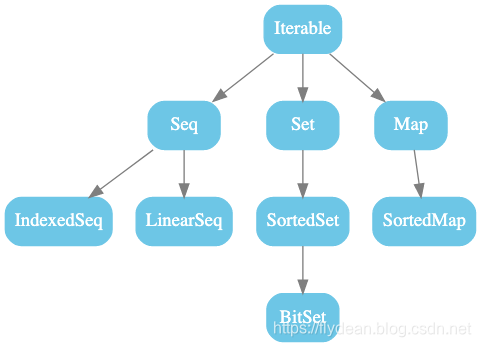
我们看下这三个包的层次结构:
scala.collection的层次结构如下:
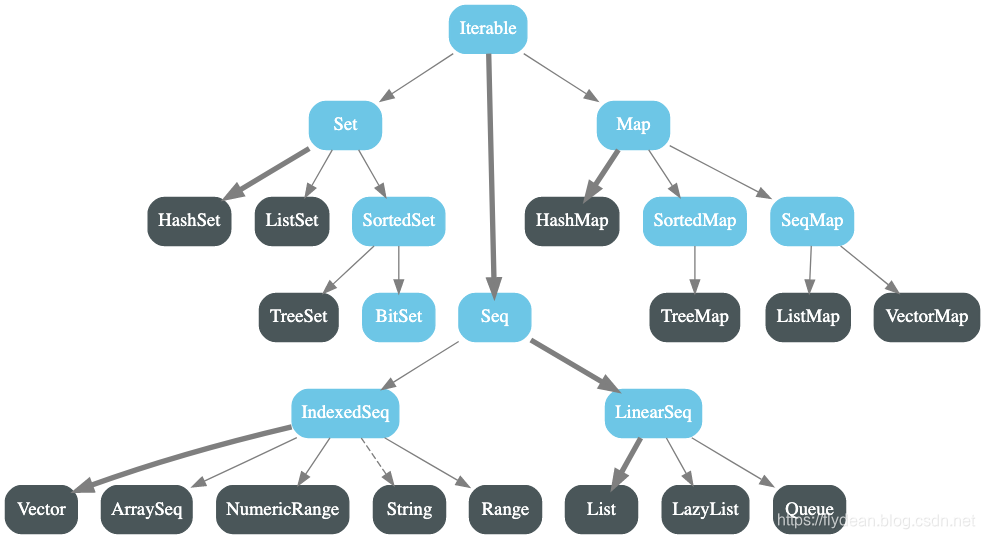
scala.collection.immutable的层次结构如下:
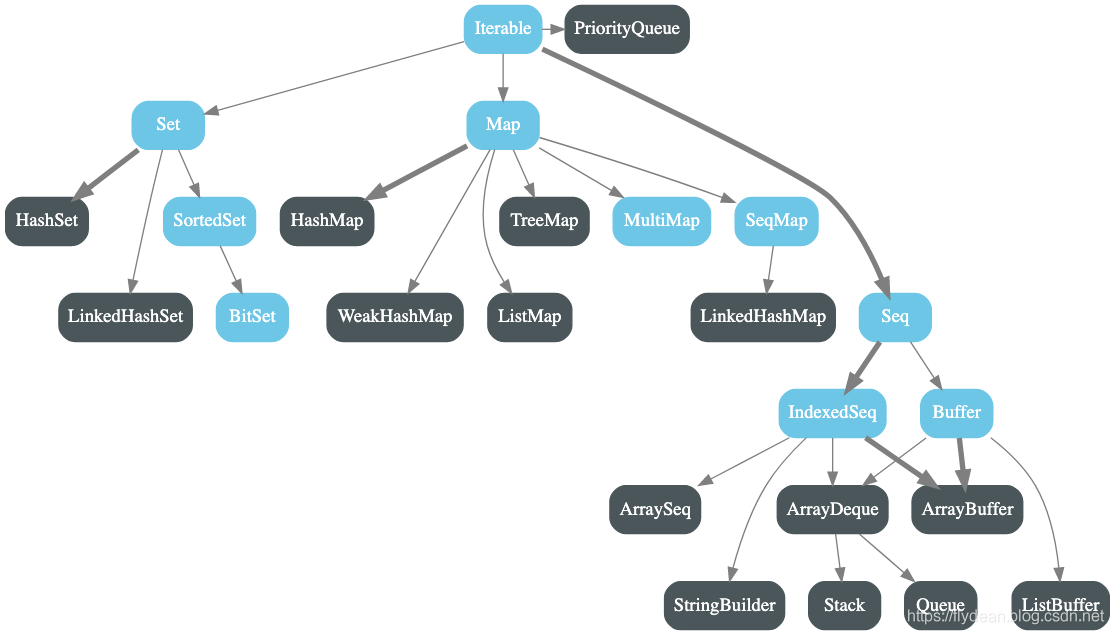
scala.collection.mutable的层次结构如下:
接下来我们通过两个HashMap的例子来看一下immutable和mutable的使用。
mutable HashMap
我们看下怎么定义一个mutable hashMap :
  import scala.collection.mutable.HashMap

  println("\nStep 1: How to initialize a HashMap with 3 elements")

  val hashMap1: HashMap[String, String] = HashMap(("PD","Plain Donut"),("SD","Strawberry Donut"),("CD","Chocolate Donut"))

  println(s"Elements of hashMap1 = $hashMap1")

  println("\nStep 2: How to initialize HashMap using key -> value notation")

  val hashMap2: HashMap[String, String] = HashMap("VD"-> "Vanilla Donut", "GD" -> "Glazed Donut")

  println(s"Elements of hashMap2 = $hashMap2")
怎么取出HashMap中的值:
  println("\nStep 3: How to access elements of HashMap by specific key")

  println(s"Element by key VD = ${hashMap2("VD")}")

  println(s"Element by key GD = ${hashMap2("GD")}")
怎么改变hashMap:
  println("\nStep 4: How to add elements to HashMap using +=")

  hashMap1 += ("KD" -> "Krispy Kreme Donut")

  println(s"Element in hashMap1 = $hashMap1")

  println("\nStep 5: How to add elements from a HashMap to an existing HashMap using ++=")

  hashMap1 ++= hashMap2

  println(s"Elements in hashMap1 = $hashMap1")

  println("\nStep 6: How to remove key and its value from HashMap using -=")

  hashMap1 -= "CD"

  println(s"HashMap without the key CD and its value = $hashMap1")
怎么定义一个空的HashMap:
  println("\nStep 7: How to initialize an empty HashMap")

  val emptyMap: HashMap[String,String] = HashMap.empty[String,String]

  println(s"Empty HashMap = $emptyMap")
immutable HashMap
看一下怎么定义一个immutable HashMap:
  import scala.collection.immutable.HashMap

  println("Step 1: How to initialize a HashMap with 3 elements using Tuples of key and value")

  val hashMap1: HashMap[String, String] = HashMap(("PD","Plain Donut"),("SD","Strawberry Donut"),("CD","Chocolate Donut"))

  println(s"Elements of hashMap1 = $hashMap1")

  println("\nStep 2: How to initialize HashMap using key -> value notation")

  val hashMap2: HashMap[String, String] = HashMap("VD"-> "Vanilla Donut", "GD" -> "Glazed Donut")

  println(s"Elements of hashMap2 = $hashMap2")
获取HashMap中的值:
  println("\nStep 3: How to access elements in HashMap by specific key")

  println(s"Element by key VD = ${hashMap2("VD")}")

  println(s"Element by key GD = ${hashMap2("GD")}")
我们再看一下怎么对集合进行操作,注意因为是immutable HashMap所以所有的操作都会返回一个新的HashMap:
  println("\nStep 4: How to add elements to HashMap using +")

  val hashMap3: HashMap[String, String] = hashMap1 + ("KD" -> "Krispy Kreme Donut")

  println(s"Element in hashMap3 = $hashMap3")

  println("\nStep 5: How to add two HashMaps together using ++")

  val hashMap4: Map[String, String] = hashMap1 ++ hashMap2

  println(s"Elements in hashMap4 = $hashMap4")

  println("\nStep 6: How to remove key and its value from HashMap using -")

  val hashMap5: Map[String, String] = hashMap4 - ("CD")

  println(s"HashMap without the key CD and its value = $hashMap5")
更多教程请参考 flydean的博客
Scala教程之:可变和不变集合的更多相关文章
- Scala教程之:深入理解协变和逆变
文章目录 函数的参数和返回值 可变类型的变异 在之前的文章中我们简单的介绍过scala中的协变和逆变,我们使用+ 来表示协变类型:使用-表示逆变类型:非转化类型不需要添加标记. 假如我们定义一个cla ...
- Scala教程之:Future和Promise
文章目录 定义返回Future的方法 阻塞方式获取Future的值 非阻塞方式获取Future的值 Future链 flatmap VS map Future.sequence() VS Future ...
- Scala教程之:函数式的Scala
文章目录 高阶函数 强制转换方法为函数 方法嵌套 多参数列表 样例类 比较 拷贝 模式匹配 密封类 单例对象 伴生对象 正则表达式模式 For表达式 Scala是一门函数式语言,接下来我们会讲一下几个 ...
- Scala教程之:面向对象的scala
文章目录 面向对象的scala Unified Types Classes Traits 面向对象的scala 我们知道Scala是一种JVM语言,可以合java无缝衔接,这也就大大的扩展了scala ...
- scala教程之:可见性规则
文章目录 public Protected private scoped private 和 scoped protected 和java很类似,scala也有自己的可见性规则,不同的是scala只有 ...
- Scala教程之:Either
在之前的文章中我们提到了Option,scala中Option表示存在0或者1个元素,如果在处理异常的时候Option就会有很大的限制,因为Option如果返回None,那么我并不知道具体的异常到底是 ...
- Scala教程之:PartialFunction
Scala中有一个很有用的traits叫PartialFunction,我看了下别人的翻译叫做偏函数,但是我觉得部分函数更加确切. 那么PartialFunction是做什么用的呢?简单点说Parti ...
- Scala教程之:Enumeration
Enumeration应该算是程序语言里面比较通用的一个类型,在scala中也存在这样的类型, 我们看下Enumeration的定义: abstract class Enumeration (init ...
- Scala教程之:Option-Some-None
文章目录 Option和Some Option和None Option和模式匹配 在java 8中,为了避免NullPointerException,引入了Option,在Scala中也有同样的用法. ...
随机推荐
- k8s + docker + Jenkins使用Pipeline部署SpringBoot项目时Jenkins错误集锦
背景 系统版本:CentOS7 Jenkins版本:2.222.1 maven版本:apache-maven-3.6.3 Java版本:jdk1.8.0_231 Git版本:1.8.3.1 docke ...
- CodeForces 6C(贪心 + 模拟)
题目链接 思路如下 贪心的思想,⚠️女士优先的策略,当它们吃掉之前的物品所用的时间相同的时候,此时女士先开始 继续吃 题解如下 #include<iostream> using names ...
- PTA数据结构与算法题目集(中文) 7-32
PTA数据结构与算法题目集(中文) 7-32 7-32 哥尼斯堡的“七桥问题” (25 分) 哥尼斯堡是位于普累格河上的一座城市,它包含两个岛屿及连接它们的七座桥,如下图所示. 可否走过这样的七 ...
- c期末笔记(2)
1.定义数组 1.1.a[3][2] = [1,2,3,4,5,6],代码是定义一个三行两列的二维数组.在数组声明和初始化时,如果用户定义的元素数量超过用户规定的元素数量,以语法错误报错.(如:cah ...
- Docker基础修炼2--Docker镜像原理及常用命令
通过前文的讲解对Docker有了基本认识之后,我们开始进入实战操作,本文先演示Docker三要素之镜像原理和相关命令. 本文的演示环境仍然沿用上一篇文章在本地Centos7中安装的环境,如果你本地没有 ...
- grub2手动引导linux
仅需要三个命令 1.set root=(hd*,gpt*) hd*为系统所在磁盘,从0开始: gpt为磁盘分区表格式,*为第几分区,mbr分区表为msdos*: 2.linux /boot/vmlin ...
- MODIS系列之NDVI(MOD13Q1)三:.jdk文件配置+MRT安装
MRT(MODIS Reprojection Tool)简介: MODIS的全称为中分辨率成像光谱仪(Moderate-Resolution Imaging Spectroradiometer),是搭 ...
- nghttp2 交叉编译
touch run.sh chmod 755 run.sh mkdir build cd build ../run.sh run.sh #!/bin/bash #cd build ../configu ...
- hibernate.current_session_context_class 比较权威的解释
hibernate.current_session_context_class 博客分类: hibernate HibernateSpring多线程配置管理thread 遇到过的问题: 情景1: 在 ...
- [转] [知乎] Roguelite 和 Roguelike 的区别是什么?
编者按 本文译自 Ethan Hawkes 一篇介绍 rogue-lite 概念的文章,已获作者授权,英文原文见这里,译文首发于这里.注意本文写于 2013 年,正是 roguelite 类型的独立游 ...