
SpringMVC源码解读 - RequestMapping注解实现解读 - RequestCondition体系
一般我们开发时,使用最多的还是@RequestMapping注解方式.
@RequestMapping(value = "/", param = "role=guest", consumes = "!application/json")

public void myHtmlService() {

    // ...

}
台前的是RequestMapping ,正经干活的却是RequestCondition,根据配置的不同条件匹配request.
@RequestMapping注解,请看<SpringMVC源码解读 - HandlerMapping - RequestMappingHandlerMapping初始化>
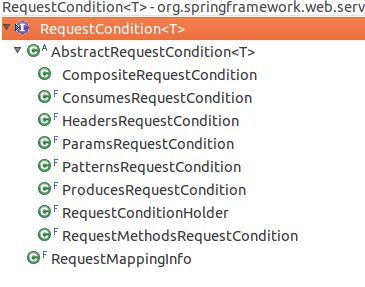
典型的接口+模板.一个接口ReqeustCondition,一个抽象类,定义基础,然后n多的具体实现.
实现中可以分为3类:基础实现,外观类和容器.
其中CompositeRequestCondition和RequestMappingInfo本身不带任何的匹配条件,只是用于包装其他的RequestCondition进行匹配
基础实现:
consumes对应request的提交内容类型content type,如application/json, text/html
headers 对应http request 的请求头
params对应http request parameter
Patterns对应url,就是注解value中的配置
produces指定返回的内容类型的content type,仅当request请求头中的(Accept)类型中包含该指定类型才返回
requestMethods对应 http method,如GET,POST,PUT,DELETE等
外观类:
RequestConditionHolder,用于不知道具体是RequestCondition哪个子类时.自定义的条件,使用的这个进行封装
容器:
CompositeRequestCondition封装基础实现,具体的匹配都委托给基础实现类.
RequestMappingInfo,对应@RequestMapping注解,一一对应注解内容与基础实现,使用时一一委托.
先来看看RequestCondition的接口定义
 package org.springframework.web.servlet.mvc.condition;

     /**

      * The contract for request conditions.

      */

     public interface RequestCondition<T> {

         /**

          * 将不同的筛选条件合并

          */

         T combine(T other);

         /**

          * 根据request查找匹配到的筛选条件

          */

         T getMatchingCondition(HttpServletRequest request);

         /**

          * 不同筛选条件比较,用于排序

          */

         int compareTo(T other, HttpServletRequest request);

     }

 }
老规矩,接下来得上抽象类AbstractRequestCondition
AbstractRequestCondition做的事不多,覆写equals,hashCode,toString.实现equals,hashCode,toString时预留模板方法getContent();实现toString时预留模板方法getToStringInfix().
 package org.springframework.web.servlet.mvc.condition;

 /**

  * A base class for {@link RequestCondition} types providing implementations of

  * {@link #equals(Object)}, {@link #hashCode()}, and {@link #toString()}.

  *

  * @author Rossen Stoyanchev

  * @since 3.1

  */

 public abstract class AbstractRequestCondition<T extends AbstractRequestCondition<T>> implements RequestCondition<T> {

     /**

      * Return the discrete items a request condition is composed of.

      * For example URL patterns, HTTP request methods, param expressions, etc.

      * @return a collection of objects, never {@code null}

      */

     protected abstract Collection<?> getContent();

     @Override

     public boolean equals(Object o) {

         if (this == o) {

             return true;

         }

         if (o != null && getClass().equals(o.getClass())) {

             AbstractRequestCondition<?> other = (AbstractRequestCondition<?>) o;

             return getContent().equals(other.getContent());

         }

         return false;

     }

     @Override

     public int hashCode() {

         return getContent().hashCode();

     }

     @Override

     public String toString() {

         StringBuilder builder = new StringBuilder("[");

         for (Iterator<?> iterator = getContent().iterator(); iterator.hasNext();) {

             Object expression = iterator.next();

             builder.append(expression.toString());

             if (iterator.hasNext()) {

                 builder.append(getToStringInfix());

             }

         }

         builder.append("]");

         return builder.toString();

     }

     /**

      * The notation to use when printing discrete items of content.

      * For example " || " for URL patterns or " && " for param expressions.

      */

     protected abstract String getToStringInfix();

 }
接下来得看具体实现了,捏不到软柿子,用ParamsRequestCondition简单说明下子类吧
// ParamsRequestCondition
 // 保存解析出来的param匹配条件

 private final Set<ParamExpression> expressions;
ParamExpression其实很简单,看父类AbstractNameValueExpression很清楚
// AbstractNameValueExpression
 package org.springframework.web.servlet.mvc.condition;

 abstract class AbstractNameValueExpression<T> implements NameValueExpression<T> {

     // 参数的名字

     protected final String name;

     // 参数的值

     protected final T value;

     // 参数的匹配规则,是= 还是!=

     protected final boolean isNegated;

 }
到这里我们就可以看懂,使用ParamExpression保存param参数,这样可以任意多个.
combine的实现也就水到渠成,直接把expression拼接到一个集合里就行:
 package org.springframework.web.servlet.mvc.condition;

 public final class ParamsRequestCondition extends AbstractRequestCondition<ParamsRequestCondition> {

     /**

      * Returns a new instance with the union of the param expressions

      * from "this" and the "other" instance.

      */

     public ParamsRequestCondition combine(ParamsRequestCondition other) {

         Set<ParamExpression> set = new LinkedHashSet<ParamExpression>(this.expressions);

         set.addAll(other.expressions);

         return new ParamsRequestCondition(set);

     }

 }
getMatchingCondition时,只要有一个不符合就判定条件不匹配
 package org.springframework.web.servlet.mvc.condition;

 public final class ParamsRequestCondition extends AbstractRequestCondition<ParamsRequestCondition> {

     /**

      * Returns "this" instance if the request matches all param expressions;

      * or {@code null} otherwise.

      */

     public ParamsRequestCondition getMatchingCondition(HttpServletRequest request) {

         for (ParamExpression expression : expressions) {

             if (!expression.match(request)) {

                 return null;

             }

         }

         return this;

     }

 }
这边的match方法比较有意思,可以看下
 package org.springframework.web.servlet.mvc.condition;

 abstract class AbstractNameValueExpression<T> implements NameValueExpression<T> {

     public final boolean match(HttpServletRequest request) {

         boolean isMatch;

         if (this.value != null) {

             isMatch = matchValue(request);

         }

         else { // 没有value时,只要匹配name就好

             isMatch = matchName(request);

         }

         return isNegated ? !isMatch : isMatch; // 这边需要看仔细,=与!=的处理

     }

     protected abstract boolean matchName(HttpServletRequest request);

     protected abstract boolean matchValue(HttpServletRequest request);

 }
ParamExpression中给出matchName与matchValue的实现.
ParamExpression这里又是接口+抽象实现+模板方法设计模式,偷个懒,暂时不去关心各层抽象的什么.
compareTo根据匹配条件的多少来判定顺序
// ParamsRequestCondition
     public int compareTo(ParamsRequestCondition other, HttpServletRequest request) {

         return other.expressions.size() - this.expressions.size();

     }
记得还留有两个模板方法
getContent直接返回记录param的expressions
getToStringInfix则使用&&
// ParamsRequestCondition
     @Override

     protected Collection<ParamExpression> getContent() {

         return expressions;

     }

     @Override

     protected String getToStringInfix() {

         return " && ";

     }
再看看是如何解析param的
// ParamsRequestCondition
     /**

      * Create a new instance from the given param expressions.

      * @param params expressions with syntax defined in {@link RequestMapping#params()};

      *     if 0, the condition will match to every request.

      */

     public ParamsRequestCondition(String... params) {

         this(parseExpressions(params));

     }

     private static Collection<ParamExpression> parseExpressions(String... params) {

         Set<ParamExpression> expressions = new LinkedHashSet<ParamExpression>();

         if (params != null) {

             for (String param : params) {

                 expressions.add(new ParamExpression(param));

             }

         }

         return expressions;

     }
核心的代码还是在AbstractNameValueExpression
// AbstractNameValueExpression
逻辑不复杂,代码看着有点烦,是不是应该听Martin Fowler在<重构>中的建议,来个extract method?
     AbstractNameValueExpression(String expression) {

         int separator = expression.indexOf('=');

         if (separator == -1) {

             this.isNegated = expression.startsWith("!");

             this.name = isNegated ? expression.substring(1) : expression;

             this.value = null;

         }

         else {

             this.isNegated = (separator > 0) && (expression.charAt(separator - 1) == '!');

             this.name = isNegated ? expression.substring(0, separator - 1) : expression.substring(0, separator);

             this.value = parseValue(expression.substring(separator + 1));

         }

     }
RequestCondition的解读未完,待续:
SpringMVC源码解读 - RequestMapping注解实现解读 - ConsumesRequestCondition
SpringMVC源码解读 - RequestMapping注解实现解读 - RequestMappingInfo
SpringMVC源码解读 - RequestMapping注解实现解读 - RequestCondition体系的更多相关文章
- SpringMVC源码解读 - RequestMapping注解实现解读 - RequestMappingInfo
使用@RequestMapping注解时,配置的信息最后都设置到了RequestMappingInfo中. RequestMappingInfo封装了PatternsRequestCondition, ...
- SpringMVC源码解读 - RequestMapping注解实现解读
SpringMVC源码解读 - RequestMapping注解实现解读 - RequestCondition体系 https://www.cnblogs.com/leftthen/p/520840 ...
- SpringMVC源码解读 - RequestMapping注解实现解读 - ConsumesRequestCondition
consumes 指定处理请求的提交内容类型(media-Type),例如application/json, text/html. 所以这边的ConsumesRequestCondition就是通过 ...
- SpringMVC源码阅读系列汇总
1.前言 1.1 导入 SpringMVC是基于Servlet和Spring框架设计的Web框架,做JavaWeb的同学应该都知道 本文基于Spring4.3.7源码分析,(不要被图片欺骗了,手动滑稽 ...
- SpringMVC源码解读 - HandlerMapping
SpringMVC在请求到handler处理器的分发这步是通过HandlerMapping模块解决的.handlerMapping 还处理拦截器. 先看看HandlerMapping的继承树吧 可以大 ...
- SpringMVC 源码深度解析<context:component-scan>(扫描和注冊的注解Bean)
我们在SpringMVC开发项目中,有的用注解和XML配置Bean,这两种都各有自己的优势,数据源配置比較经经常使用XML配置.控制层依赖的service比較经经常使用注解等(在部署时比較不会改变的) ...
- 7、SpringMVC源码分析(2):分析HandlerAdapter.handle方法,了解handler方法的调用细节以及@ModelAttribute注解
从上一篇 SpringMVC源码分析(1) 中我们了解到在DispatcherServlet.doDispatch方法中会通过 mv = ha.handle(processedRequest, res ...
- SpringMVC源码情操陶冶-AnnotationDrivenBeanDefinitionParser注解解析器
mvc:annotation-driven节点的解析器,是springmvc的核心解析器 官方注释 Open Declaration org.springframework.web.servlet.c ...
- SpringMVC源码剖析5:消息转换器HttpMessageConverter与@ResponseBody注解
转自 SpringMVC关于json.xml自动转换的原理研究[附带源码分析] 本系列文章首发于我的个人博客:https://h2pl.github.io/ 欢迎阅览我的CSDN专栏:Spring源码 ...
随机推荐
- HTTP客户端之使用request方法向其他网站请求数据
在node中,可以很轻松的向任何网站发送请求并读取该网站的响应数据. var req=http.request(options,callback); options是一个字符串或者是对象.如果是字符串 ...
- setTimeout和setInterval的unref()和ref()用法
var testFunction=function(){ console.log("guoyansi"); } var timer=setInterval(testFunction ...
- SpringMVC传统风格控制器和基于注解的控制器
SpringMVC的DispatcherServlet 之前说过springMVC是使用Servlet作为控制器,就是这个用于调度的DispatcherServlet了.这个是servlet,可以根据 ...
- java软件设计模式——单例设计模式中的【饿汉式】与 【懒汉式】示例
以下为单例设计模式中的两种经典模式的代码示意: 单例设计模式(spring框架IOC,默认创建的对象都是单例的): 饿汉式: public class SingleClass { private Si ...
- B. T-primes
/* PROBLEMSSUBMITSTATUSSTANDINGSCUSTOM TEST B. T-primes time limit per test2 seconds memory limit pe ...
- 堆、栈、free
转自:http://codeup.org/archives/212 http://bbs.bccn.net/thread-82212-1-1.html http://www.cppblog.com/o ...
- thrift协议的服务进压力测试
Thrift vs Grpc内容如下链接 http://blog.csdn.net/dazheng/article/details/48830511 背景:Facebook 开发的远程服务调用框架 ...
- jquery UI 的 datapicker 中文汉化问题
这个问题自己上网上百度的了很多的方法都没有 具体一点的东西,好在自己没有放弃 从昨天到现在,自己 摸索了很久终于找到了汉化的方法了,希望可以帮助到像我这样刚入web门的小白. 废话不说了直接来干货吧! ...
- Dev的双击Gridview的DoubleClick
注意: 是GridView的Double而不是GridControlprivate void gridView1_DoubleClick(object sender, EventArgs e){ ...
- html 资源