
spring——AOP(静态代理、动态代理、AOP)
一、代理模式
代理模式的分类:
- 静态代理
- 动态代理
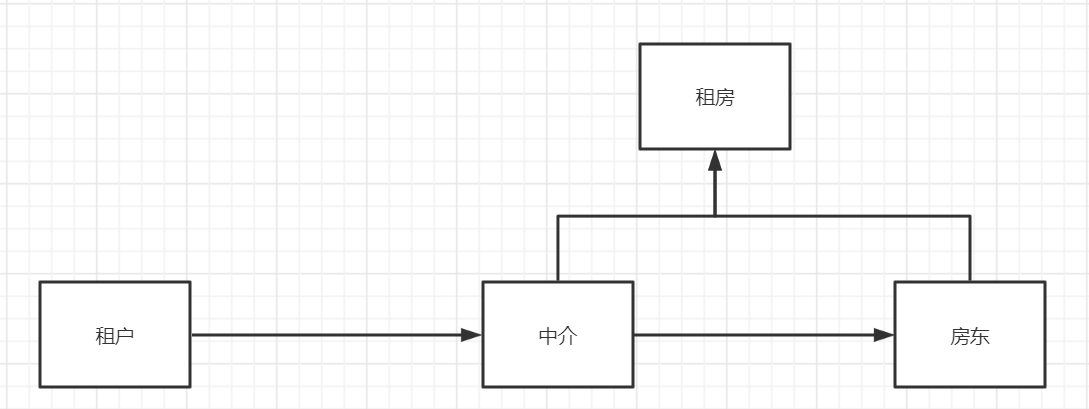
从租房子开始讲起:中介与房东有同一的目标在于租房
1.静态代理
静态代理角色分析:
抽象角色:一般使用接口或者抽象类来实现(这里为租房接口)
public interface Rent {

    void rent();

}
真实角色:被打理的角色(这里为房东)
public class HouseMaster implements Rent{

    public void rent() {

        System.out.println("房东租房啦!");

    }

    public static void main(String[] args) {

        HouseMaster houseMaster = new HouseMaster();

        Proxy proxy = new Proxy(houseMaster);

        proxy.rent();

    }

}
代理角色:代理真实角色,代理真实角色后,一般会做一些附属操作
public class Proxy {

    HouseMaster houseMaster;

    public Proxy() {

    }

    public Proxy(HouseMaster houseMaster) {

        this.houseMaster = houseMaster;

    }

    public void rent(){

        lookHouse();

        houseMaster.rent();

        sign();

    }

    public void lookHouse(){

        System.out.println("看房子");

    }

    public void sign(){

        System.out.println("签合同");

    }

}
客户:使用代理角色来进行一些操作
public static void main(String[] args) {

    HouseMaster houseMaster = new HouseMaster();

    Proxy proxy = new Proxy(houseMaster);

    proxy.rent();

}
优点:
(1).真实对象更加纯粹,不在关注一些琐碎的公共事务
(2).公共业务由代理对象完成,有利于公共业务的扩展和管理
缺点:多了代理对象也增加了代码量(所以后面出现了动态代理模式)
动态代理
角色分析:与静态代理相同
特点:动态代理的动态类是动态生成的,不是我们直接写好的
分类:
(1).基于接口的动态代理——JDK动态代理(重点理解)
(2).基于类的动态代理——cglib
(3).javasist
核心api:
(1).Proxy:
Proxy提供了创建动态代理类和实例的静态方法,它也是由这些方法创建的所有动态代理类的超类。newProxyInstance(ClassLoader loader, 类<?>[] interfaces, InvocationHandler h):返回指定接口的代理类的实例,该接口将方法调用分派给指定的调用处理程序。
参数:
(1).loader类加载器
(2).代理对象的接口
(3).InvocationHandler的实体,因为一般是调用类继承了InvocationHandler,所以许多时候就是this
(2).InvocatioinHandler:
InvocationHandler是由代理实例的调用处理程序实现的接口 。每个代理实例都有一个关联的调用处理程序(也就是一个代理类)。 当在代理实例上调用方法时,方法调用将被编码并分派到其调用处理程序的
invoke方法。invoke
参数:
(1).proxy:调用该方法的代理实例
(2).method:所述方法对应于调用代理实例上的接口方法的实例
(3).args:参数,如果没有则为null
使用:
构建动态代理对象(这个代理对象可以用于同一个接口的多个实现类)
public class ProxyInvocationHandler implements InvocationHandler {

    //代理对象

    Object target;

    //设定动态代理的对象

    public void setTarget(Object target){

        this.target = target;

    }

    public Object getProxy(){

        return Proxy.newProxyInstance(target.getClass().getClassLoader(),target.getClass().getInterfaces(),this);

    }

    public Object invoke(Object proxy, Method method, Object[] args) throws Throwable {

        Object res = method.invoke(target, args);

        return res;

    }

}
测试
public class service {

    public static void main(String[] args) throws Throwable {

        ProxyInvocationHandler handler = new ProxyInvocationHandler();

        handler.setTarget(new HostImpl());

        Host proxy = (Host) handler.getProxy();

        proxy.rent();

    }

}
解释:从构建动态代理对象的过程查看
(1).设定动态代理对象:setTarget()
(2).获得动态代理getProxy()
(3).使用动态代理,表面上看是调用了proxy.rent,本质上还是调用handler实现的invoke函数,注意该函数的第一个参数proxy用处不大
优点:在静态代理的基础上,静态代理是代理的是一个类;而动态代理是代理一个接口(多个类)
二、AOP
AOP:面向切面编程,通过预编译方式和运行期动态代理实现 程序功能的统一维护的一种技术
导入织入包
两种方式:
使用api接口
(1).MethodBeforeAdvice:方法的前置增强
(2).AfterReturningAdvice:方法的后置增强
环境搭建:
//接口

public interface service {

    void say();

}

//实例

public class serviceImpl implements service {

    public void say() {

        System.out.println("say some thins");

    }

}

//前置增强

public class beforeSay implements MethodBeforeAdvice {

    public void before(Method method, Object[] objects, Object o) throws Throwable {

        System.out.println("Good Morning!");

    }

}

//后置增强

public class afterSay implements AfterReturningAdvice {

    public void afterReturning(Object o, Method method, Object[] objects, Object o1) throws Throwable {

        System.out.println("后置增强");

    }

}
配置文件:
<?xml version="1.0" encoding="UTF-8"?>

<beans xmlns="http://www.springframework.org/schema/beans"

       xmlns:xsi="http://www.w3.org/2001/XMLSchema-instance" xmlns:aop="http://www.springframework.org/schema/aop"

       xsi:schemaLocation="http://www.springframework.org/schema/beans

        https://www.springframework.org/schema/beans/spring-beans.xsd

        http://www.springframework.org/schema/aop

         https://www.springframework.org/schema/aop/spring-aop.xsd">

    <bean id="serviceImpl" class="com.guan.dao.serviceImpl"/>

    <bean id="beforeSay" class="com.guan.dao.beforeSay"/>

    <bean id="afterSay" class="com.guan.dao.afterSay"/>

    <aop:config>

<!--        choose pointCut-->

<!--        public method.(args)-->

        <aop:pointcut id="point" expression="execution(* com.guan.dao.service.*(..))"/>

        <aop:advisor advice-ref="beforeSay" pointcut-ref="point"/>

        <aop:advisor advice-ref="afterSay" pointcut-ref="point"/>

    </aop:config>

</beans>
注:
(1).
<aop:point>设定切入点(2).
<aop:advisor>设定环绕对象(主要设定前置函数,后置函数及其目标的切入点)(3).
execution(* com.guan.dao.service.*(..))execution(* com.guan.dao.*.*(..)):所有修饰符(public,private) com.guan.dao包下的所有类下的所有方法的所有参数测试:
public static void main(String[] args) {

    ApplicationContext context = new ClassPathXmlApplicationContext("applicationContext.xml");

    service bean = context.getBean("serviceImpl", service.class);

    bean.say();

}
注:这里返回的必须用接口类型(service),而不能用serviceImpl
使用切面
环境搭建:package com.guan.dao; public class Advice { public void before(){
System.out.println("before");
} public void after(){
System.out.println("after");
} }
配置文件:
<?xml version="1.0" encoding="UTF-8"?>

<beans xmlns="http://www.springframework.org/schema/beans"

       xmlns:xsi="http://www.w3.org/2001/XMLSchema-instance" xmlns:aop="http://www.springframework.org/schema/aop"

       xsi:schemaLocation="http://www.springframework.org/schema/beans

        https://www.springframework.org/schema/beans/spring-beans.xsd

        http://www.springframework.org/schema/aop

         https://www.springframework.org/schema/aop/spring-aop.xsd">

    <bean id="advice" class="com.guan.dao.Advice"></bean>

    <bean id="serviceImpl" class="com.guan.dao.serviceImpl"></bean>

    <aop:config>

        <aop:aspect ref="advice">

            <aop:pointcut id="point" expression="execution(* com.guan.dao.serviceImpl.*(..))"/>

<!--            切面-->

            <aop:before method="before" pointcut-ref="point"></aop:before>

            <aop:after method="after" pointcut-ref="point"></aop:after>

        </aop:aspect>

    </aop:config>

</beans>
测试类:
public static void main(String[] args) {

    ApplicationContext context = new ClassPathXmlApplicationContext("applicationContext.xml");

    service bean = context.getBean("serviceImpl", service.class);

    bean.say();

}

//同上
注:
(1).注意
<aop:aspect>的ref是相关的构成切面的类(2).在这个类的内部还是需要切入点的
使用api接口和使用切面比较
(1).使用api接口需要记录相关的文档,但使用切面则可以在xml文件中直接配置
(2).使用api接口需要多个类继承相关的接口,而使用切面只需要一个类承载相关的方法即可
(3).使用api接口由于有对切入点的结果关联,所以和上下文的关联更密切;使用切面则切面的函数与切入点的上下文关系是割裂的
使用注解使用AOP
相关注解:
(1).@Aspect:标注这个类是一个切面
(2).@Before("切入点")
(3).@After("切入点后")
(4).@Around:功能复杂,需要相关的方法使用ProceedingJoinPoint类型的参数,且这个参数可以直接调用方法
(5).@EnableAspectJAutoProxy:用于注解开启注解(不用xml配置
<aop:aspectj-autoproxy/>)注意:切入点都要用execution表达式
环境搭建:
@Aspect

public class AnnotationCutPoint {

    @Before("execution(* com.guan.dao.*.*(..))")

    public void before(){

        System.out.println("before");

    }

    @After("execution(* com.guan.dao.*.*(..))")

    public void after(){

        System.out.println("after");

    }

    @Around("execution(* com.guan.dao.*.*(..))")

    public void around(ProceedingJoinPoint joinPoint) throws Throwable {

        System.out.println("around1");

        joinPoint.proceed();

        System.out.println("around2");

    }

}
注意:先要有切面@Aspect,才有切点
<?xml version="1.0" encoding="UTF-8"?>

<beans xmlns="http://www.springframework.org/schema/beans"

       xmlns:xsi="http://www.w3.org/2001/XMLSchema-instance" xmlns:aop="http://www.springframework.org/schema/aop"

       xsi:schemaLocation="http://www.springframework.org/schema/beans

        https://www.springframework.org/schema/beans/spring-beans.xsd

        http://www.springframework.org/schema/aop

         https://www.springframework.org/schema/aop/spring-aop.xsd">

    <bean id="serviceImpl" class="com.guan.dao.serviceImpl"></bean>

    <bean id="annotation" class="com.guan.dao.AnnotationCutPoint"></bean>

    <aop:aspectj-autoproxy/>

</beans>
测试:
public class serviceImpl implements service {

    public void say() {

        System.out.println("say some thins");

    }

    public static void main(String[] args) {

        ApplicationContext context = new ClassPathXmlApplicationContext("applicationContext.xml");

        service bean = context.getBean("serviceImpl", service.class);

        bean.say();

    }

}
注:spring的AOP默认是通过jdk生成,但也可以进行修改
<!--    jdk,默认-->

    <aop:aspectj-autoproxy proxy-target-class="false"/>

<!--    cglib-->

    <aop:aspectj-autoproxy proxy-target-class="true"/>
spring——AOP(静态代理、动态代理、AOP)的更多相关文章
- 【spring基础】AOP概念与动态代理详解
一.代理模式 代理模式的英文叫做Proxy或Surrogate,中文都可译为”代理“,所谓代理,就是一个人或者一个机构代表另一个人或者另一个机构采取行动.在一些情况下,一个客户不想或者不能够直接引用一 ...
- Spring AOP实现原理-动态代理
目录 代理模式 静态代理 动态代理 代理模式 我们知道,Spring AOP的主要作用就是不通过修改源代码的方式.将非核心功能代码织入来实现对方法的增强.那么Spring AOP的底层如何实现对方法的 ...
- Spring Boot实践——Spring AOP实现之动态代理
Spring AOP 介绍 AOP的介绍可以查看 Spring Boot实践——AOP实现 与AspectJ的静态代理不同,Spring AOP使用的动态代理,所谓的动态代理就是说AOP框架不会去修改 ...
- Spring AOP中的动态代理
0 前言 1 动态代理 1.1 JDK动态代理 1.2 CGLIB动态代理 1.2.1 CGLIB的代理用法 1.2.2 CGLIB的过滤功能 2 Spring AOP中的动态代理机制 2.1 ...
- 转:Spring AOP中的动态代理
原文链接:Spring AOP中的动态代理 0 前言 1 动态代理 1.1 JDK动态代理 1.2 CGLIB动态代理 1.2.1 CGLIB的代理用法 1.2.2 CGLIB的过滤功能 2 S ...
- spring---aop(4)---Spring AOP的CGLIB动态代理
写在前面 前面介绍了Spring AOP的JDK动态代理的过程,这一篇文章就要介绍下Spring AOP的Cglib代理过程. CGLib全称为Code Generation Library,是一个强 ...
- 【Spring Framework】Spring入门教程(五)AOP思想和动态代理
本文主要讲解内容如下: Spring的核心之一 - AOP思想 (1) 代理模式- 动态代理 ① JDK的动态代理 (Java官方) ② CGLIB 第三方代理 AOP概述 什么是AOP(面向切面编程 ...
- 转:AOP与JAVA动态代理
原文链接:AOP与JAVA动态代理 1.AOP的各种实现 AOP就是面向切面编程,我们可以从以下几个层面来实现AOP 在编译期修改源代码 在运行期字节码加载前修改字节码 在运行期字节码加载后动态创建代 ...
- AOP与JAVA动态代理
1.AOP的各种实现 AOP就是面向切面编程,我们可以从以下几个层面来实现AOP 在编译期修改源代码 在运行期字节码加载前修改字节码 在运行期字节码加载后动态创建代理类的字节码 2.AOP各种实现机制 ...
- 8、Spring教程之静态代理/动态代理
为什么要学习代理模式,因为AOP的底层机制就是动态代理! 代理模式: 静态代理 动态代理 学习aop之前 , 我们要先了解一下代理模式! 静态代理 静态代理角色分析 抽象角色 : 一般使用接口或者抽象 ...
随机推荐
- Hadoop启动错误——ERROR: Attempting to operate on hdfs namenode as root but there is no HDFS_NAMENODE_USER defined. Aborting operation.
错误如下所示; [root@localhost sbin]# start-all.sh Starting namenodes on [192.168.71.129] ERROR: Attempting ...
- 框架5--nginx安装部署 上(web服务)
目录 框架5--nginx安装部署(web服务) 1.练习 2.昨日问题 3.今日内容 4.什么是web服务 5.web服务器软件 6.部署Nginx 7.平滑增加Nginx模块 8.Nginx的命令 ...
- Linux源码编译安装php7.2
以下简单的介绍下如何源码安装PHP,对于版本不一定是7.2,也可以是7.3,当然方法都是换汤不换药的,核心东西不变. 一.下载PHP源码 需要到指定的路径下载源码,执行下面的命令 wget http: ...
- 五、MyBatis缓存初体验
缓存就是内存中的数据,常常来自对数据库查询结果的保存,使用缓存, 我们可以避免频繁的与数据库进行交互, 进而提高响应速度. 一级缓存初体验(session,默认打开) 同一查询执行两次以上:selec ...
- Spring常用配置使用示例
上篇介绍了Spring配置的基本情况,本篇介绍Spring常用配置具体如何使用.关于基础的配置,比如Configuration之类的就不示例,主要示例相对用的比较多同时可能比较复杂的标签或属性. 1) ...
- WPF 自定义文本框输入法 IME 跟随光标
本文告诉大家在 WPF 写一个自定义的文本框,如何实现让输入法跟随光标 本文非小白向,本文适合想开发自定义的文本框,从底层开始开发的文本库的伙伴.在开始之前,期望了解了文本库开发的基础知识 本文实现的 ...
- C#的in/out关键字与协变逆变
C#提供了一组关键字in&out,在泛型接口和泛型委托中,若不使用关键字修饰类型参数T,则该类型参数是不可变的(即不允许协变/逆变转换),若使用in修饰类型参数T,保证"只将T用于输 ...
- 【转】k8s集群自定义clusterRole样例
对pod资源可以删除,进入终端执行命令,其他资源只读权限 apiVersion: rbac.authorization.k8s.io/v1 kind: ClusterRole metadata: an ...
- 企业没有大数据技术?选择这款BI工具
无论是网络时代的传统营销还是大数据营销,营销人员的任务之一就是找到目标客户,实现自己的营销目标.而我们说的大数据营销只不过是营销的工具发生了变化,营销的本质和目标是不变的. 就目前而言,现在的大数据 ...
- 用这个BI工具,不会代码的业务人员也能做数据分析!
随着企业的迅速发展,企业对数据分析的需求也在不断地凸显,但我们在实际的工作中经常会遇到这样尴尬的情形:擅长数据分析的人不懂业务,擅长业务的人又不了解数据分析.那么怎么让更懂业务逻辑.业务分析需求和痛点 ...