
JAVA并发(3)-ReentrantReadWriteLock的探索
1. 介绍
本文我们继续探究使用AQS的子类ReentrantReadWriteLock(读写锁)。老规矩,先贴一下类图
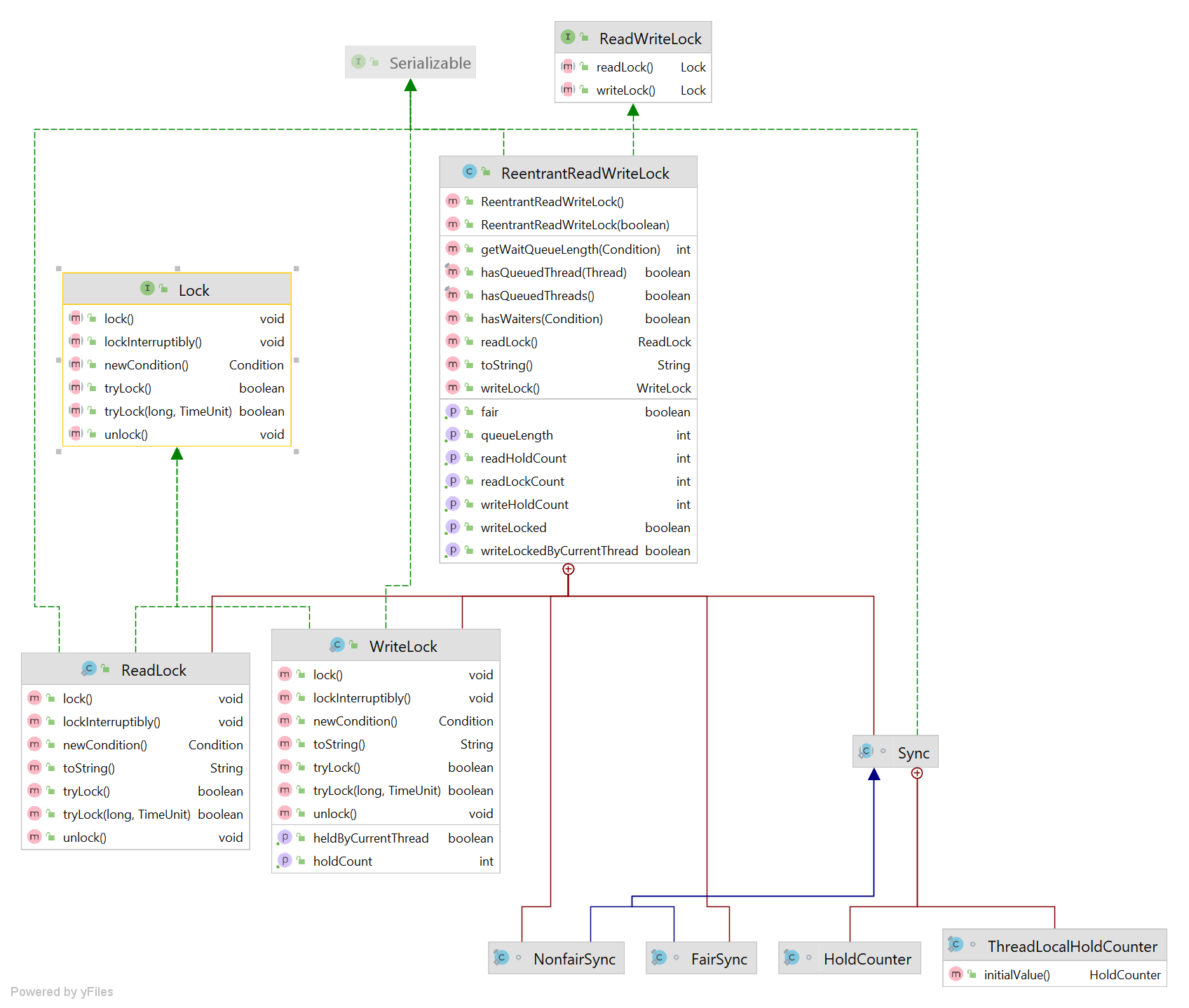
ReentrantReadWriteLock这个类包含读锁和写锁,这两种锁都存在是否公平的概念,这个后面会细讲。
此类跟ReentrantLock类似,有以下几种性质:
- 可选的公平性政策
- 重入,读锁和写锁同一个线程可以重复获取。写锁可以获取读锁,反之不能
- 锁的降级,重入还可以通过获取写锁,然后获取到读锁,通过释放写锁的方式,从而写锁降级为读锁。 然而,从读锁升级到写锁是不可能的。
- 获取读写锁期间,支持不可中断
2. 源码剖析
先讲几个必要的知识点,然后我们再对写锁的获取与释放,读锁的获取与释放进行讲解,中间穿插着讲公平与非公平的实现。
知识点一:
内部类Sync中,将AQS中的state(private volatile int state;长度是32位)逻辑分成了两份,高16位代表读锁持有的count,低16位代表写锁持有的count
Sync
    ...

        /*

         * Read vs write count extraction constants and functions.

         * Lock state is logically divided into two unsigned shorts:

         * The lower one representing the exclusive (writer) lock hold count,

         * and the upper the shared (reader) hold count.

         */

        static final int SHARED_SHIFT   = 16;

        static final int SHARED_UNIT    = (1 << SHARED_SHIFT);

        static final int MAX_COUNT      = (1 << SHARED_SHIFT) - 1;

        static final int EXCLUSIVE_MASK = (1 << SHARED_SHIFT) - 1;

        /** Returns the number of shared holds represented in count  */

        static int sharedCount(int c)    { return c >>> SHARED_SHIFT; }

        /** Returns the number of exclusive holds represented in count  */

        static int exclusiveCount(int c) { return c & EXCLUSIVE_MASK; }

   ...
This lock supports a maximum of 65535 recursive write locks and 65535 read locks. Attempts to exceed these limits result in Error throws from locking methods.(读锁与写锁都最大支持65535个)
知识点二:
HoldCounter的作用,一个计数器记录每个线程持有的读锁count。使用ThreadLocal维护。缓存在cachedHoldCounter
        static final class HoldCounter {

            int count = 0;

            // Use id, not reference, to avoid garbage retention

            final long tid = getThreadId(Thread.currentThread());

        }
使用ThreadLocal维护
        static final class ThreadLocalHoldCounter

            extends ThreadLocal<HoldCounter> {

            public HoldCounter initialValue() {

                return new HoldCounter();

            }

        }
维护最后一个使用HoldCounter的线程。简言之就是,假如A线程持有读锁,A线程重入获取读锁,在它之后没有其他线程获取读锁,那么当获取HoldCounter时,可以直接将cachedHoldCounter赋值给该线程,就不用从ThreadLocal中去查询了(ThreadLocal内部维持一个 Map ,想获取当前线程的值就需要去遍历查询),这样做可以节约时间。
private transient HoldCounter cachedHoldCounter;
当前线程持有的重入读锁count,当某个线程持有的count降至0,将被删除。
private transient ThreadLocalHoldCounter readHolds;
初始化在构造函数或readObject中
        Sync() {

            readHolds = new ThreadLocalHoldCounter();

            setState(getState()); // ensures visibility of readHolds

        }
        private void readObject(java.io.ObjectInputStream s)

            throws java.io.IOException, ClassNotFoundException {

            s.defaultReadObject();

            readHolds = new ThreadLocalHoldCounter();

            setState(0); // reset to unlocked state

        }
知识点三:
是否互斥 :
| 读操作 | 写操作 | |
|---|---|---|
| 读操作 | 否 | 是 |
| 写操作 | 是 | 是 |
只有读读不互斥,其余都互斥
获取到了写锁,也有资格获取读锁,反之不行.
知识点四
ReentranReadWriteLock,实现了ReadWriteLock接口。
public interface ReadWriteLock {

    /**

     * Returns the lock used for reading.

     *

     * @return the lock used for reading

     */

    Lock readLock();

    /**

     * Returns the lock used for writing.

     *

     * @return the lock used for writing

     */

    Lock writeLock();

}
ReadWriteLock维护着写锁和读锁。写锁是排他的,而读锁可以同时由多个线程持有。与互斥锁相比,读写锁的粒度更细
有了上面的知识,等会理解下面的源码就更容易了,故事从下面几个变量开始~
    private final ReentrantReadWriteLock rwl = new ReentrantReadWriteLock();

    private final Lock readLock = rwl.readLock();

    private final Lock writeLock = rwl.writeLock();
ReentrantReadWriteLock的构造器,默认是非公平模式
    /**

     * Creates a new {@code ReentrantReadWriteLock} with

     * default (nonfair) ordering properties.

     */

    public ReentrantReadWriteLock() {

        this(false);

    }

    /**

     * Creates a new {@code ReentrantReadWriteLock} with

     * the given fairness policy.

     *

     * @param fair {@code true} if this lock should use a fair ordering policy

     */

    public ReentrantReadWriteLock(boolean fair) {

        sync = fair ? new FairSync() : new NonfairSync();

        readerLock = new ReadLock(this);

        writerLock = new WriteLock(this);

    }
2.1 写锁
写锁,排他锁;一个线程获取了写锁,其他线程只能等待
2.1.1 写锁的获取
writeLock.lock();
java.util.concurrent.locks.ReentrantReadWriteLock.WriteLock#lock
public void lock() {

            sync.acquire(1);

        }
又来到了AQS的acquire方法
    public final void acquire(int arg) {

        if (!tryAcquire(arg) &&

            acquireQueued(addWaiter(Node.EXCLUSIVE), arg))

            selfInterrupt();

    }
我们看ReentrantReadWriteLock是如何实现tryAcquire的
 protected final boolean tryAcquire(int acquires) {

            /*

            * 对下面的条件做一个总述:

            * 1. 当读锁或者写锁的count不为零时,同时拥有者不是当前线程,返回false

            * 2. 当count达到饱和(超过最大的限制65535),返回false

            * 3. 如果上面的情况都不是,该线程有资格去获取锁,如果它是可重入获取锁或队列策略允许它。那么就更新state并且设置锁的拥有者

            */

            // 结合总述看下面的代码,很容易就看懂了

            Thread current = Thread.currentThread();

            int c = getState();

            int w = exclusiveCount(c);

            // 存在读锁或写锁

            if (c != 0) {

                // 情况分析: 1. w = 0, 表示已经获取了读锁(不管是自己还是其他线程),直接返回false

                // 2. 写锁不为零,且当前锁的拥有者不是当前线程,返回false

                if (w == 0 || current != getExclusiveOwnerThread())

                    return false;

                if (w + exclusiveCount(acquires) > MAX_COUNT)

                    throw new Error("Maximum lock count exceeded");

                // Reentrant acquire

                setState(c + acquires);

                return true;

            }

            // 不存在读锁或写锁被占用的情况

            if (writerShouldBlock() ||

                !compareAndSetState(c, c + acquires))

                return false;

            setExclusiveOwnerThread(current);

            return true;

        }
上面代码中的writerShouldBlock方法就是tryAcquire控制公平与否的关键,我们分别看看公平与非公平是如何实现的
2.1.1.1 写锁的获取(非公平)
默认情况下是非公平的
 static final class NonfairSync extends Sync {

        ...

        // 直接返回false

        final boolean writerShouldBlock() {

            return false;

        }

        ...
2.1.1.2 写锁的获取(公平)
    static final class FairSync extends Sync {

        ...

        final boolean writerShouldBlock() {

            return hasQueuedPredecessors();

        }

        ...
判断是否该线程前面还有其他线程的结点,上一节有讲到过。
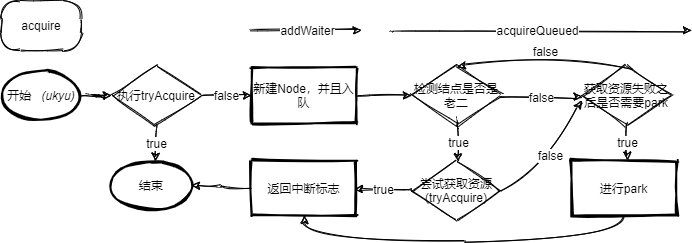
这里还贴一下,整个acquire的流程图
2.1.2 写锁的释放
下面的这段代码,记得一定放在finally中
writeLock.unlock();
        public void unlock() {

            sync.release(1);

        }
    public final boolean release(int arg) {

        if (tryRelease(arg)) {

            Node h = head;

            if (h != null && h.waitStatus != 0)

                unparkSuccessor(h);

            return true;

        }

        return false;

    }
又看到了熟悉的面孔,但我们主要看的还是tryRelease,
        protected final boolean tryRelease(int releases) {

            if (!isHeldExclusively())

                throw new IllegalMonitorStateException();

            int nextc = getState() - releases;

            boolean free = exclusiveCount(nextc) == 0;

            if (free)

                setExclusiveOwnerThread(null);

            setState(nextc);

            return free;

        }
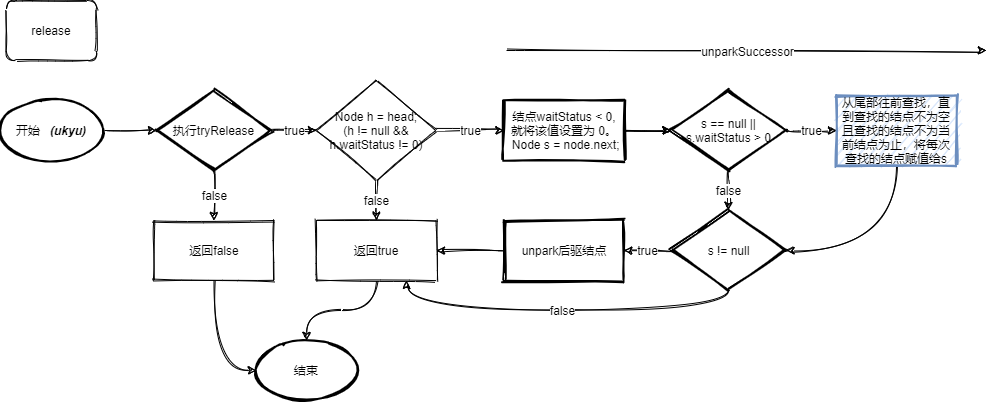
很简单,就贴一下release的流程图
2.2 读锁
读锁与读锁并不互斥,可以存在多个持有读锁的线程
2.2.1 读锁的获取
readLock.lock();
        public void lock() {

            sync.acquireShared(1);

        }
    public final void acquireShared(int arg) {

        if (tryAcquireShared(arg) < 0)

            doAcquireShared(arg);

    }
之前的文章还没有讲解过tryAcquireShared在子类如何实现的。看看如何实现的
  protected final int tryAcquireShared(int unused) {

            /*

             * 对下面的条件做一个总述:

             * 1. 如果写锁被其他线程持有,失败

             * 2. 否则,如果此线程有资格去获取写锁,首先查询是否需要阻塞(readerShouldBlock).如果不需要,就通过CAS更新state。

             *

             * 3. 如果上面两步都失败了,可能是当前线程没有资格(需要被阻塞),或CAS失败,或者count数量饱和了,然后执行fullTryAcquireShared进行重试

             */

            Thread current = Thread.currentThread();

            int c = getState();

            // 这里可以看出,若该线程持有写锁,同样也可以去获取读锁

            if (exclusiveCount(c) != 0 &&

                getExclusiveOwnerThread() != current)

                return -1;

            int r = sharedCount(c);

            // readerShouldBlock表示此线程是否被阻塞(后面细谈)

            // 多个线程执行compareAndSetState(c, c + SHARED_UNIT), 只有一个线程可以执行成功,其余线程去执行fullTryAcquireShared

            if (!readerShouldBlock() &&

                r < MAX_COUNT &&

                compareAndSetState(c, c + SHARED_UNIT)) {

                if (r == 0) {

                    // firstReader是第一个获取到读锁的线程

                    // firstReaderHoldCount是firstReader持有的count

                    firstReader = current;

                    firstReaderHoldCount = 1;

                } else if (firstReader == current) {

                    // 重入

                    firstReaderHoldCount++;

                } else {

                    // sync queue还存在其他线程持有读锁,且该线程不是第一个持有读锁的线程

                    // 结合上面的知识点二,理解下面的逻辑

                    HoldCounter rh = cachedHoldCounter;

                    if (rh == null || rh.tid != getThreadId(current))

                        cachedHoldCounter = rh = readHolds.get();

                    else if (rh.count == 0)

                        readHolds.set(rh);

                    rh.count++;

                }

                return 1;

            }

            // 到达这里的线程,1. 没有资格获取(需要阻塞) 2. CAS失败 3. 读锁count饱和

            return fullTryAcquireShared(current);

        }
Full version of acquire for reads, that handles CAS misses and reentrant reads not dealt with in tryAcquireShared.
        final int fullTryAcquireShared(Thread current) {

             // 主要逻辑跟上面的tryAcquireShared类似。tryAcquireShared的逻辑只有一个线程会成功CAS,

             // 其余的线程都进入fullTryAcquireShared,进行重试(代码不那么复杂)

            HoldCounter rh = null;

            for (;;) {

                int c = getState();

                if (exclusiveCount(c) != 0) {

                    if (getExclusiveOwnerThread() != current)

                        return -1;

                    // else we hold the exclusive lock; blocking here

                    // would cause deadlock.

                } else if (readerShouldBlock()) { // 需要被阻塞

                    // Make sure we're not acquiring read lock reentrantly

                    if (firstReader == current) {

                        // assert firstReaderHoldCount > 0;

                    } else {

                        // 此时, 如果该线程前面已经有线程获取了读锁,且当前线程持有的读锁count为0,从readHolds除去。

                        if (rh == null) {

                            rh = cachedHoldCounter;

                            if (rh == null || rh.tid != getThreadId(current)) {

                                rh = readHolds.get();

                                if (rh.count == 0)

                                    readHolds.remove();

                            }

                        }

                        // 这里表示该线程还是一个new reader, 还没有持有读锁

                        if (rh.count == 0)

                            return -1;

                    }

                }

                if (sharedCount(c) == MAX_COUNT)

                    throw new Error("Maximum lock count exceeded");

                // 这里只有一个线程会成功,若CAS失败,一直重试直到成功,或者读锁count饱和,或者需要被阻塞为止

                if (compareAndSetState(c, c + SHARED_UNIT)) {

                    if (sharedCount(c) == 0) {

                        firstReader = current;

                        firstReaderHoldCount = 1;

                    } else if (firstReader == current) {

                        firstReaderHoldCount++;

                    } else {

                        if (rh == null)

                            rh = cachedHoldCounter;

                        if (rh == null || rh.tid != getThreadId(current))

                            rh = readHolds.get();

                        else if (rh.count == 0)

                            readHolds.set(rh);

                        rh.count++;

                        cachedHoldCounter = rh; // cache for release

                    }

                    return 1;

                }

            }

        }
我们上面看到了readerShouldBlock,这个方法是控制读锁获取公平与否,下面我们分别看看在非公平与公平模式下的实现
2.2.1.1 读锁的获取(非公平)
    static final class NonfairSync extends Sync {

        ...

        final boolean readerShouldBlock() {

            /* As a heuristic to avoid indefinite writer starvation,

             * block if the thread that momentarily appears to be head

             * of queue, if one exists, is a waiting writer.  This is

             * only a probabilistic effect since a new reader will not

             * block if there is a waiting writer behind other enabled

             * readers that have not yet drained from the queue.

             */

            return apparentlyFirstQueuedIsExclusive();

        }

        ...

    }
判断sync queue的head的后继结点是否是写锁(独占模式)
    final boolean apparentlyFirstQueuedIsExclusive() {

        Node h, s;

        return (h = head) != null &&

            (s = h.next)  != null &&

            !s.isShared()         &&

            s.thread != null;

    }
上面的方法是,获取读锁时,避免导致写锁饥饿(indefinite writer starvation)的一个措施,下面我们对它进行详细的解释
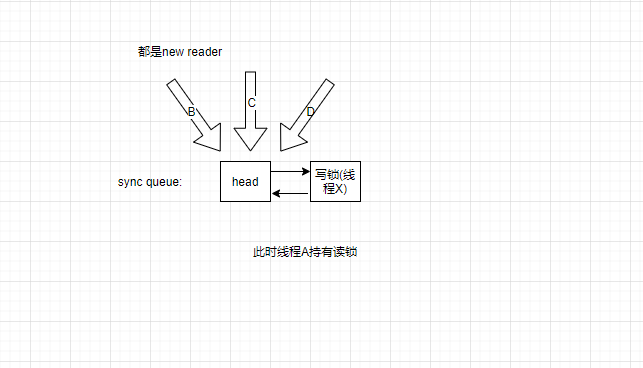
结合上面的图片,我们设想有一个这样的情况,写锁没有被获取,线程A获取到了读锁,此时另一个线程X想要获取写锁,但是写锁与读锁互斥,所以此时将线程X代表的node添加到sync queue中,等待读锁被释放,才有资格去获取写锁。
上面的情况 + 不存在判断sync queue的head的后继结点是否是写锁(apparentlyFirstQueuedIsExclusive)的方法时,我们看看会出什么问题
时刻一: 线程B、线程C,线程D是新建线程想要去获取读锁(new reader),此时因为不存在写锁被获取,所以线程B、线程C,线程D都会在fullTryAcquireShared中不断重试,最终都获得读锁
时刻二: 线程A释放,会执行unparkSuccessor,此时线程X被唤醒,但是执行到tryAcquire,又检测到读锁被持有(不管是自己还是是其他线程),线程X又被阻塞。线程B释放,还是会出现这种情况,只有等到最后一个读锁被释放,线程X才能获取到写锁。但是想想如果后面一连串的读锁,线程X不是早就被'饿死了'
apparentlyFirstQueuedIsExclusive,就可以防止这种'写锁饥饿'的情况发生。线程B、线程C,线程D只有被阻塞,等待线程X获取到写锁,才有机会获取读锁。
2.2.1.2 读锁的获取(公平)
    /**

     * Fair version of Sync

     */

    static final class FairSync extends Sync {

       ...

        final boolean readerShouldBlock() {

            return hasQueuedPredecessors();

        }

       ...

    }
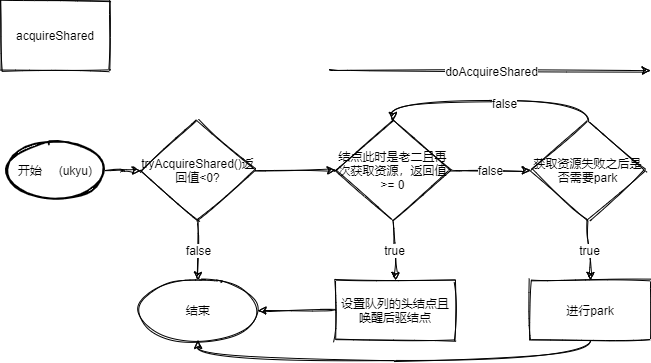
这里关于读锁的获取(公平与非公平)分析完了,贴一张整个acquireShared的流程图
2.2.2 读锁的释放
readLock.unlock();
        public void unlock() {

            sync.releaseShared(1);

        }
AQS
    public final boolean releaseShared(int arg) {

        if (tryReleaseShared(arg)) {

            // 唤醒head后驱结点

            doReleaseShared();

            return true;

        }

        return false;

    }
 // unused = 1

 protected final boolean tryReleaseShared(int unused) {

            Thread current = Thread.currentThread();

            if (firstReader == current) {

                // assert firstReaderHoldCount > 0;

                if (firstReaderHoldCount == 1)

                    firstReader = null;

                else

                    firstReaderHoldCount--;

            } else {

                HoldCounter rh = cachedHoldCounter;

                if (rh == null || rh.tid != getThreadId(current))

                    rh = readHolds.get();

                int count = rh.count;

                if (count <= 1) {

                    readHolds.remove();

                    if (count <= 0)

                        throw unmatchedUnlockException();

                }

                --rh.count;

            }

            for (;;) {

                int c = getState();

                // 获取读锁时,会执行 compareAndSetState(c, c + SHARED_UNIT),这里就是减SHARED_UNIT

                int nextc = c - SHARED_UNIT;

                if (compareAndSetState(c, nextc))

                    // 释放读锁,对需要读锁的线程没有影响(读读不互斥)

                    // 但是,这里如果返回true,可以唤醒被阻塞的想要持有写锁的线程

                    return nextc == 0;

            }

        }
3. 总结
- ReentrantReadWriteLock中的防止'写锁饥饿'的操作,值得一看
- 将AQS中的state(private volatile int state;),逻辑分为高16位(代表读锁的state),低16位(代表写锁的state),是一个值得学习的办法
- 使用ThreadLocal维护每一个现成的读锁的重入数,使用cachedHoldCounter维护最后一个使用HoldCounter的读锁线程,节省在ThreadLocal中的查询
使用读写锁的情况,应该取决于与修改相比,读取数据的频率,读取和写入操作持续的时间。
例如:
- 某个集合不经常修改,但是对其元素搜索很频繁,使用读写锁就是最佳选择。(简言之,就是读多写少)
- 现在也是读多写少,但是读操作时间很短,只有一小段代码,而读写锁比互斥锁更加复杂,开销可能大于互斥锁,这种情况使用读写锁可能不合适。此时就要通过性能分析,判断使用读写锁在系统中是否合适。
4. 参考
JAVA并发(3)-ReentrantReadWriteLock的探索的更多相关文章
- Java并发编程-ReentrantReadWriteLock
基于AQS的前世今生,来学习并发工具类ReentrantReadWriteLock.本文将从ReentrantReadWriteLock的产生背景.源码原理解析和应用来学习这个并发工具类. 1. 产生 ...
- Java并发编程,深度探索J.U.C - AQS
java.util.concurrent(J.U.C)大大提高了并发性能,AQS 被认为是 J.U.C 的核心. CountdownLatch 用来控制一个线程等待多个线程. 维护了一个计数器 cnt ...
- java并发锁ReentrantReadWriteLock读写锁源码分析
1.ReentrantReadWriterLock 基础 所谓读写锁,是对访问资源共享锁和排斥锁,一般的重入性语义为如果对资源加了写锁,其他线程无法再获得写锁与读锁,但是持有写锁的线程,可以对资源加读 ...
- java 并发(五)---AbstractQueuedSynchronizer(4)
问题 : rwl 的底层实现是什么,应用场景是什么 读写锁 ReentrantReadWriteLock 首先我们来了解一下 ReentrantReadWriteLock 的作用是什么?和 Reent ...
- 【Java并发编程实战】-----“J.U.C”:ReentrantReadWriteLock
ReentrantLock实现了标准的互斥操作,也就是说在某一时刻只有有一个线程持有锁.ReentrantLock采用这种独占的保守锁直接,在一定程度上减低了吞吐量.在这种情况下任何的"读/ ...
- java并发编程 | 锁详解:AQS,Lock,ReentrantLock,ReentrantReadWriteLock
原文:java并发编程 | 锁详解:AQS,Lock,ReentrantLock,ReentrantReadWriteLock 锁 锁是用来控制多个线程访问共享资源的方式,java中可以使用synch ...
- Java并发(十):读写锁ReentrantReadWriteLock
先做总结: 1.为什么用读写锁 ReentrantReadWriteLock? 重入锁ReentrantLock是排他锁,在同一时刻仅有一个线程可以进行访问,但是在大多数场景下,大部分时间都是提供读服 ...
- JAVA并发-ReentrantReadWriteLock
简介 读写锁维护着一对锁,一个读锁和一个写锁.通过分离读锁和写锁,使得并发性比一般的排他锁有了较大的提升:在同一时间可以允许多个读线程同时访问,但是在写线程访问时,所有读线程和写线程都会被阻塞. 读写 ...
- Java并发编程总结3——AQS、ReentrantLock、ReentrantReadWriteLock(转)
本文内容主要总结自<Java并发编程的艺术>第5章——Java中的锁. 一.AQS AbstractQueuedSynchronizer(简称AQS),队列同步器,是用来构建锁或者其他同步 ...
随机推荐
- Gson?So easy.
1.概述 这篇文章主要讲述了Gson的使用.包括从最基础的基本类型的序列化,到对象,数组,集合,再到Gson注解,Gson Builder,再到格式化,自定义序列化与反序列化等内容. 另外文章篇幅较长 ...
- Day13_72_类锁
类锁 * 对象锁(synchronized method{})和类锁(static sychronized method{})的区别 - 对象锁也叫实例锁,对应synchronized关键字,当多个线 ...
- L'ane Trotro(小驴托托) 67集法语字幕+11集无字幕 百度云
<小驴托托>(L'ane Trotro)是法国经典的少儿动画片,讲述了小驴托托的生活,它的对白浅显易懂,非常适合法语初学者培养语感以及学习日常表达. 百度云链接自取:https://pan ...
- spring boot 项目从配置文件中读取maven 的pom.xml 文件标签的内容。
需求: 将pom.xml 文件中的版本号读取到配置文件并打印到日志中. 第一步: 在pom.xml 中添加以下标签. 第二步: 将version 标签的值读取到配置文件中 这里使用 @@ 而不是 ...
- WPF小经验
Binding.IsAsync当属性值填充好后,与该属性绑定的界面才会开始加载(属性绑定优于控件加载) private IList<string> _list; public IList& ...
- Windows中的工作组和域
目录 工作组 工作组的访问 工作组的优缺点 域 域结构 域的原理 部署域架构 如何加入域 域中主机的登录 SRV出错及解决办法 SRV记录注册不成功的可能原因 禁用域中的账户 将计算机退出域 工作组 ...
- 用户模式下的线程同步的分析(Windows核心编程)
线程同步 同一进程或者同一线程可以生成许多不同的子线程来完成规定的任务,但是多个线程同时运行的情况下可能需要对某个资源进行读写访问,比如以下这个情况:创建两个线程对同一资源进行访问,最后打印出这个资源 ...
- [MySQL数据库之数据库相关概念、MySQL下载安装、MySQL软件基本管理、SQL语句]
[MySQL数据库之数据库相关概念.MySQL下载安装.MySQL软件基本管理.SQL语句] 数据库相关概念 数据库管理软件的由来 数据库管理软件:本质就是个C/S架构的套接字程序. 我们在编写任何程 ...
- 屌炸天的3D引擎OpenCASCADE的用法及案例(转载之处:)
What CASCADE? Open CASCADE(简称OCC)平台是由法国Matra Datavision公司开发的CAD/CAE/CAM软件平台,可以说是世界上最重要的几何造型基础软件平台之一. ...
- DataGear 变更部署数据库为SQL Server填坑指南(含转写后的SQL server代码及SQL server配置文件)
1. 引言 2. 配置数据库链接 3. 引入数据库驱动 4. 手动初始化数据库 5. 改写SQL 6. 其他 7. 参考 1. 引言 DataGear默认使用Derby数据库作为系统的元数据库,至于待 ...