
集合(六) WeakHashMap与LinkedHashMap
5.WeakHashMap
(1) 简介
WeakHashMap与HashMap几乎都是相同的,就是它的键是“弱引用”。
第一个问题:何为弱引用?即WeakReference类对象。
String a = new String ("A");   //Strong Reference

WeakReference <String> b = new WeakReference ("B");  //Weak Reference
以上即为强引用和弱引用的典型例子。
第二个:那么他们的区别在哪里?
当弱引用不再被使用时,就会被回收。也就是说,在WeakHashMap中有一个键的引用失效后,将会移除对应的节点。
第三个:这又有什么用呢?
坦率来说,我平常编代码时没用过WeakHashMap。WeakHashMap一般用在作为大量缓存的情况之下,可以有效地节省内存。
(2)WeakHashMap的使用和特点展示
由于WeakHashMap的特点决定了它不会非常地常用,并且大量代码、使用方法、数据结构都与HashMap完全相同,因此不会对它进行过于详细地解读。构造函数就与HashMap的形式相同,成员域多了一个队列,作用是存储已被GC清除”的“弱引用的键”。
        WeakHashMap<String,String> wh = new WeakHashMap();

        HashMap<String,String> hm = new HashMap();

        String a = new String ("A");

        String b = new String("B");

        wh.put(a,"first");

        wh.put(b,"second");

        hm.put(a,"first");

        hm.put(b,"second");

        System.out.println(wh);

        System.out.println(hm);
上述代码仅仅实现了插入两个元素,接下来展示弱引用的特点:
        hm.remove(a);

        a=null;

        b=null;

        System.gc();

        System.out.println(hm);

        System.out.println(wh);
来看一下结果,
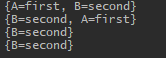
前面三个都没有问题,可是最后一个WeakHashMap怎么也少了一个元素?原因就是这个节点的键——即引用a已经没有指向了,所以也会在WeakHashMap中删除了。可能有人会问引用b不是也赋值为null了吗?为什么不删除,那是因为b还有用!b仍作为HashMap中一个键的引用发挥着作用,因此达不到回收的条件。
6.LinkedHashMap
HashMap是无序的,TreeMap是可以按照自定义的顺序排列,但是LinkedHashMap可以按照插入或者访问的顺序进行遍历,这还是很有实用性的。以下为LinkedHashMap的基本操作:
        LinkedHashMap lh = new LinkedHashMap();

        lh.put(1,"w");

        lh.put(2,"u");

        lh.put(3," ");

        lh.put(4,"y");

        lh.put(5,"i");

        lh.put(6," ");

        lh.put(7,"m");

        lh.put(8,"i");

        lh.put(9,"n");

        lh.put(10,"g");

        Collection<String> c = lh.values();

        for(String s:c)

            System.out.print(s);
wu yi ming
可以看出,只要按照顺序就可以了!
因为LinkedHashMap是继承HashMap实现的,所以特性和HashMap都是相同的,比如说可以有null元素,以及不是线程安全的,当然关于构造函数,除了和HashMap重复的,只有一个构造函数需要单独解释一下.
        /**

     * Constructs an empty insertion-ordered <tt>LinkedHashMap</tt> instance

     * with the specified initial capacity and load factor.

     *

     * @param  initialCapacity the initial capacity

     * @param  loadFactor      the load factor

     * @throws IllegalArgumentException if the initial capacity is negative

     *         or the load factor is nonpositive

     */

public LinkedHashMap(int initialCapacity, float loadFactor) {

        super(initialCapacity, loadFactor);

        accessOrder = false;

    }

    /**

     * Constructs an empty insertion-ordered <tt>LinkedHashMap</tt> instance

     * with the specified initial capacity and a default load factor (0.75).

     *

     * @param  initialCapacity the initial capacity

     * @throws IllegalArgumentException if the initial capacity is negative

     */

    public LinkedHashMap(int initialCapacity) {

        super(initialCapacity);

        accessOrder = false;

    }

    /**

     * Constructs an empty insertion-ordered <tt>LinkedHashMap</tt> instance

     * with the default initial capacity (16) and load factor (0.75).

     */

    public LinkedHashMap() {

        super();

        accessOrder = false;

    }

    /**

     * Constructs an insertion-ordered <tt>LinkedHashMap</tt> instance with

     * the same mappings as the specified map.  The <tt>LinkedHashMap</tt>

     * instance is created with a default load factor (0.75) and an initial

     * capacity sufficient to hold the mappings in the specified map.

     *

     * @param  m the map whose mappings are to be placed in this map

     * @throws NullPointerException if the specified map is null

     */

    public LinkedHashMap(Map<? extends K, ? extends V> m) {

        super();

        accessOrder = false;

        putMapEntries(m, false);

    }

    /**

     * Constructs an empty <tt>LinkedHashMap</tt> instance with the

     * specified initial capacity, load factor and ordering mode.

     *

     * @param  initialCapacity the initial capacity

     * @param  loadFactor      the load factor

     * @param  accessOrder     the ordering mode - <tt>true</tt> for

     *         access-order, <tt>false</tt> for insertion-order

     * @throws IllegalArgumentException if the initial capacity is negative

     *         or the load factor is nonpositive

     */

    public LinkedHashMap(int initialCapacity,

                         float loadFactor,

                         boolean accessOrder) {

        super(initialCapacity, loadFactor);

        this.accessOrder = accessOrder;

    }
LinkedHashMap Constructor
emmm。。。。全是直接调用父类的方法,只不过多了要给accessOrder的boolean变量。这个变量默认是false的,即按照插入顺序遍历,但是最后哪个构造函数可以将其设置为true,此时将会按照访问顺序遍历。
    public static void main(String [] args)

    {

        LinkedHashMap lh = new LinkedHashMap(16,.75f,true);   // accessOrder设置为按照访问顺序

        lh.put(1,"w");

        lh.put(2,"u");

        lh.put(3," ");

        lh.put(4,"y");

        lh.put(5,"i");

        lh.put(6," ");

        lh.put(7,"m");

        lh.put(8,"i");

        lh.put(9,"n");

        lh.put(10,"g");

        Collection<String> c = lh.values();

        for(String s:c)

            System.out.print(s);

        System.out.println();

        lh.get(5);      //访问键为5的节点

        Set se = lh.entrySet();

        Iterator ii = se.iterator();

        while(ii.hasNext())

        {

            Map.Entry map_entry = (Map.Entry)ii.next();

            System.out.print(map_entry.getValue());

        }

    }
按照访问顺序会使你最近访问的元素置于最新的位置(相当于按插入顺序的最新插入的地位),其结果如下:
wu yi ming

wu y mingi
LinkedHashMap是如何实现这种效果的呢?其实原理也简单,即一个HashMap加上一个链表,可是LinkedHashMap是继承与HashMap的,那它的链表是在哪里实现的呢?先来看一下LinkedHashMap的成员域:
    transient LinkedHashMap.Entry<K,V> head;

    transient LinkedHashMap.Entry<K,V> tail;

    final boolean accessOrder;
当然也会继承HashMap的所有成员,上述除了accessOrder已经讲过了,还增加了一个头节点和尾节点,记录第一个和最后一个LinkedHashMap节点。之前HashMap是继承Map.Entry接口的,而这里的LinkedHashMap.Entry是继承HashMap的Node类的:
    static class Entry<K,V> extends HashMap.Node<K,V> {

        Entry<K,V> before, after;

        Entry(int hash, K key, V value, Node<K,V> next) {

            super(hash, key, value, next);

        }

    }
增加了前驱节点和后继节点。这样就很好理解遍历LinkedHashMap究竟如何实现了,按照链表的方式即可,现在我关心的是如何实现按照访问顺序的。那我们接着看源码,想找相关的代码,直接的想法是找遍历代码,但是遍历代码仅仅是链表方式并没有任何关于accessOrder相关的。这是我想到会不会在get()方法呢?果然,直接上get方法的代码:
    public V get(Object key) {

        Node<K,V> e;

        if ((e = getNode(hash(key), key)) == null)

            return null;

        if (accessOrder)

            afterNodeAccess(e);

        return e.value;

    }
逻辑倒也不复杂,就是看看是不是有这个key,没有就直接返回null了,后面跟了一个判断accessOrder的逻辑,1的话执行一个afterNodeAccess(e)方法。(e就是刚访问的节点) 接着挖afterNodeAccess()方法咯:
    void afterNodeAccess(Node<K,V> e) { // move node to last

        LinkedHashMap.Entry<K,V> last;

        if (accessOrder && (last = tail) != e) {

            LinkedHashMap.Entry<K,V> p =

                (LinkedHashMap.Entry<K,V>)e, b = p.before, a = p.after;

            p.after = null;

            if (b == null)

                head = a;

            else

                b.after = a;

            if (a != null)

                a.before = b;

            else

                last = b;

            if (last == null)

                head = p;

            else {

                p.before = last;

                last.after = p;

            }

            tail = p;

            ++modCount;

        }

    }
额,只是将这个节点放在了链表结尾处。。。值得注意的是,这里hash结构并没有任何改变,要学会剥离的看待HashMap和链表,否则只会徒增麻烦!借一个图来简单的解释一下,
https://www.jianshu.com/p/8f4f58b4b8ab
集合(六) WeakHashMap与LinkedHashMap的更多相关文章
- JAVA提高十九:WeakHashMap&EnumMap&LinkedHashMap&LinkedHashSet深入分析
因为最近工作太忙了,连续的晚上支撑和上班,因此没有精力来写下这篇博客,今天上午正好有一点空,因此来复习一下不太常用的集合体系大家族中的几个类:WeakHashMap&EnumMap&L ...
- map,set,list等集合解析以及HashMap,LinkedHashMap,TreeMap等该选谁的的区别
前言: 今天在整理一些资料时,想起了map,set,list等集合,于是就做些笔记,提供给大家学习参考以及自己日后回顾. Map主要用于存储健值对,根据键得到值,因此不允许键重复(重复了覆盖了),但允 ...
- Java集合之WeakHashMap
纸上得来终觉浅,绝知此事要躬行 --陆游 问渠那得清如许,为有源头活水来 --朱熹 WeakHashMap继承于AbstractMap,同时实现了Map接口. 和HashMap一样,Weak ...
- 学习JDK1.8集合源码之--LinkedHashMap
1. LinkedHashMap简介 LinkedHashMap继承自HashMap,实现了Map接口. LinkedHashMap是HashMap的一种有序实现(多态,HashMap的有序态),可以 ...
- Java 集合框架 LinkedHashSet 和 LinkedHashMap 源码剖析
总体介绍 如果你已看过前面关于HashSet和HashMap,以及TreeSet和TreeMap的讲解,一定能够想到本文将要讲解的LinkedHashSet和LinkedHashMap其实也是一回事. ...
- 【JDK1.8】JDK1.8集合源码阅读——LinkedHashMap
一.前言 在上一篇随笔中,我们分析了HashMap的源码,里面涉及到了3个钩子函数,用来预设给子类--LinkedHashMap的调用,所以趁热打铁,今天我们来一起看一下它的源码吧. 二.Linked ...
- 【Java集合源代码剖析】LinkedHashmap源代码剖析
转载请注明出处:http://blog.csdn.net/ns_code/article/details/37867985 前言:有网友建议分析下LinkedHashMap的源代码.于是花了一晚上时间 ...
- 死磕 java集合之WeakHashMap源码分析
欢迎关注我的公众号"彤哥读源码",查看更多源码系列文章, 与彤哥一起畅游源码的海洋. 简介 WeakHashMap是一种弱引用map,内部的key会存储为弱引用,当jvm gc的时 ...
- Java之集合(十三)WeakHashMap
转载请注明源出处:http://www.cnblogs.com/lighten/p/7423818.html 1.前言 本章介绍一下WeakHashMap,这个类也很重要.要想明白此类的作用,先要明白 ...
随机推荐
- 【VS开发】【Live555-rtsp】RTSP服务器实例live555源代码分析
原文地址:RTSP服务器实例live555源代码分析作者:mozheer 1. RTSP连接的建立过程 RTSPServer类用于构建一个RTSP服务器,该类同时在其内部定义了一个RTSPClient ...
- 【VS开发】socket编程原理
socket编程原理 1.问题的引入 1) 普通的I/O操作过程: UNIX系统的I/O命令集,是从Maltics和早期系统中的命令演变出来的,其模式为打开一读/写一关闭(open-write-rea ...
- 拿下id_rsa
ssh配置公私钥远程登录Linux主机 ssh-keygen cat id_rsa.pub >>authorized_keys cat authorized_keys 拿下id_rsa h ...
- 使用PowerShell 修改DNS并加入域中
运行环境:Windows Server 2012 R2 此powershell脚本为自动修改本机DNS并加入到域中 但有的时候会提示[本地计算机当前不是域的一部分.请重新执行脚本!]错误,如遇到该错误 ...
- git 命令 查看历史提交 git log
怎么理解git commit 命令 git commit 相当于 我们虚拟机快照操作,每次执行commit命令 相当于对本地仓库做一次快照,保存了当时仓库的状态, git commit -m 加上的& ...
- 神奇的负margin解决border“合并”
如上图所示,这是一个分页样式,a:hover时,需要改变边框的颜色. 我们知道,除表格之外,其他标签的border是不能合并的.要解决这个问题,思路有三: 1.table布局(大概很少有人愿意在这里使 ...
- oracle——学习之路(oracle内置函数)
oracle与很多内置函数,主要分为单行函数与集合函数. 首先要提一下dual表,它oracle的一个表,没有什么实质的东西,不能删除它,否则会造成Oracle无法启动等问题,他有很大用处,可以利用它 ...
- SQL Server 2019 Linux Docker 在主机上以其他非根用户的身份运行容器
docker logs mssql2019SQL Server 2019 will run as non-root by default.This container is running as us ...
- 20190507-学习dubbo有感于梁飞
“作为一名程序员,BAT肯定是大多数人都想进的,仿佛是一种情愫,就像学生时代的我们对清华北大的向往感觉一样.Dubbo团队中,其中主要负责人就是梁飞了,梁飞的经历还是蛮励志的.梁飞,花名虚极, 200 ...
- ELK-全过程搭建
环境说明:软件包我都 给你们放/usr/local/src/elk目录下安装目录都放在/usr/local/下数据都放在/data0/elk/目录下日志都放在/data0/logs/elk目录下系统 ...