
c++基本数据类型及其取值范围
 #include<iostream>

 #include<string>

 #include <limits>

 using namespace std;

 int main()

 {

     cout << "type: \t\t\t" << "************size**************" << endl;

     cout << "bool: \t\t\t" << "所占字节数:" << sizeof(bool);

     cout << "\t\t最大值:" << (numeric_limits<bool>::max)();

     cout << "\t\t\t\t\t\t\t最小值:" << (numeric_limits<bool>::min)() << endl;

     cout << "char: \t\t\t" << "所占字节数:" << sizeof(char);

     cout << "\t\t最大值:" << (numeric_limits<char>::max)();

     cout << "\t\t\t\t\t\t\t最小值:" << (numeric_limits<char>::min)() << endl;

     cout << "signed char: \t" << "所占字节数:" << sizeof(signed char);

     cout << "\t\t最大值:" << (numeric_limits<signed char>::max)();

     cout << "\t\t\t\t\t\t\t最小值:" << (numeric_limits<signed char>::min)() << endl;

     cout << "unsigned char: \t" << "所占字节数:" << sizeof(unsigned char);

     cout << "\t\t最大值:" << (numeric_limits<unsigned char>::max)();

     cout << "\t\t\t\t\t\t\t最小值:" << (numeric_limits<unsigned char>::min)() << endl;

     cout << "wchar_t: \t\t" << "所占字节数:" << sizeof(wchar_t);

     cout << "\t\t最大值:" << (numeric_limits<wchar_t>::max)();

     cout << "\t\t\t\t最小值:" << (numeric_limits<wchar_t>::min)() << endl;

     cout << "short: \t\t\t" << "所占字节数:" << sizeof(short);

     cout << "\t\t最大值:" << (numeric_limits<short>::max)();

     cout << "\t\t\t\t\t\t最小值:" << (numeric_limits<short>::min)() << endl;

     cout << "int: \t\t\t" << "所占字节数:" << sizeof(int);

     cout << "\t\t最大值:" << (numeric_limits<int>::max)();

     cout << "\t\t\t\t最小值:" << (numeric_limits<int>::min)() << endl;

     cout << "unsigned: \t\t" << "所占字节数:" << sizeof(unsigned);

     cout << "\t\t最大值:" << (numeric_limits<unsigned>::max)();

     cout << "\t\t\t\t最小值:" << (numeric_limits<unsigned>::min)() << endl;

     cout << "long: \t\t\t" << "所占字节数:" << sizeof(long);

     cout << "\t\t最大值:" << (numeric_limits<long>::max)();

     cout << "\t\t最小值:" << (numeric_limits<long>::min)() << endl;

     cout << "long long: \t\t" << "所占字节数:" << sizeof(long long);

     cout << "\t\t最大值:" << (numeric_limits<long long>::max)();

     cout << "\t\t最小值:" << (numeric_limits<long long>::min)() << endl;

     cout << "unsigned long: \t" << "所占字节数:" << sizeof(unsigned long);

     cout << "\t\t最大值:" << (numeric_limits<unsigned long>::max)();

     cout << "\t\t最小值:" << (numeric_limits<unsigned long>::min)() << endl;

     cout << "double: \t\t" << "所占字节数:" << sizeof(double);

     cout << "\t\t最大值:" << (numeric_limits<double>::max)();

     cout << "\t\t\t\t最小值:" << (numeric_limits<double>::min)() << endl;

     cout << "long double: \t" << "所占字节数:" << sizeof(long double);

     cout << "\t最大值:" << (numeric_limits<long double>::max)();

     cout << "\t\t\t\t最小值:" << (numeric_limits<long double>::min)() << endl;

     cout << "float: \t\t\t" << "所占字节数:" << sizeof(float);

     cout << "\t\t最大值:" << (numeric_limits<float>::max)();

     cout << "\t\t\t\t最小值:" << (numeric_limits<float>::min)() << endl;

     cout << "size_t: \t\t" << "所占字节数:" << sizeof(size_t);

     cout << "\t\t最大值:" << (numeric_limits<size_t>::max)();

     cout << "\t\t最小值:" << (numeric_limits<size_t>::min)() << endl;

     cout << "string: \t\t" << "所占字节数:" << sizeof(string) << endl;

     // << "\t最大值:" << (numeric_limits<string>::max)() << "\t最小值:" << (numeric_limits<string>::min)() << endl;

     cout << "\t\t\t\t" << "************size**************" << endl;

     return ;

 }
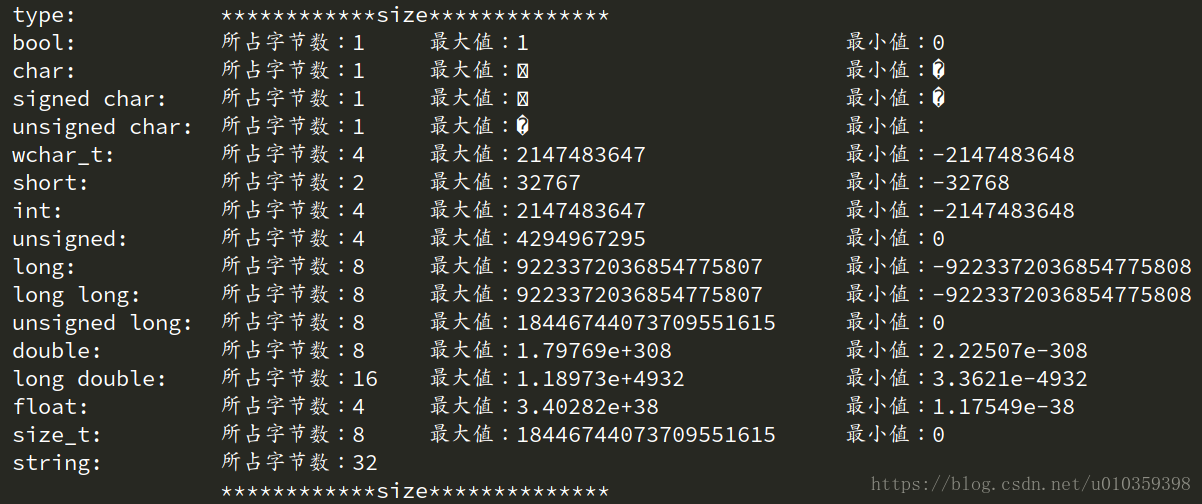
--- 参考自的博客kilen的博客。运行结果:
c++基本数据类型及其取值范围的更多相关文章
- mysql中数据类型的取值范围
mysql整型bigint.int.mediumint.smallint 和 tinyint的语法介绍,如下: 1.bigint 从 -2^63 (-9223372036854775808) 到 2^ ...
- C语言中数据类型的取值范围
C语言中数据类型的取值范围如下:char -128 ~ +127 (1 Byte)short -32767 ~ + 32768 (2 Bytes)unsigned short 0 ~ 65536 (2 ...
- 了解Java基本数据类型的取值范围
拿byte类型做栗子 一个字节是8位二进制数,然后最高位会用来作为符号位.正数计算机是存的原码,负数是存的补码. 也就说byte正数最大是0111 1111,转化为十进制是:127(这就是byte的上 ...
- C语言中各个数据类型的取值范围
因为CPU的差异,各系统中的数据类型所占的字节数(bytes)不同,二进制位数(bit)也不同.那么怎样才能知道自己系统的数据类型的字节数,位数呢? 授之以鱼不如授之以渔,大家可以自己从电脑里获取这些 ...
- Java基本数据类型的取值范围
版权声明:本文为博主原创文章,未经博主允许不得转载. 先看一段代码public class Hello{ public static void main(String[] args){ ...
- Java基础:8种基本数据类型,取值范围和储存字节说明。
Java中,一共有8种基本数据类型: 4种整数型:int,short,long,byte. 2种浮点型:float,double. 1种字符类型:char. 1种表示真值的类型:boolean. [S ...
- java数据类型,取值范围,引用类型解析
与javascript不同,Java是强类型语言,在定义变量前需要声明数据类型.主要分两种数据类型:基本数据类型和引用数据类型. 1.基本数据类型分析: 基本数据类型 数值型 整数型 byte字节 ...
- java 基本数据类型的取值
一. 1.基本类型:short 二进制位数:16 包装类:java.lang.Short 最小值:Short.MIN_VALUE=-32768 (-2的15此方)最大值:Short.MAX_VALUE ...
- Java 基本数据类型的取值范围
基本数据类型,字节数,位数,最大值和最小值. 1. 基本类型:short 二进制位数:16 包装类:java.lang.Short 最小值:Short.MIN_VALUE=-32768 (-2的15此 ...
随机推荐
- Struts2中类数据封装的方式
第一种方式:属性驱动提供对应属性的set方法进行数据的封装.表单的哪些属性需要封装数据,那么在对应的Action类中提供该属性的set方法即可.表单中的数据提交,最终找到Action类中的setXxx ...
- Confluence 6 配置管理员会话安全的备注
禁用密码确定. Confluence 安装使用自定义授权机制有可能会在密码校验的时候遇到问题.如果必要的话,你可以设置 password.confirmation.disabled 系统属性来禁用密码 ...
- js之DOM对象一
一.什么是HTML DOM HTML Document Object Model(文档对象模型) HTML DOM 定义了访问和操作HTML文档的标准方法 HTML DOM 把 HTML 文档呈现 ...
- NMT 机器翻译
本文近期学习NMT相关知识,学习大佬资料,汇总便于后期复习用,有问题,欢迎斧正. 目录 RNN Seq2Seq Attention Seq2Seq + Attention Transformer Tr ...
- Question Of AI Model Training
1 模型训练基本步骤 准备原始数据,定义神经网络结构及前向传播算法 定义loss,选择反向传播优化算法 生成Session,在训练数据进行迭代训练,使loss到达最小 在测试集或者验证集上对准确率进行 ...
- uva11827 处理下输入
/*0.012s*/ #include<cstdio> #include<algorithm> using namespace std; ], n; int gcd(int a ...
- AI学习吧-Redis操作-事务、订阅
事务 #首先启动redis服务端和客户端:#关于事务,数据库中的事务指的是逻辑上的一组操作,这组操作要么都执行成功要么不执行成功,出现异常会回滚到初始状态. 在代码中加入xxx,代码报错的话,不会执行 ...
- html表单的使用
表单用于搜集不同类型的用户输入,表单由不同类型的标签组成,实现一个特定功能的表单区域(比如:注册),首先应该用<form>标签来定义表单区域整体,在此标签中再使用不同的表单控件来实现不同类 ...
- [转] css3变形属性transform
w3c上的例子是这样子写的:· div { transform:rotate(7deg); -ms-transform:rotate(7deg); /* IE 9 */ -moz-transform: ...
- 未在本地计算机上注册“OraOLEDB.Oracle.1”提供程序。
问题描述:运行访问oracle数据库的.net程序时,弹出错误"未在本地计算机上注册“OraOLEDB.Oracle.1”提供程序". 系统环境:windows server 2 ...