
How to Repair GRUB2 When Ubuntu Won’t Boot
Ubuntu and many other Linux distributions use the GRUB2 boot loader. If GRUB2 breaks—for example, if you install Windows after installing Ubuntu, or overwrite your MBR—you won’t be able to boot into Ubuntu.
You can easily restore GRUB2 from a Ubuntu live CD or USB drive. This process is different from restoring the legacy GRUB boot loader on older Linux distributions.
This process should work on all versions of Ubuntu. It’s been tested on Ubuntu 16.04 and Ubuntu 14.04.
The Graphical Method: Boot Repair
Boot Repair is a graphical tool that can repair GRUB2 with a single click. This is the ideal solution to boot problems for most users.
If you have the media you installed Ubuntu from, insert it into your computer, restart, and boot from the removable drive. If you don’t, download a Ubuntu live CD and burn it to a disc or create a bootable USB flash drive.
When Ubuntu boots, click “Try Ubuntu” to get a usable desktop environment.
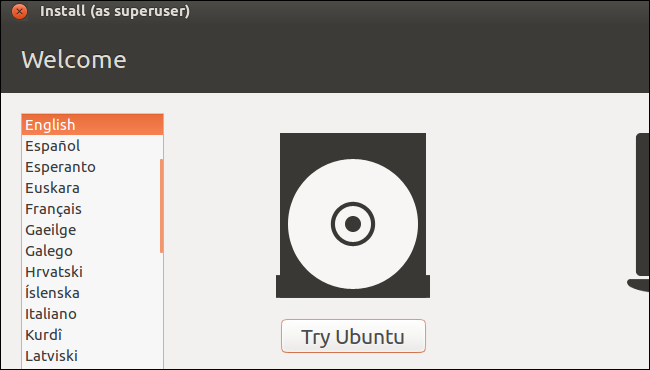
Ensure you have an Internet connection before continuing. You may need to choose a Wi-Fi network and enter its passphrase.
Open a Terminal window from the Dash and run the following commands to install and launch Boot Repair:
sudo apt-add-repository ppa:yannubuntu/boot-repair

sudo apt-get update

sudo apt-get install -y boot-repair

boot-repair
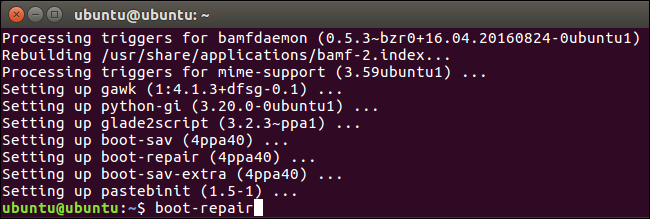
The Boot Repair window will automatically scan your system after you run the boot-repair command. After it scans your system, click the “Recommended repair” button to repair GRUB2 with a single click.
You can choose to use the advanced options here, but Ubuntu’s wiki recommends you not use the advanced options unless you know what you’re doing. The recommended repair option can fix most problems automatically, and you could mess up your system even more by selecting the wrong advanced options.

Boot Repair will begin working. It may ask you to open a Terminal and copy/paste a few commands into it.
Just follow the instructions that appear on your screen. Perform the instructions Boot Repair wants you to and click “Forward” to continue through the wizard. The tool will walk you through everything you need to do.
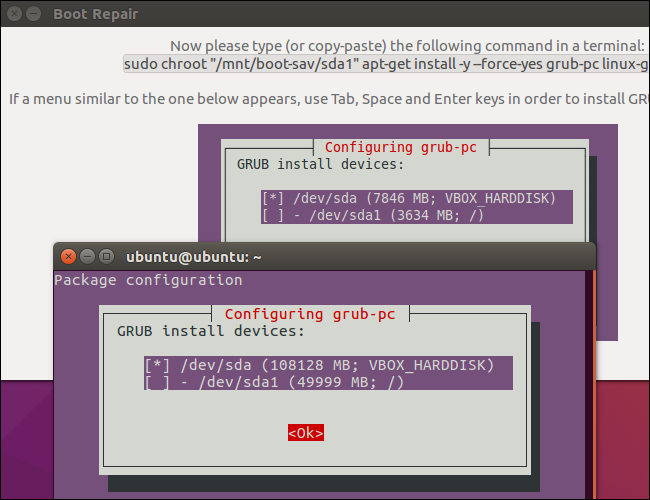
Restart your computer after the Boot Repair tool finishes applying its changes. Ubuntu should boot up normally.
The Terminal Method
If you’d rather get your hands dirty, you can do this yourself from a terminal. You’ll need to boot from a live CD or USB drive, as in the graphical method above. Ensure the version of Ubuntu on the CD is the same as the version of Ubuntu installed on your computer. For example, if you have Ubuntu 14.04 installed, ensure you use a Ubuntu 14.04 live CD.
Open a terminal after booting into the live environment. Identify the partition Ubuntu is installed on using one of the following commands:
sudo fdisk -l

sudo blkid
Here’s the output of both commands. In the fdisk -l command, the Ubuntu partition is identified by the word Linux in the System column. In the blkid command, the partition is identified by its ext4 file system.
If you have multiple Linux ext4 partitions, you can get an idea of which is which by viewing the size of the partitions and their order on the disk here.

Run the following commands to mount the Ubuntu partition at /mnt/ubuntu, replacing/dev/sdX# with the device name of your Ubuntu partition from the above commands:
sudo mkdir /mnt/ubuntu

sudo mount /dev/sdX# /mnt/ubuntu
In the screenshot above, our Ubuntu partition is /dev/sda1. This means the first partition on the first hard disk device.
Important: If you have a separate boot partition, skip the above command and mount the boot partition at /mnt/ubuntu/boot instead. If you don’t know whether you have a separate boot partition, you probably don’t.

Run the following command to reinstall grub from the live CD, replacing /dev/sdX with the device name of the hard disk above. Omit the number. For example, if you used/dev/sda1 above, use /dev/sda here.
sudo grub-install --boot-directory=/mnt/ubuntu/boot /dev/sdX

Restart your computer and Ubuntu should boot properly.
How to Repair GRUB2 When Ubuntu Won’t Boot的更多相关文章
- ubuntu下提示/boot空间不足,解决办法
在安装 ubuntu的时候 , 给/boot文件目录分配空间的时候,是100M,/boot可以单独分成一个区,也可以不单独分,在/(根目录)下也会自动为其创建一个boot目录.顺便提一下,linux分 ...
- Ubuntu提示卷boot仅剩0字节的硬盘空间,解决办法
查看当前安装的linux内核版本号 dpkg --get-selections |grep linux-image 查看当前使用的内核版本号 uname -a 卸载不需要的内核 sudo apt-ge ...
- 安装ubuntu时将boot目录单独挂载的意义
只有一个意义那就是当你的情况是:单个硬盘里面安装多个系统. 如果不是这样,就别动它.
- Ubuntu升级出现/boot空间不足解决
经常升级Linux内核,导致更新时警告/boot分区空间不足.这是以为多次升级内核后,导致内核版本太多,清理一下没用的内核文件就行了.命令如下: zht@zht-Ubuntu:~$ dpkg -l ' ...
- ubuntu更新提示/boot空间不足
1. 查看当前使用的内核版本 uname -a 2.在终端下察看已经安装的旧的内核: ctrl+alt+t——>进入终端——>输入命令: dpkg --get-selections|gre ...
- Ubuntu升级出现/boot空间不足解决(转)
经常升级Linux内核,导致更新时警告/boot分区空间不足.这是以为多次升级内核后,导致内核版本太多,清理一下没用的内核文件就行了.命令如下: zht@zht-Ubuntu:~$ dpkg -l ' ...
- ubuntu修改grub2
转自修改系统启动项 grub2配置的方法 ubuntu 在早期的Ubuntu中,使用Grub作为系统的启动引导程序,想修改系统启动项非常简单,只要用gedit打开系统菜单设定文件( sudo gedi ...
- 修改系统启动项 grub2配置的方法 ubuntu[转]
在 早期的Ubuntu中,使用Grub作为系统的启动引导程序,想修改系统启动项非常简单,只要用gedit打开系统菜单设定文件( sudo gedit /boot/grub/menu.lst ),修改该 ...
- 使用 boot-repair 对 Windows + Ubuntu 双系统引导修复
问题描述: 由于在windows上进行更新/重装/修改了引导设置以后,windows会“自私”地重写引导,导致Ubuntu系统引导消失而无法选择Ubuntu启动.
随机推荐
- NinePatch图片
绍 参考 :http://blog.sina.com.cn/s/blog_5033827f0100r4dm.html NinePatch图片以*.9.png结尾,和普通图片的区别是四周多了一个边框(如 ...
- C# HasRows 和 Read的区别
HasRows:返回true或者false,表示从数据库中读取出来的数据集DataRead是否存在,用来判断是否为空: Read:返回true或者false,Read才是真正的读数据,采用的是顺序读法 ...
- 中文参考文献如何导入到endnote中
比如我想在文献中插入“2型糖尿病患者并发脑卒中的前瞻性研究”这篇参考文献,在主题里面输入文献标题,勾选我们要找的文献,点击“导出/参考文献” 导出来以后,点击屏幕右下角界面的“导出/参考文献”,下图红 ...
- DIV或者DIV里面的图片水平与垂直居中的方法
<div class=“box”> <img /> </div> 水平居中的常用方式: text-align:center ——这可以实现子元素字体,图片的水平居中 ...
- promise用法详解
es6的promise可谓是异步书写的一大福音,过去异步js书写是函数嵌套函数的方式,promise出现后书写异步js代码就变得美观得多了 以前的写法:回调函数不停嵌套 ajax('/banners' ...
- mysql表备份的一种方式
前提: 最近测试环境shop表经常出现表损坏不能正常查询,通过mysql的修复方法,暂时有效.故做该表的迁移操作. 思路是: 停止数据库的操作 1.备份老表. 2.创建一个结构一样的表. 3.将老表 ...
- js 定义像java一样的map方便取值【转】
js 定义像java一样的map方便取值. 百度有位大神说"js对象本身就是一种Map结构",这真是一段让人欢天喜地的代码. <script> //定义一个全局map ...
- centos7 卸载rpm安装的包
1.查看已装包 rpm -qa | grep pgpool 2.卸载包 rpm -e 包名 3.示例(卸载pgpool) [root@VM_145_153_centos etc]# rpm -qa | ...
- Storm Topology 提交 总结---Kettle On Storm 实现
一,目的 在学习的过程中,需要用到 PDI---一个开源的ETL软件.主要是用它来设计一些转换流程来处理数据.但是,在PDI中设计好的 transformation 是在本地的执行引擎中执行的,(参考 ...
- UNIX环境高级编程--第一章 UNIX基础知识
第一章 UNIX基础知识 1.2 UNIX体系结构 从严格意义上说,可将操作系统定义为一种软件,它控制计算机硬件资源,提供程序运行环境.我们将这种软件称为内核(kernel),因为 它相对较小,且 ...