
c++中有些重载运算符为什么要返回引用
事实上,我们的重载运算符返回void、返回对象本身、返回对象引用都是可以的,并不是说一定要返回一个引用,只不过在不同的情况下需要不同的返回值。
那么什么情况下要返回对象的引用呢?
原因有两个:
- 允许进行连续赋值
- 防止返回对象(返回对象也可以进行连续赋值(常规的情况,如a = b = c,而不是(a = b) = c))的时候调用拷贝构造函数和析构函数导致不必要的开销,降低赋值运算符的效率。
对于第二点原因:如果用”值传递“的方式,虽然功能仍然正确,但由于return语句要把*this拷贝到保存返回值的外部存储单元之中,增加了不必要的开销,会降低赋值函数的效率。
场景:
需要返回对象引用或者返回对象(效率没有返回引用高),需要实现连续赋值,使重载的运算符更符合C++本身的运算符语意,如连续赋值 = += -= *= 、=,<<输出流
关于赋值 =,我们知道赋值=有连续等于的特性
 int x,y,z;

 x=y=z=;
同样有趣的是,赋值采用的是右结合律,所以上述连锁赋值被解析为:
x=(y=(z=));//赋值连锁形式
这里15先被赋值给z,然后其结果(更新后的z)再被赋值给y,然后其结果(更新后的y)再被赋值给x。
为了实现”连锁赋值“,赋值操作符号返回一个reference(引用)指向操作符号的左侧实参(而事实上重载运算符的左侧实参就是调用对象本身,比如= += -=等),这是你为classes实现赋值操作符时应该遵循的协议:这个协议不仅仅适用于以上的标准赋值形式,也适用于所有赋值运算。
 class Widght{

     public:

       .....

     Widget& operator=(cosnt Widget& rhs)

     {

        ...

        return* this;

     }

     Widget& operator+=(cosnt Widget& rhs)

     {

        ...

        return* this;

     }

     Widget& operator-=(cosnt Widget& rhs)

     {

        ...

        return* this;

     }

     Widget& operator*=(cosnt Widget& rhs)

     {

        ...

        return* this;

     }

     Widget& operator/=(cosnt Widget& rhs)

     {

        ...

        return* this;

     }

     ...

  };
注意,这只是个协议,并无强制性,如果不遵循它,代码一样可以通过编译,然而这份协议被所有内置类型和标准程序库提供的类型入string,vector,complex,std::trl::shared_ptr或者即将提供的类型共同遵守。因此除非你有一个标新立异的好理由,不然还是随众吧。
下面看一个赋值运算符重载的例子:(连续赋值,常规的情况(a = b = c))
1、首先是返回对象的情况:
 #include <iostream>

 using namespace std;

 class String

 {

 private:

     char *str;

     int len;

 public:

     String(const char* s);//构造函数声明

     String operator=(const String& another);//运算符重载,此时返回的是对象

     void show()

     {

         cout << "value = " << str << endl;

     }

     /*copy construct*/

     String(const String& other)

     {

         len = other.len;

         str = new char[len + ];

         strcpy(str, other.str);

         cout << "copy construct" << endl;

     }

     ~String()

     {

         delete[] str;

         cout << "deconstruct" << endl;

     }

 };

 String::String(const char* s)//构造函数定义

 {

     len = strlen(s);

     str = new char[len + ];

     strcpy(str, s);

 }

 String String::operator=(const String &other)//运算符重载

 {

     if (this == &other)

         return *this;

 //        return;

     delete[] str;

     len = other.len;

     str = new char[len + ];

     strcpy(str, other.str);

     return *this;

 //    return;

 }

 int main()

 {

     String str1("abc");

     String str2("");

     String str3("");

     str1.show();

     str2.show();

     str3.show();

     str3 = str1 = str2;//str3.operator=(str1.operator=(str2))

     str3.show();

     str1.show();

     return ;

 }
运行结果:

2、下面是返回引用的情况(String& operator = (const String& str)),直接贴运行结果:

当运算符重载返回的是对象时,会在连续赋值运算过程的返回途中,调用两次拷贝构造函数和析构函数(因为return的是个新的对象)
如果采用String& operator = (const String& str)这样就不会有多余的调用(因为这里直接return一个已经存在的对象的引用)
上面的栗子也说明一点:析构函数的调用是在变量作用域结束的时候(以及程序运行结束的时候)
如果采用return对象,那么第二次赋值运算调用的情况就是:
将一个新的String对象(returnStringObj)传递到operator = (const String& str)的参数中去 相当于
const String&str = returnStringObj;
如果采用return对象引用,那么第二次赋值运算的情况就是:
将一个已经存在的String对象的引用((其实就是str1))传递给operator = (const String& str)的参数中去
const String&str = returnReference; //(String& returnReference = str1;)
+=等运算符也是同样的考虑,比如
 int main()

 {

     String str1("abc");

     String str2("");

     String str3("");

     str1.show();

     str2.show();

     str3.show();

     str3 = str1 = str2;//str3.operator=(str1.operator=(str2))

     str3.show();

     str1.show();

     int num = ;

     num += (num += );

     cout << num << endl;

     return ;

 }

如果使用+=或其它上面举出的运算符进行连续操作时,,则这些运算符的返回值一定要是一个对象或者引用才行,不然就会出现错误(参数类型不符合)。什么意思呢,下面举个栗子。
我现在让运算符重载返回的类型为空,单个赋值,不使用连续赋值:
 #include <iostream>

 using namespace std;

 class String

 {

 private:

     char *str;

     int len;

 public:

     String(const char* s);//构造函数声明

     void operator=(const String& another);//运算符重载,此时返回为空

     void show()

     {

         cout << "value = " << str << endl;

     }

     /*copy construct*/

     String(const String& other)

     {

         len = other.len;

         str = new char[len + ];

         strcpy(str, other.str);

         cout << "copy construct" << endl;

     }

     ~String()

     {

         delete[] str;

         cout << "deconstruct" << endl;

     }

 };

 String::String(const char* s)

 {

     len = strlen(s);

     str = new char[len + ];

     strcpy(str, s);

 }

 void String::operator=(const String &other)

 {

     if (this == &other)

 //        return *this;

         return;

     delete[] str;

     len = other.len;

     str = new char[len + ];

     strcpy(str, other.str);

 //    return *this;

     return;

 }

 int main()

 {

     String str1("abc");

     String str2("");

     String str3("");

     str1.show();

     str2.show();

     str3.show();

     str3 = str1;//这样OK

     str3.show();

     str1.show();

     return ;

 }
运行结果:
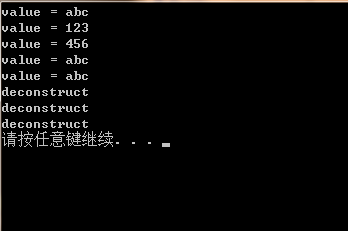
但当我把主函数中str1,str2,str3改为连续赋值时:
 int main()

 {

     String str1("abc");

     String str2("");

     String str3("");

     str1.show();

     str2.show();

     str3.show();

     str3 = str1=str2;//这样不OK

     str3.show();

     str1.show();

     return ;

 }
出错:

所以,当你确定不使用连续赋值时,直接返回void也是可以的。要明白一点:
运算符左侧的对象就是操作对象,比如
 ObjectA = ObjectB 等同于ObjectA.operator=(ObjectB)

 ObjectA+=ObjectB 等同于ObjectA.operator+(ObjectB)
最后要说明一点:并非必须返回引用,返回引用的好处既可以避免拷贝构造函数和析构函数的调用,又可以保证= +=等运算符的原始语义清晰。
啥叫原始语义清晰呢?
如
(str3 = str1) = str2;
我们的意识里,就是先执行括号内容,即str1赋值给str3,然后str2再赋值给str3,最后str3输出的内容是str2的。
即如果运算符重载返回的是对象引用时,
 //返回的是对象引用的情况

 #include <iostream>

 using namespace std;

 class String

 {

 private:

     char *str;

     int len;

 public:

     String(const char* s);//构造函数声明

     String& operator=(const String& another);//运算符重载,此时返回为引用

     void show()

     {

         cout << "value = " << str << endl;

     }

     /*copy construct*/

     String(const String& other)

     {

         len = other.len;

         str = new char[len + ];

         strcpy(str, other.str);

         cout << "copy construct" << endl;

     }

     ~String()

     {

         delete[] str;

         cout << "deconstruct" << endl;

     }

 };

 String::String(const char* s)

 {

     len = strlen(s);

     str = new char[len + ];

     strcpy(str, s);

 }

 String& String::operator=(const String &other)

 {

     if (this == &other)

         return *this;

 //        return;

     delete[] str;

     len = other.len;

     str = new char[len + ];

     strcpy(str, other.str);

     return *this;

 //    return;

 }

 int main()

 {

     String str1("abc");

     String str2("");

     String str3("");

     str1.show();

     str2.show();

     str3.show();

     (str3 = str1) = str2;

     cout << "str3的内容为:" << endl;

     str3.show();

     return ;

 }
运行结果:

str3得到了str2的内容,与我们认识的‘=’运算符逻辑相符。
而如果运算符重载返回的是对象时,
 //这是返回类型为对象的情况

 #include <iostream>

 using namespace std;

 class String

 {

 private:

     char *str;

     int len;

 public:

     String(const char* s);//构造函数声明

     String operator=(const String& another);//运算符重载,此时返回为空

     void show()

     {

         cout << "value = " << str << endl;

     }

     /*copy construct*/

     String(const String& other)

     {

         len = other.len;

         str = new char[len + ];

         strcpy(str, other.str);

         cout << "copy construct" << endl;

     }

     ~String()

     {

         delete[] str;

         cout << "deconstruct" << endl;

     }

 };

 String::String(const char* s)

 {

     len = strlen(s);

     str = new char[len + ];

     strcpy(str, s);

 }

 String String::operator=(const String &other)

 {

     if (this == &other)

         return *this;

 //        return;

     delete[] str;

     len = other.len;

     str = new char[len + ];

     strcpy(str, other.str);

     return *this;

 //    return;

 }

 int main()

 {

     String str1("abc");

     String str2("");

     String str3("");

     str1.show();

     str2.show();

     str3.show();

     (str3 = str1) = str2;

     cout << "赋值后str3的内容为:" << endl;

     str3.show();

     return ;

 }
运行结果:

str3只得到了str1的内容,并没有得到str2的内容,这是因为执行(str3=str1)后,因为返回的是对象(一个临时对象,str3的一个拷贝),不是引用,所以此时str3不在后面的‘=str2’的操作中,而是str2对一个临时对象赋值,所以str3的内容保持不变(等于str1)。
总结
所以,对此类运算符重载时,还是老老实实的返回引用,少搞事,做个好男孩:)
c++中有些重载运算符为什么要返回引用的更多相关文章
- C++ 重载运算符和重载函数
C++ 重载运算符和重载函数 C++ 允许在同一作用域中的某个函数和运算符指定多个定义,分别称为函数重载和运算符重载. 重载声明是指一个与之前已经在该作用域内声明过的函数或方法具有相同名称的声明,但是 ...
- C++解析七-重载运算符和重载函数
重载运算符和重载函数C++ 允许在同一作用域中的某个函数和运算符指定多个定义,分别称为函数重载和运算符重载.重载声明是指一个与之前已经在该作用域内声明过的函数或方法具有相同名称的声明,但是它们的参数列 ...
- 吴裕雄--天生自然C++语言学习笔记:C++ 重载运算符和重载函数
C++ 允许在同一作用域中的某个函数和运算符指定多个定义,分别称为函数重载和运算符重载. 重载声明是指一个与之前已经在该作用域内声明过的函数或方法具有相同名称的声明,但是它们的参数列表和定义(实现)不 ...
- c++的重载运算符
c++中允许重载运算符: 这是我辛苦的结果 #include"iostream"using namespace std;class aaa{ int x;public: aaa() ...
- JavaScript中的逗号运算符
JavaScript逗号运算符 阅读本文的前提,明确表达式.短语.运算符.运算数这几个概念. 所谓表达式,就是一个JavaScript的“短语”,JavaScript解释器可以计算它,从而生成一个值 ...
- C++ 重载运算符简单举例
我们可以重定义或重载大部分 C++ 内置的运算符.这样,就能使用自定义类型的运算符. 重载的运算符是带有特殊名称的函数,函数名是由关键字 operator 和其后要重载的运算符符号构成的.与其他函数一 ...
- C++中,用类和重载运算符写高精模板
先放代码: #include<iostream> #include<cstdio> #include<cstring> using namespace std; s ...
- 高精度运算略解 在struct中重载运算符
高精度 高精度,即高精度算法,属于处理大数字的数学计算方法.在一般的科学计算中,会经常算到小数点后几百位或者更多,当然也可能是几千亿几百亿的大数字. 重载运算符 运算符重载,就是对已有的运算符重新进行 ...
- 【C++】C++中重载运算符和类型转换
输入输出运算符 输入输出运算符 输入输出运算符 算术和关系运算符 相等运算符 关系运算符 赋值运算符 复合赋值运算符 下标运算符 递增和递减运算符 成员访问运算符 函数调用运算符 lambda是函数对 ...
随机推荐
- Ubuntu 12 编译安装 PHP 5.4 及 问题汇总
参考先前的文章:Ubuntu 14 编译安装 PHP 5.4.45 + Nginx 1.4.7 + MySQL 5.6.26 笔记 安装过程: ############################ ...
- 开关WIFI脚本
title wifi管理color A@echo on@echo ~~~~~~~~~~~~~~~~~~~~~~~~~~~~~~@echo 1.启用并设定虚拟WiFi网卡;@echo 2.开启无线网络; ...
- int (*p)[4] 与 int* p[4]
碰到一道题: ][] = {,,,,,,,,,,,}; ]; ] = (a+); cout<<*(p+)<<endl; cout<<(*ptr+)[]<< ...
- 扩展RBAC用户角色权限设计方案
RBAC(Role-Based Access Control,基于角色的访问控制),就是用户通过角色与权限进行关联.简单地说,一个用户拥有若干角色,每一个角色拥有若干权限.这样,就构造成“用户-角色- ...
- Unity3D客户端和Java服务端使用Protobuf
转自:http://blog.csdn.net/kakashi8841/article/details/17334493 前几天有位网友问我关于Unity3D里面使用Protobuf的方法,一时有事拖 ...
- Inorder Successor in Binary Search Tree
Given a binary search tree (See Definition) and a node in it, find the in-order successor of that no ...
- OpenCV图像的二值化
图像的二值化: 与边缘检测相比,轮廓检测有时能更好的反映图像的内容.而要对图像进行轮廓检测,则必须要先对图像进行二值化,图像的二值化就是将图像上的像素点的灰度值设置为0或255,这样将使整个图像呈现出 ...
- gulp学习笔记1-定义
1.gulp是前端开发过程中对代码进行构建的自动化工具,可以通过它提供的各种插件实现如:预编译(sass&less).压缩.合并.图片精灵等前端的重复操作 2.基于nodeJS,以js编写插件 ...
- PHP中函数sprintf .vsprintf (占位符)
sprintf()格式化字符串写入一个变量中. vsprintf()格式化字符串些写入变量中. <?php $num1 = 123; $num2 = 456; $txt = vsprintf(& ...
- GPS坐标互转:WGS-84(GPS)、GCJ-02(Google地图)、BD-09(百度地图)
WGS-84:是国际标准,GPS坐标(Google Earth使用.或者GPS模块)GCJ-02:中国坐标偏移标准,Google Map.高德.腾讯使用BD-09:百度坐标偏移标准,Baidu Map ...