
K - Ancient Messages(dfs求联通块)
Time Limit:3000MS Memory Limit:0KB 64bit IO Format:%lld & %llu
Description

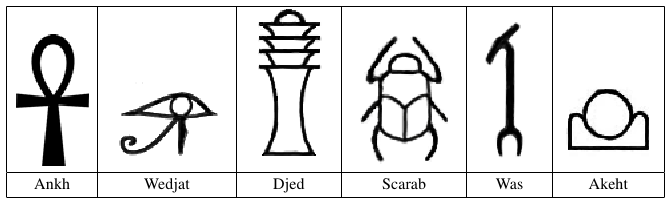
In order to understand early civilizations, archaeologists often study texts written in ancient languages. One such language, used in Egypt more than 3000 years ago, is based on characters called hieroglyphs. Figure C.1 shows six hieroglyphs and their names. In this problem, you will write a program to recognize these six characters.
Input
The input consists of several test cases, each of which describes an image containing one or more hieroglyphs chosen from among those shown in Figure C.1. The image is given in the form of a series of horizontal scan lines consisting of black pixels (represented by 1) and white pixels (represented by 0). In the input data, each scan line is encoded in hexadecimal notation. For example, the sequence of eight pixels 10011100 (one black pixel, followed by two white pixels, and so on) would be represented in hexadecimal notation as 9c. Only digits and lowercase letters a through f are used in the hexadecimal encoding. The first line of each test case contains two integers, H and W. H(0 < H 200) is the number of scan lines in the image. W(0 < W50) is the number of hexadecimal characters in each line. The next H lines contain the hexadecimal characters of the image, working from top to bottom. Input images conform to the following rules:
- The image contains only hieroglyphs shown in Figure C.1.
- Each image contains at least one valid hieroglyph.
- Each black pixel in the image is part of a valid hieroglyph.
- Each hieroglyph consists of a connected set of black pixels and each black pixel has at least one other black pixel on its top, bottom, left, or right side.
- The hieroglyphs do not touch and no hieroglyph is inside another hieroglyph.
- Two black pixels that touch diagonally will always have a common touching black pixel.
- The hieroglyphs may be distorted but each has a shape that is topologically equivalent to one of the symbols in Figure C.1. (Two figures are topologically equivalent if each can be transformed into the other by stretching without tearing.)
The last test case is followed by a line containing two zeros.
Output
For each test case, display its case number followed by a string
containing one character for each hieroglyph recognized in the image,
using the following code:
Ankh: A
Wedjat: J
Djed: D
Scarab: S
Was: W
Akhet: K
In each output string, print the codes in alphabetic order. Follow the format of the sample output.
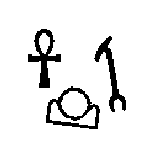
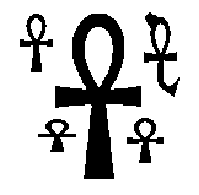
The sample input contains descriptions of test cases shown in Figures
C.2 and C.3. Due to space constraints not all of the sample input can be
shown on this page.
Sample Input
100 25

0000000000000000000000000

0000000000000000000000000

...(50 lines omitted)...

00001fe0000000000007c0000

00003fe0000000000007c0000

...(44 lines omitted)...

0000000000000000000000000

0000000000000000000000000

150 38

00000000000000000000000000000000000000

00000000000000000000000000000000000000

...(75 lines omitted)...

0000000003fffffffffffffffff00000000000

0000000003fffffffffffffffff00000000000

...(69 lines omitted)...

00000000000000000000000000000000000000

00000000000000000000000000000000000000

0 0
Sample Output
Case 1: AKW
Case 2: AAAAA
 #include <iostream>

 #include <cstdio>

 #include <cstring>

 #include <cmath>

 #include <algorithm>

 #include <string>

 #include <vector>

 #include <stack>

 #include <queue>

 #include <set>

 #include <map>

 #include <list>

 #include <iomanip>

 #include <cstdlib>

 #include <sstream>

 using namespace std;

 const int INF=0x5fffffff;

 const double EXP=1e-;

 const int maxh=;

 const int maxw=*+;

 int H,W;

 int pic[maxh][maxw],color[maxh][maxw];

 int dir[][]={{,},{,},{,-},{-,}};

 char bin[][];

 char line[maxw];

 const char* code = "WAKJSD";

 void decode(int row,int col,char c)

 {

     for(int i=;i<;i++)

     {

         pic[row][col+i]=bin[(int)c][i]-'';

     }

 }

 void dfs(int row,int col,int c)

 {

     color[row][col]=c;

     for(int i=;i<;i++)

     {

         int x=row+dir[i][];

         int y=col+dir[i][];

         if(x>=&&x<H&&y>=&&y<W&&pic[x][y]==pic[row][col]&&color[x][y]==)

             dfs(x,y,c);

     }

 }

 vector<set<int> > neighbor;

 void check(int row,int col)    //check white

 {

     for(int i=;i<;i++)

     {

         int x=row+dir[i][];

         int y=col+dir[i][];

         if(x>=&&x<H&&y>=&&y<W&&pic[x][y]==&&color[x][y]!=)

             neighbor[color[row][col]].insert(color[x][y]);

     }

 }

 char recognize(int c)

 {

     int cnt=neighbor[c].size();

     return code[cnt];

 }

 int main()

 {

     strcpy(bin[''], "");

     strcpy(bin[''], "");

     strcpy(bin[''], "");

     strcpy(bin[''], "");

     strcpy(bin[''], "");

     strcpy(bin[''], "");

     strcpy(bin[''], "");

     strcpy(bin[''], "");

     strcpy(bin[''], "");

     strcpy(bin[''], "");

     strcpy(bin['a'], "");

     strcpy(bin['b'], "");

     strcpy(bin['c'], "");

     strcpy(bin['d'], "");

     strcpy(bin['e'], "");

     strcpy(bin['f'], "");

     int kase=;

     while(scanf("%d%d",&H,&W)==&&(H+W))

     {

         memset(pic,,sizeof(pic));

         memset(color,,sizeof(color));

         for(int i=;i<H;i++)

         {

             scanf("%s",line);

             for(int j=;j<W;j++)

                 decode(i+,j*+,line[j]);   //注意起始位置

         }

         H+=;

         W=W*+;

         int cnt=;

         vector<int >  c;

         for(int i=;i<H;i++)

             for(int j=;j<W;j++)

         {

             if(color[i][j]==)

             {

                 dfs(i,j,++cnt);

                 if(pic[i][j]==)

                     c.push_back(cnt);

             }

         }

         neighbor.clear();

         neighbor.resize(cnt+);

         for(int i=;i<H;i++)

             for(int j=;j<W;j++)

         {

             if(pic[i][j]==)

                 check(i,j);

         }

         vector<char>  ans;

         int t=c.size();

         for(int i=;i<t;i++)

             ans.push_back(recognize(c[i]));

         sort(ans.begin(),ans.end());

         printf("Case %d: ",kase++);

         for(int i=;i<t;i++)

             printf("%c",ans[i]);

         printf("\n");

     }

     return ;

 }
K - Ancient Messages(dfs求联通块)的更多相关文章
- 利用DFS求联通块个数
/*572 - Oil Deposits ---DFS求联通块个数:从每个@出发遍历它周围的@.每次访问一个格子就给它一个联通编号,在访问之前,先检查他是否 ---已有编号,从而避免了一个格子重复访问 ...
- 【紫书】Oil Deposits UVA - 572 dfs求联通块
题意:给你一个地图,求联通块的数量. 题解: for(所有还未标记的‘@’点) 边dfs边在vis数组标记id,直到不能继续dfs. 输出id及可: ac代码: #define _CRT_SECURE ...
- 用dfs求联通块(UVa572)
一.题目 输入一个m行n列的字符矩阵,统计字符“@”组成多少个八连块.如果两个字符所在的格子相邻(横.竖.或者对角线方向),就说它们属于同一个八连块. 二.解题思路 和前面的二叉树遍历类似,图也有DF ...
- HDU - 1213 dfs求联通块or并查集
思路:给定一个无向图,判断有几个联通块. AC代码 #include <cstdio> #include <cmath> #include <algorithm> ...
- 中矿新生赛 H 璐神看岛屿【BFS/DFS求联通块/连通块区域在边界则此连通块无效】
时间限制:C/C++ 1秒,其他语言2秒空间限制:C/C++ 32768K,其他语言65536K64bit IO Format: %lld 题目描述 璐神现在有张n*m大小的地图,地图上标明了陆地(用 ...
- Educational Codeforces Round 1D 【DFS求联通块】
http://blog.csdn.net/snowy_smile/article/details/49924965 D. Igor In the Museum time limit per test ...
- POJ 1562 Oil Deposits (并查集 OR DFS求联通块)
Oil Deposits Time Limit: 1000MS Memory Limit: 10000K Total Submissions: 14628 Accepted: 7972 Des ...
- HDU1241 Oil Deposits —— DFS求连通块
题目链接:http://acm.hdu.edu.cn/showproblem.php?pid=1241 Oil Deposits Time Limit: 2000/1000 MS (Java/Othe ...
- C. Learning Languages 求联通块的个数
C. Learning Languages 1 #include <iostream> 2 #include <cstdio> 3 #include <cstring&g ...
随机推荐
- 转】腾讯云CentOS 6.6安装 Nginx
原博文出自于: http://www.cnblogs.com/xdp-gacl/p/5290155.html 感谢! 一.下载Nginx 从Nginx的官网(http://nginx.org/en/d ...
- class int
class int(object): """ int(x=0) -> integer int(x, base=10) -> integer Convert a ...
- HDU 4539郑厂长系列故事――排兵布阵(状压DP)
HDU 4539 郑厂长系列故事――排兵布阵 基础的状压DP,首先记录先每一行可取的所哟状态(一行里互不冲突的大概160个状态), 直接套了一个4重循环居然没超时我就呵呵了 //#pragma co ...
- newlsip 检查磁盘分区使用情况
主要还是用df -k这个命令,然后将输出结果全部逐行解析,最后调用REST API,发送给服务器保存. 参考代码: #!/usr/bin/newlisp (set 'cur-path "/o ...
- 使用JAP(基类)父类注解
-----------------基类------------------------------- /** * @className:com.jubangit.ebusiness.database. ...
- input value的值不可改变
同样是东钿微信服务平台,使用积分的问题,原来的版本是,默认用户不使用积分,也就没有给input赋值,后面华总说默认让用户使用积分,于是我就信誓旦旦把从后台得到用户可使用的积分赋在input上,后来,用 ...
- sql 无法识别的配置节 system.serviceModel
sql 链接实例的时候,提示 无法识别的配置节 system.serviceModelC:\WINDOWS\Microsoft.NET\Framework\v2.0.50727\Config\mac ...
- 全代码实现ios-4
刚开始开发的时候,也曾经想用IB或Storyboard. 不过看了许多篇关于IB和Storyboard的操作文档后仍然是糊里糊涂,不由得怀疑自己的IQ. 可不可以全代码实现ios开发?当时我想. 不过 ...
- Eclipse设置选中高亮显示(包含debug)
如果不高亮显示了:工具栏里有个黄色小笔的图标,点一下就可以了,或者alt+shift+O 设置高亮显示:
- Cross-Browser HTML5 Placeholder Text
One of the nice enhancement in HTML5 web form is being able to add placeholder text to input fields. ...