
Mysql 常用SQL语句集锦
基础篇
//查询时间,友好提示

$sql = "select date_format(create_time, '%Y-%m-%d') as day from table_name";
//int 时间戳类型
$sql = "select from_unixtime(create_time, '%Y-%m-%d') as day from table_name";//一个sql返回多个总数
$sql = "select count(*) all, " ;
$sql .= " count(case when status = 1 then status end) status_1_num, ";
$sql .= " count(case when status = 2 then status end) status_2_num ";
$sql .= " from table_name";//Update Join / Delete Join
$sql = "update table_name_1 ";
$sql .= " inner join table_name_2 on table_name_1.id = table_name_2.uid ";
$sql .= " inner join table_name_3 on table_name_3.id = table_name_1.tid ";
$sql .= " set *** = *** ";
$sql .= " where *** ";
//delete join 同上。//替换某字段的内容的语句
$sql = "update table_name set content = REPLACE(content, 'aaa', 'bbb') ";
$sql .= " where (content like '%aaa%')";//获取表中某字段包含某字符串的数据
$sql = "SELECT * FROM `表名` WHERE LOCATE('关键字', 字段名) ";//获取字段中的前4位
$sql = "SELECT SUBSTRING(字段名,1,4) FROM 表名 ";//查找表中多余的重复记录
//单个字段
$sql = "select * from 表名 where 字段名 in ";
$sql .= "(select 字段名 from 表名 group by 字段名 having count(字段名) > 1 )";
//多个字段
$sql = "select * from 表名 别名 where (别名.字段1,别名.字段2) in ";
$sql .= "(select 字段1,字段2 from 表名 group by 字段1,字段2 having count(*) > 1 )";//删除表中多余的重复记录(留id最小)
//单个字段
$sql = "delete from 表名 where 字段名 in ";
$sql .= "(select 字段名 from 表名 group by 字段名 having count(字段名) > 1) ";
$sql .= "and 主键ID not in ";
$sql .= "(select min(主键ID) from 表名 group by 字段名 having count(字段名 )>1) ";
//多个字段
$sql = "delete from 表名 别名 where (别名.字段1,别名.字段2) in ";
$sql .= "(select 字段1,字段2 from 表名 group by 字段1,字段2 having count(*) > 1) ";
$sql .= "and 主键ID not in ";
$sql .= "(select min(主键ID) from 表名 group by 字段1,字段2 having count(*)>1) ";业务篇
连续范围问题
//创建测试表

CREATE TABLE `test_number` (

  `id` int(10) unsigned NOT NULL AUTO_INCREMENT,

  `number` int(11) unsigned NOT NULL DEFAULT '0' COMMENT '数字',

  PRIMARY KEY (`id`)

) ENGINE=InnoDB DEFAULT CHARSET=utf8
//创建测试数据
insert into test_number values(1,1);
insert into test_number values(2,2);
insert into test_number values(3,3);
insert into test_number values(4,5);
insert into test_number values(5,7);
insert into test_number values(6,8);
insert into test_number values(7,10);
insert into test_number values(8,11);实验目标:求数字的连续范围。
根据上面的数据,应该得到的范围。
1-3

5-5

7-8

10-11
//执行Sql
select min(number) start_range,max(number) end_range
from
(
select number,rn,number-rn diff from
(
select number,@number:=@number+1 rn from test_number,(select @number:=0) as number
) b
) c group by diff;
签到问题
//创建参考表(模拟数据需要用到)

CREATE TABLE `test_nums` (

  `id` int(11) unsigned NOT NULL AUTO_INCREMENT,

  PRIMARY KEY (`id`)

) ENGINE=InnoDB DEFAULT CHARSET=utf8 COMMENT='参考表';

//模拟数据,插入 1-10000 连续数据.
//创建测试表
CREATE TABLE `test_sign_history` (
`id` int(10) unsigned NOT NULL AUTO_INCREMENT,
`uid` int(11) unsigned NOT NULL DEFAULT '0' COMMENT '用户ID',
`create_time` timestamp NOT NULL DEFAULT CURRENT_TIMESTAMP COMMENT '签到时间',
PRIMARY KEY (`id`)
) ENGINE=InnoDB DEFAULT CHARSET=utf8 COMMENT='签到历史表';//创建测试数据
insert into test_sign_history(uid,create_time)
select ceil(rand()*10000),str_to_date('2016-12-11','%Y-%m-%d')+interval ceil(rand()*10000) minute
from test_nums where id<31;//统计每天的每小时用户签到情况
select
h,
sum(case when create_time='2016-12-11' then c else 0 end) 11Sign,
sum(case when create_time='2016-12-12' then c else 0 end) 12Sign,
sum(case when create_time='2016-12-13' then c else 0 end) 13Sign,
sum(case when create_time='2016-12-14' then c else 0 end) 14Sign,
sum(case when create_time='2016-12-15' then c else 0 end) 15Sign,
sum(case when create_time='2016-12-16' then c else 0 end) 16Sign,
sum(case when create_time='2016-12-17' then c else 0 end) 17Sign
from
(
select
date_format(create_time,'%Y-%m-%d') create_time,
hour(create_time) h,
count(*) c
from test_sign_history
group by
date_format(create_time,'%Y-%m-%d'),
hour(create_time)
) a
group by h with rollup;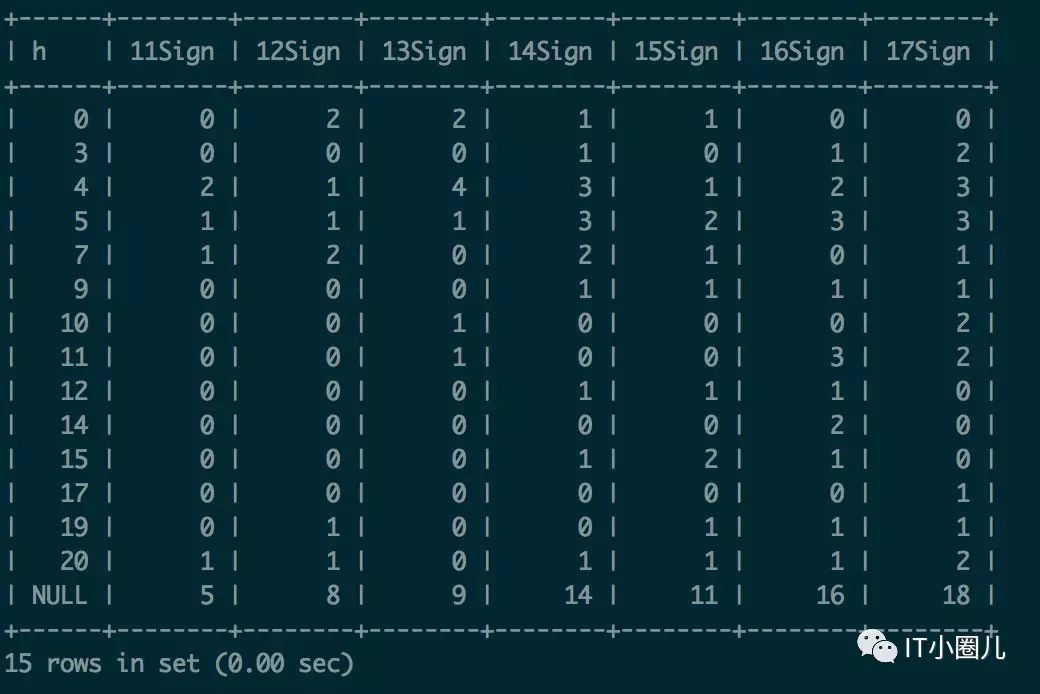
//统计每天的每小时用户签到情况(当某个小时没有数据时,显示0)

select

    h ,

    sum(case when create_time='2016-12-11' then c else 0 end) 11Sign,

    sum(case when create_time='2016-12-12' then c else 0 end) 12Sign,

    sum(case when create_time='2016-12-13' then c else 0 end) 13Sign,

    sum(case when create_time='2016-12-14' then c else 0 end) 14Sign,

    sum(case when create_time='2016-12-15' then c else 0 end) 15Sign,

    sum(case when create_time='2016-12-16' then c else 0 end) 16Sign,

    sum(case when create_time='2016-12-17' then c else 0 end) 17Sign

from

(

    select b.h h,c.create_time,c.c from

     (

        select id-1 h from test_nums where id<=24

     ) b

     left join

     (

        select

         date_format(create_time,'%Y-%m-%d') create_time,

         hour(create_time) h,

         count(*) c

        from test_sign_history

        group by

         date_format(create_time,'%Y-%m-%d'),

         hour(create_time)

      ) c on (b.h=c.h)

) a

group by h with rollup;
//统计每天的用户签到数据和每天的增量数据

select

        type,

        sum(case when create_time='2016-12-11' then c else 0 end) 11Sign,

        sum(case when create_time='2016-12-12' then c else 0 end) 12Sign,

        sum(case when create_time='2016-12-13' then c else 0 end) 13Sign,

        sum(case when create_time='2016-12-14' then c else 0 end) 14Sign,

        sum(case when create_time='2016-12-15' then c else 0 end) 15Sign,

        sum(case when create_time='2016-12-16' then c else 0 end) 16Sign,

        sum(case when create_time='2016-12-17' then c else 0 end) 17Sign

from

(

        select b.create_time,ifnull(b.c-c.c,0) c,'Increment' type from

        (

            select

             date_format(create_time,'%Y-%m-%d') create_time,

             count(*) c

            from test_sign_history

            group by

             date_format(create_time,'%Y-%m-%d')

        ) b

        left join

        (

            select

             date_format(create_time,'%Y-%m-%d') create_time,

             count(*) c

            from test_sign_history

            group by

             date_format(create_time,'%Y-%m-%d')

        ) c on(b.create_time=c.create_time+ interval 1 day)

    union all

        select

         date_format(create_time,'%Y-%m-%d') create_time,

         count(*) c,

         'Current'

        from test_sign_history

        group by

         date_format(create_time,'%Y-%m-%d')

) a

group by type

order by case when type='Current' then 1 else 0 end desc;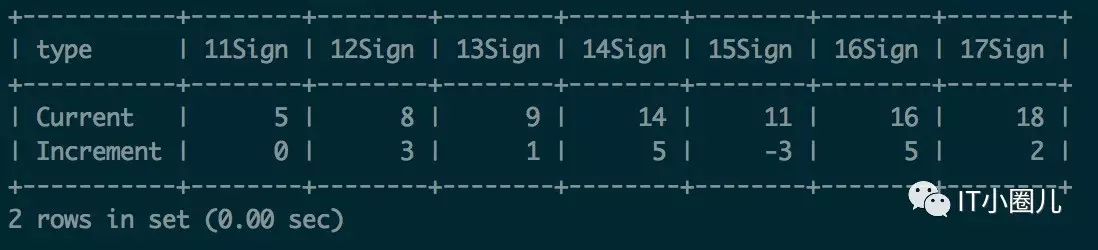
//模拟不同的用户签到了不同的天数

insert into test_sign_history(uid,create_time)

select uid,create_time + interval ceil(rand()*10) day from test_sign_history,test_nums

where test_nums.id <10 order by rand() limit 150;
//统计签到天数相同的用户数量
select
sum(case when day=1 then cn else 0 end) 1Day,
sum(case when day=2 then cn else 0 end) 2Day,
sum(case when day=3 then cn else 0 end) 3Day,
sum(case when day=4 then cn else 0 end) 4Day,
sum(case when day=5 then cn else 0 end) 5Day,
sum(case when day=6 then cn else 0 end) 6Day,
sum(case when day=7 then cn else 0 end) 7Day,
sum(case when day=8 then cn else 0 end) 8Day,
sum(case when day=9 then cn else 0 end) 9Day,
sum(case when day=10 then cn else 0 end) 10Day
from
(
select c day,count(*) cn
from
(
select uid,count(*) c from test_sign_history group by uid
) a
group by c
) b;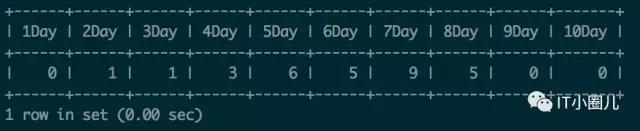
//统计每个用户的连续签到时间

select * from (

    select d.*,

    @ggid := @cggid,

    @cggid := d.uid,

    if(@ggid = @cggid, @grank := @grank + 1, @grank := 1) grank

    from

    (

        select uid,min(c.create_time) begin_date ,max(c.create_time) end_date,count(*) count from

        (

            select

            b.*,

            @gid := @cgid,

            @cgid := b.uid,

            if(@gid = @cgid, @rank := @rank + 1, @rank := 1) rank,

            b.diff-@rank flag from (

                select

                distinct

                uid,

                date_format(create_time,'%Y-%m-%d') create_time,

                datediff(create_time,now()) diff

                from test_sign_history order by uid,create_time

            ) b, (SELECT @gid := 1, @cgid := 1, @rank := 1) as a

        ) c group by uid,flag

        order by uid,count(*) desc

    ) d,(SELECT @ggid := 1, @cggid := 1, @grank := 1) as e

)f

where grank=1;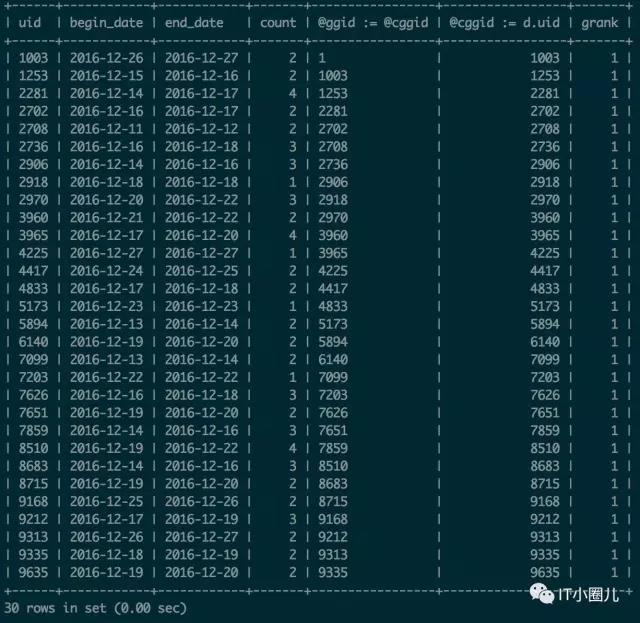
Mysql 常用SQL语句集锦的更多相关文章
- Mysql 常用 SQL 语句集锦
Mysql 常用 SQL 语句集锦 基础篇 //查询时间,友好提示 $sql = "select date_format(create_time, '%Y-%m-%d') as day fr ...
- Mysql 常用 SQL 语句集锦 转载(https://gold.xitu.io/post/584e7b298d6d81005456eb53)
Mysql 常用 SQL 语句集锦 基础篇 //查询时间,友好提示 $sql = "select date_format(create_time, '%Y-%m-%d') as day fr ...
- mysql 常用 sql 语句 - 快速查询
Mysql 常用 sql 语句 - 快速查询 1.mysql 基础 1.1 mysql 交互 1.1.1 mysql 连接 mysql.exe -hPup ...
- php面试专题---MySQL常用SQL语句优化
php面试专题---MySQL常用SQL语句优化 一.总结 一句话总结: 原理,万变不离其宗:其实SQL语句优化的过程中,无非就是对mysql的执行计划理解,以及B+树索引的理解,其实只要我们理解执行 ...
- Mysql常用sql语句(一)- 操作数据库
21篇测试必备的Mysql常用sql语句,每天敲一篇,每次敲三遍,每月一循环,全都可记住!! https://www.cnblogs.com/poloyy/category/1683347.html ...
- Mysql常用sql语句(二)- 操作数据表
21篇测试必备的Mysql常用sql语句,每天敲一篇,每次敲三遍,每月一循环,全都可记住!! https://www.cnblogs.com/poloyy/category/1683347.html ...
- Mysql常用sql语句(八)- where 条件查询
测试必备的Mysql常用sql语句,每天敲一篇,每次敲三遍,每月一循环,全都可记住!! https://www.cnblogs.com/poloyy/category/1683347.html 前言 ...
- Mysql常用sql语句(九)- like 模糊查询
测试必备的Mysql常用sql语句,每天敲一篇,每次敲三遍,每月一循环,全都可记住!! https://www.cnblogs.com/poloyy/category/1683347.html 前言 ...
- Mysql常用sql语句(13)- having 过滤分组结果集
测试必备的Mysql常用sql语句,每天敲一篇,每次敲三遍,每月一循环,全都可记住!! https://www.cnblogs.com/poloyy/category/1683347.html 前言 ...
随机推荐
- Python Revisited Day 07 (文件处理)
目录 7.1 二进制数据的读与写 7.1.1 带可选压缩的Pickle 7.1.2 带可选压缩的原始二进制数据 7.2 文本文件的写入与分析 7.2.1 写入文本 7.2.2 分析文本 7.2.3 使 ...
- tomcat 启动窗口乱码
在tomcat主目录下的conf文件夹里,找到logging.properties文件: 用记事本打开,找到以下内容 java.util.logging.ConsoleHandler.encoding ...
- vue报错如log,如果其他项目运行没问题,很有可能是代码错误 加externals报错
- layui 日期初化一个月前
lay('.test-item').each(function(){ var d = new Date(); laydate.render({ elem: this ,max: 0 ,value: d ...
- Flask 模板系统
模板 基本数据类型 可以执行python语法,如:dict.get(), list['xx'] 比django 更加亲近于 python 传入函数 - django,自动执行 - flask,不自动执 ...
- tomcat8 源码分析 | 组件及启动过程
tomcat 8 源码分析 ,本文主要讲解tomcat拥有哪些组件,容器,又是如何启动的 推荐访问我的个人网站,排版更好看呦: https://chenmingyu.top/tomcat-source ...
- 越光后端开发——ygapi(3.引入xadmin)
1.引入xadmin 1.将xadmin文件夹放入extra_apps目录下: 2.在每个app下新建adminx.py 1.apps/users/目录下新建adminx.py: import xad ...
- Cucumber环境配置
1.JDK下载和配置 2.Maven下载和环境配置 3.IDEA下载和Cucumber插件安装 下载地址官网,一般IDEA自带cucumber插件 如果没有安装过的话,点击以下进行搜索安装,安装完成后 ...
- 2019南昌邀请赛网络预选赛 I. Max answer(单调栈+暴力??)
传送门 题意: 给你你一序列 a,共 n 个元素,求最大的F(l,r): F(l,r) = (a[l]+a[l+1]+.....+a[r])*min(l,r); ([l,r]的区间和*区间最小值,F( ...
- 分布式监控系统开发【day38】:报警策略设计(二)
一.策略和动作多对多的好处坏处 1.好处: 相同服务,相同策略的服务可以不用重复写好多次触发器 2.坏处: 1.策略A给小李和小罗发邮件2.策略B给小胡和小崔发邮件3.策略A是第三部发邮件4.策略B是 ...