
mybatis sqlsession与sqlsquery、transaction、connection
sqlsession和connection
- 一个sqlsession一般对应一个connection,并且mybatis默认每次获取session都会开启一个事务,且不自动提交事务。如果更新操作完成后不手动commit,则在连接断开时会将更新操作回滚,一个sqlSession(一个transaction)中可以多次commit,commit后cache和statement刷新(一般一个事务(transaction)只对应一个sqlseesion,也即一个connection,分布式一个事务可以对应多个connection),只有close后同时关闭sqlsession和transaction(transaction可以由factory关闭)并返回connection。mybatis的transaction基本没添加什么功能,大部分仅状态判断后交由connection(再由jdbc)执行。可能是为了给spring等框架容易组转自己的事务管理机制。
sqlsession与transaction
(第一个JdbcTransactionFactory、第二个defaultsqlsessonfactory):
用transactionFactory创建相应的transaction,用创建出的tx来创建executor,再用executor和配置信息来创建defaulSqlsession
public class JdbcTransactionFactory implements TransactionFactory {

    public JdbcTransactionFactory() {

    }

    public void setProperties(Properties props) {

    }

    public Transaction newTransaction(Connection conn) {

        return new JdbcTransaction(conn);

    }

    public Transaction newTransaction(DataSource ds, TransactionIsolationLevel level, boolean autoCommit) {

        return new JdbcTransaction(ds, level, autoCommit);

    }

}
public class DefaultSqlSessionFactory implements SqlSessionFactory {

public SqlSession openSession(ExecutorType execType, Connection connection) {

    return this.openSessionFromConnection(execType, connection);

}

 private SqlSession openSessionFromConnection(ExecutorType execType, Connection connection) {//分为两种创建(dataSource、fromConnection)

        DefaultSqlSession var8;

        try {

            boolean autoCommit;

            try {

                autoCommit = connection.getAutoCommit();

            } catch (SQLException var13) {

                autoCommit = true;

            }

            Environment environment = this.configuration.getEnvironment();

            TransactionFactory transactionFactory = this.getTransactionFactoryFromEnvironment(environment);

            Transaction tx = transactionFactory.newTransaction(connection);

            Executor executor = this.configuration.newExecutor(tx, execType);

            var8 = new DefaultSqlSession(this.configuration, executor, autoCommit);

        } catch (Exception var14) {

            throw ExceptionFactory.wrapException("Error opening session.  Cause: " + var14, var14);

        } finally {

            ErrorContext.instance().reset();

        }

        return var8;

    }

 private SqlSession openSessionFromConnection(ExecutorType execType, Connection connection) {

        DefaultSqlSession var8;

        try {

            boolean autoCommit;

            try {

                autoCommit = connection.getAutoCommit();

            } catch (SQLException var13) {

                autoCommit = true;

            }

            Environment environment = this.configuration.getEnvironment();

            TransactionFactory transactionFactory = this.getTransactionFactoryFromEnvironment(environment);

            Transaction tx = transactionFactory.newTransaction(connection);

            Executor executor = this.configuration.newExecutor(tx, execType);

            var8 = new DefaultSqlSession(this.configuration, executor, autoCommit);

        } catch (Exception var14) {

            throw ExceptionFactory.wrapException("Error opening session.  Cause: " + var14, var14);

        } finally {

            ErrorContext.instance().reset();

        }

        return var8;

    }
sqlsession对executor的调用
(defaultSqlsession)
public class DefaultSqlSession implements SqlSession {

public <E> List<E> selectList(String statement, Object parameter, RowBounds rowBounds) {

    List var5;

    try {

        MappedStatement ms = this.configuration.getMappedStatement(statement);

        var5 = this.executor.query(ms, this.wrapCollection(parameter), rowBounds, Executor.NO_RESULT_HANDLER);

    } catch (Exception var9) {

        throw ExceptionFactory.wrapException("Error querying database.  Cause: " + var9, var9);

    } finally {

        ErrorContext.instance().reset();

    }

    return var5;

}

public int update(String statement, Object parameter) {

        int var4;

        try {

            this.dirty = true;

            MappedStatement ms = this.configuration.getMappedStatement(statement);

            var4 = this.executor.update(ms, this.wrapCollection(parameter));

        } catch (Exception var8) {

            throw ExceptionFactory.wrapException("Error updating database.  Cause: " + var8, var8);

        } finally {

            ErrorContext.instance().reset();

        }

        return var4;

    }

 public void commit(boolean force) {

        try {

            this.executor.commit(this.isCommitOrRollbackRequired(force));

            this.dirty = false;

        } catch (Exception var6) {

            throw ExceptionFactory.wrapException("Error committing transaction.  Cause: " + var6, var6);

        } finally {

            ErrorContext.instance().reset();

        }

    }

     public void rollback(boolean force) {

        try {

            this.executor.rollback(this.isCommitOrRollbackRequired(force));

            this.dirty = false;

        } catch (Exception var6) {

            throw ExceptionFactory.wrapException("Error rolling back transaction.  Cause: " + var6, var6);

        } finally {

            ErrorContext.instance().reset();

        }

    }
- sqlsession无论执行sql语句还是对事物的管理,都会转由executor执行
executor对sql的执行
- (simpleExecutor extends baseExecutor) sqlsession->executor->connection
- 由configuration以及参数生成语句处理对象 handler,再调用preaparement方法对handler进行connection的获取与连接,之后将操作都交给了handler,经过实现了statementhandler接口的RoutingStatementHandler->PreparedStatementHandler(extends BaseStatementHandler)之后的preparedstatement等statement后,便是jdbc的excute操作与result的封装
- 一级缓存的发生也在处理后发生
public class SimpleExecutor extends BaseExecutor {

    public SimpleExecutor(Configuration configuration, Transaction transaction) {

        super(configuration, transaction);

    }

    public int doUpdate(MappedStatement ms, Object parameter) throws SQLException {

        Statement stmt = null;

        int var6;

        try {

            Configuration configuration = ms.getConfiguration();

            StatementHandler handler = configuration.newStatementHandler(this, ms, parameter, RowBounds.DEFAULT, (ResultHandler)null, (BoundSql)null);

            stmt = this.prepareStatement(handler, ms.getStatementLog());

            var6 = handler.update(stmt);

        } finally {

            this.closeStatement(stmt);

        }

        return var6;

    }

    public <E> List<E> doQuery(MappedStatement ms, Object parameter, RowBounds rowBounds, ResultHandler resultHandler, BoundSql boundSql) throws SQLException {

        Statement stmt = null;

        List var9;

        try {

            Configuration configuration = ms.getConfiguration();

            StatementHandler handler = configuration.newStatementHandler(this.wrapper, ms, parameter, rowBounds, resultHandler, boundSql);

            stmt = this.prepareStatement(handler, ms.getStatementLog());

            var9 = handler.query(stmt, resultHandler);

        } finally {

            this.closeStatement(stmt);

        }

        return var9;

    }

     private Statement prepareStatement(StatementHandler handler, Log statementLog) throws SQLException {

        Connection connection = this.getConnection(statementLog);

        Statement stmt = handler.prepare(connection, this.transaction.getTimeout());

        handler.parameterize(stmt);

        return stmt;

    }
executor对事务的处理
- 由simpleExecutor对象处理,但用的方法都继承自baseExecutor
- sqlsession(带着在sqlsessionfactory创建的transaction)->executor(transaction)->transaction.commit/close·····
- executor 将事务管理交给了 transaction,commit/rollback等对cache和statement的清空(clearLocalCache,flushStatements)也在这里开始进行。
- 在sqlsession的close前,对sql语句的执行都会用getConnection创建的连接进行sql语句的执行,commit也并不会说新建一个事务(transaction),而是清空cache和statement并提交jdbc执行后的结果到mysql。此时仍可以用commit后的sqlsession和transaction进行getMapper代理并调用接口方法,只有close后两者才会消失
public class SimpleExecutor extends BaseExecutor {

public Transaction getTransaction() {

    if (this.closed) {

        throw new ExecutorException("Executor was closed.");

    } else {

        return this.transaction;

    }

}

public void close(boolean forceRollback) {

    try {

        try {

            this.rollback(forceRollback);

        } finally {

            if (this.transaction != null) {

                this.transaction.close();

            }

        }

    } catch (SQLException var11) {

        log.warn("Unexpected exception on closing transaction.  Cause: " + var11);

    } finally {

        this.transaction = null;

        this.deferredLoads = null;

        this.localCache = null;

        this.localOutputParameterCache = null;

        this.closed = true;

    }

}

public void commit(boolean required) throws SQLException {

        if (this.closed) {

            throw new ExecutorException("Cannot commit, transaction is already closed");

        } else {

            this.clearLocalCache();

            this.flushStatements();

            if (required) {

                this.transaction.commit();

            }

        }

    }

 public void rollback(boolean required) throws SQLException {

        if (!this.closed) {

            try {

                this.clearLocalCache();

                this.flushStatements(true);

            } finally {

                if (required) {

                    this.transaction.rollback();

                }

            }

        }

    }

public void clearLocalCache() {

        if (!this.closed) {

            this.localCache.clear();

            this.localOutputParameterCache.clear();

        }

    }
transaction到connection
- JdbcTransaction
- 由transaction对与connection 的commit/colse进行管理。
public class JdbcTransaction implements Transaction {

public JdbcTransaction(Connection connection) {

    this.connection = connection;

}

public Connection getConnection() throws SQLException {

    if (this.connection == null) {

        this.openConnection();

    }

    return this.connection;

}

public void commit() throws SQLException {

    if (this.connection != null && !this.connection.getAutoCommit()) {

        if (log.isDebugEnabled()) {

            log.debug("Committing JDBC Connection [" + this.connection + "]");

        }

        this.connection.commit();

    }

}

public void rollback() throws SQLException {

    if (this.connection != null && !this.connection.getAutoCommit()) {

        if (log.isDebugEnabled()) {

            log.debug("Rolling back JDBC Connection [" + this.connection + "]");

        }

        this.connection.rollback();

    }

}

public void close() throws SQLException {

    if (this.connection != null) {

        this.resetAutoCommit();

        if (log.isDebugEnabled()) {

            log.debug("Closing JDBC Connection [" + this.connection + "]");

        }

        this.connection.close();

    }

}

}
connection
- connectionImp类
- 从这开始便是com.mysql.jdbc包的东西了,就是与数据库直接进行交接的部分了
public class ConnectionImpl extends ConnectionPropertiesImpl implements Connection {

public void commit() throws SQLException {

    synchronized(this.getMutex()) {

        this.checkClosed();

        try {

            if (this.connectionLifecycleInterceptors != null) {

                IterateBlock iter = new IterateBlock(this.connectionLifecycleInterceptors.iterator()) {

                    void forEach(Object each) throws SQLException {

                        if (!((ConnectionLifecycleInterceptor)each).commit()) {

                            this.stopIterating = true;

                        }

                    }

                };

                iter.doForAll();

                if (!iter.fullIteration()) {

                    return;

                }

            }

            if (this.autoCommit && !this.getRelaxAutoCommit()) {

                throw SQLError.createSQLException("Can't call commit when autocommit=true");

            }

            if (this.transactionsSupported) {

                if (this.getUseLocalSessionState() && this.versionMeetsMinimum(5, 0, 0) && !this.io.inTransactionOnServer()) {

                    return;

                }

                this.execSQL((StatementImpl)null, "commit", -1, (Buffer)null, 1003, 1007, false, this.database, (Field[])null, false);

            }

        } catch (SQLException var8) {

            if ("08S01".equals(var8.getSQLState())) {

                throw SQLError.createSQLException("Communications link failure during commit(). Transaction resolution unknown.", "08007");

            }

            throw var8;

        } finally {

            this.needsPing = this.getReconnectAtTxEnd();

        }

    }

}

}

spring与MyBatis 事务管理
https://coderbee.net/index.php/framework/20191025/2002
1. 运行环境 Enviroment
当 MyBatis 与不同的应用结合时,需要不同的事务管理机制。与 Spring 结合时,由 Spring 来管理事务;单独使用时需要自行管理事务,在容器里运行时可能由容器进行管理。
MyBatis 用 Enviroment 来表示运行环境,其封装了三个属性:
public class Configuration {

    // 一个 MyBatis 的配置只对应一个环境

    protected Environment environment;

    // 其他属性 .....

}

public final class Environment {

    private final String id;

    private final TransactionFactory transactionFactory;

    private final DataSource dataSource;

}
2. 事务抽象
MyBatis 把事务管理抽象出 Transaction 接口,由 TransactionFactory 接口的实现类负责创建。
public interface Transaction {

    Connection getConnection() throws SQLException;

    void commit() throws SQLException;

    void rollback() throws SQLException;

    void close() throws SQLException;

    Integer getTimeout() throws SQLException;

}

public interface TransactionFactory {

    void setProperties(Properties props);

    Transaction newTransaction(Connection conn);

    Transaction newTransaction(DataSource dataSource, TransactionIsolationLevel level, boolean autoCommit);

}
Executor 的实现持有一个 SqlSession 实现,事务控制是委托给 SqlSession 的方法来实现的。
public abstract class BaseExecutor implements Executor {

    protected Transaction transaction;

    public void commit(boolean required) throws SQLException {

        if (closed) {

            throw new ExecutorException("Cannot commit, transaction is already closed");

        }

        clearLocalCache();

        flushStatements();

        if (required) {

            transaction.commit();

        }

    }

    public void rollback(boolean required) throws SQLException {

        if (!closed) {

            try {

                clearLocalCache();

                flushStatements(true);

            } finally {

                if (required) {

                    transaction.rollback();

                }

            }

        }

    }

    // 省略其他方法、属性

}
3. 与 Spring 集成的事务管理
3.1 配置 TransactionFactory
与 Spring 集成时,通过 SqlSessionFactoryBean 来初始化 MyBatis 。
protected SqlSessionFactory buildSqlSessionFactory() throws IOException {

    Configuration configuration;

    XMLConfigBuilder xmlConfigBuilder = null;

    if (this.configuration != null) {

        configuration = this.configuration;

        if (configuration.getVariables() == null) {

            configuration.setVariables(this.configurationProperties);

        } else if (this.configurationProperties != null) {

            configuration.getVariables().putAll(this.configurationProperties);

        }

    } else if (this.configLocation != null) {

        xmlConfigBuilder = new XMLConfigBuilder(this.configLocation.getInputStream(), null, this.configurationProperties);

        configuration = xmlConfigBuilder.getConfiguration();

    } else {

        configuration = new Configuration();

        configuration.setVariables(this.configurationProperties);

    }

    if (this.objectFactory != null) {

        configuration.setObjectFactory(this.objectFactory);

    }

    if (this.objectWrapperFactory != null) {

        configuration.setObjectWrapperFactory(this.objectWrapperFactory);

    }

    if (this.vfs != null) {

        configuration.setVfsImpl(this.vfs);

    }

    if (hasLength(this.typeAliasesPackage)) {

        String[] typeAliasPackageArray = tokenizeToStringArray(this.typeAliasesPackage,

        ConfigurableApplicationContext.CONFIG_LOCATION_DELIMITERS);

        for (String packageToScan : typeAliasPackageArray) {

            configuration.getTypeAliasRegistry().registerAliases(packageToScan,

            typeAliasesSuperType == null ? Object.class : typeAliasesSuperType);

        }

    }

    if (!isEmpty(this.typeAliases)) {

        for (Class<?> typeAlias : this.typeAliases) {

            configuration.getTypeAliasRegistry().registerAlias(typeAlias);

        }

    }

    if (!isEmpty(this.plugins)) {

        for (Interceptor plugin : this.plugins) {

            configuration.addInterceptor(plugin);

        }

    }

    if (hasLength(this.typeHandlersPackage)) {

        String[] typeHandlersPackageArray = tokenizeToStringArray(this.typeHandlersPackage,

        ConfigurableApplicationContext.CONFIG_LOCATION_DELIMITERS);

        for (String packageToScan : typeHandlersPackageArray) {

            configuration.getTypeHandlerRegistry().register(packageToScan);

        }

    }

    if (!isEmpty(this.typeHandlers)) {

        for (TypeHandler<?> typeHandler : this.typeHandlers) {

            configuration.getTypeHandlerRegistry().register(typeHandler);

        }

    }

    if (this.databaseIdProvider != null) {//fix #64 set databaseId before parse mapper xmls

        try {

            configuration.setDatabaseId(this.databaseIdProvider.getDatabaseId(this.dataSource));

        } catch (SQLException e) {

            throw new NestedIOException("Failed getting a databaseId", e);

        }

    }

    if (this.cache != null) {

        configuration.addCache(this.cache);

    }

    if (xmlConfigBuilder != null) {

        try {

            xmlConfigBuilder.parse();

        } catch (Exception ex) {

            throw new NestedIOException("Failed to parse config resource: " + this.configLocation, ex);

        } finally {

            ErrorContext.instance().reset();

        }

    }

    // 创建 SpringManagedTransactionFactory

    if (this.transactionFactory == null) {

        this.transactionFactory = new SpringManagedTransactionFactory();

    }

    // 封装成 Environment

    configuration.setEnvironment(new Environment(this.environment, this.transactionFactory, this.dataSource));

    if (!isEmpty(this.mapperLocations)) {

        for (Resource mapperLocation : this.mapperLocations) {

            if (mapperLocation == null) {

                continue;

            }

            try {

                XMLMapperBuilder xmlMapperBuilder = new XMLMapperBuilder(mapperLocation.getInputStream(),

                configuration, mapperLocation.toString(), configuration.getSqlFragments());

                xmlMapperBuilder.parse();

            } catch (Exception e) {

                throw new NestedIOException("Failed to parse mapping resource: '" + mapperLocation + "'", e);

            } finally {

                ErrorContext.instance().reset();

            }

        }

    } else {

    }

    return this.sqlSessionFactoryBuilder.build(configuration);

}

public class SqlSessionFactoryBuilder {

    public SqlSessionFactory build(Configuration config) {

        return new DefaultSqlSessionFactory(config);

    }

}
重点是在构建 MyBatis Configuration 对象时,把 transactionFactory 配置成 SpringManagedTransactionFactory,再封装成 Environment 对象。
3.2 运行时事务管理
Mapper 的代理对象持有的是 SqlSessionTemplate,其实现了 SqlSession 接口。
SqlSessionTemplate 的方法并不直接调用具体的 SqlSession 的方法,而是委托给一个动态代理,通过代理 SqlSessionInterceptor 对方法调用进行拦截。
SqlSessionInterceptor 负责获取真实的与数据库关联的 SqlSession 实现,并在方法执行完后决定提交或回滚事务、关闭会话。
public class SqlSessionTemplate implements SqlSession, DisposableBean {

    private final SqlSessionFactory sqlSessionFactory;

    private final ExecutorType executorType;

    private final SqlSession sqlSessionProxy;

    private final PersistenceExceptionTranslator exceptionTranslator;

    public SqlSessionTemplate(SqlSessionFactory sqlSessionFactory, ExecutorType executorType,

        PersistenceExceptionTranslator exceptionTranslator) {

        notNull(sqlSessionFactory, "Property 'sqlSessionFactory' is required");

        notNull(executorType, "Property 'executorType' is required");

        this.sqlSessionFactory = sqlSessionFactory;

        this.executorType = executorType;

        this.exceptionTranslator = exceptionTranslator;

        // 因为 SqlSession 接口声明的方法也不少,

        // 在每个方法里添加事务相关的拦截比较麻烦,

        // 不如创建一个内部的代理对象进行统一处理。

        this.sqlSessionProxy = (SqlSession) newProxyInstance(

            SqlSessionFactory.class.getClassLoader(),

            new Class[] { SqlSession.class },

            new SqlSessionInterceptor());

    }

    public int update(String statement) {

        // 在代理对象上执行方法调用

        return this.sqlSessionProxy.update(statement);

    }

    // 对方法调用进行拦截,加入事务控制逻辑

    private class SqlSessionInterceptor implements InvocationHandler {

        public Object invoke(Object proxy, Method method, Object[] args) throws Throwable {

            // 获取与数据库关联的会话

            SqlSession sqlSession = SqlSessionUtils.getSqlSession(

                SqlSessionTemplate.this.sqlSessionFactory,

                SqlSessionTemplate.this.executorType,

                SqlSessionTemplate.this.exceptionTranslator);

            try {

                // 执行 SQL 操作

                Object result = method.invoke(sqlSession, args);

                if (!SqlSessionUtils.isSqlSessionTransactional(sqlSession, SqlSessionTemplate.this.sqlSessionFactory)) {

                    // 如果 sqlSession 不是 Spring 管理的,则要自行提交事务

                    sqlSession.commit(true);

                }

                return result;

            } catch (Throwable t) {

                Throwable unwrapped = unwrapThrowable(t);

                if (SqlSessionTemplate.this.exceptionTranslator != null && unwrapped instanceof PersistenceException) {

                    SqlSessionUtils.closeSqlSession(sqlSession, SqlSessionTemplate.this.sqlSessionFactory);

                    sqlSession = null;

                    Throwable translated = SqlSessionTemplate.this.exceptionTranslator.translateExceptionIfPossible((PersistenceException) unwrapped);

                    if (translated != null) {

                        unwrapped = translated;

                    }

                }

                throw unwrapped;

            } finally {

                if (sqlSession != null) {

                    SqlSessionUtils.closeSqlSession(sqlSession, SqlSessionTemplate.this.sqlSessionFactory);

                }

            }

        }

    }

}
SqlSessionUtils 封装了对 Spring 事务管理机制的访问。
// SqlSessionUtils

public static SqlSession getSqlSession(SqlSessionFactory sessionFactory, ExecutorType executorType, PersistenceExceptionTranslator exceptionTranslator) {

    // 从 Spring 的事务管理机制那里获取当前事务关联的会话

    SqlSessionHolder holder = (SqlSessionHolder) TransactionSynchronizationManager.getResource(sessionFactory);

    SqlSession session = sessionHolder(executorType, holder);

    if (session != null) {

        // 已经有一个会话则复用

        return session;

    }

    // 创建新的 会话

    session = sessionFactory.openSession(executorType);

    // 注册到 Spring 的事务管理机制里

    registerSessionHolder(sessionFactory, executorType, exceptionTranslator, session);

    return session;

}

private static void registerSessionHolder(SqlSessionFactory sessionFactory, ExecutorType executorType,

        PersistenceExceptionTranslator exceptionTranslator, SqlSession session) {

    SqlSessionHolder holder;

    if (TransactionSynchronizationManager.isSynchronizationActive()) {

        Environment environment = sessionFactory.getConfiguration().getEnvironment();

        if (environment.getTransactionFactory() instanceof SpringManagedTransactionFactory) {

            holder = new SqlSessionHolder(session, executorType, exceptionTranslator);

            TransactionSynchronizationManager.bindResource(sessionFactory, holder);

            // 重点:注册会话管理的回调钩子,真正的关闭动作是在回调里完成的。

            TransactionSynchronizationManager.registerSynchronization(new SqlSessionSynchronization(holder, sessionFactory));

            holder.setSynchronizedWithTransaction(true);

            // 维护会话的引用计数

            holder.requested();

        } else {

            if (TransactionSynchronizationManager.getResource(environment.getDataSource()) == null) {

            } else {

                throw new TransientDataAccessResourceException(

                    "SqlSessionFactory must be using a SpringManagedTransactionFactory in order to use Spring transaction synchronization");

            }

        }

    } else {

    }

}

public static void closeSqlSession(SqlSession session, SqlSessionFactory sessionFactory) {

    // 从线程本地变量里获取 Spring 管理的会话

    SqlSessionHolder holder = (SqlSessionHolder) TransactionSynchronizationManager.getResource(sessionFactory);

    if ((holder != null) && (holder.getSqlSession() == session)) {

        // Spring 管理的不直接关闭,由回调钩子来关闭

        holder.released();

    } else {

        // 非 Spring 管理的直接关闭

        session.close();

    }

}
SqlSessionSynchronization 是 SqlSessionUtils 的内部私有类,用于作为回调钩子与 Spring 的事务管理机制协调工作,TransactionSynchronizationManager 在适当的时候回调其方法。
private static final class SqlSessionSynchronization extends TransactionSynchronizationAdapter {

    private final SqlSessionHolder holder;

    private final SqlSessionFactory sessionFactory;

    private boolean holderActive = true;

    public SqlSessionSynchronization(SqlSessionHolder holder, SqlSessionFactory sessionFactory) {

        this.holder = holder;

        this.sessionFactory = sessionFactory;

    }

    public int getOrder() {

        return DataSourceUtils.CONNECTION_SYNCHRONIZATION_ORDER - 1;

    }

    public void suspend() {

        if (this.holderActive) {

            TransactionSynchronizationManager.unbindResource(this.sessionFactory);

        }

    }

    public void resume() {

        if (this.holderActive) {

            TransactionSynchronizationManager.bindResource(this.sessionFactory, this.holder);

        }

    }

    public void beforeCommit(boolean readOnly) {

        if (TransactionSynchronizationManager.isActualTransactionActive()) {

            try {

                this.holder.getSqlSession().commit();

            } catch (PersistenceException p) {

                if (this.holder.getPersistenceExceptionTranslator() != null) {

                    DataAccessException translated = this.holder

                        .getPersistenceExceptionTranslator()

                        .translateExceptionIfPossible(p);

                    if (translated != null) {

                        throw translated;

                    }

                }

                throw p;

            }

        }

    }

    public void beforeCompletion() {

        if (!this.holder.isOpen()) {

            TransactionSynchronizationManager.unbindResource(sessionFactory);

            this.holderActive = false;

            // 真正关闭数据库会话

            this.holder.getSqlSession().close();

        }

    }

    public void afterCompletion(int status) {

        if (this.holderActive) {

            TransactionSynchronizationManager.unbindResourceIfPossible(sessionFactory);

            this.holderActive = false;

            // 真正关闭数据库会话

            this.holder.getSqlSession().close();

        }

        this.holder.reset();

    }

}
3.3 创建新会话
// DefaultSqlSessionFactory

private SqlSession openSessionFromDataSource(ExecutorType execType, TransactionIsolationLevel level, boolean autoCommit) {

    Transaction tx = null;

    try {

        final Environment environment = configuration.getEnvironment();

        // 获取事务工厂实现

        final TransactionFactory transactionFactory = getTransactionFactoryFromEnvironment(environment);

        tx = transactionFactory.newTransaction(environment.getDataSource(), level, autoCommit);

        final Executor executor = configuration.newExecutor(tx, execType);

        return new DefaultSqlSession(configuration, executor, autoCommit);

    } catch (Exception e) {

        closeTransaction(tx); // may have fetched a connection so lets call close()

        throw ExceptionFactory.wrapException("Error opening session.  Cause: " + e, e);

    } finally {

        ErrorContext.instance().reset();

    }

}

private TransactionFactory getTransactionFactoryFromEnvironment(Environment environment) {

    if (environment == null || environment.getTransactionFactory() == null) {

        return new ManagedTransactionFactory();

    }

    return environment.getTransactionFactory();

}
4. 小结
- MyBatis 的核心组件 Executor 通过 Transaction 接口来进行事务控制。
- 与 Spring 集成时,初始化 Configuration 时会把 transactionFactory 设置为 SpringManagedTransactionFactory 的实例。
- 每个 Mapper 代理里注入的 SqlSession 是 SqlSessionTemplate 的实例,其实现了 SqlSession 接口;
- SqlSessionTemplate 把对 SqlSession 接口里声明的方法调用委托给内部的一个动态代理,该代理的方法处理器为内部类 SqlSessionInterceptor 。
- SqlSessionInterceptor 接收到方法调用时,通过 SqlSessionUtil 访问 Spring 的事务设施,如果有与 Spring 当前事务关联的 SqlSession 则复用;没有则创建一个。
- SqlSessionInterceptor 根据 Spring 当前事务的状态来决定是否提交或回滚事务。会话的真正关闭是通过注册在 TransactionSynchronizationManager 上的回调钩子实现的。
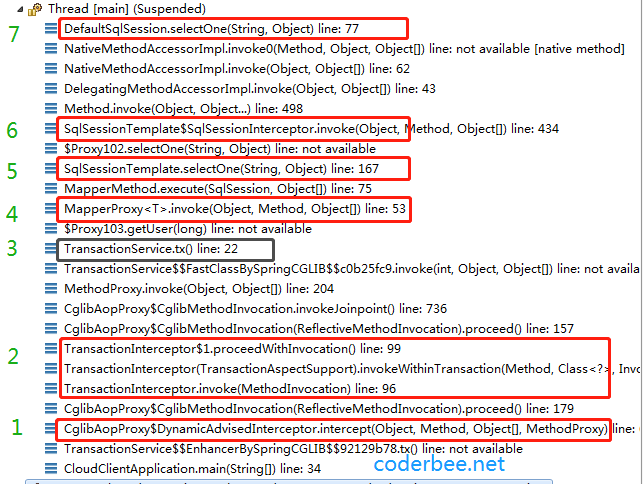
如上图:
\1. 步骤 1 是 Spring AOP 添加的切面的执行,事务是其中一个切面。
\2. 步骤 2 是 Spring 事务管理机制的部分。
\3. 步骤 3 是业务代码,调用 Mapper 代理上的方法。
\4. 步骤 4 是代理上的方法调用被 MapperProxy.invoke 拦截。
\5. 步骤 5、6 是因为 MapperProxy 持有的 sqlSession 是 SqlSessionTemplate,调用到 template 上的方法,又被转发给内部类 SqlSessionInterceptor ,该类获得 Spring 事务管理持有的数据库连接,用以创建 Executor h和 DefaultSqlSession。
\6. 步骤 7 用 DefaultSqlSession 发起数据库调用。
mybatis sqlsession与sqlsquery、transaction、connection的更多相关文章
- 关于MyBatis sqlSession的一点整理
工作中,需要学习一下MyBatis sqlSession的产生过程,翻看了mybatis-spring的源码,阅读了一些mybatis的相关doc,对mybatis sqlSession有了一些认知和 ...
- mybatis源码阅读-Transaction和TransactionFactory(四)
Transaction 类图 接口定义 public interface Transaction { Connection getConnection() throws SQLException; v ...
- MyBatis 源码篇-Transaction
本章简单介绍一下 MyBatis 的事务模块,这块内容比较简单,主要为后面介绍 mybatis-spring-1.**.jar(MyBatis 与 Spring 集成)中的事务模块做准备. 类图结构 ...
- Spring Transaction + MyBatis SqlSession事务管理机制[marked]
- mybatis SqlSession事务
mybatis版本:3.4.6. mybatis默认的SqlSessionFactory是DefaultSqlSessionFactory,它openSession()的源码是: public Sql ...
- MyBatis sqlsession 简化 使用工具类创建
2019-04-09 @Test public void Test() throws Exception { // 1.读取配置文件 String resource = "mybatis-c ...
- spring中的mybatis的sqlSession是如何做到线程隔离的?
项目中常常使用mybatis配合spring进行数据库操作,但是我们知道,数据的操作是要求做到线程安全的,而且按照原来的jdbc的使用方式,每次操作完成之后都要将连接关闭,但是实际使用中我们并没有这么 ...
- mybatis与hibernate常用的持久化类,及sqlsession和sqlsessionTemplate区别
首先, 通过翻阅源码,我们来整理一下mybatis进行持久化操作时重要的几个类:SqlSessionFactoryBuilder:build方法创建SqlSessionFactory实例.SqlSes ...
- MyBatis常用对象SqlSessionFactory和SqlSession介绍和运用
学习框架一个比较好的路径阅读源码.本文介绍的SqlSessionFactory和SqlSession.可以通过了解SqlSessionFactory接口和SqlSession接口以及两个的实现类入手, ...
随机推荐
- Python3-paramiko模块-基于SSH的远程连接模块
Python3中的paramiko模块,基于SSH用于连接远程服务器并执行相关操作 http://docs.paramiko.org/en/2.1/ SSHClient 用于连接远程服务器并执行基本命 ...
- 使用TimerTask创建定时任务
使用TimerTask创建定时任务,打包之后应用于linux系统 step1:创建java项目 step2:代码实现 定时任务实现类CreateTask.java是打印操作者的名字 配置准换类Conf ...
- 入门大数据---HDFS-HA搭建
一.简述 上一篇了解了Zookeeper和HDFS的一些概念,今天就带大家从头到尾搭建一下,其中遇到的一些坑也顺便记录下. 1.1 搭建的拓扑图如下: 1.2 部署环境:Centos3.1,java1 ...
- 入门大数据---Hbase搭建
环境介绍 tuge1 tuge2 tuge3 tuge4 NameNode NameNode DataNode DataNode ZooKeeper ZooKeeper ZooKeeper ZooKe ...
- js基础练习题(3)
8.this 1.举例说说apply方法和call方法的作用和区别 2.读下面代码,写程序结果 function identify () { return this.name.toUpperCase( ...
- postman无法正常启动
想请教下各位大神,我电脑的postman打开之后就一直转,没法启动是怎么回事?重装了不同版本的也是同样的情况,重启电脑也没用...同样的安装包,在别的电脑上就能正常打开!有什么办法解决吗? 0 20 ...
- Flutter 中那么多组件,难道要都学一遍?
在 Flutter 中一切皆是 组件,仅仅 Widget 的子类和间接子类就有 350 多个,整理的 Flutter组件继承关系图 可以帮助大家更好的理解学习 Flutter,回归正题,如此多的组件到 ...
- JavaScript基础原始数据类型的封装对象(013)
JavaScript提供了5种原始数据类型:number, string, boolean, null, and undefined.对于前面3个,即number, string, 和boolean提 ...
- 【FastDFS】FastDFS 分布式文件系统的安装与使用,看这一篇就够了!!
写在前面 有不少小伙伴在实际工作中,对于如何存储文件(图片.视频.音频等)没有一个很好的解决思路.都明白不能将文件存储在单台服务器的磁盘上,也知道需要将文件进行副本备份.如果自己手动写文件的副本机制, ...
- 阐述Fetch.ai的能源市场优化
原文链接:https://fetch.ai/explaining-fetch-ais-energy-market-optimization/ 阐述Fetch.ai的能源市场优化 2019年11月4日 ...