
Spring Boot Security And JSON Web Token
Spring Boot Security And JSON Web Token 说明
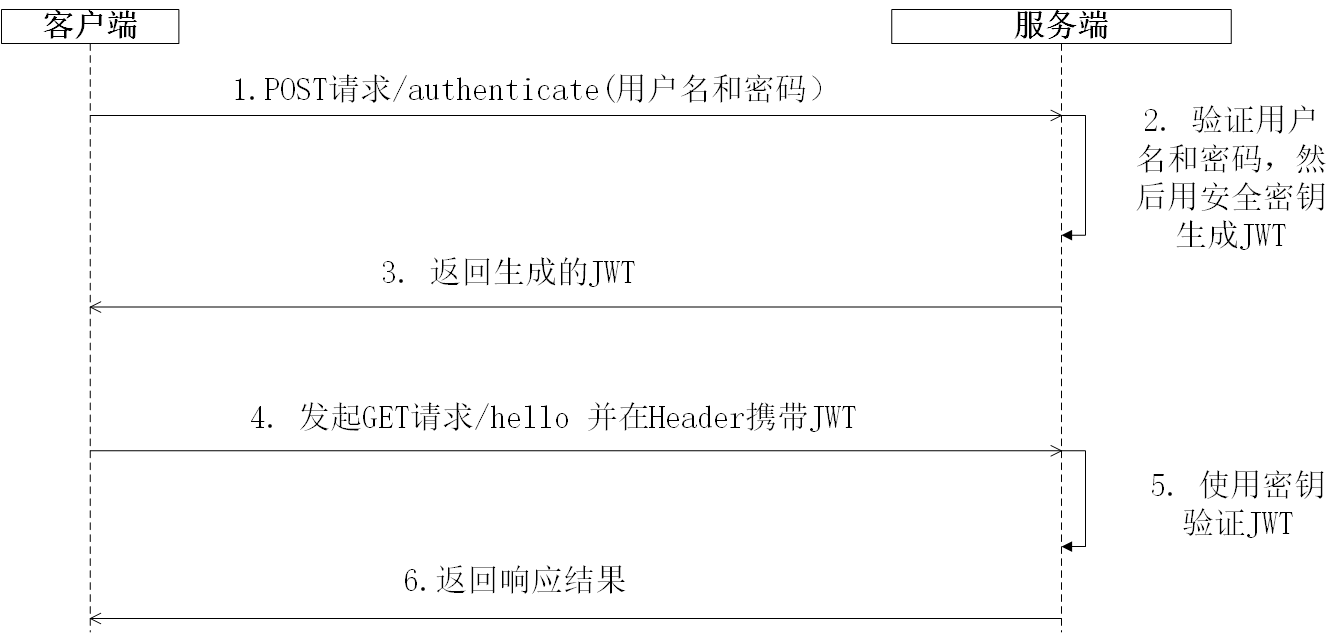
流程说明
何时生成和使用jwt,其实我们主要是token更有意义并携带一些信息
https://github.com/Ants-double/huanhuncao/tree/master/visio
实操准备
新建一个spring boot 项目,并添加hello请求
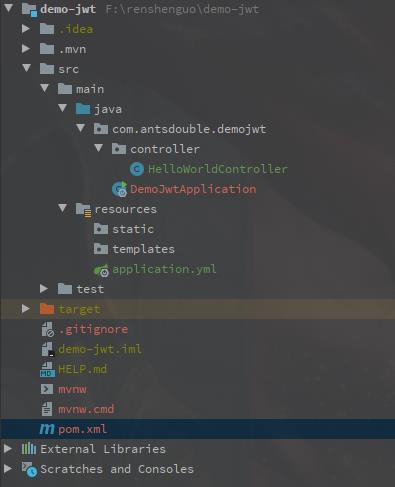
工程目录结构如下
- HelloWorldController 代码如下
package com.antsdouble.demojwt.controller;

import org.springframework.web.bind.annotation.GetMapping;

import org.springframework.web.bind.annotation.RestController;

@RestController

public class HelloWorldController {

    @GetMapping(value = {"/hello"})

    public String hello() {

        return "Hello World JWT";

    }

}
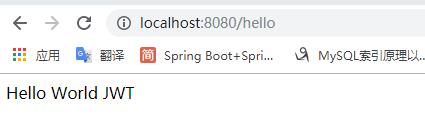
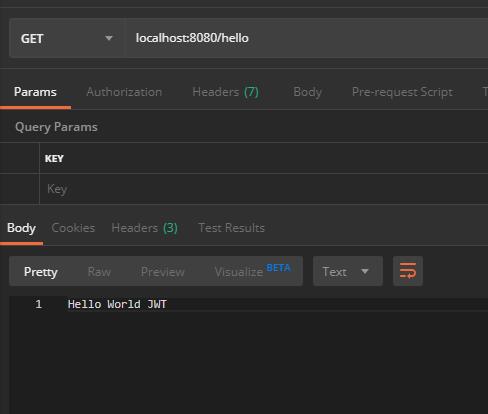
- 请求结果
配置Spring Security 和JWT
完整 的pom.xml
<?xml version="1.0" encoding="UTF-8"?>

<project xmlns="http://maven.apache.org/POM/4.0.0" xmlns:xsi="http://www.w3.org/2001/XMLSchema-instance"

         xsi:schemaLocation="http://maven.apache.org/POM/4.0.0 https://maven.apache.org/xsd/maven-4.0.0.xsd">

    <modelVersion>4.0.0</modelVersion>

    <parent>

        <groupId>org.springframework.boot</groupId>

        <artifactId>spring-boot-starter-parent</artifactId>

        <version>2.2.0.RELEASE</version>

        <relativePath/> <!-- lookup parent from repository -->

    </parent>

    <groupId>com.antsdouble</groupId>

    <artifactId>demo-jwt</artifactId>

    <version>0.0.1-SNAPSHOT</version>

    <name>demo-jwt</name>

    <description>Demo project for Spring Boot</description>

    <properties>

        <project.build.sourceEncoding>UTF-8</project.build.sourceEncoding>

        <project.reporting.outputEncoding>UTF-8</project.reporting.outputEncoding>

        <java.version>1.8</java.version>

    </properties>

    <dependencies>

        <dependency>

            <groupId>org.springframework.boot</groupId>

            <artifactId>spring-boot-starter-web</artifactId>

        </dependency>

        <dependency>

            <groupId>org.springframework.boot</groupId>

            <artifactId>spring-boot-starter-test</artifactId>

            <scope>test</scope>

            <exclusions>

                <exclusion>

                    <groupId>org.junit.vintage</groupId>

                    <artifactId>junit-vintage-engine</artifactId>

                </exclusion>

            </exclusions>

        </dependency>

        <dependency>

            <groupId>org.springframework.boot</groupId>

            <artifactId>spring-boot-starter-security</artifactId>

        </dependency>

        <dependency>

            <groupId>io.jsonwebtoken</groupId>

            <artifactId>jjwt</artifactId>

            <version>0.9.1</version>

        </dependency>

        <dependency>

            <groupId>org.springframework.boot</groupId>

            <artifactId>spring-boot-starter-data-jpa</artifactId>

        </dependency>

        <dependency>

            <groupId>mysql</groupId>

            <artifactId>mysql-connector-java</artifactId>

        </dependency>

    </dependencies>

    <build>

        <plugins>

            <plugin>

                <groupId>org.springframework.boot</groupId>

                <artifactId>spring-boot-maven-plugin</artifactId>

            </plugin>

        </plugins>

    </build>

</project>
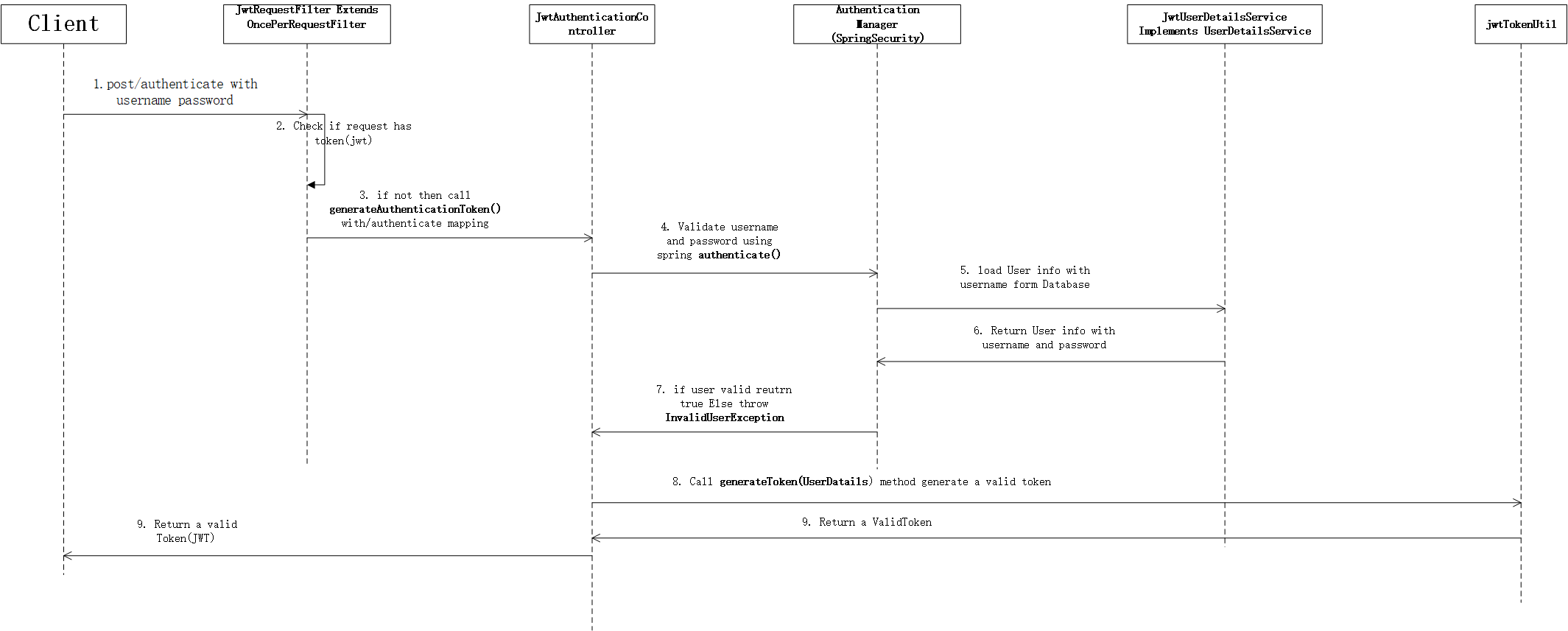
生成jwt
https://github.com/Ants-double/huanhuncao/tree/master/visio
如果请求authenticate 则会生成jwt
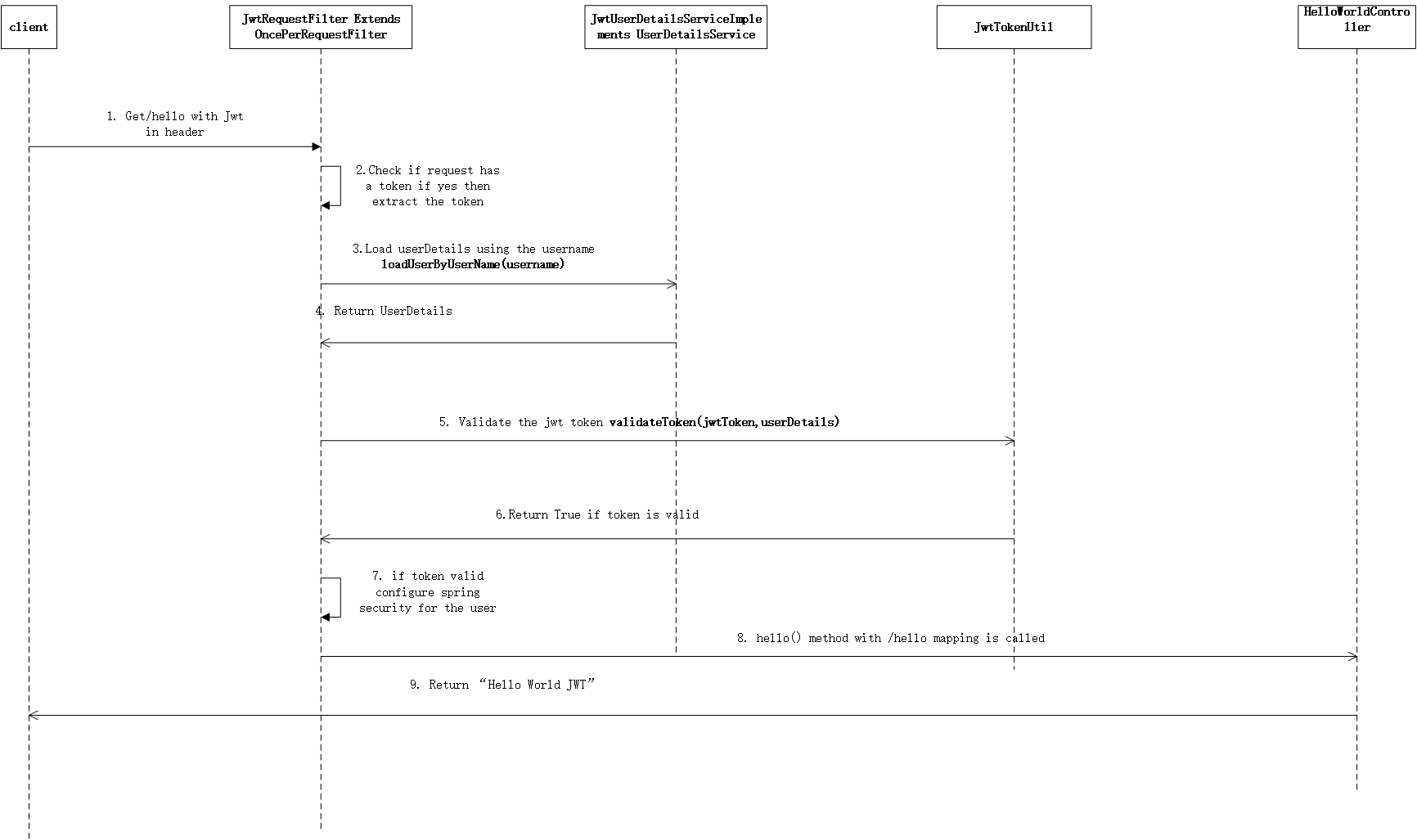
检证 jwt
https://github.com/Ants-double/huanhuncao/tree/master/visio
1. 请求业务接口带上jwt 先验证通过后再处理具体的请求
配置数据库相关
application.yml
 jwt:

       secret: javainuse

     spring:

       datasource:

         url: jdbc:mysql://localhost:3306/test?useUnicode=true&characterEncoding=utf-8&useSSL=false&serverTimezone=CTT

         username: root

         password: 456123

         platform: mysql

       jpa:

         hibernate:

           ddl-auto: create-drop
添加对应的DTO 和DAO
package com.antsdouble.demojwt.model;

/**

 * @author lyy

 * @Deprecated

 * @date 2019/10/17

 */

public class UserDTO {

    private String username;

    private String password;

    public String getUsername() {

        return username;

    }

    public void setUsername(String username) {

        this.username = username;

    }

    public String getPassword() {

        return password;

    }

    public void setPassword(String password) {

        this.password = password;

    }

}
package com.antsdouble.demojwt.dao; import com.antsdouble.demojwt.model.DAOUser;
import org.springframework.data.repository.CrudRepository;
import org.springframework.stereotype.Repository; /**
* @author lyy
* @Deprecated
* @date 2019/10/17
*/ @Repository
public interface UserDao extends CrudRepository<DAOUser, Integer> {
DAOUser findByUsername(String username);
}- JwtAuthenticationController
package com.antsdouble.demojwt.controller;

import com.antsdouble.demojwt.config.JwtTokenUtil;

import com.antsdouble.demojwt.model.JwtRequest;

import com.antsdouble.demojwt.model.JwtResponse;

import com.antsdouble.demojwt.model.UserDTO;

import com.antsdouble.demojwt.service.JwtUserDetailsService;

import org.springframework.beans.factory.annotation.Autowired;

import org.springframework.http.ResponseEntity;

import org.springframework.security.authentication.AuthenticationManager;

import org.springframework.security.authentication.BadCredentialsException;

import org.springframework.security.authentication.DisabledException;

import org.springframework.security.authentication.UsernamePasswordAuthenticationToken;

import org.springframework.security.core.userdetails.UserDetails;

import org.springframework.web.bind.annotation.*;

/**

 * @author lyy

 * @Deprecated

 * @date 2019/10/17

 */

@RestController

@CrossOrigin

public class JwtAuthenticationController {

    @Autowired

    private AuthenticationManager authenticationManager;

    @Autowired

    private JwtTokenUtil jwtTokenUtil;

    @Autowired

    private JwtUserDetailsService userDetailsService;

    @RequestMapping(value = "/authenticate", method = RequestMethod.POST)

    public ResponseEntity<?> createAuthenticationToken(@RequestBody JwtRequest authenticationRequest) throws Exception {

        authenticate(authenticationRequest.getUsername(), authenticationRequest.getPassword());

        final UserDetails userDetails = userDetailsService

                .loadUserByUsername(authenticationRequest.getUsername());

        final String token = jwtTokenUtil.generateToken(userDetails);

        return ResponseEntity.ok(new JwtResponse(token));

    }

    @RequestMapping(value = "/register", method = RequestMethod.POST)

    public ResponseEntity<?> saveUser(@RequestBody UserDTO user) throws Exception {

        return ResponseEntity.ok(userDetailsService.save(user));

    }

    private void authenticate(String username, String password) throws Exception {

        try {

            authenticationManager.authenticate(new UsernamePasswordAuthenticationToken(username, password));

        } catch (DisabledException e) {

            throw new Exception("USER_DISABLED", e);

        } catch (BadCredentialsException e) {

            throw new Exception("INVALID_CREDENTIALS", e);

        }

    }

}- WebSecurityConfig
package com.antsdouble.demojwt.config;

import org.springframework.beans.factory.annotation.Autowired;

import org.springframework.context.annotation.Bean;

import org.springframework.context.annotation.Configuration;

import org.springframework.http.HttpMethod;

import org.springframework.security.authentication.AuthenticationManager;

import org.springframework.security.config.annotation.authentication.builders.AuthenticationManagerBuilder;

import org.springframework.security.config.annotation.method.configuration.EnableGlobalMethodSecurity;

import org.springframework.security.config.annotation.web.builders.HttpSecurity;

import org.springframework.security.config.annotation.web.configuration.EnableWebSecurity;

import org.springframework.security.config.annotation.web.configuration.WebSecurityConfigurerAdapter;

import org.springframework.security.config.http.SessionCreationPolicy;

import org.springframework.security.core.userdetails.UserDetailsService;

import org.springframework.security.crypto.bcrypt.BCryptPasswordEncoder;

import org.springframework.security.crypto.password.PasswordEncoder;

import org.springframework.security.web.authentication.UsernamePasswordAuthenticationFilter;

/**

 * @author lyy

 * @Deprecated

 * @date 2019/10/17

 */

@Configuration

@EnableWebSecurity

@EnableGlobalMethodSecurity(prePostEnabled = true)

public class WebSecurityConfig extends WebSecurityConfigurerAdapter {

    @Autowired

    private JwtAuthenticationEntryPoint jwtAuthenticationEntryPoint;

    @Autowired

    private UserDetailsService jwtUserDetailsService;

    @Autowired

    private JwtRequestFilter jwtRequestFilter;

    @Autowired

    public void configureGlobal(AuthenticationManagerBuilder auth) throws Exception {

// configure AuthenticationManager so that it knows from where to load

// user for matching credentials

// Use BCryptPasswordEncoder

        auth.userDetailsService(jwtUserDetailsService).passwordEncoder(passwordEncoder());

    }

    @Bean

    public PasswordEncoder passwordEncoder() {

        return new BCryptPasswordEncoder();

    }

    @Bean

    @Override

    public AuthenticationManager authenticationManagerBean() throws Exception {

        return super.authenticationManagerBean();

    }

    @Override

    protected void configure(HttpSecurity httpSecurity) throws Exception {

// We don't need CSRF for this example

        httpSecurity.csrf().disable()

// dont authenticate this particular request

                .authorizeRequests().antMatchers("/authenticate", "/register").

                permitAll().antMatchers(HttpMethod.OPTIONS, "/**")

    .permitAll().

// all other requests need to be authenticated

        anyRequest().authenticated().and().

// make sure we use stateless session; session won't be used to

// store user's state.

        exceptionHandling().authenticationEntryPoint(jwtAuthenticationEntryPoint).and().sessionManagement()

                .sessionCreationPolicy(SessionCreationPolicy.STATELESS);

// Add a filter to validate the tokens with every request

        httpSecurity.addFilterBefore(jwtRequestFilter, UsernamePasswordAuthenticationFilter.class);

    }

}- JwtTokenUtil
package com.antsdouble.demojwt.config;

import io.jsonwebtoken.Claims;

import io.jsonwebtoken.Jwts;

import io.jsonwebtoken.SignatureAlgorithm;

import org.springframework.beans.factory.annotation.Value;

import org.springframework.security.core.userdetails.UserDetails;

import org.springframework.stereotype.Component;

import java.io.Serializable;

import java.util.Date;

import java.util.HashMap;

import java.util.Map;

import java.util.function.Function;

/**

 * @author lyy

 * @Deprecated

 * @date 2019/10/17

 */

@Component

public class JwtTokenUtil  implements Serializable {

    private static final long serialVersionUID = -2550185165626007488L;

    public static final long JWT_TOKEN_VALIDITY = 5 * 60 * 60;

    @Value("${jwt.secret}")

    private String secret;

    //retrieve username from jwt token

    public String getUsernameFromToken(String token) {

        return getClaimFromToken(token, Claims::getSubject);

    }

    //retrieve expiration date from jwt token

    public Date getExpirationDateFromToken(String token) {

        return getClaimFromToken(token, Claims::getExpiration);

    }

    public <T> T getClaimFromToken(String token, Function<Claims, T> claimsResolver) {

        final Claims claims = getAllClaimsFromToken(token);

        return claimsResolver.apply(claims);

    }

    //for retrieveing any information from token we will need the secret key

    private Claims getAllClaimsFromToken(String token) {

        return Jwts.parser().setSigningKey(secret).parseClaimsJws(token).getBody();

    }

    //check if the token has expired

    private Boolean isTokenExpired(String token) {

        final Date expiration = getExpirationDateFromToken(token);

        return expiration.before(new Date());

    }

    //generate token for user

    public String generateToken(UserDetails userDetails) {

        Map<String, Object> claims = new HashMap<>();

        return doGenerateToken(claims, userDetails.getUsername());

    }

    //while creating the token -

//1. Define  claims of the token, like Issuer, Expiration, Subject, and the ID

//2. Sign the JWT using the HS512 algorithm and secret key.

//3. According to JWS Compact Serialization(https://tools.ietf.org/html/draft-ietf-jose-json-web-signature-41#section-3.1)

//   compaction of the JWT to a URL-safe string

    private String doGenerateToken(Map<String, Object> claims, String subject) {

        return Jwts.builder().setClaims(claims).setSubject(subject).setIssuedAt(new Date(System.currentTimeMillis()))

                .setExpiration(new Date(System.currentTimeMillis() + JWT_TOKEN_VALIDITY * 1000))

                .signWith(SignatureAlgorithm.HS512, secret).compact();

    }

    //validate token

    public Boolean validateToken(String token, UserDetails userDetails) {

        final String username = getUsernameFromToken(token);

        return (username.equals(userDetails.getUsername()) && !isTokenExpired(token));

    }

}- JwtRequestFilter
package com.antsdouble.demojwt.config;

import com.antsdouble.demojwt.service.JwtUserDetailsService;

import io.jsonwebtoken.ExpiredJwtException;

import org.springframework.beans.factory.annotation.Autowired;

import org.springframework.security.authentication.UsernamePasswordAuthenticationToken;

import org.springframework.security.core.context.SecurityContextHolder;

import org.springframework.security.core.userdetails.UserDetails;

import org.springframework.security.web.authentication.WebAuthenticationDetailsSource;

import org.springframework.stereotype.Component;

import org.springframework.web.filter.OncePerRequestFilter;

import javax.servlet.FilterChain;

import javax.servlet.ServletException;

import javax.servlet.http.HttpServletRequest;

import javax.servlet.http.HttpServletResponse;

import java.io.IOException;

/**

 * @author lyy

 * @Deprecated

 * @date 2019/10/17

 */

@Component

public class JwtRequestFilter extends OncePerRequestFilter {

    @Autowired

    private JwtUserDetailsService jwtUserDetailsService;

    @Autowired

    private JwtTokenUtil jwtTokenUtil;

    @Override

    protected void doFilterInternal(HttpServletRequest request, HttpServletResponse response, FilterChain chain)

            throws ServletException, IOException {

        final String requestTokenHeader = request.getHeader("Authorization");

        String username = null;

        String jwtToken = null;

// JWT Token is in the form "Bearer token". Remove Bearer word and get

// only the Token

        if (requestTokenHeader != null && requestTokenHeader.startsWith("Bearer ")) {

            jwtToken = requestTokenHeader.substring(7);

            try {

                username = jwtTokenUtil.getUsernameFromToken(jwtToken);

            } catch (IllegalArgumentException e) {

                System.out.println("Unable to get JWT Token");

            } catch (ExpiredJwtException e) {

                System.out.println("JWT Token has expired");

            }

            catch (Exception e){

                System.out.println(e);

            }

        } else {

            logger.warn("JWT Token does not begin with Bearer String");

        }

// Once we get the token validate it.

        if (username != null && SecurityContextHolder.getContext().getAuthentication() == null) {

            UserDetails userDetails = this.jwtUserDetailsService.loadUserByUsername(username);

// if token is valid configure Spring Security to manually set

// authentication

            if (jwtTokenUtil.validateToken(jwtToken, userDetails)) {

                UsernamePasswordAuthenticationToken usernamePasswordAuthenticationToken = new UsernamePasswordAuthenticationToken(

                        userDetails, null, userDetails.getAuthorities());

                usernamePasswordAuthenticationToken

                        .setDetails(new WebAuthenticationDetailsSource().buildDetails(request));

// After setting the Authentication in the context, we specify

// that the current user is authenticated. So it passes the

// Spring Security Configurations successfully.

                SecurityContextHolder.getContext().setAuthentication(usernamePasswordAuthenticationToken);

            }

        }

        chain.doFilter(request, response);

    }

}- JwtAuthenticationEntryPoint
package com.antsdouble.demojwt.config;

import org.springframework.security.core.AuthenticationException;

import org.springframework.security.web.AuthenticationEntryPoint;

import org.springframework.stereotype.Component;

import javax.servlet.http.HttpServletRequest;

import javax.servlet.http.HttpServletResponse;

import java.io.IOException;

import java.io.Serializable;

/**

 * @author lyy

 * @Deprecated

 * @date 2019/10/17

 */

@Component

public class JwtAuthenticationEntryPoint implements AuthenticationEntryPoint, Serializable {

    private static final long serialVersionUID = -7858869558953243875L;

    @Override

    public void commence(HttpServletRequest request, HttpServletResponse response,

                         AuthenticationException authException) throws IOException {

        response.sendError(HttpServletResponse.SC_UNAUTHORIZED, "Unauthorized");

    }

}
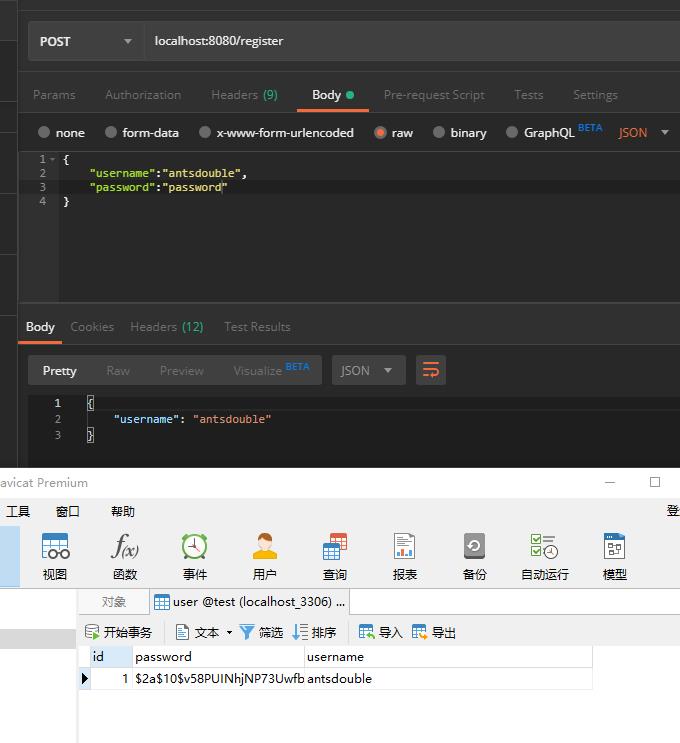
请求测试
- localhost:8080/register
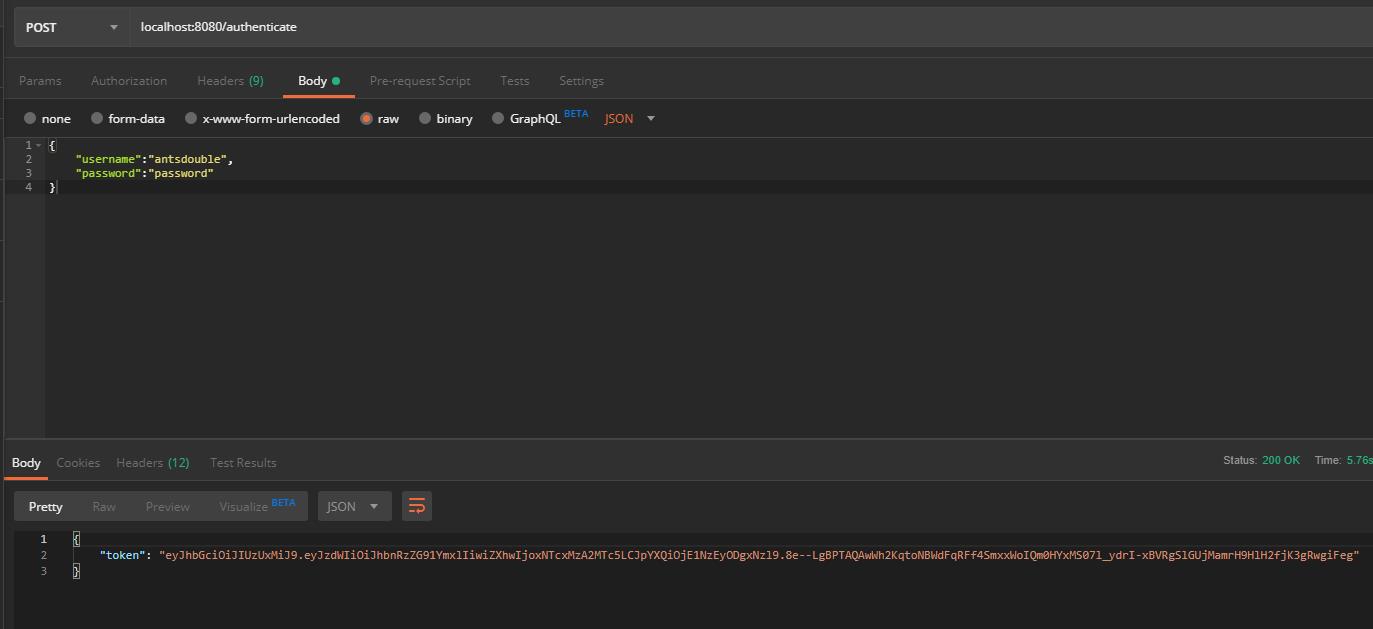
- localhost:8080/authenticate
- localhost:8080/hello
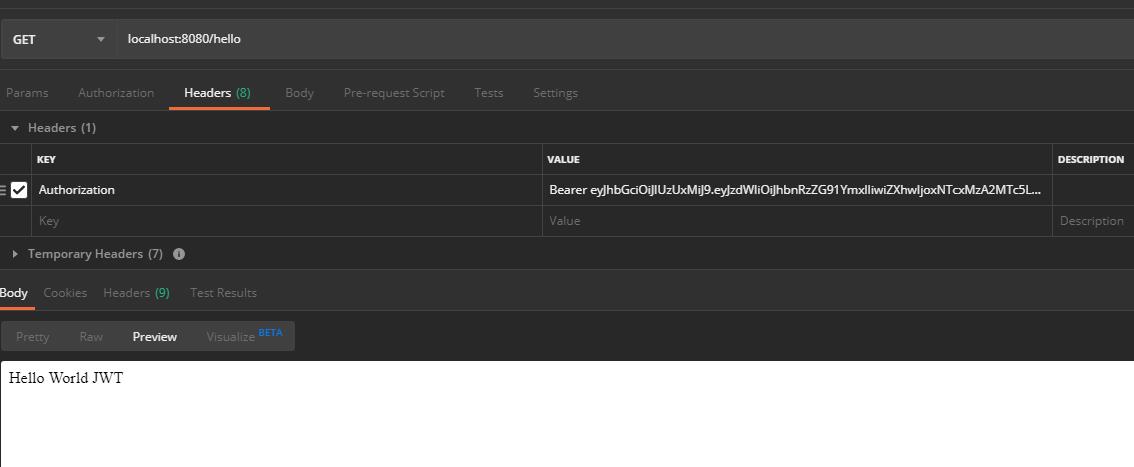
参考文档
https://dzone.com/articles/spring-boot-security-json-web-tokenjwt-hello-world
Spring Boot Security And JSON Web Token的更多相关文章
- [更新]一份包含: 采用RSA JWT(Json Web Token, RSA加密)的OAUTH2.0,HTTP BASIC,本地数据库验证,Windows域验证,单点登录的Spring Security配置文件
没有任何注释,表怪我(¬_¬) 更新: 2016.05.29: 将AuthorizationServer和ResourceServer分开配置 2016.05.29: Token获取采用Http Ba ...
- Spring Boot集成JSON Web Token(JWT)
一:认证 在了解JWT之前先来回顾一下传统session认证和基于token认证. 1.1 传统session认证 http协议是一种无状态协议,即浏览器发送请求到服务器,服务器是不知道这个请求是哪个 ...
- Java JWT: JSON Web Token
Java JWT: JSON Web Token for Java and Android JJWT aims to be the easiest to use and understand libr ...
- Spring Boot Security 整合 JWT 实现 无状态的分布式API接口
简介 JSON Web Token(缩写 JWT)是目前最流行的跨域认证解决方案.JSON Web Token 入门教程 - 阮一峰,这篇文章可以帮你了解JWT的概念.本文重点讲解Spring Boo ...
- Spring Boot Security JWT 整合实现前后端分离认证示例
前面两章节我们介绍了 Spring Boot Security 快速入门 和 Spring Boot JWT 快速入门,本章节使用 JWT 和 Spring Boot Security 构件一个前后端 ...
- 如何在SpringBoot中集成JWT(JSON Web Token)鉴权
这篇博客主要是简单介绍了一下什么是JWT,以及如何在Spring Boot项目中使用JWT(JSON Web Token). 1.关于JWT 1.1 什么是JWT 老生常谈的开头,我们要用这样一种工具 ...
- JSON Web Token – 在 Web 应用间安全地传递信息
出处:子回 使用 JWT 令牌和 Spring Security 来实现身份验证 八幅漫画理解使用JSON Web Token设计单点登录系统
- JWT—JSON Web Token - 理解JWT网络间应用用户安全认证交互设计
原文地址:http://blog.leapoahead.com/2015/09/06/understanding-jwt/ 官网地址:https://jwt.io/ JSON Web Token(JW ...
- 你知道你对 JSON Web Token 的认识存在误解吗
1.前言 JSON Web Token (JWT) 其实目前已经广为软件开发者所熟知了,但是 JOSE (Javascript Object Signing and Encryption) 却鲜有人知 ...
随机推荐
- vim编辑python脚本时Tab补全
所属分类:成长之路 使用Linux写python脚本的时候,初期最痛苦的是什么?当然是各种库的不熟悉,知道了库,里面的方法还要挨个看,挨个记. 所以这时候,很多小伙伴使用了ipython,最强大的功能 ...
- Android Studio [WebView]
WebViewActivity.java package com.xdw.a122; import android.graphics.Bitmap; import android.support.v7 ...
- Knative 实战:基于 Knative Serverless 技术实现天气服务-上篇
提到天气预报服务,我们第一反应是很简单的一个服务啊,目前网上有大把的天气预报 API 可以直接使用,有必要去使用 Knative 搞一套吗?杀鸡用牛刀?先不要着急,我们先看一下实际的几个场景需求: 场 ...
- redis分布式锁-WATCH锁(废弃)
使用watch构建锁的代码结构.(最着负载不断增加,系统完成一次加锁操作,重试次数不断加大) pine=conn.pineline while pine.watch if xxx pine.unwat ...
- Linux环境下实现对文件读写操作
---- 今天分享一下在linux系统在实现对文件读写一些基本的操作,在这之前我们要掌握一些基本的技能在Linux环境下.比如查看命令和一个函数的具体用法,就是相当于查手册,在Linux下有一个man ...
- java8 Optional使用总结
[前言] java8新特性 java8 函数接口 java8 lambda表达式 Java 8 时间日期使用 java8 推出的Optional的目的就是为了杜绝空指针异常,帮助开发者开发出更优雅的代 ...
- 【爬虫小程序:爬取斗鱼所有房间信息】Xpath(多进程版)
# 本程序亲测有效,用于理解爬虫相关的基础知识,不足之处希望大家批评指正 import requests from lxml import etree from multiprocessing imp ...
- RBD 基本使用 - Storage6
块存储管理系列文章 (1)RBD 基本使用 - Storage6 (2)iSCSI 网关管理 (3)使用 librbd 将虚拟机运行在 Ceph RBD (4)RBD Mirror 容灾 Ceph 块 ...
- vue 引入 fontawesome 报错 Could not find one or more icon(s) 解决
在 vue 项目中引用 fontawesome , 按照官方说明如下步骤操作 1. 终端中执行 $ npm i --save @fortawesome/fontawesome-svg-core $ n ...
- Django之使用redis缓存session,历史浏览记录,首页数据实现性能优化
Redis缓存session 配置Django缓存数据到redis中 # diango的缓存配置 CACHES = { "default": { "BACKEND&quo ...