
mybatis源码解析9---执行器Executor解析
从前面分析我们知道了sql的具体执行是通过调用SqlSession接口的对应的方法去执行的,而SqlSession最终都是通过调用了自己的Executor对象的query和update去执行的。本文就分析下sql的执行器-----Executor
Executor是mybatis的sql执行器,SqlSession是面向程序的,而Executor则就是面向数据库的,先看下Executor接口的方法有哪些,源码如下:
 public interface Executor {

   ResultHandler NO_RESULT_HANDLER = null;

   int update(MappedStatement ms, Object parameter) throws SQLException;

   <E> List<E> query(MappedStatement ms, Object parameter, RowBounds rowBounds, ResultHandler resultHandler, CacheKey cacheKey, BoundSql boundSql) throws SQLException;

   <E> List<E> query(MappedStatement ms, Object parameter, RowBounds rowBounds, ResultHandler resultHandler) throws SQLException;

   <E> Cursor<E> queryCursor(MappedStatement ms, Object parameter, RowBounds rowBounds) throws SQLException;

   List<BatchResult> flushStatements() throws SQLException;

   void commit(boolean required) throws SQLException;

   void rollback(boolean required) throws SQLException;

   CacheKey createCacheKey(MappedStatement ms, Object parameterObject, RowBounds rowBounds, BoundSql boundSql);

   boolean isCached(MappedStatement ms, CacheKey key);

   void clearLocalCache();

   void deferLoad(MappedStatement ms, MetaObject resultObject, String property, CacheKey key, Class<?> targetType);

   Transaction getTransaction();

   void close(boolean forceRollback);

   boolean isClosed();

   void setExecutorWrapper(Executor executor);
和SqlSession一样定义了各种各样的sql执行的方法,有查询的query方法,有更新的update方法,以及和事务有关的commit方法和rollback方法等,接下来就以query方法为例,看下具体是如何执行的。
Executor接口共有两个实现类,分别是BaseExecutor和CachingExecutor,CachingExecutor是缓存执行器,后面会提到,现在先看下BaseExecutor
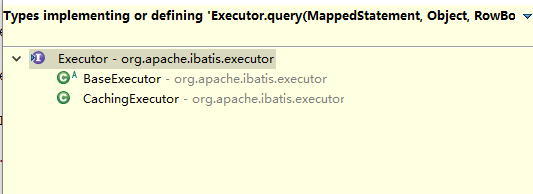
BaseExecutor的属性有:
 1   protected Transaction transaction;//事务

   protected Executor wrapper;//执行器包装者

   protected ConcurrentLinkedQueue<DeferredLoad> deferredLoads;//线程安全队列

   protected PerpetualCache localCache;//本地缓存

   protected PerpetualCache localOutputParameterCache;

   protected Configuration configuration;

   protected int queryStack = 0;//查询次数栈

   private boolean closed;//是否已关闭(回滚的时候会被关闭)
再看下BaseExecutor执行query方法的源码:
 public <E> List<E> query(MappedStatement ms, Object parameter, RowBounds rowBounds, ResultHandler resultHandler, CacheKey key, BoundSql boundSql) throws SQLException {

       ErrorContext.instance().resource(ms.getResource()).activity("executing a query").object(ms.getId());

       if (closed) {//判断执行器是否已关闭

         throw new ExecutorException("Executor was closed.");

       }

       //如果查询次数栈为0并且MappedStatement可以清除缓存,则清除本地缓存

       if (queryStack == 0 && ms.isFlushCacheRequired()) {

         clearLocalCache();

       }

       List<E> list;

       try {

         queryStack++;//查询次数+1

         list = resultHandler == null ? (List<E>) localCache.getObject(key) : null;//从缓存中根据缓存key查询是否有缓存

         if (list != null) {

           //如果缓存中有数据,则处理缓存

           handleLocallyCachedOutputParameters(ms, key, parameter, boundSql);

         } else {

           //如果缓存中没有数据,则从数据库查询数据

           list = queryFromDatabase(ms, parameter, rowBounds, resultHandler, key, boundSql);

         }

       } finally {

           //查询次数-1

         queryStack--;

       }

       if (queryStack == 0) {

         for (DeferredLoad deferredLoad : deferredLoads) {

           deferredLoad.load();

         }

         // issue #601

         deferredLoads.clear();

         if (configuration.getLocalCacheScope() == LocalCacheScope.STATEMENT) {

           // issue #482

           clearLocalCache();

         }

       }

       return list;

     }
可以看出BaseExecutor会优先从缓存中查询数据,如果缓存不为空再从数据库数据。在这里有一个queryStack会进行自增自减,它的作用是什么呢?
先看下如果没有缓存的话,BaseExecutor是怎么从数据库查询数据的:
 private <E> List<E> queryFromDatabase(MappedStatement ms, Object parameter, RowBounds rowBounds, ResultHandler resultHandler, CacheKey key, BoundSql boundSql) throws SQLException {

     List<E> list;

     localCache.putObject(key, EXECUTION_PLACEHOLDER);

     try {

       list = doQuery(ms, parameter, rowBounds, resultHandler, boundSql);//执行doQuery方法

     } finally {

       localCache.removeObject(key);

     }

     localCache.putObject(key, list);//将查询结果放入缓存

     if (ms.getStatementType() == StatementType.CALLABLE) {//如果callable类型查询

       localOutputParameterCache.putObject(key, parameter);//将参数放入缓存中

     }

     return list;

   }
可见该方法是调用了doQuery方法从数据库查询了数据,然后将查询的结果及查询用的参数放入了缓存中,而doQuery方法是BaseExecutor中的抽象方法,具体的实现是由BaseExecutor的子类进行实现
  protected abstract int doUpdate(MappedStatement ms, Object parameter)

       throws SQLException;

   protected abstract List<BatchResult> doFlushStatements(boolean isRollback)

       throws SQLException;

   protected abstract <E> List<E> doQuery(MappedStatement ms, Object parameter, RowBounds rowBounds, ResultHandler resultHandler, BoundSql boundSql)

       throws SQLException;

   protected abstract <E> Cursor<E> doQueryCursor(MappedStatement ms, Object parameter, RowBounds rowBounds, BoundSql boundSql)

       throws SQLException;

   protected void closeStatement(Statement statement) {

     if (statement != null) {

       try {

         statement.close();

       } catch (SQLException e) {

         // ignore

       }

     }

   }
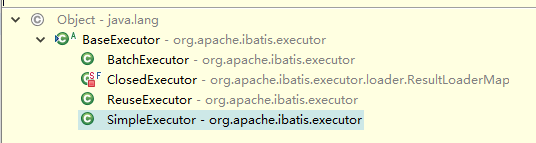
BaseExecutor共有SimpleExecutor、ReuseExecutor、BatchExecutor以及ClosedExecutor四个子类,这个后面再分析,现在我们以及知道了SqlSession是调用了Executor的方法来执行sql,而Executor的默认实现类的BaseExecutor,而BaseExecutor又是调用了其子类的方法。而BaseExecutor则对查询的结果进行了缓存处理以及查询的时候会从缓存中进行查询。
mybatis源码解析9---执行器Executor解析的更多相关文章
- 浩哥解析MyBatis源码(十一)——Parsing解析模块之通用标记解析器(GenericTokenParser)与标记处理器(TokenHandler)
原创作品,可以转载,但是请标注出处地址:http://www.cnblogs.com/V1haoge/p/6724223.html 1.回顾 上面的几篇解析了类型模块,在MyBatis中类型模块包含的 ...
- Spring源码情操陶冶#task:executor解析器
承接Spring源码情操陶冶-自定义节点的解析.线程池是jdk的一个很重要的概念,在很多的场景都会应用到,多用于处理多任务的并发处理,此处借由spring整合jdk的cocurrent包的方式来进行深 ...
- mybatis源码分析之02配置文件解析
该篇正式开始学习mybatis的源码,本篇主要学习mybatis是如何加载配置文件mybatis-config.xml的, 先从测试代码入手. public class V1Test { public ...
- mybatis源码阅读-MappedStatement各个属性解析过程(八)
调用方 类org.apache.ibatis.builder.xml.XMLMapperBuilder private void configurationElement(XNode context) ...
- Mybatis源码分析之Mapper文件解析
感觉CSDN对markdown的支持不够友好,总是伴随各种问题,很恼火! xxMapper.xml的解析主要由XMLMapperBuilder类完成,parse方法来完成解析: public void ...
- Mybatis源码阅读-配置文件及映射文件解析
Mybatis源码分析: 1.配置文件解析: 1.1源码阅读入口: org.apache.ibatis.builder.xml.XMLConfigBuilder.parse(); 功能:解析全局配置文 ...
- MyBatis源码 核心配置解析 properties元素
XMLConfigBuilder的parseConfiguration(XNode)方法,用于解析配置文件 XMLConfigBuilder的propertiesElement(XNode)方法,用于 ...
- Spring源码情操陶冶#task:scheduled-tasks解析器
承接前文Spring源码情操陶冶#task:executor解析器,在前文基础上解析我们常用的spring中的定时任务的节点配置.备注:此文建立在spring的4.2.3.RELEASE版本 附例 S ...
- mybatis源码学习(一) 原生mybatis源码学习
最近这一周,主要在学习mybatis相关的源码,所以记录一下吧,算是一点学习心得 个人觉得,mybatis的源码,大致可以分为两部分,一是原生的mybatis,二是和spring整合之后的mybati ...
- mybatis源码分析之06二级缓存
上一篇整合redis框架作为mybatis的二级缓存, 该篇从源码角度去分析mybatis是如何做到的. 通过上一篇文章知道,整合redis时需要在FemaleMapper.xml中添加如下配置 &l ...
随机推荐
- cb && cb() 和 a || {}
cb && cb() 等同于 if(cb != undefined) { cb(); } a || {} var flag = false var a = flag || {} a / ...
- spring学习(01)之IOC
spring学习(01)之IOC IOC:控制反转——Spring通过一种称作控制反转(IOC)的技术促进了低耦合.当应用了IOC,一个对象依赖的其它对象会通过被动的方式传递进来,而不是这个对象自己创 ...
- python-面向对象-07_继承
继承 目标 单继承 多继承 面向对象三大特性 封装 根据 职责 将 属性 和 方法 封装 到一个抽象的 类 中 继承 实现代码的重用,相同的代码不需要重复的编写 多态 不同的对象调用相同的方法,产生不 ...
- Jmeter测试实践:文件下载接口
一 Jmeter步骤 1.打开jmeter4.0,新建测试计划,添加线程组.根据实际情况配置线程属性. 2.添加HTTP请求.根据接口文档进行配置. Basic部分修改如下,Advanced部分保持默 ...
- Socket接口
Socket接口 Socket: Socket是应用层与TCP/IP协议族通信的中间软件抽象层,它是一组接口.在设计模式中,Socket其实就是一个门面模式,它把复杂的TCP/IP协议族隐藏在Sock ...
- Wi-Fi 协议和数率?
IEEE 802.11Wi-Fi 协议摘要 协议 频率 信号 最大数据速率 传统 802.11 2.4GHz FHSS 或 DSSS 2Mbps 802.11A 5GHz OFDM 54Mbps 80 ...
- 前端框架之Vue(7)-事件处理
监听事件 可以用 v-on 指令监听 DOM 事件,并在触发时运行一些 JavaScript 代码. 示例: <div id="example-1"> <butt ...
- [django]http请求
请求参数 http基本认证 https://zxc0328.github.io/2015/11/04/http-basic-auth/ 我们看到在http请求的header里有一个Authorizat ...
- python-selenium无法调用浏览器的问题
一直有这个问题 问题:selenim不能调用浏览器 File "/Users/ligaijiang/PycharmProjects/Runoob/venv/lib/python3.7/sit ...
- cocos2d JS-(JavaScript) 基础语法间的函数方法相互调用
1.函数嵌套函数 function calcuate(opr, a, b) { // 定义函数,opr - -> 符号,a,b - -> 数值 //定义 + 函数 function add ...