
ActiveMQ整合spring、同步索引库
1. Activemq整合spring
1.1. 使用方法
第一步:引用相关的jar包。
|
<dependency> <groupId>org.springframework</groupId> <artifactId>spring-jms</artifactId> </dependency> <dependency> <groupId>org.springframework</groupId> <artifactId>spring-context-support</artifactId> </dependency> |
第二步:配置Activemq整合spring。配置ConnectionFactory
|
<?xml version="1.0" encoding="UTF-8"?> <beans xmlns="http://www.springframework.org/schema/beans" xmlns:context="http://www.springframework.org/schema/context" xmlns:p="http://www.springframework.org/schema/p" xmlns:aop="http://www.springframework.org/schema/aop" xmlns:tx="http://www.springframework.org/schema/tx" xmlns:xsi="http://www.w3.org/2001/XMLSchema-instance" xsi:schemaLocation="http://www.springframework.org/schema/beans http://www.springframework.org/schema/beans/spring-beans-4.2.xsd http://www.springframework.org/schema/context http://www.springframework.org/schema/context/spring-context-4.2.xsd http://www.springframework.org/schema/aop http://www.springframework.org/schema/aop/spring-aop-4.2.xsd http://www.springframework.org/schema/tx http://www.springframework.org/schema/tx/spring-tx-4.2.xsd http://www.springframework.org/schema/util http://www.springframework.org/schema/util/spring-util-4.2.xsd"> <!-- 真正可以产生Connection的ConnectionFactory,由对应的 JMS服务厂商提供 --> <bean id="targetConnectionFactory" class="org.apache.activemq.ActiveMQConnectionFactory"> <property name="brokerURL" value="tcp://192.168.25.168:61616" /> </bean> <!-- Spring用于管理真正的ConnectionFactory的ConnectionFactory --> <bean id="connectionFactory" class="org.springframework.jms.connection.SingleConnectionFactory"> <!-- 目标ConnectionFactory对应真实的可以产生JMS Connection的ConnectionFactory --> <property name="targetConnectionFactory" ref="targetConnectionFactory" /> </bean> </beans> |
第三步:配置生产者。
使用JMSTemplate对象。发送消息。
第四步:在spring容器中配置Destination。
|
<?xml version="1.0" encoding="UTF-8"?> <beans xmlns="http://www.springframework.org/schema/beans" xmlns:context="http://www.springframework.org/schema/context" xmlns:p="http://www.springframework.org/schema/p" xmlns:aop="http://www.springframework.org/schema/aop" xmlns:tx="http://www.springframework.org/schema/tx" xmlns:xsi="http://www.w3.org/2001/XMLSchema-instance" xsi:schemaLocation="http://www.springframework.org/schema/beans http://www.springframework.org/schema/beans/spring-beans-4.2.xsd http://www.springframework.org/schema/context http://www.springframework.org/schema/context/spring-context-4.2.xsd http://www.springframework.org/schema/aop http://www.springframework.org/schema/aop/spring-aop-4.2.xsd http://www.springframework.org/schema/tx http://www.springframework.org/schema/tx/spring-tx-4.2.xsd http://www.springframework.org/schema/util http://www.springframework.org/schema/util/spring-util-4.2.xsd"> <!-- 真正可以产生Connection的ConnectionFactory,由对应的 JMS服务厂商提供 --> <bean id="targetConnectionFactory" class="org.apache.activemq.ActiveMQConnectionFactory"> <property name="brokerURL" value="tcp://192.168.25.168:61616" /> </bean> <!-- Spring用于管理真正的ConnectionFactory的ConnectionFactory --> <bean id="connectionFactory" class="org.springframework.jms.connection.SingleConnectionFactory"> <!-- 目标ConnectionFactory对应真实的可以产生JMS Connection的ConnectionFactory --> <property name="targetConnectionFactory" ref="targetConnectionFactory" /> </bean> <!-- 配置生产者 --> <!-- Spring提供的JMS工具类,它可以进行消息发送、接收等 --> <bean id="jmsTemplate" class="org.springframework.jms.core.JmsTemplate"> <!-- 这个connectionFactory对应的是我们定义的Spring提供的那个ConnectionFactory对象 --> <property name="connectionFactory" ref="connectionFactory" /> </bean> <!--这个是队列目的地,点对点的 --> <bean id="queueDestination" class="org.apache.activemq.command.ActiveMQQueue"> <constructor-arg> <value>spring-queue</value> </constructor-arg> </bean> <!--这个是主题目的地,一对多的 --> <bean id="topicDestination" class="org.apache.activemq.command.ActiveMQTopic"> <constructor-arg value="topic" /> </bean> </beans> |
第五步:代码测试
|
@Test public void testSpringActiveMq() throws Exception { //初始化spring容器 ApplicationContext applicationContext = new ClassPathXmlApplicationContext("classpath:spring/applicationContext-activemq.xml"); //从spring容器中获得JmsTemplate对象 JmsTemplate jmsTemplate = applicationContext.getBean(JmsTemplate.class); //从spring容器中取Destination对象 Destination destination = (Destination) applicationContext.getBean("queueDestination"); //使用JmsTemplate对象发送消息。 jmsTemplate.send(destination, new MessageCreator() { @Override public Message createMessage(Session session) throws JMSException { //创建一个消息对象并返回 TextMessage textMessage = session.createTextMessage("spring activemq queue message"); return textMessage; } }); } |
1.2. 代码测试
1.2.1. 发送消息
第一步:初始化一个spring容器
第二步:从容器中获得JMSTemplate对象。
第三步:从容器中获得一个Destination对象
第四步:使用JMSTemplate对象发送消息,需要知道Destination
|
@Test public void testQueueProducer() throws Exception { // 第一步:初始化一个spring容器 ApplicationContext applicationContext = new ClassPathXmlApplicationContext("classpath:spring/applicationContext-activemq.xml"); // 第二步:从容器中获得JMSTemplate对象。 JmsTemplate jmsTemplate = applicationContext.getBean(JmsTemplate.class); // 第三步:从容器中获得一个Destination对象 Queue queue = (Queue) applicationContext.getBean("queueDestination"); // 第四步:使用JMSTemplate对象发送消息,需要知道Destination jmsTemplate.send(queue, new MessageCreator() { @Override public Message createMessage(Session session) throws JMSException { TextMessage textMessage = session.createTextMessage("spring activemq test"); return textMessage; } }); } |
1.2.2. 接收消息
e3-search-Service中接收消息。
第一步:把Activemq相关的jar包添加到工程中
第二步:创建一个MessageListener的实现类。
|
public class MyMessageListener implements MessageListener { @Override public void onMessage(Message message) { try { TextMessage textMessage = (TextMessage) message; //取消息内容 String text = textMessage.getText(); System.out.println(text); } catch (JMSException e) { e.printStackTrace(); } } } |
第三步:配置spring和Activemq整合。
|
<?xml version="1.0" encoding="UTF-8"?> <beans xmlns="http://www.springframework.org/schema/beans" xmlns:context="http://www.springframework.org/schema/context" xmlns:p="http://www.springframework.org/schema/p" xmlns:aop="http://www.springframework.org/schema/aop" xmlns:tx="http://www.springframework.org/schema/tx" xmlns:xsi="http://www.w3.org/2001/XMLSchema-instance" xsi:schemaLocation="http://www.springframework.org/schema/beans http://www.springframework.org/schema/beans/spring-beans-4.2.xsd http://www.springframework.org/schema/context http://www.springframework.org/schema/context/spring-context-4.2.xsd http://www.springframework.org/schema/aop http://www.springframework.org/schema/aop/spring-aop-4.2.xsd http://www.springframework.org/schema/tx http://www.springframework.org/schema/tx/spring-tx-4.2.xsd http://www.springframework.org/schema/util http://www.springframework.org/schema/util/spring-util-4.2.xsd"> <!-- 真正可以产生Connection的ConnectionFactory,由对应的 JMS服务厂商提供 --> <bean id="targetConnectionFactory" class="org.apache.activemq.ActiveMQConnectionFactory"> <property name="brokerURL" value="tcp://192.168.25.168:61616" /> </bean> <!-- Spring用于管理真正的ConnectionFactory的ConnectionFactory --> <bean id="connectionFactory" class="org.springframework.jms.connection.SingleConnectionFactory"> <!-- 目标ConnectionFactory对应真实的可以产生JMS Connection的ConnectionFactory --> <property name="targetConnectionFactory" ref="targetConnectionFactory" /> </bean> <!--这个是队列目的地,点对点的 --> <bean id="queueDestination" class="org.apache.activemq.command.ActiveMQQueue"> <constructor-arg> <value>spring-queue</value> </constructor-arg> </bean> <!--这个是主题目的地,一对多的 --> <bean id="topicDestination" class="org.apache.activemq.command.ActiveMQTopic"> <constructor-arg value="topic" /> </bean> <!-- 接收消息 --> <!-- 配置监听器 --> <bean id="myMessageListener" class="cn.e3mall.search.listener.MyMessageListener" /> <!-- 消息监听容器 --> <bean class="org.springframework.jms.listener.DefaultMessageListenerContainer"> <property name="connectionFactory" ref="connectionFactory" /> <property name="destination" ref="queueDestination" /> <property name="messageListener" ref="myMessageListener" /> </bean> </beans> |
第四步:测试代码。
|
@Test public void testQueueConsumer() throws Exception { //初始化spring容器 ApplicationContext applicationContext = new ClassPathXmlApplicationContext("classpath:spring/applicationContext-activemq.xml"); //等待 System.in.read(); } |
2. 添加商品同步索引库
2.1. Producer
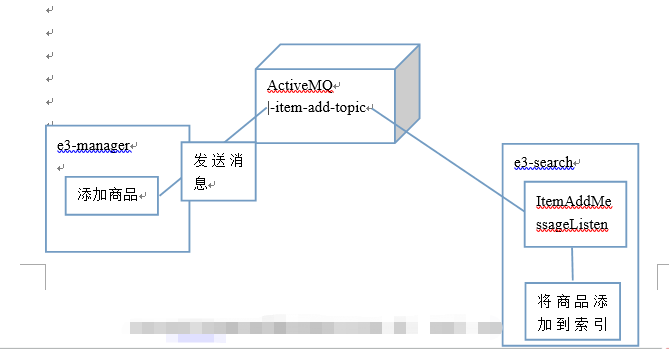
e3-manager-server工程中发送消息。
当商品添加完成后发送一个TextMessage,包含一个商品id。
|
@Override public e3Result addItem(TbItem item, String desc) { // 1、生成商品id final long itemId = IDUtils.genItemId(); // 2、补全TbItem对象的属性 item.setId(itemId); //商品状态,1-正常,2-下架,3-删除 item.setStatus((byte) 1); Date date = new Date(); item.setCreated(date); item.setUpdated(date); // 3、向商品表插入数据 itemMapper.insert(item); // 4、创建一个TbItemDesc对象 TbItemDesc itemDesc = new TbItemDesc(); // 5、补全TbItemDesc的属性 itemDesc.setItemId(itemId); itemDesc.setItemDesc(desc); itemDesc.setCreated(date); itemDesc.setUpdated(date); // 6、向商品描述表插入数据 itemDescMapper.insert(itemDesc); //发送一个商品添加消息 jmsTemplate.send(topicDestination, new MessageCreator() { @Override public Message createMessage(Session session) throws JMSException { TextMessage textMessage = session.createTextMessage(itemId + ""); return textMessage; } }); // 7、e3Result.ok() return e3Result.ok(); } |
2.2. Consumer
2.2.1. 功能分析
1、接收消息。需要创建MessageListener接口的实现类。
2、取消息,取商品id。
3、根据商品id查询数据库。
4、创建一SolrInputDocument对象。
5、使用SolrServer对象写入索引库。
6、返回成功,返回e3Result。
2.2.2. Dao层
根据商品id查询商品信息。
映射文件:
|
<select id="getItemById" parameterType="long" resultType="cn.e3mall.common.pojo.SearchItem"> SELECT a.id, a.title, a.sell_point, a.price, a.image, b. NAME category_name, c.item_desc FROM tb_item a JOIN tb_item_cat b ON a.cid = b.id JOIN tb_item_desc c ON a.id = c.item_id WHERE a.status = 1 AND a.id=#{itemId} </select> |
2.2.3. Service层
参数:商品ID
业务逻辑:
1、根据商品id查询商品信息。
2、创建一SolrInputDocument对象。
3、使用SolrServer对象写入索引库。
4、返回成功,返回e3Result。
返回值:e3Result
|
public e3Result addDocument(long itemId) throws Exception { // 1、根据商品id查询商品信息。 SearchItem searchItem = searchItemMapper.getItemById(itemId); // 2、创建一SolrInputDocument对象。 SolrInputDocument document = new SolrInputDocument(); // 3、使用SolrServer对象写入索引库。 document.addField("id", searchItem.getId()); document.addField("item_title", searchItem.getTitle()); document.addField("item_sell_point", searchItem.getSell_point()); document.addField("item_price", searchItem.getPrice()); document.addField("item_image", searchItem.getImage()); document.addField("item_category_name", searchItem.getCategory_name()); document.addField("item_desc", searchItem.getItem_desc()); // 5、向索引库中添加文档。 solrServer.add(document); solrServer.commit(); // 4、返回成功,返回e3Result。 return e3Result.ok(); } |
2.2.4. Listener
|
public class ItemChangeListener implements MessageListener { @Autowired private SearchItemServiceImpl searchItemServiceImpl; @Override public void onMessage(Message message) { try { TextMessage textMessage = null; Long itemId = null; //取商品id if (message instanceof TextMessage) { textMessage = (TextMessage) message; itemId = Long.parseLong(textMessage.getText()); } //向索引库添加文档 searchItemServiceImpl.addDocument(itemId); } catch (Exception e) { e.printStackTrace(); } } } |
2.2.5. Spring配置监听

2.2.6. 实现流程
ActiveMQ整合spring、同步索引库的更多相关文章
- JAVAEE——宜立方商城09:Activemq整合spring的应用场景、添加商品同步索引库、商品详情页面动态展示与使用缓存
1. 学习计划 1.Activemq整合spring的应用场景 2.添加商品同步索引库 3.商品详情页面动态展示 4.展示详情页面使用缓存 2. Activemq整合spring 2.1. 使用方法 ...
- 淘淘商城项目_同步索引库问题分析 + ActiveMQ介绍/安装/使用 + ActiveMQ整合spring + 使用ActiveMQ实现添加商品后同步索引库_匠心笔记
文章目录 1.同步索引库问题分析 2.ActiveM的介绍 2.1.什么是ActiveMQ 2.2.ActiveMQ的消息形式 3.ActiveMQ的安装 3.1.安装环境 3.2.安装步骤 4.Ac ...
- 商城08——activeMQ 使用消息队列同步索引库
1. 课程计划 1.什么是MQ 2.MQ的应用场景 3.ActiveMQ的使用方法. 4.使用消息队列实现商品同步. 2. 同步索引库分析 方案一:在taotao-manager中,添加商品的业务 ...
- e3mall商城的归纳总结9之activemq整合spring、redis的缓存
敬给读者 本节主要给大家说一下activemq整合spring,该如何进行配置,上一节我们说了activemq的搭建和测试(单独测试),想看的可以点击时空隧道前去查看.讲完了之后我们还说一说在项目中使 ...
- 应用activeMQ消息中间件同步索引库
mq是一个消息服务器: 安装包内置了tomcat,直接登录访问,登录:http://ip:8161/admin/ (相当于dubbo的moniter监控中心) admin admin传统串行化, ...
- ActiveMQ学习笔记(6)----ActiveMQ整合Spring开发
1. 添加依赖 spring 提供了对JMS的支持,需要添加Spring支持jms的包和Spring的核心包,如下: <dependency> <groupId>org.apa ...
- ActiveMQ整合spring结合项目开发流程(生产者和消费者)总结
一:生产者代码编写: 1.配置pom.xml引入相关坐标 <dependencies> <!-- spring开发测试 --> <dependency> <g ...
- ActiveMQ 整合 spring
一.添加 jar 包 <dependency> <groupId>org.apache.activemq</groupId> <artifactId>a ...
- activemq整合spring
随机推荐
- 理解Java枚举类型
(参考资料:深入理解java enum) 1.原理:对编译后的class文件javap反编译可以看出,定义的枚举类继承自java.lang.Enum抽象类且通过public static final定 ...
- linux下用/proc/stat文件来计算cpu的利用率-c语言实现
proc文件系统介绍 /proc文件系统是一个伪文件系统,它只存在内存当中,而不占用外存空间.它以文件系统的方式为内核与进程提供通信的接口.用户和应用程序可以通过/proc得到系统的信息,并可以改变内 ...
- EventBus vs Otto vs Guava--自定义消息总线
同步发表于http://avenwu.net/ioc/2015/01/29/custom_eventbus Fork on github https://github.com/avenwu/suppo ...
- CLOS网络的无阻塞条件
交换单元及网络 模拟信号数字化和时分复用基础 交换单元模型基本交换单元 交换网络 2.1模拟信号数字化和分时复用基础 模拟信号是指在是和幅度数值上连续变化的信号 数字信号是指在时间和幅度取值上离散的编 ...
- 【转】彻底搞清C#中cookie的内容
http://blog.163.com/sea_haitao/blog/static/77562162012027111212610/ 花了2天时间,彻底搞清C#中cookie的内容,搞清以下内容将让 ...
- [OpenCV] Samples 14: kalman filter
Ref: http://blog.csdn.net/gdfsg/article/details/50904811 #include "opencv2/video/tracking.hpp&q ...
- jquery.validate 验证记录
<html xmlns="http://www.w3.org/1999/xhtml"> <head> <meta http-equiv="C ...
- [原]openstack-kilo--issue(十九) ImportError: Could not import settings 'openstack_dashboard.settings' (Is it on sys.path? Is there an import error in the settings file?): No module named main
查看此问题的时候请先查看 这个问题包含在(十)中,此篇只是从(十)中分离出来 openstack-kilo--issue(十)ERROR: openstack Unable to establish ...
- autodesk fbx sdk sample里面的工程无法调试解决方法
1.项目属性->常规中的目标文件名改为1 2.链接器->调试中的生成程序数据库文件改成:$(OutDir)1.pdb 3.连接器->常规中的输出文件改成:$(OutDir)1.exe ...
- SPL标准库-数据结构
数据结构:栈 );] = ;] = ;var_dump($array); 来自为知笔记(Wiz)