
Spring IOC容器的初始化—(一)Resource定位
前言
上一篇博文“ Spring IOC是怎样启动的 ”中提到了refresh()方法,这个就是容器初始化的入口。容器初始化共有三个阶段:
第一阶段:Resource定位
第二阶段:BeanDefinition解析
第三阶段:BeanDefinition注册
这一篇我们讲第一阶段Resource定位。
阅读目录
- 1.XmlWebApplicationContext的继承体系图
- 2.refresh()方法
- 3.Resource组件
1. XmlWebApplicationContext的继承体系图
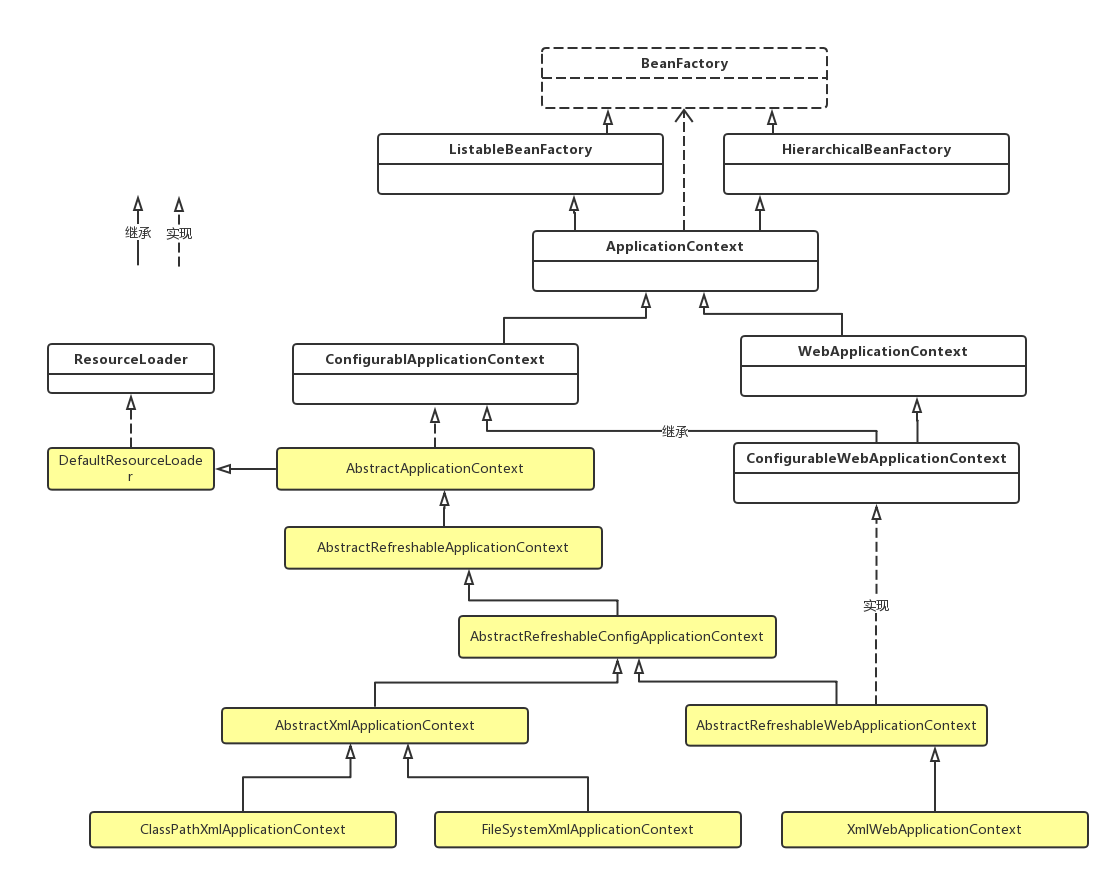
我们知道Spring IOC容器的默认实现类是XmlWebApplicationContext,下图是ApplicationContext的继承体系,至于BeanFactory的分支,以后再研究
BeanFactory or ApplicationContext?
BeanFactory和ApplicationContext都是实现IoC容器的基础接口。Application是BeanFactory的子接口,包含了BeanFactory的功能,同时增加了对Transactions和AOP的支持。所以官方更推荐开发者使用ApplicationContext及其子类实现IoC容器。特别地,Spring在实现时,大量使用ApplicationContext实现BeanPostProcessor extension point。
2.refresh()方法
我们追溯XmlWebApplicationContext的refresh()方法,依据继承体系图,追踪源码至AbastractApplicationContext的refresh()方法。
refresh()是一个模板方法,执行多个方法,而且提供了各(protected)方法的(默认)实现,其子类可以重写它们
模板方法模式:在一个方法中定义一个算法的骨架,而将一些步骤延迟到子类中。模板方法使得子类(使用protected方法)可以在不改变算法结构的情况下,重新定义算法中的某些步骤。
refresh函数中调用了多个方法,这里先不详细讲解每一个方法,可以先通过英文注释大概了解各方法的作用。
AbastractApplicationContext的refresh()方法
@Override
public void refresh() throws BeansException, IllegalStateException {
synchronized (this.startupShutdownMonitor) {
// Prepare this context for refreshing.
prepareRefresh(); // Tell the subclass to refresh the internal bean factory.//告诉子类启动refreshBeanFactory()方法,bean定义资源文件的载入从子类的refreshBeanFactory()方法启动【重点】
            ConfigurableListableBeanFactory beanFactory = obtainFreshBeanFactory();

            // Prepare the bean factory for use in this context.

            prepareBeanFactory(beanFactory);

            try {

                // Allows post-processing of the bean factory in context subclasses.

                postProcessBeanFactory(beanFactory);

                // Invoke factory processors registered as beans in the context.

                invokeBeanFactoryPostProcessors(beanFactory);

                // Register bean processors that intercept bean creation.

                registerBeanPostProcessors(beanFactory);

                // Initialize message source for this context.

                initMessageSource();

                // Initialize event multicaster for this context.

                initApplicationEventMulticaster();

                // Initialize other special beans in specific context subclasses.

                onRefresh();

                // Check for listener beans and register them.

                registerListeners();

                // Instantiate all remaining (non-lazy-init) singletons.

                finishBeanFactoryInitialization(beanFactory);

                // Last step: publish corresponding event.

                finishRefresh();

            }

            catch (BeansException ex) {

                if (logger.isWarnEnabled()) {

                    logger.warn("Exception encountered during context initialization - " +

                            "cancelling refresh attempt: " + ex);

                }

                // Destroy already created singletons to avoid dangling resources.

                destroyBeans();

                // Reset 'active' flag.

                cancelRefresh(ex);

                // Propagate exception to caller.

                throw ex;

            }

            finally {

                // Reset common introspection caches in Spring's core, since we

                // might not ever need metadata for singleton beans anymore...

                resetCommonCaches();

            }

        }

    }
这个refresh()方法就是SpringIOC 容器的初始化全过程。那么我们先关注obtainFreshBeanFactory()这个方法,因为这个方法里面会实现我们上述的Resource定位及载入解析和注册。
2.1 obtainFreshBeanFactory()方法
obtainFreshBeanFactory()方法完成了容器初始化的最重要最基础的功能,Bean定义资源的Resource定位、载入解析和注册。
AbstractApplicationContext的obtainFreshBeanFactory()方法
protected ConfigurableListableBeanFactory obtainFreshBeanFactory() {

        refreshBeanFactory();

        ConfigurableListableBeanFactory beanFactory = getBeanFactory();

        if (logger.isDebugEnabled()) {

            logger.debug("Bean factory for " + getDisplayName() + ": " + beanFactory);

        }

        return beanFactory;

    }

protected abstract void refreshBeanFactory() throws BeansException, IllegalStateException;

public abstract ConfigurableListableBeanFactory getBeanFactory() throws IllegalStateException;
这里使用了委派设计模式,obtainFreshBeanFactory()中调用了两个抽象方法,定义了obtainFreshBeanFactory的算法骨架,实际的行为交给其子类(AbstractRefreshableApplicationContext)实现。
AbstractRefreshableApplicationContext的refreshBeanFactory()方法
@Override

    protected final void refreshBeanFactory() throws BeansException {

        if (hasBeanFactory()) { //如果已经有容器,销 毁 容器中的bean,关闭容器  以保证在refresh之后使用的是新建立起来的IoC容器

            destroyBeans();

            closeBeanFactory();

        }

        try {
            //创建IoC容器

            DefaultListableBeanFactory beanFactory = createBeanFactory();

            beanFactory.setSerializationId(getId());

            //对IOC容器进行定制化,如设置启动参数,开启注解的自动装配等
            customizeBeanFactory(beanFactory);
           //调用载入Bean定义的方法,这里又使用了委派模式,在当前类中只定义了抽象的loadBeanDefinitions方法,具体的实现调用子类容器

            loadBeanDefinitions(beanFactory);

            synchronized (this.beanFactoryMonitor) {

                this.beanFactory = beanFactory;

            }

        }

        catch (IOException ex) {

            throw new ApplicationContextException("I/O error parsing bean definition source for " + getDisplayName(), ex);

        }

    }
protected abstract void loadBeanDefinitions(DefaultListableBeanFactory beanFactory) throws BeansException, IOException;
由于是web容器启动的,追溯源码,我们看到XmlWebApplicationContext实现了loadBeanDefinitions()方法。
XmlWebApplicationContext的loadBeanDefinitions(DefaultListableBeanFactory beanFactory)方法
@Override

    protected void loadBeanDefinitions(DefaultListableBeanFactory beanFactory) throws BeansException, IOException {

        // Create a new XmlBeanDefinitionReader for the given BeanFactory.

        XmlBeanDefinitionReader beanDefinitionReader = new XmlBeanDefinitionReader(beanFactory);

        // Configure the bean definition reader with this context's

        // resource loading environment.

        beanDefinitionReader.setEnvironment(getEnvironment());

        beanDefinitionReader.setResourceLoader(this);

        beanDefinitionReader.setEntityResolver(new ResourceEntityResolver(this));

        // Allow a subclass to provide custom initialization of the reader,

        // then proceed with actually loading the bean definitions.

        initBeanDefinitionReader(beanDefinitionReader);

        loadBeanDefinitions(beanDefinitionReader);

    }
上面的XMLBeanDefinitionReader我们先不理睬,后面BeanDefinition解析的时候会讲到这个类,我们直接看loadBeanDefinitions方法,这里是具体载入bean信息,那么要载入就要知道bean的定义文件在哪,所以Resource定位还要继续跟下去,来看这个方法的源码:
XmlWebApplicationContext的loadBeanDefinitions(XmlBeanDefinitionReader reader)方法
protected void loadBeanDefinitions(XmlBeanDefinitionReader reader) throws IOException {
          //获取ConfigLocations,也就是配置文件路径

        String[] configLocations = getConfigLocations();

        if (configLocations != null) {

            for (String configLocation : configLocations) {

                reader.loadBeanDefinitions(configLocation);

            }

        }

    }
看到这里大家还记得之前我们的web.xml里面配置的context-param吗?还记得我们的ContextLoader里面设置了wac.setConfigLocation(sc.getInitParameter(CONFIG_LOCATION_PARAM))吗?这里我们就取到了xml的位置。但是这里我们并没有看到我们一直在说的Resource,那么继续看代码:经过了一次重载的方法,我们最终可以看到这个方法:
AbstractBeanDefinitionReader的loadBeanDefinitions方法
public int loadBeanDefinitions(String location, Set<Resource> actualResources) throws BeanDefinitionStoreException {
         //这里得到当前定义的ResourceLoader,默认的使用DefaultResourceLoader

        ResourceLoader resourceLoader = getResourceLoader();

        if (resourceLoader == null) {

            throw new BeanDefinitionStoreException(

                    "Cannot import bean definitions from location [" + location + "]: no ResourceLoader available");

        }

        //下面这堆是对Resource的路径模式进行解析(像我们在web.xml里面有可能使用通配符等),得到需要的Resource集合,这些Resource集合指向了我们定义好的BeanDefinition的信息,可以是多个文件。

        if (resourceLoader instanceof ResourcePatternResolver) {

            try {
               //将指定位置的Bean定义资源文件解析为Spring IoC容器封装的资源(Resource)

                Resource[] resources = ((ResourcePatternResolver) resourceLoader).getResources(location);

                int loadCount = loadBeanDefinitions(resources);

                if (actualResources != null) {

                    for (Resource resource : resources) {

                        actualResources.add(resource);

                    }

                }

                if (logger.isDebugEnabled()) {

                    logger.debug("Loaded " + loadCount + " bean definitions from location pattern [" + location + "]");

                }

                return loadCount;

            }

            catch (IOException ex) {

                throw new BeanDefinitionStoreException(

                        "Could not resolve bean definition resource pattern [" + location + "]", ex);

            }

        }

        else {

            // Can only load single resources by absolute URL.  这里通过ResourceLoader来完成位置定位

            Resource resource = resourceLoader.getResource(location);

            int loadCount = loadBeanDefinitions(resource);

            if (actualResources != null) {

                actualResources.add(resource);

            }

            if (logger.isDebugEnabled()) {

                logger.debug("Loaded " + loadCount + " bean definitions from location [" + location + "]");

            }

            return loadCount;

        }

    }
那么对于取得Resource的具体过程,((ResourcePatternResolver) resourceLoader).getResources(location)这个方法大家点开看看就可以知道,是PathMatchingResourcePatternResolver中的实现的,它具体里面就是针对我们配置的是否以“classpath*:” 开头分别处理。对于resourceLoader.getResource(location)方法,具体是交给继承ResourceLoader的子类完成的。这里不再多述了。
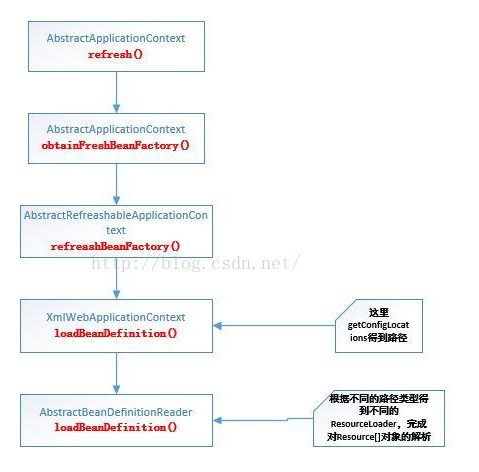
总结一下,容器初始化各个父类方法调用,不然就更懵了!
3.Resource组件
Resource组件与ResourceLoader组件一起工作,将字符串格式指示的资源解析为Resource对象。事实上ResourceLoader是Resource的工厂类, ResourceLoader的核心工作就是解析location。
location示例:”classpath:applicationContext.xml”,”classpath:applicationContext-.xml”,”file:/some/resource/path/myTemplate.txt”,"http://XX/resource/path/myTemplate.txt“ ResourceLoader根据所指示的前缀返回特定的Resource对象。看下Resource的结构图:

Spring IOC容器的初始化—(一)Resource定位的更多相关文章
- Spring IoC容器的初始化过程
Spring IoC容器的初始化包括 BeanDefinition的Resource定位.载入和注册 这三个基本的过程.IoC容器的初始化过程不包含Bean依赖注入的实现.Bean依赖的注入一般会发生 ...
- Spring IOC容器的初始化-(二)BeanDefinition的载入和解析
前言 1.在讲BeanDefinition的载入和解析之前,我们先来看看什么是BeanDefinition. Bean对象在Spring中是以BeanDefinition来描述的,也就是说在Sprin ...
- Spring IOC容器的初始化流程
IOC初始化流程 Resource定位:指对BeanDefinition的资源定位过程.Bean 可能定义在XML中,或者是一个注解,或者是其他形式.这些都被用Resource来定位, 读取Resou ...
- Spring IOC容器的初始化-(三)BeanDefinition的注册
---恢复内容开始--- 前言 在上一篇中有一处代码是BeanDefiniton注册的入口,我们回顾一下. 1.BeanDefiniton在IOC容器注册 首先我们回顾两点,1. 发起注册的地方:2. ...
- 03.Spring IoC 容器 - 初始化
基本概念 Spring IoC 容器的初始化过程在监听器 ContextLoaderListener 类中定义. 具体由该类的的 configureAndRefreshWebApplicationCo ...
- Spring IOC容器分析(4) -- bean创建获取完整流程
上节探讨了Spring IOC容器中getBean方法,下面我们将自行编写测试用例,深入跟踪分析bean对象创建过程. 测试环境创建 测试示例代码如下: package org.springframe ...
- JavaEE互联网轻量级框架整合开发(书籍)阅读笔记(6):Spring IOC容器学习(概念、作用、Bean生命周期)
一.IOC控制反转概念 控制反转(IOC)是一种通过描述(在Java中可以是XML或者是注解)并通过第三方去生产或获取特定对象的方式. 主动创建模式,责任在于开发者,而在被动模式下,责任归于Ioc容器 ...
- spring5源码分析系列(三)——IOC容器的初始化(一)
前言: IOC容器的初始化包括BeanDefinition的Resource定位.载入.注册三个基本过程. 本文以ApplicationContext为例讲解,XmlWebApplicationCon ...
- 04.Spring Ioc 容器 - 刷新
基本概念 Spring Ioc 容器被创建之后,接下来就是它的初始化过程了.该过程包含了配置.刷新两个步骤 . 刷新由 Spring 容器自己实现,具体发生在 ConfigurableApplicat ...
随机推荐
- lua身份证号码验证~
--验证身份证信息 --只支持18位身份证的验证 --[[ #身份证18位编码规则:dddddd yyyymmdd xxx y #dddddd:地区码 #yyyymmdd: 出生年月日 #xxx:顺序 ...
- 分布式链路监控与追踪系统Zipkin
1.分布式链路监控与追踪产生背景2.SpringCloud Sleuth + Zipkin3.分布式服务追踪实现原理4.搭建Zipkin服务追踪系统5.搭建Zipkin集成RabbitMQ异步传输6. ...
- java处理图片base64编码的相互转换
转载自http://www.cnblogs.com/libra0920/p/5754356.html 直接上代码 import sun.misc.BASE64Decoder; import sun.m ...
- Dynamo概述
Dynamo 是Amazon提供的一款高可用的分布式Key-Value存储系统,其满足可伸缩性.可用性.可靠性. CAP原理满足:通过一致性哈希满足P,用复制满足A,用对象版本与向量时钟满足C.用牺牲 ...
- 使用Mybatis整合spring时报错Injection of autowired dependencies failed;
这是无法自动注入,通过查找,我出错的原因在于配置文件的路径没有写对,在applicationContext.xml中是这样写的. <bean id="sqlSessionFactory ...
- SSL和SSH的区别
SSL是一种国际标准的加密及身份认证通信协议,您用的浏览器就支持此协议.SSL(Secure Sockets Layer)最初是由美国Netscape公司研究出来的,后来成为了Internet网上安全 ...
- Shell 自定义函数
语法: function fname() { 程序段} 例子: #!/bin/bash ## 定义函数,分子除以分母,算利润.占有率等## 参数1:分子## 参数2:分母 function divfu ...
- yii2:redis调用
参照手册,调用redis,报错,真坑: Yii::$app->redis 后改改用: Yii::getRedis();
- python Tkinter图形用户编程简单学习(一)
Events(事件) Events are given as strings, using a special event syntax:事件以字符串的方式给出,使用特殊的事件语法:<modif ...
- 【mysql 】sql删除重复记录 You can't specify target table '表名' for update in FROM clause
用下面的语句就报语法出错: delete from tab_record where recordid not in (select min(c.recordid) as recordid from ...