
【系统设计】432. 全 O(1) 的数据结构
题目:
使用栈实现队列的下列操作:

push(x) -- 将一个元素放入队列的尾部。

pop() -- 从队列首部移除元素。

peek() -- 返回队列首部的元素。

empty() -- 返回队列是否为空。

注意:

你只能使用标准的栈操作-- 也就是只有push to top, peek/pop from top, size, 和 is empty 操作是合法的。

你所使用的语言也许不支持栈。你可以使用 list 或者 deque (双端队列) 来模拟一个栈,只要是标准的栈操作即可。

假设所有操作都是有效的 (例如,一个空的队列不会调用 pop 或者 peek 操作)。
本题解题思路:
思考过程中考虑到可以用两个map来解决该问题,但发现比较麻烦,后自己写了一个解决方案:
核心数据结构:
struct DoubleListNode{

    void * val;

    DoubleListNode * pre;

    DoubleListNode * next;

    DoubleListNode(void * x):val(x){

        pre = NULL;

        next = NULL;

    }

};

struct StrToken{

    int counter;

    set<string> strs;

};
用一个排序的双向链表来存储所有的key和key的计数,数列的计数从小到大。
如果返回最小计数的key,则返回队列中的头元素,如果返回最大计数的key,则返回队列的最末位的元素;
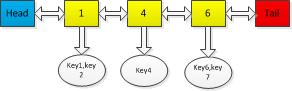
插入元素:
如果发现该key已经存在map中,则找到该节点,将该key插入到其计算加1的链表节点中去,同时更新map映射;如果发现该key不存在,则将该key插入到计算为1的节点中去,同时更新map映射。
删除元素:
如果发现该key已经存在map中,则找到该节点,将该key插入到其计算减一的链表节点中去同时更新MAP映射。
返回最大值:
由于链表是按照计算的大小排列的,返回链表中的最后端的元素即可。
返回最小值:
由于链表是按照计算的大小排列的,返回链表中的最前端的元素即可。
源代码如下,leetcode执行时间为40ms
struct DoubleListNode{

    void * val;

    DoubleListNode * pre;

    DoubleListNode * next;

    DoubleListNode(void * x):val(x){

        pre = NULL;

        next = NULL;

    }

};

struct StrToken{

    int counter;

    set<string> strs;

};

class DoubleLinkList{

public:

    DoubleLinkList(){

        head = new DoubleListNode(NULL);

        tail = new DoubleListNode(NULL);

        head->next = tail;

        tail->pre = head;

        cnt = ;

    }

    bool insertHead(DoubleListNode * node){

        if(NULL == node || NULL == head){

            return false;

        }

        node->next = head->next;

        node->pre = head;

        head->next->pre = node;

        head->next = node;

        cnt++;

        return true;

    }

    bool insertTail(DoubleListNode * node){

        if(NULL == node || NULL == tail){

            return false;

        }

        node->next = tail;

        node->pre = tail->pre;

        tail->pre->next = node;

        tail->pre = node;

        cnt++;

        return true;

    }

    DoubleListNode * getHead(){

        return this->head;

    }

    DoubleListNode * getTail(){

        return this->tail;

    }

    DoubleListNode * getNext(const DoubleListNode * target){

        if(NULL == target){

            return NULL;

        }

        return target->next;

    }

    DoubleListNode * getPrev(const DoubleListNode * target){

        if(NULL == target){

            return NULL;

        }

        return target->pre;

    }

    bool isHead(const DoubleListNode * target){

        if(head == target){

            return true;

        }else{

            return false;

        }

    }

    bool isTail(const DoubleListNode * target){

        if(tail == target){

            return true;

        }else{

            return false;

        }

    }

    bool deleteTarget(DoubleListNode * node){

        if(NULL == node || node == head || node == tail){

            return false;

        }

        if(!node->pre || !node->next){

            return false;

        }

        node->pre->next = node->next;

        node->next->pre = node->pre;

        node->next = NULL;

        node->pre = NULL;

        if(node->val){

            delete node->val;

            node->val = NULL;

        }

        delete node;

        node = NULL;

        return true;

    }

    bool insertBefore(DoubleListNode * target,DoubleListNode * node){

        if(NULL == target || NULL == node){

            return false;

        }

        node->pre = target->pre;

        node->next = target;

        target->pre->next = node;

        target->pre = node;

        cnt++;

        return true;

    }

    bool insertAfter(DoubleListNode * target,DoubleListNode * node){

        if(NULL == target || NULL == node){

            return false;

        }

        node->pre = target;

        node->next = target->next;

        target->next->pre = node;

        target->next = node;

        cnt++;

        return true;

    }

    int length(){

        return cnt;

    }

    bool isEmpty(){

        if(head->next == tail){

            return true;

        }else{

            return false;

        }

    }

private:

    struct DoubleListNode * head;

    struct DoubleListNode * tail;

    int cnt;

};

class AllOne {

public:

    /** Initialize your data structure here. */

    AllOne() {

    }

    /** Inserts a new key <Key> with value 1. Or increments an existing key by 1. */

    void inc(string key) {

        if(keyMap.find(key) == keyMap.end()){

            /*we wiil insert the first node*/

            DoubleListNode * head = keyList.getHead();

            DoubleListNode * next = keyList.getNext(head);

            StrToken * toke = (StrToken *)(next->val);

            /*we will add a new node in to the linklist*/

            if(keyList.isEmpty() || (toke != NULL && toke->counter > )){

                StrToken  * newToke = new StrToken();

                newToke->counter = ;

                newToke->strs.insert(key);

                DoubleListNode * newNode = new DoubleListNode(newToke);

                keyList.insertHead(newNode);

                keyMap[key] = newNode;

            }else{/*we add the key in to the token*/

                if( NULL != toke && toke->counter == ){

                    toke->strs.insert(key);

                    keyMap[key] = next;

                }

            }

        }else{

            map<string,DoubleListNode *>::iterator it = keyMap.find(key);

            DoubleListNode * node =  it->second;

            StrToken * toke = (StrToken *)(node->val);

            toke->strs.erase(key);

            DoubleListNode * next =  keyList.getNext(node);

            StrToken * nextToke = NULL;

            if(next != keyList.getTail()){

                nextToke = (StrToken *)(next->val);

            }

            if(next == keyList.getTail() ||

               (nextToke!=NULL && nextToke->counter > (toke->counter+))){

                StrToken  * newToke = new StrToken();

                newToke->counter = toke->counter+;

                newToke->strs.insert(key);

                DoubleListNode * newNode = new DoubleListNode(newToke);

                keyList.insertAfter(node,newNode);

                keyMap[key] = newNode;

            }else{

                if(nextToke){

                    nextToke->strs.insert(key);

                    keyMap[key] = next;

                }

            }

            if(toke->strs.empty()){

                keyList.deleteTarget(node);

            }

        }

        //debug();

    }

    /** Decrements an existing key by 1. If Key's value is 1, remove it from the data structure. */

    void dec(string key) {

        if(keyMap.find(key) == keyMap.end()){

            return;

        }

        map<string,DoubleListNode *>::iterator it = keyMap.find(key);

        DoubleListNode * node =  it->second;

        StrToken * toke = (StrToken *)(node->val);

        toke->strs.erase(key);

        DoubleListNode * prev =  keyList.getPrev(node);

        StrToken * prevToke = NULL;

        if(prev != keyList.getHead()){

            prevToke = (StrToken *)(prev->val);

        }

        if(toke->counter > ){

            if(prev == keyList.getHead() ||

               (prevToke!=NULL && prevToke->counter < (toke->counter - ))){

                StrToken  * newToke = new StrToken();

                newToke->counter = toke->counter - ;

                newToke->strs.insert(key);

                DoubleListNode * newNode = new DoubleListNode(newToke);

                keyList.insertBefore(node,newNode);

                keyMap[key] = newNode;

            }else{

                if(prevToke){

                    prevToke->strs.insert(key);

                    keyMap[key] = prev;

                }

            }

        }else{

            keyMap.erase(key);

        }

       if(toke->strs.empty()){

            keyList.deleteTarget(node);

        }

        //debug();

    }

    /** Returns one of the keys with maximal value. */

    string getMaxKey() {

        string res;

        if(keyList.isEmpty()){

            return res;

        }

        DoubleListNode * node = keyList.getPrev(keyList.getTail());

        StrToken * toke = (StrToken *)(node->val);

        return *(toke->strs.begin());

    }

    /** Returns one of the keys with Minimal value. */

    string getMinKey() {

        string res;

        if(keyList.isEmpty()){

            return res;

        }

        DoubleListNode * node = keyList.getNext(keyList.getHead());

        StrToken * toke = (StrToken *)(node->val);

        return *(toke->strs.begin());

    }

    void debug(){

        cout<<endl;

        DoubleListNode * node = keyList.getNext(keyList.getHead());

        for(;node!=keyList.getTail();node = keyList.getNext(node)){

            StrToken * toke = (StrToken *)(node->val);

            cout<<"cnt:"<<toke->counter<<endl;

            set<string>::iterator it = toke->strs.begin();

            for(;it!=toke->strs.end();++it){

                cout<<*it<<" ";

            }

            cout<<endl;

        }

    }

private:

    map<string,DoubleListNode *> keyMap;

    DoubleLinkList  keyList;

};

/**

 * Your AllOne object will be instantiated and called as such:

 * AllOne obj = new AllOne();

 * obj.inc(key);

 * obj.dec(key);

 * string param_3 = obj.getMaxKey();

 * string param_4 = obj.getMinKey();

 */
【系统设计】432. 全 O(1) 的数据结构的更多相关文章
- Java实现 LeetCode 432 全 O(1) 的数据结构
432. 全 O(1) 的数据结构 实现一个数据结构支持以下操作: Inc(key) - 插入一个新的值为 1 的 key.或者使一个存在的 key 增加一,保证 key 不为空字符串. Dec(ke ...
- [LeetCode] All O`one Data Structure 全O(1)的数据结构
Implement a data structure supporting the following operations: Inc(Key) - Inserts a new key with va ...
- leetcode难题
4 寻找两个有序数组的中位数 35.9% 困难 10 正则表达式匹配 24.6% 困难 23 合并K个排序链表 47.4% 困难 25 K ...
- C#LeetCode刷题-设计
设计篇 # 题名 刷题 通过率 难度 146 LRU缓存机制 33.1% 困难 155 最小栈 C#LeetCode刷题之#155-最小栈(Min Stack) 44.9% 简单 173 二叉搜索 ...
- Pandas_基础_全
Pandas基础(全) 引言 Pandas是基于Numpy的库,但功能更加强大,Numpy专注于数值型数据的操作,而Pandas对数值型,字符串型等多种格式的表格数据都有很好的支持. 关于Numpy的 ...
- Python全栈之路----目录
Module1 Python基本语法 Python全栈之路----编程基本情况介绍 Python全栈之路----常用数据类型--集合 Module2 数据类型.字符编码.文件操作 Python全栈之路 ...
- 《数据结构-C语言版》(严蔚敏,吴伟民版)课本源码+习题集解析使用说明
<数据结构-C语言版>(严蔚敏,吴伟民版)课本源码+习题集解析使用说明 先附上文档归类目录: 课本源码合辑 链接☛☛☛ <数据结构>课本源码合辑 习题集全解析 链接☛☛☛ ...
- 9-11-Trie树/字典树/前缀树-查找-第9章-《数据结构》课本源码-严蔚敏吴伟民版
课本源码部分 第9章 查找 - Trie树/字典树/前缀树(键树) ——<数据结构>-严蔚敏.吴伟民版 源码使用说明 链接☛☛☛ <数据结构-C语言版>(严蔚 ...
- 9-9-B+树-查找-第9章-《数据结构》课本源码-严蔚敏吴伟民版
课本源码部分 第9章 查找 - B+树 ——<数据结构>-严蔚敏.吴伟民版 源码使用说明 链接☛☛☛ <数据结构-C语言版>(严蔚敏,吴伟民版)课本源码+习题 ...
随机推荐
- Selenium 入门到精通系列:五
Selenium 入门到精通系列 PS:显式等待.隐式等待.强制等待方法 例子 #!/usr/bin/env python # -*- coding: utf-8 -*- # @Date : 2019 ...
- Unity 编辑器扩展
自定义检视面板的使用: 先是定义一个脚本文件,我们来修饰它的检视面板: [HelpURL("http://www.baidu.com")] public class Atr : M ...
- 【20180807模拟测试】T2 box
[问题描述] 有个桌子长 R 宽 C,被分为 R*C 个小方格.其中,一些方格上有箱子,一些方格上有按 钮,一些方格上有障碍物,一些方格上是空地.现在有个任务,需要把所有箱子推到这些按 钮上面.箱子有 ...
- Machine Learning分类:监督/无监督学习
从宏观方面,机器学习可以从不同角度来分类 是否在人类的干预/监督下训练.(supervised,unsupervised,semisupervised 以及 Reinforcement Learnin ...
- 深入理解Java 8 Lambda(类库篇——Streams API,Collectors和并行)
转载:http://zh.lucida.me/blog/java-8-lambdas-inside-out-library-features/ 关于 深入理解 Java 8 Lambda(语言篇——l ...
- Git 命令基本应用
两种建立仓库的方法: (1)在本地文件路径下建立仓库:git init (2)在代码托管网站上克隆项目:git clone [url] 查看该分支下的文件情况:git status 添加远程仓库源:g ...
- LintCode-365.二进制中有多少个1
二进制中有多少个1 计算在一个 32 位的整数的二进制表式中有多少个 1. 样例 给定 32 (100000),返回 1 给定 5 (101),返回 2 给定 1023 (111111111),返回 ...
- 大型网站架构演化(八)——使用NoSQL和搜索引擎
随着网站业务越来越复杂,对数据存储和检索的需求也越来越复杂,网站需要采用一些非关系数据库技术如NoSQL和非数据库查询技术如搜索引擎,如图. NoSQL和搜索引擎都是源自互联网的技术手段,对可伸缩的分 ...
- 3dContactPointAnnotationTool开发日志(十一)
把image也做成panel的形式了,并且放进了scrollView里,真实地显示出图像: 其它两个scrollView的content也做成自适应大小了,就是添加一项content的heig ...
- Gitkraken系列-Gitkraken修改用户名
修改用户名 为了方便项目中代码的管理,需要重新编辑用户名. 点击右上角的图像即可看到如下图 3‑1所示的下拉菜单,鼠标悬于Profile上,会出现一个Edit按钮. 图 3‑1 编辑个人信息 点击Ed ...