
Java-基础-LinkedList
1. 简介
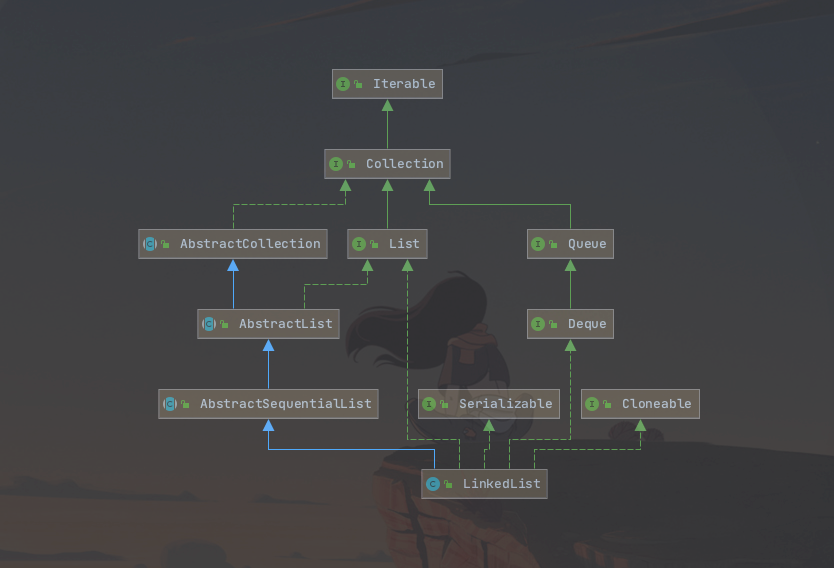
LinkedList 同时实现了List和Deque接口,也就是说它既可以看作是一个顺序容器,又可以看作是双向队列。
既然是双向列表,那么它的每个数据节点都一定有两个指针,分别指向它的前驱和后继。所以,从LinkedList 链表中的任意一个节点开始,都可以很方便的访问它的前驱和后继节点。
1.1 节点
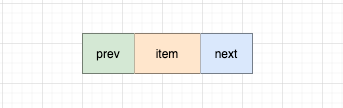
代码实现:
Node 为 LinkedList的静态内部类
// LinkedList.Node

private static class Node<E> {

    // 当前节点元素

    E item;

    // 前驱指针

    Node<E> next;

    // 后继指针

    Node<E> prev;

    Node(Node<E> prev, E element, Node<E> next) {

        this.item = element;

        this.next = next;

        this.prev = prev;

    }

}
多个节点相连:
每个Node都有指针指向前驱和后继节点,“null”并非Node节点,只不过是firstNode prev 为null,并且 lastNode next 为null。

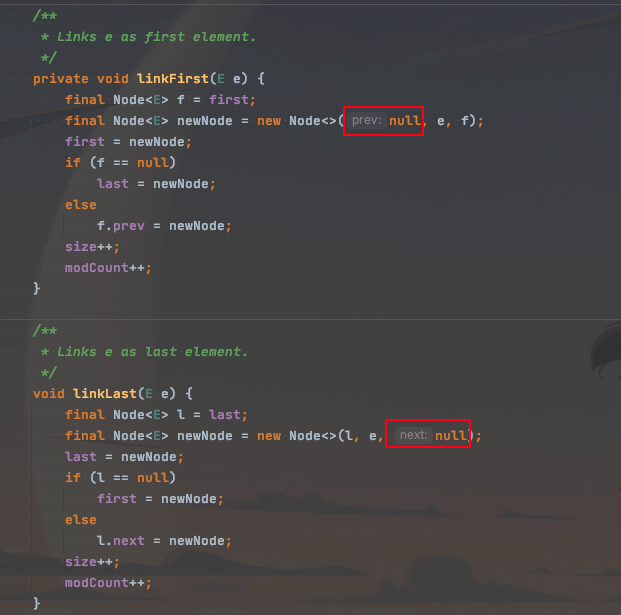
我们再来看下LinkedList 的几个核心的变量:
// 链表长度

transient int size = 0;

 /**

  * Pointer to first node. 指向第一个节点

  * Invariant: (first == null && last == null) ||

  *            (first.prev == null && first.item != null)

  * first == null && last == null) :刚初始化还未赋值的状态

  * 因为是队列第一个元素,所以 前驱指针为null,item不为null

  */

 transient Node<E> first;

 /**

  * Pointer to last node.

  * Invariant: (first == null && last == null) ||

  *            (last.next == null && last.item != null)

  * 因为是最后一个元素,所以 后继指针为null,item不为null

  */

 transient Node<E> last;
2. 初始化
首先我们创建一个LinkedList对象:
// Test::main() 构造一个List实例

List<User> list1 = new LinkedList<>();
LinkedList 构造方法如下:
public LinkedList() {

}

/**

 * Constructs a list containing the elements of the specified

 * collection, in the order they are returned by the collection's

 * iterator.

 *

 * @param  c the collection whose elements are to be placed into this list

 * @throws NullPointerException if the specified collection is null

 */

public LinkedList(Collection<? extends E> c) {

    this();

    addAll(c);

}
纳尼? 啥都没干。只是开辟了个堆内存空间而已。。。
如图所示:

3. 添加元素
源码走起:
// 将指定的元素附加到此列表的末尾。

public boolean add(E e) {

    linkLast(e);

    return true;

}

// 尾部追加

void linkLast(E e) {

    // 第一次添加,这里last为null,所以l也为null

    final Node<E> l = last;

    // 创建一个后继指针为null的node实例

    final Node<E> newNode = new Node<>(l, e, null);

    // 赋值给 last 属性

    last = newNode;

    if (l == null)

      // l为null,将创建出来的node再赋值给first

      first = newNode;

    else

      // 如果不是第一次添加,将队尾的node 的后继指针指向 新创建的node

      l.next = newNode;

    size++;

    modCount++;

}
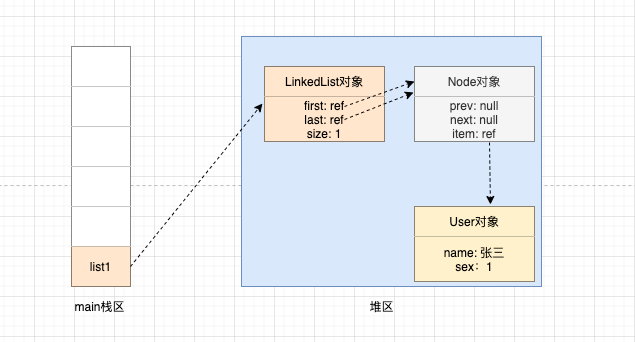
那么我们给list1实例添加一个元素后内存地址会如何变化呢?
User user = new User("张三", 1);

LinkedList<User> list1 = new LinkedList<>();

list1.add(user);
如图所示:
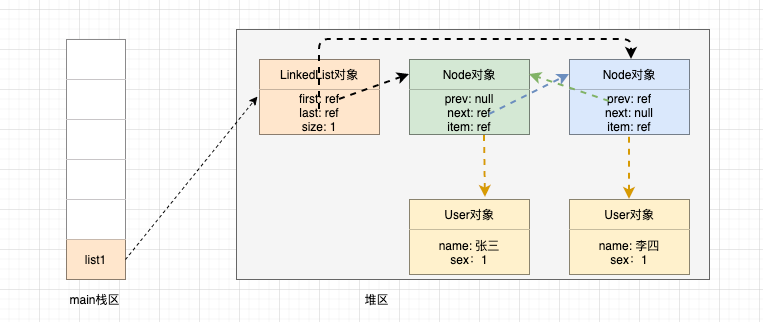
此时我们再添加一个元素呢?
User user = new User("张三", 1);

User user1 = new User("李四", 1);

LinkedList<User> list1 = new LinkedList<>();

list1.add(user);

list1.add(user1);
如图所示:
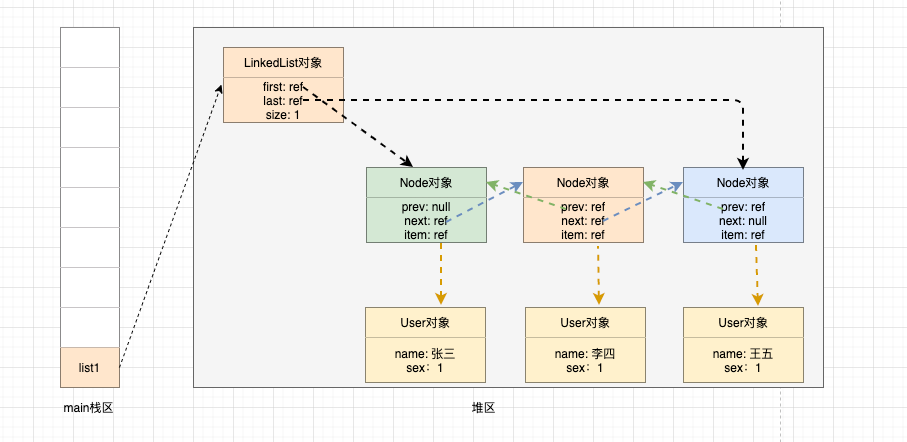
再添加一个王五对象:
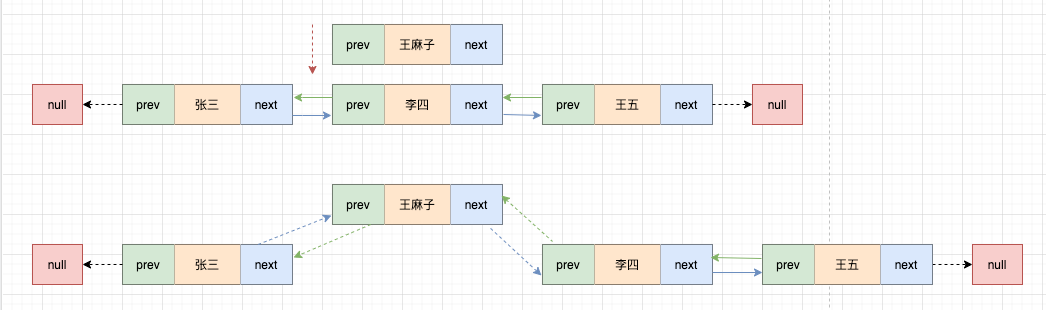
那如果我们是插入元素,不是尾部追加,会是什么情况?
public void add(int index, E element) {

    // 检查索引下标   index >= 0 && index < size

    checkPositionIndex(index);

    if (index == size)

        // 如果index == size 那么尾部追加

        linkLast(element);

    else

        // 插入元素

        linkBefore(element, node(index));

}

/**

 * Inserts element e before non-null Node succ.

 */

void linkBefore(E e, Node<E> succ) {

    // 获取之前index所在位置node的前驱

    final Node<E> pred = succ.prev;

    // 创建一个node。前驱 == 之前index所在位置node的前驱,后继 == 之前index所在位置的node

    final Node<E> newNode = new Node<>(pred, e, succ);

    // 之前index所在位置node的前驱指向 新创建的node

    succ.prev = newNode;

    if (pred == null)

        first = newNode;

    else

        pred.next = newNode;

    size++;

    modCount++;

}

// 查找指定索引位置的node。4.0有讲,这里不再赘述

Node<E> node(int index) {

    if (index < (size >> 1)) {

        Node<E> x = first;

        for (int i = 0; i < index; i++)

            x = x.next;

        return x;

    } else {

        Node<E> x = last;

        for (int i = size - 1; i > index; i--)

            x = x.prev;

        return x;

    }

}
其原理如图所示:
4. 获取元素
因为LinkedList本身就是个双端队列,所以LinkedList支持从双端获取元素,即:firstNode 和 lastNode。
/**

 * Returns the first element in this list.

 *

 * @return the first element in this list

 * @throws NoSuchElementException if this list is empty

 */

public E getFirst() {

    final Node<E> f = first;

    if (f == null)

        throw new NoSuchElementException();

    return f.item;

}

/**

 * Returns the last element in this list.

 *

 * @return the last element in this list

 * @throws NoSuchElementException if this list is empty

 */

public E getLast() {

    final Node<E> l = last;

    if (l == null)

        throw new NoSuchElementException();

    return l.item;

}
我们再来看下get()方法:
public E get(int index) {

    // 检查索引下标   index >= 0 && index < size

    checkElementIndex(index);

    return node(index).item;

}

Node<E> node(int index) {

    // 如果索引 < size / 2 , 右移一位相当于除以2

    if (index < (size >> 1)) {

        Node<E> x = first;

        // 从链表的最左端一直 遍历到 index为止

        for (int i = 0; i < index; i++)

            x = x.next;

        return x;

    } else {

        Node<E> x = last;

        // 从链表的最右端 遍历到 index为止

        for (int i = size - 1; i > index; i--)

            x = x.prev;

        return x;

    }

}
啊哈,所以说为什么LinkedList查找元素慢了,原来是从离 index 最近的一端 一直遍历到 index 位置为止。
5. 删除元素
/**

 * Removes the element at the specified position in this list.  Shifts any

 * subsequent elements to the left (subtracts one from their indices).

 * Returns the element that was removed from the list.

 * 移除此列表中指定位置的元素。将任何后续元素向左移动(从它们的索引中减去一个)。返回从列表中删除的元素

 * @param index the index of the element to be removed

 * @return the element previously at the specified position

 * @throws IndexOutOfBoundsException {@inheritDoc}

 */

public E remove(int index) {

    checkElementIndex(index);

    return unlink(node(index));

}

/**

 * Unlinks non-null node x.

 */

E unlink(Node<E> x) {

    final E element = x.item;

    final Node<E> next = x.next;

    final Node<E> prev = x.prev;

    if (prev == null) {

        first = next;

    } else {

        // 将删除node前驱的后继指针指向删除node的后继

        prev.next = next;

        x.prev = null;

    }

    if (next == null) {

        last = prev;

    } else {

        // 将删除node后继的前驱指针指向删除node的前驱

        next.prev = prev;

        x.next = null;

    }

    // 设置为null 为了让GC清除被删除的node

    x.item = null;

    size--;

    modCount++;

    return element;

}
参考:
https://zhuanlan.zhihu.com/p/28101975
Java-基础-LinkedList的更多相关文章
- Java基础-ArrayList和LinkedList的区别
大致区别: 1.ArrayList是实现了基于动态数组的数据结构,LinkedList基于链表的数据结构. 2.对于随机访问get和set,ArrayList觉得优于LinkedList,因为Lin ...
- 【Java基础】用LinkedList实现一个简单栈的功能
栈的基本功能 栈的最基本功能是保障后进先出,然后在此基础上可以对在栈中的对象进行弹入弹出,此外,在弹出时,如果栈为空,则会报错,所以还需要提供获取当前栈大小的方法. 构造存储对象Student /** ...
- java基础解析系列(十)---ArrayList和LinkedList源码及使用分析
java基础解析系列(十)---ArrayList和LinkedList源码及使用分析 目录 java基础解析系列(一)---String.StringBuffer.StringBuilder jav ...
- Java基础之 集合体系结构(Collection、List、ArrayList、LinkedList、Vector)
Java基础之 集合体系结构详细笔记(Collection.List.ArrayList.LinkedList.Vector) 集合是JavaSE的重要组成部分,其与数据结构的知识密切相联,集合体系就 ...
- JAVA基础学习之String、StringBuffer、StringBuilder、基本数据类型的使用、整形进制转换、集合Collection、Vector、ArrayList、LinkedList、HashSet、TreeSet等(3)
主函数类MainDemo.java package com.itcast.test20140109; import java.util.ArrayList; import java.util.Coll ...
- Java基础之集合框架——使用真的的链表LinkedList<>(TryPolyLine)
控制台程序. public class Point { // Create a point from its coordinates public Point(double xVal, double ...
- Java基础知识强化之集合框架笔记29:使用LinkedList实现栈数据结构的集合代码(面试题)
1. 请用LinkedList模拟栈数据结构的集合,并测试: 题目的意思是: 你自己的定义一个集合类,在这个集合类内部可以使用LinkedList模拟,使用LinkedList功能方法封装成 ...
- Java基础知识强化之集合框架笔记26:LinkedList的特有功能
1. LinkedList的特有功能: (1)添加功能 public void addFirst(Object e) public void addLast(Object e) ( ...
- Java基础——ArrayList与LinkedList(二)
今天练习ArrayList与LinkedList,在网上看到有关它俩应用效率的题型.觉得很有价值,保留一下. import java.util.ArrayList; import java.util. ...
- Java基础——ArrayList与LinkedList(一)
一.定义 ArrayList和LinkedList是两个集合类,用于储存一系列的对象引用(references). 引用的格式分别为: ArrayList<String> list = n ...
随机推荐
- input 只可以输入时分秒
在html5的time中,只有时.分,没有秒. 例如<input type="time" name="user_date" /> 属性加上 step ...
- (7)java Spring Cloud+Spring boot+mybatis企业快速开发架构之SpringCloud-Spring Boot Starter的介绍及使用
Spring Boot 的便利性体现在,它简化了很多烦琐的配置,这对于开发人员来说是一个福音,通过引入各种 Spring Boot Starter 包可以快速搭建出一个项目的脚手架推荐分布式架构源 ...
- 手把手教你如何玩转消息中间件(ActiveMQ)
手把手教你如何玩转消息中间件(ActiveMQ) 2018年07月15日 18:07:39 Cs_hnu_scw 阅读数 12270 标签: 中间件消息中间件ActiveMQ分布式集群 更多 个人分类 ...
- axios与vue-resource
在Vue项目中前后端交互时,早期Vue使用Vue-resource实现异步请求.从Vue2.0之后就不再对vue-resource进行更新,Vue官方推荐使用axios. vue-resource V ...
- PHPDebug互动扩展【phpdbg】功能浅析
对于 PHP 开发者来说,单步的断点 Debug 调试并不是我们的必修课,而 Java . C# . C++ 这些静态语言则会经常性地进行这种调试.其实,我们 PHP 也是支持这类调试方式的,特别是对 ...
- Linux系列(39) - nohup
nohup 英文全称 no hang up(不挂起),用于在系统后台不挂断地运行命令,退出终端不会影响程序的运行. nohup 命令,在默认情况下(非重定向时),会输出一个名叫 nohup.out 的 ...
- javascript 数组 shuffle 洗牌 打乱顺序
* php shuffle 打乱数组顺序 Array.prototype.shuffle = function () { "use strict"; var a = [], b = ...
- CF757F-Team Rocket Rises Again【最短路,DAG支配树】
正题 题目链接:https://www.luogu.com.cn/problem/CF757F 题目大意 \(n\)个点\(m\)条边的一张无向图,求删除\(s\)以外的一个点改变\(s\)到最多点的 ...
- Hibernate 的 <= 出现问题
问题模拟 select new map( e.name as name , e.salary as salary) from Emplpyee e where e.salary <= :sala ...
- 分组密码(五)AES算法② — 密码学复习(八)
在上一篇简单复习了AES的历史时间节点.产生背景.与DES的对比.算法框图(粗略)以及一些数学基础,如果不记得的话点击这里回顾.下面将介绍AES算法的细节. 下面给出AES算法的流程,图片来源:密码算 ...