
【LeetCode】133. Clone Graph 解题报告(Python & C++)
作者: 负雪明烛
id: fuxuemingzhu
个人博客: http://fuxuemingzhu.cn/
题目地址:https://leetcode.com/problems/clone-graph/
题目描述
Given a reference of a node in a connected undirected graph, return a deep copy (clone) of the graph. Each node in the graph contains a val (int) and a list (List[Node]) of its neighbors.
Example:
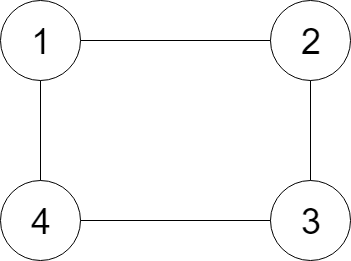
Input:

{"$id":"1","neighbors":[{"$id":"2","neighbors":[{"$ref":"1"},{"$id":"3","neighbors":[{"$ref":"2"},{"$id":"4","neighbors":[{"$ref":"3"},{"$ref":"1"}],"val":4}],"val":3}],"val":2},{"$ref":"4"}],"val":1}

Explanation:

Node 1's value is 1, and it has two neighbors: Node 2 and 4.

Node 2's value is 2, and it has two neighbors: Node 1 and 3.

Node 3's value is 3, and it has two neighbors: Node 2 and 4.

Node 4's value is 4, and it has two neighbors: Node 1 and 3.
Note:
- The number of nodes will be between 1 and 100.
- The undirected graph is a simple graph, which means no repeated edges and no self-loops in the graph.
- Since the graph is undirected, if node p has node q as neighbor, then node q must have node p as neighbor too.
- You must return the copy of the given node as a reference to the cloned graph.
题目大意
完全复制一个图结构。返回新的起始节点。
解题方法
DFS
这个题和138. Copy List with Random Pointer比较类似。至于图结构,我们可以使用DFS和BFS两种结构进行遍历。
一般的遍历只需要保存是否遍历过这个节点即可,但是由于这个题需要把neighboors对应复制过来。那么需要进行改进,改进的方式是把set改成dict,保存每个老节点对应的新节点是多少。在Python中,字典直接保存对象(指针)之间的映射。所以,我们直接把遍历过的对象和复制出来的对象一一对应即可。当我们遍历到一个新的节点的时候,需要判断这个节点是否在字典中出现过,如果出现过就把它对应的复制出来的对象放到其neighboors里,若没有出现过,那么就重新构造该节点,并把原节点和该节点放到字典中保存。
Python代码如下:
"""

# Definition for a Node.

class Node(object):

    def __init__(self, val, neighbors):

        self.val = val

        self.neighbors = neighbors

"""

class Solution(object):

    def cloneGraph(self, node):

        """

        :type node: Node

        :rtype: Node

        """

        node_copy = self.dfs(node, dict())

        return node_copy

    def dfs(self, node, hashd):

        if not node: return None

        if node in hashd: return hashd[node]

        node_copy = Node(node.val, [])

        hashd[node] = node_copy

        for n in node.neighbors:

            n_copy = self.dfs(n, hashd)

            if n_copy:

                node_copy.neighbors.append(n_copy)

        return node_copy
C++代码如下:
/*

// Definition for a Node.

class Node {

public:

    int val;

    vector<Node*> neighbors;

    Node() {}

    Node(int _val, vector<Node*> _neighbors) {

        val = _val;

        neighbors = _neighbors;

    }

};

*/

class Solution {

public:

    Node* cloneGraph(Node* node) {

        if (!node) return nullptr;

        if (m_.count(node))

            return m_[node];

        Node* node_copy = new Node(node->val, {});

        m_[node] = node_copy;

        for (Node* n : node->neighbors) {

            node_copy->neighbors.push_back(cloneGraph(n));

        }

        return node_copy;

    }

private:

    unordered_map<Node*, Node*> m_;

};
BFS
这个题同样也可以使用BFS解决。方法也是使用了字典保存每一个对应关系。当新构造出一个节点之后,必须同时把它放到字典中保存,这个很重要。另外就是每遍历到一个节点时,都要把它的所有邻居放到队列中。
python代码如下:
"""

# Definition for a Node.

class Node(object):

    def __init__(self, val, neighbors):

        self.val = val

        self.neighbors = neighbors

"""

class Solution(object):

    def cloneGraph(self, node):

        """

        :type node: Node

        :rtype: Node

        """

        que = collections.deque()

        hashd = dict()

        que.append(node)

        node_copy = Node(node.val, [])

        hashd[node] = node_copy

        while que:

            t = que.popleft()

            if not t: continue

            for n in t.neighbors:

                if n not in hashd:

                    hashd[n] = Node(n.val, [])

                    que.append(n)

                hashd[t].neighbors.append(hashd[n])

        return node_copy
C++代码如下:
/*

// Definition for a Node.

class Node {

public:

    int val;

    vector<Node*> neighbors;

    Node() {}

    Node(int _val, vector<Node*> _neighbors) {

        val = _val;

        neighbors = _neighbors;

    }

};

*/

class Solution {

public:

    Node* cloneGraph(Node* node) {

        queue<Node*> q;

        q.push(node);

        unordered_map<Node*, Node*> m_;

        Node* node_copy = new Node(node->val, {});

        m_[node] = node_copy;

        while (!q.empty()) {

            Node* t = q.front(); q.pop();

            if (!t) continue;

            for (Node* n : t->neighbors) {

                if (!m_.count(n)) {

                    m_[n] = new Node(n->val, {});

                    q.push(n);

                }

                m_[t]->neighbors.push_back(m_[n]);

            }

        }

        return node_copy;

    }

};
日期
2019 年 3 月 9 日 —— 妇女节快乐
【LeetCode】133. Clone Graph 解题报告(Python & C++)的更多相关文章
- LeetCode: Clone Graph 解题报告
Clone GraphClone an undirected graph. Each node in the graph contains a label and a list of its neig ...
- [LeetCode] 133. Clone Graph 克隆无向图
Clone an undirected graph. Each node in the graph contains a label and a list of its neighbors. OJ's ...
- Java for LeetCode 133 Clone Graph
Clone an undirected graph. Each node in the graph contains a label and a list of its neighbors. OJ's ...
- leetcode 133. Clone Graph ----- java
Clone an undirected graph. Each node in the graph contains a label and a list of its neighbors. OJ's ...
- [leetcode]133. Clone Graph 克隆图
题目 给定一个无向图的节点,克隆能克隆的一切 思路 1--2 | 3--5 以上图为例, node neighbor 1 2, 3 2 1 3 1 ...
- Leetcode#133 Clone Graph
原题地址 方法I,DFS 一边遍历一边复制 借助辅助map保存已经复制好了的节点 对于原图中每个节点,如果已经复制过了,直接返回新节点的地址,如果没复制过,则复制并加入map中,接着依次递归复制其兄弟 ...
- 【LeetCode】120. Triangle 解题报告(Python)
[LeetCode]120. Triangle 解题报告(Python) 作者: 负雪明烛 id: fuxuemingzhu 个人博客: http://fuxuemingzhu.cn/ 题目地址htt ...
- LeetCode 1 Two Sum 解题报告
LeetCode 1 Two Sum 解题报告 偶然间听见leetcode这个平台,这里面题量也不是很多200多题,打算平时有空在研究生期间就刷完,跟跟多的练习算法的人进行交流思想,一定的ACM算法积 ...
- 133. Clone Graph 138. Copy List with Random Pointer 拷贝图和链表
133. Clone Graph Clone an undirected graph. Each node in the graph contains a label and a list of it ...
随机推荐
- EXCEL-批量下拉填充
3.批量下拉填充 => 全选->Ctrl+G定位空值->随意找一个空白单元格输入=还有此单元格想要填充的内容->按Ctrl+Enter,等待几秒,即可,批量下拉填充:
- 基本绘图函数:plot的使用
注意:"##"后面是程序输出结果 例如: par("bg") # 命令 ## [1] "white" # 结果 基本绘图函数: plot:散 ...
- 字符串String的trim()方法
用来删除字符串两端的空白字符并返回,trim方法并不影响原来的字符串本身,它返回的是一个新的字符串 String a = " Hello World "; String b = ...
- Python | 迭代器与zip的一些细节
首先抛出一个困扰本人许久的问题: nums = [1,2,3,4,5,6] numsIter = iter(nums) for _ in zip(*[numsIter]*3): print(_) pr ...
- 巩固javaweb第十三天
巩固内容: HTML 表格 表格由 <table> 标签来定义.每个表格均有若干行(由 <tr> 标签定义),每行被分割为若干单元格(由 <td> 标签定义).字母 ...
- 【Elasticsearch-Java】Java客户端搭建
Elasticsearch Java高级客户端 1. 概述 Java REST Client 有两种风格: Java Low Level REST Client :用于Elasticsearch ...
- 应用springMVC时如果配置URL映射时如下配置
应用springMVC时如果配置URL映射时如下配置 [html] view plaincopy<servlet> <servlet-name>appServlet</s ...
- @ResponseBody和@RequestBody
@ResponseBody @ResponseBody的作用其实是将java对象转为json格式的数据. @responseBody注解的作用是将controller的方法返回的对象通过适当的转换器转 ...
- 基于Github Actions + Docker + Git 的devops方案实践教程
目录 为什么需要Devops 如何实践Devops 版本控制工具(Git) 学习使用 配置环境 源代码仓库 一台配置好环境的云服务器 SSH远程登录 在服务器上安装docker docker技术准备工 ...
- JavaOOP对象和封装
对象: 前言: 在程序员眼中,世界万物皆为对象.世界上有两种人,一种是懂二进制的人,一种就是不懂二进制的人. 面向对象设计的过程就是抽象的过程. 步骤: 第一步:发现类 第二步:发现类的属性 第三步: ...