
201771010134杨其菊《面向对象程序设计java》第十周学习总结
第8章泛型程序设计学习总结
第一部分:理论知识
主要内容: 什么是泛型程序设计
泛型类的声明及实例化的方法
泛型方法的定义
泛型接口的定义
泛型类型的继承规则
通配符类型及使用方法
1:泛型类的定义
(1) 一个泛型类(generic class)就是具有一个或多个类型变量的类,即创建用类型作为参数的类。如一个泛型类定义格式如下:class Generics<K,V>其中的K和V是类中的可变类型参数。如:
public class Pair{
private T first;
private T second;
public Pair() {first = null; second = null;}
public Pair(T first, T second) {
this.first = first; this.second = second;
}
public T getFirst() {return first;}
public T getSecond() {return second;}
public void setFirst(T newValue)
{first = newValue;}
public void setSecond(T newValue)
{second = newValue;}
}
(2)Pair类引入了一个类型变量T,用尖括号(<>)括起来,并放在类名的后面。泛型类可以有多个类型变量。例如:public class Pair<t, u=""> { … }
(3) 类定义中的类型变量用于指定方法的返回类型以及域、局部变量的类型。
2.泛型方法的声明
(1)泛型方法
– 除了泛型类外,还可以只单独定义一个方法作为泛型方法,用于指定方法参数或者返回值为泛型类型,留待方法调用时确定。
– 泛型方法可以声明在泛型类中,也可以声明在普通类中。
public class ArrayTool
{
public static void insert(
E[] e, int i)
{
//请自己添加代码
}
public static E valueAt(
E[] e , int i)
{
//请自己添加代码
}
}
3.泛型接口的定义
(1)定义
public interface IPool
{
T get();
int add(T t);
}
(2)实现
public class GenericPool implements IPool
{
…
}
public class GenericPool implements IPool
{
…
}
4.泛型变量的限定
(1) 定义泛型变量的上界
public class NumberGeneric< T extends Number>
(2) 泛型变量上界的说明
上述声明规定了NumberGeneric类所能处理的泛型变量类型需和Number有继承关系;
extends关键字所声明的上界既可以是一个类,也可以是一个接口;
(3)< T extends BoundingType> 表示T应该是绑定类型的子类型。 一个类型变量或通配符可以有多个限定,限定类型用“&”分割。例如:< T extends Comparable & Serializable >
(4) 定义泛型变量的下界
List cards = new ArrayList();
(5) 泛型变量下界的说明
– 通过使用super关键字可以固定泛型参数的类型为某种类型或者其超类
– 当程序希望为一个方法的参数限定类型时,通常可以使用下限通配符
public static void sort(T[] a,Comparator c)
{ …
}
5.通配符类型
通配符
– “?”符号表明参数的类型可以是任何一种类型,它和参数T的含义是有区别的。T表示一种未知类型,而“?”表示任何一种类型。这种通配符一般有以下三种用法:
– 单独的?,用于表示任何类型。
– ? extends type,表示带有上界。
– ? super type,表示带有下界。
第二部分:实验部分
实验十 泛型程序设计技术
实验时间 2018-11-1
1、实验目的与要求
(1) 理解泛型概念;
(2) 掌握泛型类的定义与使用;
(3) 掌握泛型方法的声明与使用;
(4) 掌握泛型接口的定义与实现;
(5)了解泛型程序设计,理解其用途。
2、实验内容和步骤
实验1: 导入第8章示例程序,测试程序并进行代码注释。
测试程序1:
l 编辑、调试、运行教材311、312页 代码,结合程序运行结果理解程序;
l 在泛型类定义及使用代码处添加注释;
l 掌握泛型类的定义及使用。
 package pair1;

 /**

  * @version 1.01 2012-01-26

  * @author Cay Horstmann

  */

 public class PairTest1

 {

    public static void main(String[] args)

    {

       String[] words = { "Mary", "had", "a", "little", "lamb" };

      //ArrayAlg调用静态方法minmax;

       Pair<String> mm = ArrayAlg.minmax(words);

       System.out.println("min = " + mm.getFirst());

       System.out.println("max = " + mm.getSecond());

    }

 }

 class ArrayAlg

 {

    /**

     * Gets the minimum and maximum of an array of strings.

     * @param a an array of strings

     * @return a pair with the min and max value, or null if a is null or empty

     */

    public static Pair<String> minmax(String[] a)//定义静态泛型方法,将类型变量实例化为String;

    {

       if (a == null || a.length == 0) return null;

       String min = a[0];

       String max = a[0];

       for (int i = 1; i < a.length; i++)

       {

          if (min.compareTo(a[i]) > 0) min = a[i];

          if (max.compareTo(a[i]) < 0) max = a[i];

       }

       return new Pair<>(min, max);//返回一个实例化后的类对象;

    }

 }
 package pair1;

 /**

  * @version 1.00 2004-05-10

  * @author Cay Horstmann

  */

 public class Pair<T> //定义泛型类,类型变量为T;

 {

    private T first;

    private T second;

    public Pair() { first = null; second = null; }

   // 构造泛型方法,构造方法的入口参数(first, second)类型为泛型T;

    public Pair(T first, T second) { this.first = first;  this.second = second; }

    //定义泛型方法,类型变量T指定了访问方法的返回值和入口参数的类型;

    public T getFirst() { return first; }

    public T getSecond() { return second; }

   //泛型方法,构造方法的入口参数类型为泛型T;

    public void setFirst(T newValue) { first = newValue; }

    public void setSecond(T newValue) { second = newValue; }

 }
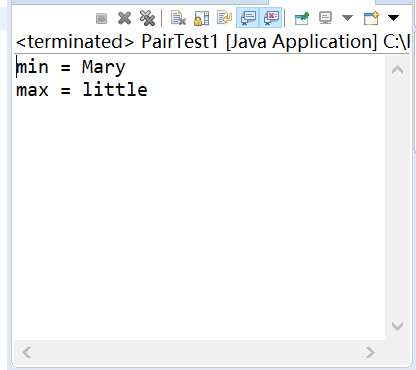
测试程序2:
l 编辑、调试运行教材315页 PairTest2,结合程序运行结果理解程序;
l 在泛型程序设计代码处添加相关注释;
l 掌握泛型方法、泛型变量限定的定义及用途。
 package pair2;

 /**

  * @version 1.00 2004-05-10

  * @author Cay Horstmann

  */

 public class Pair<T> //定义泛型类,类型变量为T;

 {

    private T first;

    private T second;

    public Pair() { first = null; second = null; }

   // 构造泛型方法,构造方法的入口参数(first, second)类型为泛型T;

    public Pair(T first, T second) { this.first = first;  this.second = second; }

    //定义泛型方法,类型变量T指定了访问方法的返回值和入口参数的类型;

    public T getFirst() { return first; }

    public T getSecond() { return second; }

   //泛型方法,构造方法的入口参数类型为泛型T;

    public void setFirst(T newValue) { first = newValue; }

    public void setSecond(T newValue) { second = newValue; }

 }
 package pair2;

 //import PairTest1.Pair;

 import java.time.*;

 /**

  * @version 1.02 2015-06-21

  * @author Cay Horstmann

  */

 public class PairTest2

 {

    public static void main(String[] args)

    {

       LocalDate[] birthdays =

          {

             LocalDate.of(1906, 12, 9), // G. Hopper

             LocalDate.of(1815, 12, 10), // A. Lovelace

             LocalDate.of(1903, 12, 3), // J. von Neumann

             LocalDate.of(1910, 6, 22), // K. Zuse

          };

       //ArrayAlg调用静态方法minmax,

       Pair<LocalDate> mm = ArrayAlg.minmax(birthdays);

       System.out.println("min = " + mm.getFirst());

       System.out.println("max = " + mm.getSecond());

    }

 }

 class ArrayAlg

 {

    /**

       Gets the minimum and maximum of an array of objects of type T.

       @param a an array of objects of type T

       @return a pair with the min and max value, or null if a is

       null or empty

    */

     //构造泛型方法;限定类型变量,类型变量T是Comparable类的子类,

    public static <T extends Comparable> Pair<T> minmax(T[] a)

    {

       if (a == null || a.length == 0) return null;

       T min = a[0];

       T max = a[0];

       for (int i = 1; i < a.length; i++)

       {

          if (min.compareTo(a[i]) > 0) min = a[i];

          if (max.compareTo(a[i]) < 0) max = a[i];

       }

       return new Pair<>(min, max);//返回一个实例化泛型Pair类对象;

    }

 }

测试程序3:
l 用调试运行教材335页 PairTest3,结合程序运行结果理解程序;
l 了解通配符类型的定义及用途。
 package pair3;

 import java.time.*;

 public class Employee

 {

    private String name;

    private double salary;

    private LocalDate hireDay;

    public Employee(String name, double salary, int year, int month, int day)

    {

       this.name = name;

       this.salary = salary;

       hireDay = LocalDate.of(year, month, day);

    }

    public String getName()

    {

       return name;

    }

    public double getSalary()

    {

       return salary;

    }

    public LocalDate getHireDay()

    {

       return hireDay;

    }

    public void raiseSalary(double byPercent)

    {

       double raise = salary * byPercent / 100;

       salary += raise;

    }

 }
 package pair3;

 public class Manager extends Employee// Manager继承父类 Employee;

 {

    private double bonus;

    /**

       @param name the employee's name

       @param salary the salary

       @param year the hire year

       @param month the hire month

       @param day the hire day

    */

    public Manager(String name, double salary, int year, int month, int day)

    {

       super(name, salary, year, month, day);

       bonus = 0;

    }

    public double getSalary()

    {

       double baseSalary = super.getSalary();

       return baseSalary + bonus;

    }

    public void setBonus(double b)

    {

       bonus = b;

    }

    public double getBonus()

    {

       return bonus;

    }

 }
 package pair3;

 /**

  * @version 1.00 2004-05-10

  * @author Cay Horstmann

  */

 public class Pair<T> //定义泛型类,类型变量为T;

 {

    private T first;

    private T second;

    public Pair() { first = null; second = null; }

    // 构造泛型方法,构造方法的入口参数(first, second)类型为泛型T;

    public Pair(T first, T second) { this.first = first;  this.second = second; }

    //定义泛型方法,类型变量T指定了访问方法的返回值和入口参数的类型;

    public T getFirst() { return first; }

    public T getSecond() { return second; }

    //泛型方法,构造方法的入口参数类型为泛型T;

    public void setFirst(T newValue) { first = newValue; }

    public void setSecond(T newValue) { second = newValue; }

 }
 package pair3;

 /**

  * @version 1.01 2012-01-26

  * @author Cay Horstmann

  */

 public class PairTest3

 {

    public static void main(String[] args)

    {

       Manager ceo = new Manager("Gus Greedy", 800000, 2003, 12, 15);

       Manager cfo = new Manager("Sid Sneaky", 600000, 2003, 12, 15);

      //创建Pair泛型类对象(泛型变量T默认为int型,并将其传递给类型变量T为Manager的类变量buddies;

       Pair<Manager> buddies = new Pair<>(ceo, cfo);

       printBuddies(buddies);

       ceo.setBonus(1000000);

       cfo.setBonus(500000);

       Manager[] managers = { ceo, cfo };

       Pair<Employee> result = new Pair<>();//创建一个Pair类对象,并将其传递给类型变量T为Employee的类变量 result;

       minmaxBonus(managers, result);

       System.out.println("first: " + result.getFirst().getName()

          + ", second: " + result.getSecond().getName());

       maxminBonus(managers, result);

       System.out.println("first: " + result.getFirst().getName()

          + ", second: " + result.getSecond().getName());

    }

     //?:下限通配符;限定类型变量的下界为Employee类;

    public static void printBuddies(Pair<? extends Employee> p) {

       Employee first = p.getFirst();

       Employee second = p.getSecond();

       System.out.println(first.getName() + " and " + second.getName() + " are buddies.");

    }

        //?:下限通配符;限定类型变量的下界为Manager类;

    public static void minmaxBonus(Manager[] a, Pair<? super Manager> result)

    {

       if (a.length == 0) return;

       Manager min = a[0];

       Manager max = a[0];

       for (int i = 1; i < a.length; i++)

       {

          if (min.getBonus() > a[i].getBonus()) min = a[i];

          if (max.getBonus() < a[i].getBonus()) max = a[i];

       }

       result.setFirst(min);

       result.setSecond(max);

    }

     //?:下限通配符;限定泛型类Pair类型变量的下界为Manager类;

    public static void maxminBonus(Manager[] a, Pair<? super Manager> result)

    {

       minmaxBonus(a, result);

       PairAlg.swapHelper(result); //swapHelper捕获通配符类型 ;

    }

    // 不能写: public static <T super manager> ...

 }

 class PairAlg

 {

    public static boolean hasNulls(Pair<?> p)//限定泛型类Pair类型变量的下界为p;

    {

       return p.getFirst() == null || p.getSecond() == null;

    }

    public static void swap(Pair<?> p) { swapHelper(p); }

    public static <T> void swapHelper(Pair<T> p)

    {

       T t = p.getFirst();

       p.setFirst(p.getSecond());

       p.setSecond(t);

    }

 }
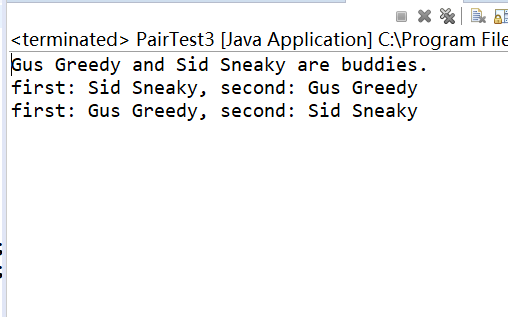
实验2:编程练习:
编程练习1:实验九编程题总结
l 实验九编程练习1总结(从程序总体结构说明、模块说明,目前程序设计存在的困难与问题三个方面阐述)。
 package shiyan9;

 import java.io.BufferedReader;

 import java.io.File;

 import java.io.FileInputStream;

 import java.io.FileNotFoundException;

 import java.io.IOException;

 import java.io.InputStreamReader;

 import java.util.ArrayList;

 import java.util.Arrays;

 import java.util.Collections;

 import java.util.Scanner;

 public class Search{

     private static ArrayList<Person> Personlist1;

     public static void main(String[] args) {

       Personlist1 = new ArrayList<>();

        Scanner scanner = new Scanner(System.in);

        File file = new File("E:\\面向对象程序设计Java\\实验\\实验六\\身份证号.txt");

         try {

              FileInputStream F = new FileInputStream(file);

              BufferedReader in = new BufferedReader(new InputStreamReader(F));

              String temp = null;

              while ((temp = in.readLine()) != null) {

                 Scanner linescanner = new Scanner(temp);

                 linescanner.useDelimiter(" ");

                 String name = linescanner.next();

                 String id = linescanner.next();

                 String sex = linescanner.next();

                 String age = linescanner.next();

                 String place =linescanner.nextLine();

                 Person Person = new Person();

                 Person.setname(name);

                 Person.setid(id);

                 Person.setsex(sex);

                 int a = Integer.parseInt(age);

                 Person.setage(a);

                 Person.setbirthplace(place);

                 Personlist1.add(Person);

             }

         } catch (FileNotFoundException e) {

             System.out.println("查找不到信息");

             e.printStackTrace();

         } catch (IOException e) {

             System.out.println("信息读取有误");

             e.printStackTrace();

         }

         boolean isTrue = true;

         while (isTrue) {

             System.out.println("******************************************");

             System.out.println("1:按姓名字典顺序输出信息;");

             System.out.println("2:查询最大年龄与最小年龄人员信息;");

             System.out.println("3:按省份找你的同乡;");

             System.out.println("4:输入你的年龄,查询年龄与你最近人的信息;");

             System.out.println("5:退出");

             System.out.println("******************************************");

             int type = scanner.nextInt();

             switch (type) {

             case 1:

                 Collections.sort(Personlist1);

                 System.out.println(Personlist1.toString());

                 break;

             case 2:

                 int max=0,min=100;int j,k1 = 0,k2=0;

                 for(int i=1;i<Personlist1.size();i++)

                 {

                     j=Personlist1.get(i).getage();

                    if(j>max)

                    {

                        max=j;

                        k1=i;

                    }

                    if(j<min)

                    {

                        min=j;

                        k2=i;

                    }

                 }

                 System.out.println("年龄最大:"+Personlist1.get(k1));

                 System.out.println("年龄最小:"+Personlist1.get(k2));

                 break;

             case 3:

                 System.out.println("place?");

                 String find = scanner.next();

                 String place=find.substring(0,3);

                 String place2=find.substring(0,3);

                 for (int i = 0; i <Personlist1.size(); i++)

                 {

                     if(Personlist1.get(i).getbirthplace().substring(1,4).equals(place))

                     {

                         System.out.println("你的同乡:"+Personlist1.get(i));

                     }

                 }

                 break;

             case 4:

                 System.out.println("年龄:");

                 int yourage = scanner.nextInt();

                 int close=ageclose(yourage);

                 int d_value=yourage-Personlist1.get(close).getage();

                 System.out.println(""+Personlist1.get(close));

                 break;

             case 5:

            isTrue = false;

            System.out.println("再见!");

                 break;

             default:

                 System.out.println("输入有误");

             }

         }

     }

     public static int ageclose(int age) {

            int m=0;

         int    max=53;

         int d_value=0;

         int k=0;

         for (int i = 0; i < Personlist1.size(); i++)

         {

             d_value=Personlist1.get(i).getage()-age;

             if(d_value<0) d_value=-d_value;

             if (d_value<max)

             {

                max=d_value;

                k=i;

             }

          }    return k;

      }

 }
Search
 package shiyan9;

 public class Person implements Comparable<Person> {

     private String name;

     private String id;

     private int age;

     private String sex;

     private String birthplace;

 public String getname() {

 return name;

 }

 public void setname(String name) {

 this.name = name;

 }

 public String getid() {

 return id;

 }

 public void setid(String id) {

 this.id= id;

 }

 public int getage() {

 return age;

 }

 public void setage(int age) {

 // int a = Integer.parseInt(age);

 this.age= age;

 }

 public String getsex() {

 return sex;

 }

 public void setsex(String sex) {

 this.sex= sex;

 }

 public String getbirthplace() {

 return birthplace;

 }

 public void setbirthplace(String birthplace) {

 this.birthplace= birthplace;

 }

 public int compareTo(Person o) {

 return this.name.compareTo(o.getname());

 }

 public String toString() {

 return  name+"\t"+sex+"\t"+age+"\t"+id+"\t";

 }

 }
Person
(1)编程练习1总结:
程序总体结构:主类(Search)和接口(Person);
模块说明:(1)主类Search:读取文件模块;
Try/catch模块:监视可能出现的异常;捕捉处理异常;
Switch/case模块匹配选择5种具体操作;
(2)接口(Person):
属性声明模块;
构造方法模块:getname,setname, getid,setid,getage,setage,getsex,setsex,getbirthplace,setbirthplace,compareTo等;
目前存在的困难与问题: 文件读取路径的设置影响到能否找到文件;
不论是语法,还是主要的技术(如接口)方面不是娴熟,有些显而易见的东西不能立马想到;
构想正确的设计思路;
l 实验九编程练习2总结(从程序总体结构说明、模块说明,目前程序设计存在的困难与问题三个方面阐述)。
 package a;

 import java.io.FileNotFoundException;

 import java.io.PrintWriter;

 import java.util.Scanner;

 import org.w3c.dom.css.Counter;

 public class Main{

     public static void main(String[] args) {

         Scanner in = new Scanner(System.in);

         counter counter=new  counter();

         PrintWriter output = null;

         try {

             output = new PrintWriter("result.txt");

         } catch (Exception e) {

             //e.printStackTrace();

         }

         int sum = 0;

         for (int i = 1; i < 11; i++) {

             int a = (int) Math.round(Math.random() * 100);

             int b = (int) Math.round(Math.random() * 100);

             int type = (int) Math.round(Math.random() * 4);

            switch(type)

            {

            case 1:

                System.out.println(i+": "+a+"/"+b+"=");

                while(b==0){

                    b = (int) Math.round(Math.random() * 100);

                    }

                double c = in.nextDouble();

                output.println(a+"/"+b+"="+c);

                if (c == counter.Chu(a, b))

                {

                    sum += 10;

                    System.out.println("恭喜答案正确!");

                }

                else {

                    System.out.println("答案错误!");

                } break;

            case 2:

                System.out.println(i+": "+a+"*"+b+"=");

                int c1 = in.nextInt();

                output.println(a+"*"+b+"="+c1);

                if (c1 == counter.Cheng(a, b)) {

                    sum += 10;

                    System.out.println("恭喜答案正确!");

                }

                else {

                    System.out.println("答案错误!");

                }break;

            case 3:

                System.out.println(i+": "+a+"+"+b+"=");

                int c2 = in.nextInt();

                output.println(a+"+"+b+"="+c2);

                if (c2 ==  counter.Jia(a, b)) {

                    sum += 10;

                    System.out.println("恭喜答案正确!");

                }

                else {

                    System.out.println("答案错误!");

                }break ;

            case 4:

                System.out.println(i+": "+a+"-"+b+"=");

                int c3 = in.nextInt();

                output.println(a+"-"+b+"="+c3);

                if (c3 ==  counter.Jian(a, b)) {

                    sum += 10;

                    System.out.println("恭喜答案正确!");

                }

                else {

                    System.out.println("答案错误!");

                }break ;

              }

           }

         System.out.println("成绩"+sum);

         output.println("成绩:"+sum);

         output.close();

     }

 }
Main
 package a;

 public class counter {

        private int a;

        private int b;

                public int  Jia(int a,int b)

                {

                    return a+b;

                }

                public int   Jian(int a,int b)

                {

                    if((a-b)<0)

                        return 0;

                    else

                    return a-b;

                }

                public int   Cheng(int a,int b)

                {

                    return a*b;

                }

                public int   Chu(int a,int b)

                {

                    if(b!=0)

                    return a/b;

                    else

                return 0;

                }

        }
counter
编程练习2总结:
程序结构:主类Main和子类counter两大部分;
模块说明:Main类:
(1) 建文件字符流,文件输出模块,将out结果输出到result.txt中;
(2) try/catch模块捕获处理异常;
(3) Switch//case模块:随机生成a,b两个操作数,匹配选择加减乘除四种具体操作;
(4) 输出总成绩;
子类counter类:
(1) 属性声明;
(2) 构造方法;
程序设计存在的困难与问题:
1.没有全面考虑小学生的实际状况:减法算法结果可能出现负数的情况,以及除法的运算结果直接取整输出,都不符合小学生的学习范围;
2.编程过程中,我在变量的 使用范围中出现了问题;
3.结果输出到文件中;
4.设计思路比较难;
编程练习2:采用泛型程序设计技术改进实验九编程练习2,使之可处理实数四则运算,其他要求不变。
 package a;

 import java.io.FileNotFoundException;

 import java.io.PrintWriter;

 import java.util.Scanner;

 //import org.w3c.dom.css.Counter;

 public class Main{

     public static void main(String[] args) {

         Scanner in = new Scanner(System.in);

         counter Counter=new  counter();

         PrintWriter output = null;

         try {

             output = new PrintWriter("result.txt");

         } catch (Exception e) {

             //e.printStackTrace();

         }

         int sum = 0;

         for (int i = 1; i <=10; i++) {

             int a = (int) Math.round(Math.random() * 100);

             int b = (int) Math.round(Math.random() * 100);

             int type = (int) Math.round(Math.random() * 4);

            switch(type)

            {

            case 1:

                System.out.println(i+": "+a+"/"+b+"=");

                while(b== 0&& a%b!=0)

                {

                    b = (int) Math.round(Math.random() * 100);

                    a = (int) Math.round(Math.random() * 100);

                    }

                int c = in.nextInt();

                output.println(a+"/"+b+"="+c);

                if (c == Counter.Chu(a, b))

                {

                    sum += 10;

                    System.out.println("恭喜答案正确!");

                }

                else {

                    System.out.println("答案错误!");

                }

                    break;

            case 2:

                System.out.println(i+": "+a+"*"+b+"=");

                int c1 = in.nextInt();

                output.println(a+"*"+b+"="+c1);

                if (c1 == Counter.Cheng(a, b)) {

                    sum += 10;

                    System.out.println("恭喜答案正确!");

                }

                else {

                    System.out.println("答案错误!");

                }

                break;

            case 3:

                System.out.println(i+": "+a+"+"+b+"=");

                int c2 = in.nextInt();

                output.println(a+"+"+b+"="+c2);

                if (c2 ==  Counter.Jia(a, b)) {

                    sum += 10;

                    System.out.println("恭喜答案正确!");

                }

                else {

                    System.out.println("答案错误!");

                }

                break ;

            case 4:

                while (a < b) {

                    int x=0;

                    x=b;

                    b=a;

                    a=x;

                }

                System.out.println(i+": "+a+"-"+b+"=");

                int c3 = in.nextInt();

                output.println(a+"-"+b+"="+c3);

                if (c3 ==  Counter.Jian(a, b))

                {

                    sum += 10;

                    System.out.println("恭喜答案正确!");

                }

                else {

                    System.out.println("答案错误!");

                }

                break ;

              }

           }

         System.out.println("成绩"+sum);

         output.println("成绩:"+sum);

         output.close();

     }

 }
 package a;

 public class counter<T>{

        private T a;

        private T b;

        public counter(T a, T b) {

             this.a = a;

             this.b = b;

         }

                public counter() {

         // TODO Auto-generated constructor stub

     }

             public int  Jia(int a,int b)

                {

                    return a+b;

                }

                public int  Jian(int a,int b)

                {

                    return a-b;

                }

                public int   Cheng(int a,int b)

                {

                    return a*b;

                }

                public int   Chu(int a,int b)

                {

                    if (b!= 0 && a%b==0)

                        return a / b;

                    else

                        return 0;

                }

        }
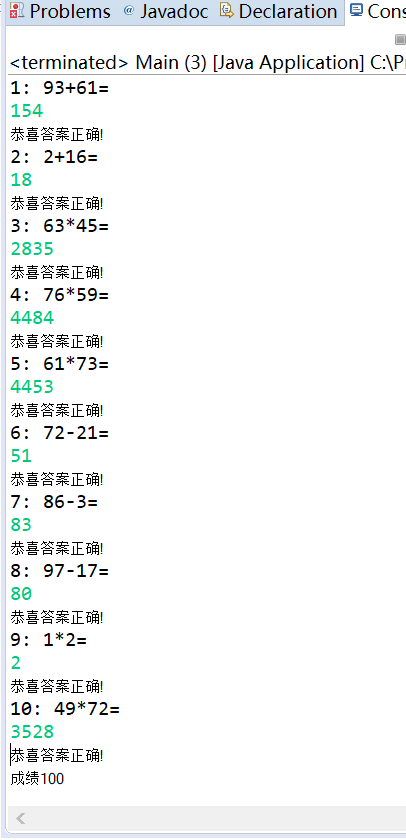
主要是对于除法和减法的修改,过滤掉一些不合适的数据;
第三部分:总结
1.上泛型理论课的时候,我以为我掌握的差不多了,用的时候还是多多少少有这样那样的问题,可能有些操作我没练习过也就没发现一些隐藏的问题和疑惑。
2.之前读代码,敲代码的时候虽然会总结,但一直不怎么重视反思总结,但这次这么仔细的,以老师给的这种步骤去重新审视总结,感觉很不错,也积累了一种学习方法;
3.拿到一个问题后的解决思路是非常重要的!!!
201771010134杨其菊《面向对象程序设计java》第十周学习总结的更多相关文章
- 201771010134杨其菊《面向对象程序设计java》第九周学习总结
第九周学习总结 第一部分:理论知识 异常.断言和调试.日志 1.捕获 ...
- 201871010132-张潇潇《面向对象程序设计(java)》第一周学习总结
面向对象程序设计(Java) 博文正文开头 项目 内容 这个作业属于哪个课程 https://www.cnblogs.com/nwnu-daizh/ 这个作业的要求在哪里 https://www.cn ...
- 扎西平措 201571030332《面向对象程序设计 Java 》第一周学习总结
<面向对象程序设计(java)>第一周学习总结 正文开头: 项目 内容 这个作业属于哪个课程 https://www.cnblogs.com/nwnu-daizh/ 这个作业的要求在哪里 ...
- 杨其菊201771010134《面向对象程序设计Java》第二周学习总结
第三章 Java基本程序设计结构 第一部分:(理论知识部分) 本章主要学习:基本内容:数据类型:变量:运算符:类型转换,字符串,输入输出,控制流程,大数值以及数组. 1.基本概念: 1)标识符:由字母 ...
- 201871010124 王生涛《面向对象程序设计JAVA》第一周学习总结
项目 内容 这个作业属于哪个课程 https://www.cnblogs.com/nwnu-daizh/ 这个作业的要求在哪里 https://edu.cnblogs.com/campus/xbsf/ ...
- 201871010115——马北《面向对象程序设计JAVA》第二周学习总结
项目 内容 这个作业属于哪个课程 https://www.cnblogs.com/nwnu-daizh/ 这个作业的要求在哪里 https://www.cnblogs.com/nwnu-daizh/p ...
- 201777010217-金云馨《面向对象程序设计(Java)》第二周学习总结
项目 内容 这个作业属于哪个课程 https://www.cnblogs.com/nwnu-daizh/ 这个作业的要求在哪里 https://www.cnblogs.com/nwnu-daizh/p ...
- 201871010132——张潇潇《面向对象程序设计JAVA》第二周学习总结
项目 内容 这个作业属于哪个课程 https://www.cnblogs.com/nwnu-daizh/ 这个作业的要求在哪里 https://www.cnblogs.com/nwnu-daizh/p ...
- 201771010123汪慧和《面向对象程序设计Java》第二周学习总结
一.理论知识部分 1.标识符由字母.下划线.美元符号和数字组成, 且第一个符号不能为数字.标识符可用作: 类名.变量名.方法名.数组名.文件名等.第二部分:理论知识学习部分 2.关键字就是Java语言 ...
- 20155303 2016-2017-2 《Java程序设计》第十周学习总结
20155303 2016-2017-2 <Java程序设计>第十周学习总结 目录 学习内容总结 网络编程 数据库 教材学习中的问题和解决过程 代码调试中的问题和解决过程 代码托管 上周考 ...
随机推荐
- Java能不能通过代码干预Java垃圾回收
1.不能通过Java代码干预Java垃圾回收. 2.system.gc是请求运行垃圾回收器,不一定真的运行了垃圾回收器. 3.Java的system.gc不受代码控制. 4.影响Java虚拟机垃圾回收 ...
- 分布式一致性算法2PC和3PC
为了解决分布式一致性问题,产生了不少经典的分布式一致性算法,本文将介绍其中的2PC和3PC.2PC即Two-Phase Commit,译为二阶段提交协议.3PC即Three-Phase Commit, ...
- spring boot项目配置跨域
1.在项目启动入口类实现 WebMvcConfigurer 接口: @SpringBootApplication public class Application implements WebMvcC ...
- Springboot中对Service层进行集成测试时注意点
@SpringBootTest(classes = {DataSourceAutoConfiguration.class,MybatisAutoConfiguration.class,****Impl ...
- Java就业班day09_xml&tomcat
Xml & Tomcat Xml eXtendsible markup language 可扩展的标记语言 XML 有什么用? 可以用来保存数据 可以用来做配置文件 数据传输载体 定义xml ...
- jeecg-boot 简易部署方案
jeecg-boot采用前后端分离的方案,前后端代码不在一起.想要部署 一般是通过反向代理实现. jeecg-boot目前支持更好更简单的解决方案: jeecg 在配置文件里面指定了 webapp的存 ...
- Windows、Linux的环境变量
Windows操作系统 什么是环境变量?环境变量一般是指在操作系统中用来指定操作系统运行环境的一些参数,比如临时文件夹位置和系统文件夹位置等. 这点有点类似于DOS时期的默认路径,当你运行某些程序时除 ...
- web跨域问题(No 'Access-Control-Allow-Origin'..)
1. 问题 angular开发中连接java服务时出现跨域问题(No 'Access-Control-Allow-Origin'..). 如下图 解决方法 2,原因分析 这个与安全机制有关,默认情况下 ...
- Going to university is supposed to be a mind-broadening experience.
Going to university is supposed to be a mind-broadening experience. That assertion is presumably mad ...
- [Tools] Wireshark Primer Tutorials
介绍就不说了,安装也没必要讲,关于如何使用,网上的辣鸡文过多,视频又太冗余. 我推荐看下面有条理的入门教程. 界面说明:http://openmaniak.com/cn/wireshark_use.p ...